You navigate a world that feels solid, tangible, and undeniably real. But what if I told you that the reality you experience is not an objective, passive reception of information, but an active, creative construction by your very own brain? Your brain, a marvel of biological engineering, isn’t just a camera recording the external world; it’s a sophisticated projector, drawing upon a vast internal library of experiences, expectations, and biases to paint the picture you perceive. This is the fascinating realm of how your brain shapes your world.
Imagine your senses as the windows through which the world streams in. You have your eyes, your ears, your nose, your tongue, and the receptors in your skin. These are the raw data collectors. However, the sheer volume of information bombarding you every single moment is overwhelming. If your brain were to process everything equally, you’d likely experience a debilitating sensory overload. Instead, your brain acts as an incredibly selective filter, prioritizing certain information and downplaying or ignoring the rest. This filtering process is crucial for survival and efficient functioning.
Selective Attention: The Spotlight You Cast
Think about walking into a busy room. You can’t possibly register every single conversation, every rustle of clothing, every scent. You focus on what’s important to you at that moment – perhaps the person you’re meeting, the music playing, or a sudden commotion. This is selective attention at work. Your brain doesn’t passively receive all sensory input; it actively directs your attention to what it deems relevant. This isn’t just about consciousness; even at a subconscious level, your brain is constantly sifting through stimuli, deciding what gets a prime-time slot in your awareness and what gets relegated to the background.
The Role of Goals and Motivation
Why are you drawn to certain things and not others? Your current goals and motivations play a significant role. If you’re hungry, you’ll be more attuned to the smell of food or advertisements for restaurants. If you’re looking for a specific person, their face will stand out in a crowd. Your brain is wired to help you achieve your objectives, and this means it prioritizes sensory information that aligns with those objectives. This isn’t always conscious; sometimes, a primal need or a deeply ingrained desire will unconsciously guide your attention.
The Influence of Expectations and Prior Knowledge
What you expect to see or hear also heavily influences what you actually perceive. If you’re expecting to see a blue car, you’re more likely to perceive a vehicle as blue, even if it has a slightly greenish hue. This is because your brain uses your prior knowledge and expectations as a framework to interpret incoming sensory data. It’s like having a pre-existing story that your brain tries to fit the new information into. If the new information doesn’t quite fit, your brain might either tweak its interpretation of the new information or even alter it to conform to the existing narrative.
Sensory Adaptation: When the Familiar Fades Away
Ever walked into a room that has a strong smell, like freshly baked cookies or cleaning supplies? For a while, the smell is intense. But after a few minutes, you barely notice it. This is sensory adaptation. Your sensory receptors become less responsive to constant, unchanging stimuli. This adaptation is highly adaptive, as it allows your brain to focus on novel and potentially important changes in your environment. Imagine if you were constantly aware of the pressure of your clothes or the hum of the refrigerator; you’d be perpetually distracted. Sensory adaptation frees up your cognitive resources for more pressing matters.
The Science Behind the Fade
At a physiological level, sensory adaptation involves a decrease in the firing rate of sensory neurons. When a stimulus is present for a prolonged period, these neurons become less excited by its continuous presence. This desensitization prevents your brain from being bombarded with information that doesn’t change. Think of it as your brain getting bored with a constant signal and deciding to tune it out to listen for something new and potentially more interesting.
Beyond Individual Senses
Sensory adaptation isn’t limited to smell or touch. You also experience it with vision. If you stare at a bright color for an extended period and then look away, you’ll often see an afterimage of the complementary color. This is a form of visual adaptation. Your brain is recalibrating, and this recalibration can sometimes lead to temporary perceptual shifts.
Understanding how our brain interprets reality is a fascinating topic that delves into the complexities of perception and cognition. For those interested in exploring this subject further, a related article can be found at Freaky Science, which discusses the intricate processes involved in how we perceive the world around us. This resource provides valuable insights into the mechanisms of the brain and how they shape our understanding of reality.
The Brain as an Interpreter: Building Meaning from Raw Data
Once the filtered sensory information reaches your brain, it doesn’t exist as isolated packets of data. Instead, your brain embarks on the monumental task of interpreting this raw data, weaving it into a coherent and meaningful experience of the world. This is where your brain moves from merely receiving input to actively constructing your reality.
Perception is Not Perfection: The Fallibility of Our Senses
It’s crucial to understand that your perception is not a perfect mirror of reality. Optical illusions are powerful demonstrations of how our brains can be tricked into perceiving something that isn’t objectively there. These illusions exploit the shortcuts and assumptions your brain makes when interpreting visual information. They highlight the constructive nature of perception, revealing that what you see is influenced by your brain’s internal processing.
Optical Illusions: Windows into the Brain’s Workings
Consider the Müller-Lyer illusion, where two lines of equal length appear to be different lengths due to the direction of the arrowheads at their ends. Your brain interprets the arrowheads as cues for depth and distance, leading to a misjudgment of the actual line lengths. These illusions aren’t failures of your senses; rather, they are powerful illustrations of the sophisticated, and sometimes flawed, interpretive strategies your brain employs. They show you that your brain is actively making educated guesses.
Illusory Correlations: Seeing Patterns Where None Exist
Sometimes, your brain sees a connection between two things when no actual causal link exists. This is known as an illusory correlation. For instance, if you’ve had a few negative experiences while wearing a certain color shirt, you might start to associate that color with bad luck, even though there’s no logical connection. Your brain seeks patterns and order, and in its pursuit, it can sometimes create perceived relationships that are not based on objective reality.
Memory and Prior Experience: The Blueprint of Your Reality
Your entire life’s experiences are stored within your brain as memories. These memories act as a vast blueprint, informing how you interpret new sensory information. When you encounter something new, your brain doesn’t start from scratch; it immediately compares it to existing memories, categorizing it, assigning it meaning, and predicting what might happen next. This process is incredibly efficient but also means that your past heavily influences your present perception.
The Influence of Childhood Experiences
Your early childhood experiences are particularly formative. The way you were raised, the things you were taught, and the emotional environment you were exposed to lay down foundational patterns of perception and interpretation. If you grew up in a supportive and nurturing environment, you might be more likely to perceive new social interactions as positive. Conversely, if your upbringing was filled with criticism, you might be more prone to interpreting interactions through a lens of distrust.
Semantic Networks and Associations
Your memories are not stored as isolated files. Instead, they are interconnected in complex semantic networks. When you think of “dog,” your brain activates not only the concept of a dog but also associated concepts like “bark,” “loyal,” “pet,” “walk,” and even specific dogs you’ve known. This network allows for rapid associative thinking and influences how you interpret information. For example, if you see a dog and have a positive association with pets, you are more likely to perceive its presence favorably.
The Brain as a Predictor: Anticipating the Future to Make Sense of the Present
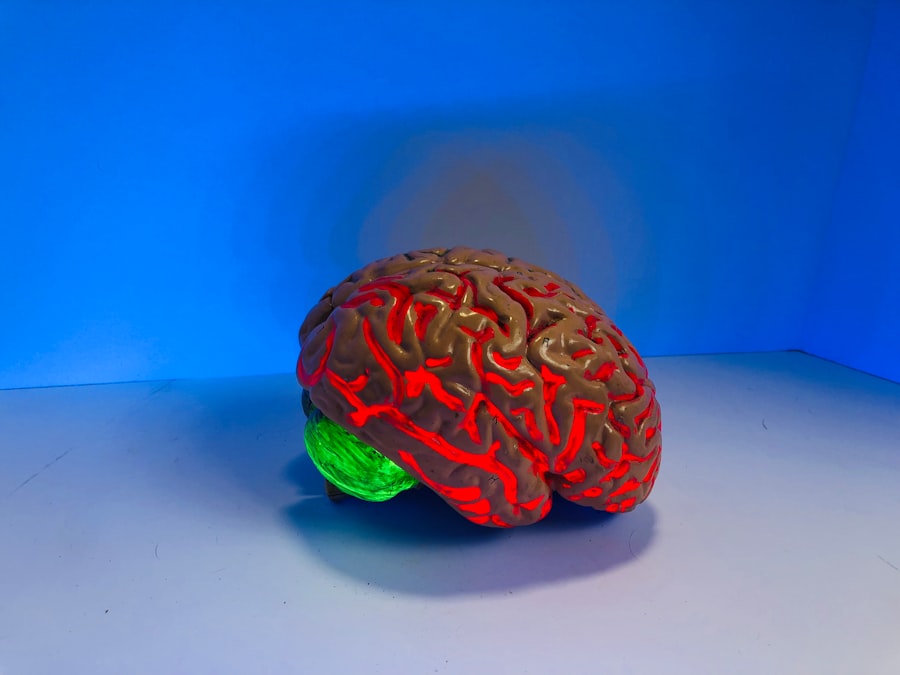
One of the most remarkable functions of your brain is its ability to predict what will happen next. This predictive power is crucial for navigating the world safely and efficiently. Your brain is constantly generating predictions based on past experiences and current sensory input, and then comparing these predictions to the actual incoming information. This ongoing feedback loop refines your understanding of reality.
Predictive Coding: The Brain’s Hypothesis Testing
A leading theory in neuroscience, predictive coding, suggests that your brain is constantly making predictions about the sensory input it expects to receive. When the incoming information matches these predictions, the brain requires less processing power. However, when there’s a mismatch – a prediction error – the brain updates its internal models and adjusts its predictions for the future. This constant process of prediction and correction allows you to learn and adapt.
Prediction Errors: The Catalysts for Learning
Prediction errors are not failures; they are the very engines of learning. When something unexpected happens, it highlights a gap in your brain’s understanding of the world. Your brain then works to resolve this error, either by updating its internal model or by adjusting its expectations. For example, if you expect a familiar route to be clear but encounter unexpected traffic, your brain registers this prediction error, leading you to adjust your route or estimate your travel time more accurately in the future.
Shaping Your Future Perceptions
The patterns of prediction errors you experience over time shape how you perceive future events. If you consistently experience negative outcomes when interacting with a particular group of people, your brain will begin to predict negative outcomes in similar situations, leading to a more guarded or wary perception of those individuals. This highlights how past predictive successes and failures actively sculpt your future experiences.
The Importance of Expectation in Shaping Experience
Your expectations don’t just influence what you notice; they can actively shape your physiological and emotional responses. If you anticipate a positive experience, your brain might release neurotransmitters like dopamine, contributing to feelings of pleasure and satisfaction. Conversely, expecting a negative outcome can trigger the release of stress hormones, leading to anxiety and discomfort, even before the event has occurred. This is the power of the placebo effect in action, demonstrating how your internal beliefs can have tangible effects on your perceived reality.
The Mind-Body Connection: Expectations Manifested
The placebo effect is a powerful testament to how your brain’s expectations can directly influence your physical well-being. When you believe a treatment will work, even if it’s inert, your brain can trigger physiological responses that mimic the effects of an actual medication. This demonstrates that your perception isn’t just about mental interpretation; it can have real, physical consequences.
Anticipation and Dopamine
Dopamine, often referred to as a “pleasure chemical,” plays a crucial role in your brain’s reward system. It’s not just released when you experience something pleasurable, but also when you anticipate it. This anticipation can make the eventual experience even more potent, as your brain is already primed for reward. This is why looking forward to a vacation or a special meal can be almost as enjoyable as the event itself.
The Brain as a Creator: Constructing Your Subjective Reality
Ultimately, your brain is not merely a passive receiver or an interpreter of external stimuli. It is an active creator, constantly weaving together information from your senses, memories, expectations, and emotions to construct your unique, subjective reality. This means that while there’s an objective world out there, your personal experience of it is profoundly shaped by your internal landscape.
The Role of Emotion: Coloring Your Perceptions
Emotions are powerful lenses through which you perceive the world. When you are happy, the world may seem brighter and more inviting. When you are sad or anxious, the same environment can feel bleak and threatening. Your emotional state can amplify or dampen certain aspects of your perception, influencing what you attend to and how you interpret it.
Emotional Priming and Salience
Your emotions can prime your brain to be more sensitive to certain stimuli. If you are feeling fearful, you are more likely to notice potential threats in your environment, such as shadows that look like figures or strange noises that could indicate danger. Conversely, if you are feeling joyful, you might be more attuned to pleasant sights and sounds, focusing on the beauty of nature or the laughter of friends.
The Impact of Mood on Decision-Making
Your mood significantly influences your decision-making processes. A positive mood can lead to more optimistic and open-minded decisions, while a negative mood can result in more cautious and pessimistic choices. This is because your emotions affect the way you weigh information and assess risks.
Culture and Social Influence: Shared Realities, Divergent Perspectives
The reality you experience is also profoundly shaped by the culture and society in which you live. Your cultural background provides a shared framework of beliefs, values, and norms that influence how you interpret the world and interact with others. What is considered polite or rude, beautiful or ugly, right or wrong, is often culturally determined.
The Power of Social Norms
Social norms act as unwritten rules that guide behavior and shape perception. You learn these norms from a young age through observation and interaction. These norms influence everything from how you dress and speak to how you perceive success and happiness. They create a shared reality that allows for social cohesion but can also lead to a reinforcement of biases.
Language as a Cognitive Tool
The language you speak also plays a significant role in shaping your perception of reality. Different languages have different vocabulary and grammatical structures, which can influence how you categorize and think about the world. This is known as the Sapir-Whorf hypothesis, which suggests that language can influence thought. For example, cultures with many words for different types of snow might perceive subtle distinctions in snow that are invisible to those with a single word for “snow.”
Understanding how your brain interprets reality is a fascinating journey into the complexities of human perception. Our brains constantly process sensory information, shaping our experiences and influencing our understanding of the world around us. For a deeper exploration of this topic, you might find it interesting to read an article on the science behind perception and cognition. It delves into how various factors, including emotions and past experiences, can alter our interpretation of reality. You can check it out here.
Embracing the Subjectivity: Living in a Brain-Constructed World
| Aspect | Metric |
|---|---|
| Sensory Input | Visual, auditory, olfactory, gustatory, tactile |
| Processing | Neural networks, pattern recognition, memory retrieval |
| Perception | Interpretation of sensory information, depth perception, color perception |
| Cognition | Attention, language processing, problem solving, decision making |
| Emotion | Impact on perception, memory, and decision making |
Understanding that your brain actively shapes your reality is not an invitation to cynicism or nihilism. Instead, it’s an empowering revelation. It means you have an active role to play in the reality you experience. By understanding the mechanisms by which your brain constructs your world, you can begin to influence and, in some ways, even rewrite your own subjective experience.
Cultivating Mindfulness: Becoming Aware of Your Brain’s Processes
Mindfulness practices, such as meditation, can be incredibly effective in helping you become more aware of your own thought processes and perceptual patterns. By observing your thoughts without judgment, you can begin to identify your biases, your habitual reactions, and the assumptions your brain is making. This heightened awareness allows you to step back from your automatic responses and make more conscious choices about how you perceive and interact with the world.
Noticing Your Thought Patterns
When you practice mindfulness, you begin to notice the recurring themes in your thinking. Are you frequently dwelling on negative possibilities? Do you tend to jump to conclusions? Recognizing these patterns is the first step toward changing them. You can then actively work to challenge these automatic thoughts and cultivate more balanced and realistic perspectives.
Observing Without Judgment
The key to mindfulness is to observe your internal landscape without labeling things as “good” or “bad.” Simply notice your thoughts, your emotions, and your bodily sensations as they arise. This non-judgmental observation creates a space for understanding and acceptance, which are crucial for making positive changes.
Challenging Your Biases and Assumptions: Rewriting Your Internal Narratives
Armed with the knowledge that your brain is prone to biases and assumptions, you can actively work to challenge them. This involves questioning your initial reactions, seeking out diverse perspectives, and being open to information that contradicts your existing beliefs. It’s about consciously choosing to update your internal models and create more nuanced and accurate understandings of the world.
Cognitive Reframing: Shifting Your Perspective
Cognitive reframing is a technique where you intentionally look at a situation from a different angle. Instead of focusing on the negative aspects of a setback, for example, you might look for the lessons learned or the opportunities for growth. This mental shift can profoundly alter your emotional response and your perception of the event.
Seeking Diverse Experiences
Exposing yourself to new people, places, and ideas can actively challenge your ingrained assumptions and broaden your perceptual horizons. Engaging with individuals from different backgrounds and cultures can expose you to new ways of thinking and understanding, helping to dismantle your personal biases.
The Power of Positive Self-Talk and Visualization
Your internal dialogue and your mental imagery have a powerful impact on your perception and your ability to achieve your goals. By consciously choosing to engage in positive self-talk and visualize successful outcomes, you can influence your brain’s predictive mechanisms and shape your experience towards more desirable results. The belief in your ability to succeed, coupled with a clear mental picture of that success, can be a potent force in creating the reality you desire. You are not a passive observer of your life; you are its architect, and your brain is your most powerful tool. By understanding how it shapes your world, you unlock the potential to shape it with intention and purpose.

Why Paper Cuts Hurt (It’s Not What You Think)
FAQs
1. How does the brain interpret reality?
The brain interprets reality through a complex process involving sensory input, memory, and cognitive processing. It takes in information from the environment through the senses and then processes and integrates this information to create a coherent perception of reality.
2. What role do sensory inputs play in the brain’s interpretation of reality?
Sensory inputs, such as sight, sound, touch, taste, and smell, provide the brain with raw data about the external world. The brain then processes and organizes this information to create a meaningful and coherent perception of reality.
3. How does memory influence the brain’s interpretation of reality?
Memory plays a crucial role in the brain’s interpretation of reality by providing a framework for understanding and interpreting sensory inputs. Past experiences and memories shape how the brain perceives and interprets the present moment, influencing its understanding of reality.
4. What is the role of cognitive processing in the brain’s interpretation of reality?
Cognitive processing involves higher-level mental processes such as attention, reasoning, and problem-solving. These processes help the brain make sense of sensory inputs and memories, allowing it to construct a coherent and meaningful interpretation of reality.
5. Can the brain’s interpretation of reality be influenced or distorted?
Yes, the brain’s interpretation of reality can be influenced or distorted by various factors, including cognitive biases, emotions, and external influences. Additionally, certain neurological conditions or disorders can also impact the brain’s ability to accurately interpret reality.