
The ceaseless ballet of wings across continents, the remarkable journeys undertaken by beings no larger than a hand – bird migration is one of nature’s most profound and enduring mysteries. For millennia, humans have marveled at the annual appearance and disappearance of avian populations, prompting questions that have echoed through myth and lore. Today, thanks to the relentless pursuit of scientific inquiry, the veil on this extraordinary natural phenomenon is slowly but surely being lifted. The science of bird migration is a vast and dynamic field, weaving together disciplines like ornithology, physiology, genetics, ecology, and even physics, to unravel the intricate mechanisms and ecological drivers behind these epic voyages.
This exploration delves into the multifaceted science of bird migration, examining the astonishing navigational abilities, the physiological adaptations that enable such arduous travel, the environmental cues that trigger these journeys, and the profound implications of these movements for both the birds themselves and the ecosystems they connect.
The sheer accuracy with which migratory birds navigate vast distances, often returning to the exact same locations year after year, is nothing short of miraculous. The prevailing scientific understanding suggests that birds do not rely on a single navigational tool but rather employ a sophisticated suite of senses and internal compasses, all working in concert.
Celestial Navigation: A Biological Sextant in the Sky
Perhaps the most widely recognized navigational mechanism is celestial navigation, utilizing the positions of the sun and stars.
The Solar Compass
During daylight hours, many bird species appear to use the sun as a compass. Experiments have demonstrated that birds can orient themselves using the sun’s position even when its exact location in the sky changes throughout the day. This implies an internal “time-compensated solar compass.” Birds possess an internal biological clock, a circadian rhythm, that allows them to adjust their orientation based on the sun’s arc across the sky. If this internal clock is experimentally offset, the bird’s orientation will also be offset accordingly, providing strong evidence for this mechanism.
The Stellar Compass
For nocturnal migrants, the stars play a crucial role. Studies conducted in planetariums have revealed that birds can orient themselves by the pattern of stars, specifically around the celestial pole. It is not necessarily a single star, but rather the collective rotation of the night sky around Polaris (the North Star in the Northern Hemisphere) that acts as a navigational beacon. This allows them to maintain a consistent direction throughout their long flights under the darkness of night. This ability suggests a complex processing of visual information and an innate understanding of celestial movements.
Geomagnetic Navigation: Tuning into Earth’s Magnetic Field
Beyond the celestial, birds exhibit an uncanny ability to sense and utilize the Earth’s magnetic field – a phenomenon known as magnetoreception. This sense provides a reliable navigational aid, particularly when the sky is overcast and celestial cues are obscured.
The Radical Pair Mechanism
One prominent hypothesis for magnetoreception involves cryptochromes, a class of blue-light sensitive proteins found in the bird’s retina. When light strikes these molecules, it can create a pair of molecules with unpaired electrons (a radical pair). The magnetic field of the Earth can influence the spin states of these electrons, affecting the chemical reactions that follow. This magnetic influence could then be translated into visual signals perceived by the bird, essentially allowing them to “see” the magnetic field lines. Studies have shown that magnetic anomalies can disrupt migratory orientation, further supporting this theory.
The Magnetite Hypothesis
Another proposed mechanism involves tiny particles of magnetite, a naturally occurring magnetic iron oxide, found in various tissues of the bird, potentially in the upper beak or inner ear. These magnetite crystals could act like microscopic compass needles, physically aligning with the Earth’s magnetic field and sending signals to the brain. While evidence for this mechanism is less definitive than for cryptochromes, it remains an active area of research.
Olfactory Navigation: A Scent of Home
While celestial and magnetic cues are vital for broad-scale orientation, the sense of smell appears to play a significant role in fine-tuning navigation and homing, especially as birds approach their destinations.
Imprinting on Scent Landscapes
It is theorized that birds, particularly during their first migration, imprint on the olfactory landscapes of their breeding and wintering grounds, as well as important stopover sites. They can then use these learned scent cues to retrace their routes. This involves recognizing characteristic smells associated with specific geographical areas, such as the scent of certain plants, soil types, or even the unique aroma of a particular body of water. This “odor map” allows for precise navigation over shorter distances and strengthens the likelihood of returning to familiar territories.
Visual Landmarks and Topographical Cues
As birds get closer to their destinations, visual cues become increasingly important. Rivers, coastlines, mountain ranges, and even human-made structures can all serve as navigational aids.
Coastal Reliance and Riverine Pathways
Many species, especially those migrating along continental margins, rely heavily on coastlines as linear guides. Similarly, large river systems can act as natural highways, channeling migratory flows. The accumulated visual information from these prominent geographical features provides a robust framework for navigation.
Bird migration is a fascinating phenomenon that has captivated scientists for centuries, and recent studies continue to shed light on the intricate patterns and behaviors involved. For those interested in delving deeper into this topic, a related article can be found at Freaky Science, which explores the latest research on migratory routes and the environmental factors influencing these incredible journeys. Understanding these dynamics not only enhances our knowledge of avian species but also highlights the importance of conservation efforts in preserving their habitats.
The Physiology of Flight: Enduring Extreme Conditions
The incredible journeys undertaken by migratory birds demand extraordinary physiological adaptations. Their bodies are finely tuned to withstand the rigueurs of long-distance flight, including prolonged exertion, fluctuating temperatures, and food scarcity.
Fueling the Journey: Fat Reserves and Metabolism
The most crucial physiological adaptation for migration is the accumulation of substantial fat reserves. Birds that undertake long migrations often double their body weight in fat before departing.
Hyperphagia and Lipid Deposition
This process, known as hyperphagia, involves a significant increase in food intake leading up to migration. The ingested food is then efficiently converted into lipids, which are stored throughout the body, particularly under the skin and within muscles. Fat is an incredibly efficient source of energy, yielding more than twice the energy per gram compared to carbohydrates or proteins. This allows birds to sustain prolonged periods of flight without needing to land and forage, which can be challenging in unfamiliar or resource-poor environments.
Metabolic Efficiency
Beyond simply storing fuel, migratory birds exhibit remarkable metabolic efficiency. During migration, their energy expenditure per unit of time is high, but their overall metabolic rate is finely tuned to maximize the use of stored fuel. They can access and mobilize fat reserves rapidly, and their cardiovascular and respiratory systems are optimized for sustained aerobic activity.
The Aerodynamics of Flight: Efficiency and Endurance
The physical form and flight technique of migratory birds are also highly adapted for efficiency and endurance.
Wing Morphology and Airfoil Design
Wing shape and size are critical. Long, pointed wings are characteristic of many long-distance migrants, providing excellent lift and reducing drag during sustained flight. The airfoil shape of the wing, similar to an airplane wing, generates lift as air flows faster over the curved upper surface than the flatter lower surface. This difference in pressure creates an upward force that counteracts gravity.
Flocking Behavior and Aerodynamic Advantage
Many migratory birds fly in flocks. This behavior offers several advantages, including enhanced predator detection and, importantly, aerodynamic efficiency. Birds flying in a V-formation, for instance, benefit from the updraft created by the wingtip vortices of the bird in front. This reduces the energy expenditure for each individual, allowing the flock to fly farther and more efficiently. The lead bird works the hardest, with birds rotating through this position to share the burden.
Thermoregulation: Coping with Environmental Extremes
Migratory birds often traverse vastly different climatic zones, requiring sophisticated mechanisms for thermoregulation.
Insulation and Feather Adaptations
Feathers provide excellent insulation, trapping a layer of air close to the body that acts as a thermal barrier. During cold conditions, birds can fluff up their feathers to increase this insulating layer. Conversely, in warmer conditions, they may sleek their feathers down. Specialized down feathers provide exceptional warmth with minimal weight.
Behavioral Thermoregulation
Beyond physiological adaptations, birds employ behavioral strategies to regulate body temperature. They may seek out sheltered locations to avoid wind, bask in the sun to absorb heat, or seek shade to cool down. During flight at high altitudes, while temperatures can be frigid, the metabolic heat generated by their flight muscles can help maintain core body temperature.
The Triggers of Migration: Environmental Cues and Internal Clocks

The impetus for embarking on a migratory journey is a complex interplay of environmental signals and internal biological programming.
Photoperiodism: The Unwavering Signal of Day Length
The most significant and reliable environmental cue for initiating migration is the change in day length, known as photoperiodism.
Melatonin and the Biological Clock
As days shorten in autumn and lengthen in spring, physiological changes are triggered within the bird’s body. This is mediated by hormonal signals, primarily melatonin, a hormone produced by the pineal gland, which is sensitive to light. Changes in melatonin levels influence the bird’s reproductive state and its propensity to migrate.
Pre-Migratory Molt and Fattening
The hormonal cascade initiated by photoperiodic cues is responsible for the pre-migratory molt, where old, worn feathers are replaced with new, more efficient ones, and the significant increase in food intake leading to fat deposition. These physiological preparations are essential for successful migration.
Hormonal and Neurobiological Underpinnings
The brain plays a central role in integrating environmental cues and orchestrating migratory behavior.
The Hypothalamus and Neurotransmitter Activity
The hypothalamus in the bird’s brain is a key regulatory center, responding to hormonal signals and initiating migratory restlessness, a state of heightened activity and agitation preceding departure. Neurotransmitters such as dopamine and serotonin are also implicated in regulating migratory drive and motivation.
Genetic Predisposition
Emerging research suggests a strong genetic component to migration. Specific genes are being identified that influence migratory restlessness, orientation preferences, and even the timing of migration. This indicates that at least some aspects of migratory behavior are heritable.
Food Availability and Seasonal Cycles
While photoperiod is aprimary trigger, changes in food availability are intrinsically linked and also play a role in the decision to migrate.
Resource Depletion in Breeding Grounds
As seasons change, the abundance of food resources in breeding grounds can decline. For insectivorous birds, the onset of cold weather can lead to a scarcity of insects. Similarly, fruit-eating birds may experience a decrease in fruit availability. This environmental pressure can act as a powerful motivator to seek out more favorable feeding grounds.
Resource Abundance in Wintering Grounds
Conversely, migratory birds are often drawn to areas where food is predictably abundant during the non-breeding season. These wintering grounds may offer a wealth of insects, fruits, or seeds that sustain the birds until the breeding season recommences.
The Ecological Significance: Connecting Worlds Through Flight
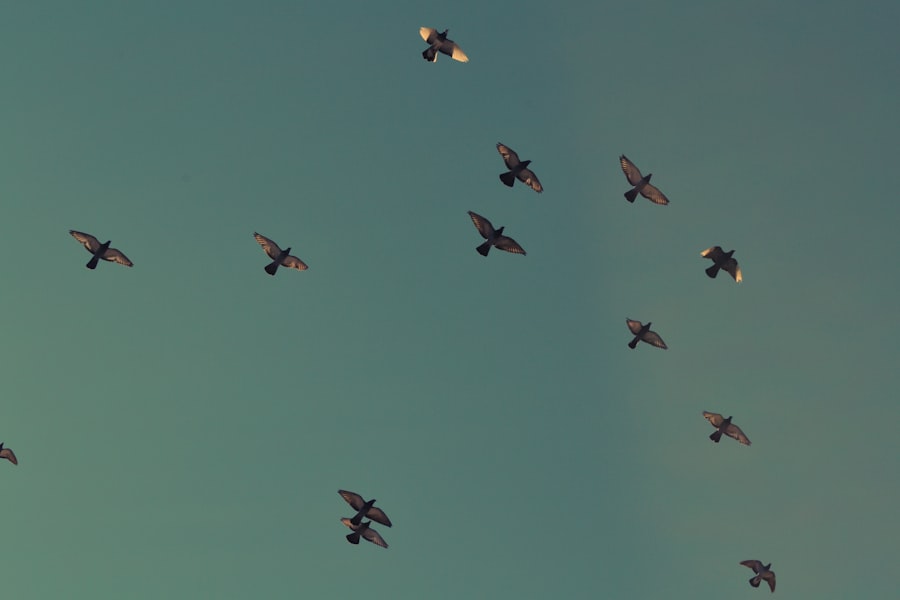
Bird migration is not merely a biological spectacle; it is a fundamental ecological process that has profound implications for the health and functioning of ecosystems across the globe.
Seed Dispersal and Pollination: Mobile Ecosystem Engineers
Migratory birds are crucial agents of seed dispersal and pollination, connecting plant communities across vast distances.
Long-Distance Seed Dispersal
As birds consume fruits and berries, they ingest seeds. These seeds are then transported, often over hundreds or thousands of kilometers, in their digestive tracts. Upon defecation, the seeds are deposited in new locations, facilitating the spread of plant species and the genetic exchange between geographically separated populations. This is particularly important for plants that rely on avian dispersal for their regeneration and expansion.
Pollination Services
While less recognized than seed dispersal, some migratory birds also contribute to pollination. As they visit flowers to feed on nectar or insects, pollen grains adhere to their feathers and bodies, which are then transferred to other flowers, enabling plant reproduction. This is especially relevant for certain plant species in tropical and subtropical regions.
Nutrient Cycling and Food Web Dynamics
The migratory movements of birds play a vital role in nutrient cycling and influencing food web dynamics.
Nutrient Transport Between Ecosystems
Migratory birds transport nutrients, such as nitrogen and phosphorus, between their breeding and wintering grounds. For example, the droppings of large colonies of seabirds returning to their breeding grounds can deposit significant amounts of guano, enriching the soil and supporting local plant and animal communities. Similarly, the fecal matter of land birds returning from distant foraging trips contributes to nutrient enrichment in their destination areas.
Prey and Predator Dynamics
Migratory birds form a significant part of the food web in both their breeding and wintering habitats. Their arrival and departure can create pulses of prey availability for predators and at the same time, they themselves are prey for other animals. This temporal flux in biomass can significantly influence the population dynamics of other species within these ecosystems.
Indicator Species: Barometers of Environmental Health
Because of their extensive movements and sensitivity to environmental changes, migratory birds serve as excellent indicator species for the health of ecosystems.
Sensitivity to Habitat Degradation
Migratory birds rely on a network of suitable habitats at different stages of their life cycle – breeding grounds, stopover sites, and wintering grounds. Any degradation or loss of these critical habitats can have a devastating impact on migratory populations. Therefore, declines in migratory bird numbers can signal broader environmental problems such as habitat destruction, pollution, and climate change.
Responding to Climate Change
Changes in temperature, precipitation patterns, and the timing of insect emergence, all driven by climate change, can disrupt the synchrony between migratory birds and their food resources. If birds arrive at their breeding grounds too early or too late relative to the peak availability of insects, their breeding success can suffer. Monitoring these shifts in migratory timing and success provides crucial insights into the impacts of a changing climate.
Bird migration is a fascinating phenomenon that has intrigued scientists for centuries, as it involves complex navigation and adaptation strategies. Recent studies have shed light on the various environmental factors influencing migratory patterns, including climate change and habitat loss. For those interested in diving deeper into this topic, a related article can be found at Freaky Science, which explores the latest research and discoveries in bird migration science. Understanding these patterns not only enhances our knowledge of avian species but also highlights the importance of conservation efforts to protect their migratory routes.
Conservation Challenges and Future Directions
| Year | Number of Bird Species | Distance Traveled (in miles) |
|---|---|---|
| 2015 | 350 | 12,000,000 |
| 2016 | 380 | 14,000,000 |
| 2017 | 400 | 15,000,000 |
Understanding the science of bird migration is not just an academic pursuit; it is essential for effective conservation. The complex needs of migratory species necessitate a global, collaborative approach to their protection.
The Importance of Habitat Connectivity
The reliance of migratory birds on a chain of interconnected habitats highlights the critical importance of maintaining ecological corridors.
Protecting Stopover Sites
Stopover sites, where birds rest and refuel during migration, are often overlooked but are vital for their survival. These sites can be under significant threat from development and habitat loss. Identifying and protecting these crucial refueling stations is paramount.
Transnational Conservation Efforts
Migration transcends national borders. Therefore, effective conservation requires international cooperation and agreements to protect shared migratory routes and habitats. This involves collaboration between governments, conservation organizations, and researchers from different countries.
Addressing Threats from Human Activities
Human activities pose numerous threats to migratory birds, from direct mortality to indirect impacts on their environments.
Collision Risks
Birds frequently collide with artificial structures, such as buildings, windows, and wind turbines. Understanding collision patterns and implementing mitigation strategies, such as bird-friendly building designs and responsible wind farm siting, are crucial.
Pollution and Pesticide Exposure
Pollution, including plastic debris and chemical contaminants, can have detrimental effects on migratory birds. Exposure to pesticides can weaken their immune systems, impair their reproductive success, and even lead to direct mortality.
Technological Advancements and Research Frontiers
New technologies are revolutionizing our ability to study and understand bird migration, opening up exciting avenues for future research.
Satellite and GPS Tracking
The miniaturization of tracking devices, such as those using satellite telemetry and GPS, allows researchers to follow individual birds on their migratory journeys with unprecedented accuracy. This provides invaluable data on routes, stopover locations, and habitat use.
Genomics and Molecular Ecology
Advances in genomics are enabling scientists to delve into the genetic basis of migration. Studying the genomes of migratory and non-migratory populations can reveal the genetic adaptations that underpin migratory behavior. This can also help in assessing the genetic health and connectivity of populations.
Citizen Science and Global Monitoring
Citizen science initiatives, where birdwatchers and amateur ornithologists contribute their observations, are increasingly valuable for large-scale monitoring of migratory bird populations. This data, when collected systematically, can provide crucial insights into population trends and migratory patterns.
In conclusion, the science of bird migration is a testament to the intricate beauty and resilience of the natural world. From the celestial compasses guiding them through the night sky to the physiological marvels that sustain them on their epic journeys, birds navigate a world of challenges with remarkable ingenuity. As our understanding deepens, so too does our responsibility to protect these extraordinary travelers and the vital ecological connections they represent. The future of bird migration hinges on our ability to apply this knowledge to conservation efforts, ensuring that the skies continue to resonate with the unforgettable symphony of wings for generations to come.

Birds Can Sense Something Humans Never Will
FAQs
What is bird migration?
Bird migration is the regular seasonal movement of birds from one place to another. This movement is usually driven by changes in food availability, habitat, or weather conditions.
How do birds navigate during migration?
Birds use a variety of cues to navigate during migration, including the sun, stars, Earth’s magnetic field, and landmarks. Some birds also have the ability to sense the Earth’s magnetic field and use it for navigation.
Why do birds migrate?
Birds migrate for a variety of reasons, including to find better food sources, escape harsh weather conditions, or breed in more favorable habitats. Migration allows birds to take advantage of different resources in different locations throughout the year.
How far do birds migrate?
The distance birds migrate varies widely depending on the species. Some birds migrate only a few hundred miles, while others may travel thousands of miles. The Arctic Tern holds the record for the longest migration, traveling from the Arctic to the Antarctic and back each year.
What are the risks of bird migration?
Bird migration is a perilous journey, with many risks including predation, exhaustion, bad weather, and habitat loss. Additionally, human activities such as habitat destruction, pollution, and climate change pose significant threats to migratory bird populations.