
The rhythmic beat of wings against the dawn sky, a fleeting glimpse of avian travelers against the vast expanse – these are the quintessential images of bird migration. Yet, for centuries, these seasonal journeys have remained one of nature’s most profound mysteries. How do creatures so small, so seemingly delicate, traverse thousands of miles, navigating with an uncanny precision that rivals our most sophisticated GPS systems? The scientific community has dedicated immense effort to unraveling these intricate puzzles, and while much has been discovered, the full scope of this annual odyssey continues to inspire awe and scientific inquiry.
The phenomenon of bird migration has captivated human observers since the dawn of recorded history. Early civilizations, deeply intertwined with the natural world, noted the predictable arrival and departure of certain species, correlating them with seasonal changes. This led to early, often poetic, interpretations of their movements.
The “Lost” Birds: When Migration Wasn’t Understood
Before the advent of scientific inquiry, many cultures held fascinating, though often inaccurate, beliefs about what happened to migrating birds. Some believed they hibernated in mud at the bottom of lakes, or perhaps transformed into other animals during the winter months. The sheer scale and invisibility of their journeys fueled these imaginative theories.
Myths of Disappearance and Rebirth
Across various mythologies, stories of birds vanishing and reappearing with the seasons often symbolized themes of death and rebirth, mirroring the cyclical nature of the earth. These tales, while not scientific, highlight the deep-seated human fascination with these enigmatic travelers.
Early Scientific Investigations: Seeds of Understanding
As scientific observation began to take root, the focus shifted from mythical explanations to empirical evidence. Early naturalists meticulously recorded bird populations, noting shifts in presence and absence throughout the year. This systematic approach laid the groundwork for understanding the migratory patterns.
The Dawn of Ornithology
The development of ornithology as a scientific discipline marked a turning point. Dedicated birdwatchers and scientists began collecting data, drawing maps, and meticulously documenting species distribution. These early efforts, though often lacking advanced technology, were crucial in establishing the basic facts of bird migration.
Bird migration has long fascinated scientists and enthusiasts alike, as the reasons behind these incredible journeys remain shrouded in mystery. A related article that delves deeper into the complexities of avian migration patterns can be found at Freaky Science. This resource explores various theories and recent discoveries that shed light on how birds navigate vast distances and the environmental factors influencing their migratory behavior.
The Incredible Navigation: How Do They Find Their Way?
Perhaps the most perplexing aspect of bird migration is their extraordinary ability to navigate. Flying thousands of kilometers, often over featureless oceans or vast deserts, they return to the same nesting sites and overwintering grounds year after year. The mechanisms behind this remarkable feat have been a primary focus of scientific research.
Celestial Compass: The Sun and Stars as Guides
One of the earliest established cues is the use of celestial bodies. Birds have demonstrated an ability to orient themselves using the position of the sun during the day and the pattern of stars at night. This celestial compass provides a reliable directional reference, even over long distances.
Solar Orientation: A Built-in Sundial
Studies have shown that birds can compensate for the movement of the sun throughout the day, maintaining a consistent direction. This suggests a sophisticated internal clock and a mechanism to interpret solar cues for navigation.
Stellar Navigation: A Cosmic Map
For nocturnal migrants, the stars play a crucial role. Experiments conducted in planetariums have revealed that birds can learn and utilize star patterns to orient themselves. Specific constellations and their apparent rotation around the North Star appear to be key navigational aids.
Geomagnetism: The Earth’s Invisible Compass
Beyond celestial cues, birds possess another remarkable sense: magnetoreception. They can detect and utilize the Earth’s magnetic field for orientation. This invisible compass provides a backup system, particularly useful on cloudy nights or over regions where celestial cues are less reliable.
The Magnetic Sense: A Biological Compass
The precise biological mechanism for magnetoreception is still an active area of research. Theories include the presence of iron-containing particles in specific tissues, such as the beak or eyes, or the involvement of photoreceptor molecules in the eyes that are sensitive to magnetic fields.
Gradient Navigation: Latitude and Longitude from Magnetism
Recent research suggests that birds may not only sense the direction of the magnetic field but also its inclination and intensity. These variations can act as a form of latitude and longitude, allowing birds to pinpoint their position on Earth.
Olfactory Cues: The Scent of Home
While less studied than celestial or magnetic navigation, the sense of smell also appears to play a role in bird migration, particularly for homing. Some species have demonstrated an ability to recognize unique scent profiles associated with their breeding or overwintering grounds.
Scent Landmarks: A Smelly Map
The idea is that birds learn to associate certain smells with specific locations, creating a “scent map” that guides them, especially in the final stages of their journey. This might involve recognizing the distinct aromas of plants, soil, or even the ocean.
Wind-Borne Odors: Navigating by Scent Trails
Wind patterns can carry these olfactory cues over long distances, allowing birds to follow scent trails back to familiar territories. This is particularly relevant for seabirds that rely on the distinct scents of their island colonies.
The Physiological Marvel: Preparing for the Journey
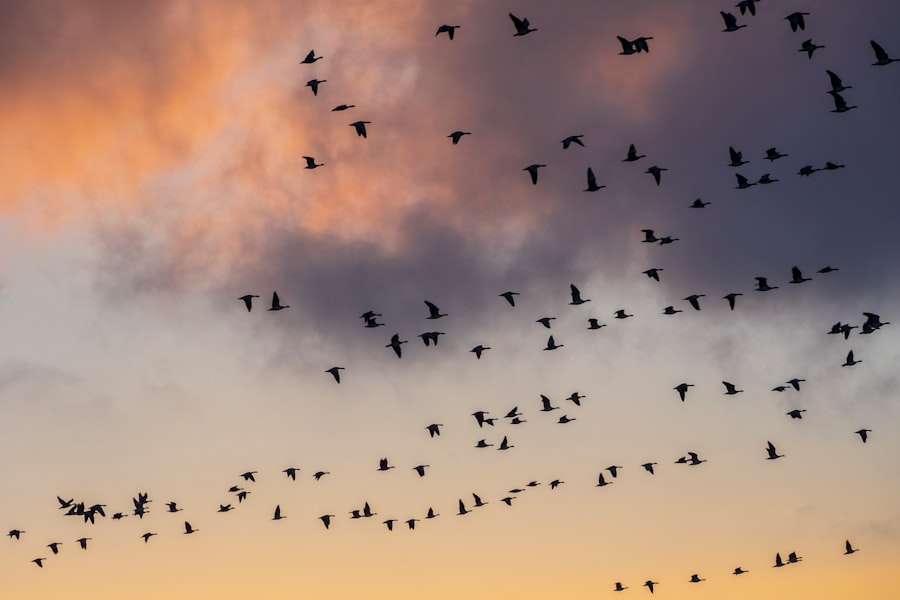
The sheer endurance required for migratory flights places immense demands on a bird’s physiology. Over evolutionary time, birds have developed remarkable adaptations to prepare for and sustain these epic journeys.
Fueling the Flight: Hyperphagia and Fat Deposition
Before embarking on migration, many birds enter a phase known as hyperphagia, characterized by a significant increase in food intake. This leads to the accumulation of substantial fat reserves, which serve as the primary energy source for prolonged flight.
Fat as Fuel: An Efficient Energy Source
Fat is a highly efficient fuel, providing more than double the energy per unit of mass compared to carbohydrates or proteins. This allows birds to carry sufficient energy reserves without becoming excessively heavy.
Metabolic Changes: Optimizing Energy Use
During migration, birds undergo significant metabolic changes. Their bodies become highly efficient at utilizing fat for energy, conserving protein for essential bodily functions and muscle maintenance.
Enhanced Endurance: Muscular and Respiratory Adaptations
The flight muscles of migratory birds are highly specialized for endurance. They are rich in mitochondria, the powerhouses of the cell, and possess a high capacity for aerobic respiration. Their respiratory systems are incredibly efficient, allowing for the uptake of oxygen and the expulsion of carbon dioxide at rates far exceeding those of non-migragmentory birds.
Aerobic Powerhouses: Specialized Flight Muscles
The pectoralis major, the primary flight muscle, is a marvel of biological engineering. It is densely packed with slow-twitch muscle fibers that are resistant to fatigue, enabling sustained wingbeats over many hours.
Efficient Oxygen Delivery: A Supercharged Respiratory System
Bird lungs are unique in their structure, featuring air sacs that allow for a unidirectional flow of air. This ensures a continuous supply of oxygen to the blood, crucial for meeting the high metabolic demands of flight.
Behavioral Strategies: Stopovers and Refueling
While some birds can undertake non-stop flights, many rely on strategically located stopover sites to rest and refuel. These areas, often rich in food resources, are critical for replenishing energy reserves and allowing for physiological recovery.
Critical Refueling Stations: The Importance of Stopover Habitats
The availability and quality of stopover habitats can significantly impact migratory success. Habitat degradation or loss can pose a serious threat to migratory bird populations.
Timing is Everything: Exploiting Seasonal Resource Peaks
Birds’ migratory timings are exquisitely synchronized with the availability of food resources at their destinations and along their routes. This temporal matching ensures they arrive when food is most abundant, maximizing their chances of survival and reproduction.
The Incredible Diversity: A Global Phenomenon

Bird migration is not a monolithic event; it is a remarkably diverse phenomenon, varying in distance, timing, and strategy across thousands of species. From the epic transcontinental journeys to shorter, regional movements, the migratory world is a testament to evolutionary ingenuity.
Long-Distance Travelers: Transcontinental and Intercontinental Journeys
Some of the most awe-inspiring migrations are undertaken by species that travel vast distances, crossing continents and even oceans. These birds embody the ultimate migratory spirit.
Arctic Tern: The Champion Traveler
The Arctic Tern holds the record for the longest migration, traveling from its Arctic breeding grounds to the Antarctic and back each year. This incredible journey covers tens of thousands of kilometers, exposing the bird to two summers annually.
Shorebirds and Waterfowl: Masters of Epic Odysseys
Many species of shorebirds and waterfowl undertake similarly impressive migrations. These birds often follow specific flyways, air corridors that connect breeding and wintering grounds.
Short-Distance Migrants: Regional Movements and Altitudinal Shifts
Not all migrations are transcontinental. Many species undertake shorter, regional migrations, moving from higher elevations to lower ones in response to seasonal changes or from one region to another within a continent.
The Influence of Local Conditions: Adapting to Microclimates
These shorter migrations are often dictated by local climatic conditions, such as the onset of freezing temperatures or the availability of food sources in different altitudes.
Altitudinal Migration: A Vertical Migration
Some birds, particularly those in mountainous regions, exhibit altitudinal migration, moving up or down slopes to find suitable foraging and breeding grounds throughout the year.
Partial Migration: A Mixed Strategy
A fascinating aspect of migration is partial migration, where within a single species, some individuals migrate while others remain resident. This strategy allows for flexibility in response to environmental pressures.
The Benefits of Staying Put: Resident Advantages
Resident individuals may benefit from established territories and readily available resources, avoiding the risks and energetic costs of migration.
The Risks of Staying: When Winter Bites Back
However, resident birds also face the challenges of harsh winter conditions and potential food scarcity, making migration a more advantageous option for some.
Bird migration has long fascinated scientists and nature enthusiasts alike, as the intricate patterns and routes taken by these avian travelers remain shrouded in mystery. Recent studies have shed light on some of the factors influencing migration, but many questions still linger. For those interested in exploring this topic further, an insightful article can be found at Freaky Science, which delves into the complexities of bird migration and the various theories that attempt to explain this remarkable phenomenon.
Threats and Conservation: Protecting the Migratory Passage
| Year | Location | Number of Birds | Explanation |
|---|---|---|---|
| 2018 | Alaska | Thousands | Unexplained disappearance |
| 2019 | Canada | Millions | Weather-related theory |
| 2020 | Mexico | Unknown | Research ongoing |
Despite their remarkable resilience, migratory birds face increasing threats in the modern world. Human activities have significantly altered habitats, disrupted natural cycles, and introduced new dangers, making conservation efforts crucial for their survival.
Habitat Loss and Degradation: The Vanishing Stops
The most significant threat to migratory birds is the loss and degradation of their critical habitats. Wetlands, forests, grasslands, and coastal areas that serve as breeding grounds, stopover sites, and wintering grounds are being converted for agriculture, urban development, and other human uses.
The Importance of Stopover Habitats: Critical Food and Rest Stops
As mentioned before, intact and healthy stopover sites are vital. Their destruction or fragmentation can lead to starvation and exhaustion for migrating birds.
Degradation of Breeding Grounds: Impacts on Reproduction
The quality of breeding grounds directly affects a bird’s ability to successfully raise young. Pollution, invasive species, and overdevelopment can all negatively impact reproductive success.
Climate Change: Shifting Seasons and Mismatched Timing
Climate change poses a multifaceted threat. Rising global temperatures are altering migration timings, food availability, and the geographical distribution of suitable habitats. This can lead to phenological mismatches, where birds arrive at their destinations before or after peak food abundance.
Phenological Mismatches: A Timing Problem
If the insects that a bird relies on hatch earlier or later due to warming temperatures, the bird’s arrival might be out of sync. This can lead to a lack of food for both adults and their chicks.
Shifting Geographic Ranges: New Challenges and Opportunities
As temperatures change, some species may find their traditional ranges becoming inhospitable, forcing them to adapt and move to new areas, which may present their own set of challenges.
Human-Caused Mortality: Collisions and Other Dangers
Anthropogenic factors contribute significantly to bird mortality. Collisions with man-made structures, such as windows, wind turbines, and communication towers, are a major cause of death, especially during migratory periods.
The Window Strike Problem: Unseen Dangers
Bird-friendly window designs and awareness campaigns are essential to reduce the millions of bird deaths caused by window collisions each year.
Wind Turbines and Power Lines: Mechanical Threats
While wind energy is a renewable resource, the placement and operation of wind turbines and power lines need careful consideration to minimize risks to birds, particularly raptors and large migratory species.
Conservation Strategies: A Collective Effort
Protecting migratory birds requires a concerted and collaborative effort. It involves safeguarding critical habitats, mitigating climate change impacts, and implementing strategies to reduce human-caused mortality.
International Cooperation: Birds Know No Borders
Since migratory birds travel across national boundaries, international cooperation is paramount. Agreements and partnerships between countries are essential for effective conservation of shared migratory routes.
Habitat Restoration and Protection: Ensuring Safe Havens
Investing in habitat restoration projects and establishing protected areas for migratory birds are fundamental steps in ensuring their long-term survival.
Policy and Advocacy: Giving Birds a Voice
Advocacy and policy changes are crucial to implement bird-friendly practices, such as implementing lighting regulations for buildings, promoting sustainable agriculture, and supporting research into bird migration.
In conclusion, the mystery of bird migration, while still holding some enigmatic layers, has been significantly unraveled through dedicated scientific endeavors. From the ancient wonder to the complex biological and navigational mechanisms, and the ever-present threats to their survival, the journey of these feathered travelers continues to inspire and challenge us. Understanding their incredible journeys is not just an academic pursuit; it is a critical component of safeguarding the biodiversity of our planet and appreciating the interconnectedness of life on Earth. The future of these magnificent journeys rests on our continued dedication to research, conservation, and a deeper respect for the natural world.

Birds Can Sense Something Humans Never Will
FAQs
What is bird migration?
Bird migration is the regular seasonal movement of birds from one place to another. This movement is usually driven by changes in food availability, habitat, or weather conditions.
Why do birds migrate?
Birds migrate for various reasons, including finding better feeding grounds, breeding grounds, or escaping harsh weather conditions. Some birds migrate to take advantage of longer daylight hours in the summer for breeding, while others migrate to avoid extreme cold in the winter.
How do birds navigate during migration?
Birds use a variety of cues to navigate during migration, including the sun, stars, Earth’s magnetic field, and landmarks. Some birds also have the ability to detect polarized light patterns to orient themselves.
What are some challenges birds face during migration?
Birds face numerous challenges during migration, including predation, exhaustion, adverse weather conditions, and habitat loss. Additionally, human activities such as habitat destruction, pollution, and collisions with man-made structures pose significant threats to migrating birds.
What are some examples of long-distance migratory birds?
Some examples of long-distance migratory birds include the Arctic Tern, which migrates from the Arctic to the Antarctic and back each year, and the Bar-tailed Godwit, which holds the record for the longest non-stop flight of any bird, flying from Alaska to New Zealand without stopping.