
The Earth wears a protective cloak, an invisible shield that dances and shimmers, guiding mariners and shielding life from the harsh glare of space. This is the planet’s magnetic field, a phenomenon as ancient as Earth itself, yet one that continues to puzzle and inspire scientists. Unraveling its mystery is a journey into the heart of our world, a quest to understand the forces that shape our planet and perhaps, the very conditions that allow life to thrive. This elusive field, generated deep within the Earth, is not static; it shifts, weakens, and even flips, presenting a dynamic puzzle that has captivated human curiosity for centuries.
The prevailing scientific explanation for Earth’s magnetic field traces its origin to a geodynamo – a complex interplay of heat, fluid motion, and electrical conductivity within the planet’s core. Understanding this dynamo is paramount to comprehending the magnetic field itself. Scientists believe that the Earth’s core is composed of two main parts: a solid inner core and a liquid outer core. The inner core, primarily iron and nickel, is incredibly hot, estimated to be as hot as the surface of the Sun. Surrounding this is the liquid outer core, also made of iron and nickel, but in a molten state.
Convection Currents: The Driving Force
The intense heat emanating from the inner core drives convection currents in the liquid outer core. These currents are akin to the bubbling of boiling water, where hotter, less dense material rises, cools, and then sinks. This continuous circulation of electrically conductive molten metal is the fundamental engine. As the fluid iron and nickel churn and flow, it generates electrical currents. This concept is a direct application of electromagnetic induction, a fundamental principle of physics.
The Role of Rotation: The Coriolis Effect
Crucially, the Earth’s rotation plays a vital role in organizing these convection currents. The Coriolis effect, a phenomenon that deflects moving objects on a rotating sphere, twists and shapes the convective flows into helix-like structures. These organized helical movements of conducting fluid are what amplify and sustain the magnetic field. Without the Earth’s rotation, the convection would likely be chaotic and insufficient to generate a large-scale, stable magnetic field. It is this intricate dance between convection and rotation that creates the planet’s dynamo.
Regenerating the Field: A Self-Exciting System
The beauty of the geodynamo lies in its self-sustaining nature. The generated magnetic field, in turn, influences the flow of the conductive fluid, creating a feedback loop that perpetuates the field. This intricate self-excitation process is what allows Earth to maintain a magnetic field for billions of years. It’s a remarkably efficient and robust system, capable of generating a field strong enough to extend far beyond the planet’s surface.
Understanding how Earth’s magnetic field works is crucial for comprehending various natural phenomena, including navigation and animal migration. For a deeper dive into the intricacies of this fascinating subject, you can explore a related article that discusses the generation and dynamics of Earth’s magnetic field. This article provides insights into the geodynamo process and its implications for life on our planet. To read more, visit this link.
The Earth’s Magnetic Field: A Visible Manifestation
While the dynamo operates unseen in the Earth’s depths, its effects are observable and have been charted for centuries. The magnetic field lines, invisible to the naked eye, form a complex three-dimensional structure that emanates from the south polar region and re-enters at the north polar region, looping out into space.
The Dipole Approximation: A Simplistic View
For a general understanding, the Earth’s magnetic field is often approximated as a simple dipole – like that of a bar magnet. This dipole model, with its north and south magnetic poles, aligns roughly with the geographic poles. However, this is a simplification, as the real magnetic field is far more complex and exhibits significant variations.
Magnetic Poles vs. Geographic Poles: A Crucial Distinction
It is essential to distinguish between the geographic poles, which define the Earth’s axis of rotation, and the magnetic poles. The magnetic poles are not fixed and are constantly drifting. Currently, the north magnetic pole is located in the Arctic Ocean and is moving at a significant pace. This distinction is vital for navigation, as compasses point to the magnetic north, not the geographic north.
Magnetic Declination and Inclination: Essential Navigation Tools
The subtle deviations from a pure dipole field are described by two key parameters: magnetic declination and magnetic inclination. Magnetic declination is the angle between true north (geographic north) and the direction a compass needle points (magnetic north). This angle varies depending on location on Earth. Magnetic inclination, or dip, is the angle between the magnetic field line and the horizontal plane. At the magnetic equator, the field lines are horizontal, while they become increasingly vertical as one approaches the magnetic poles. These measurements, historically critical for seafaring and by extension, global exploration and trade, are direct evidence of the magnetic field’s structure.
Beyond the Dipole: The Complex Reality
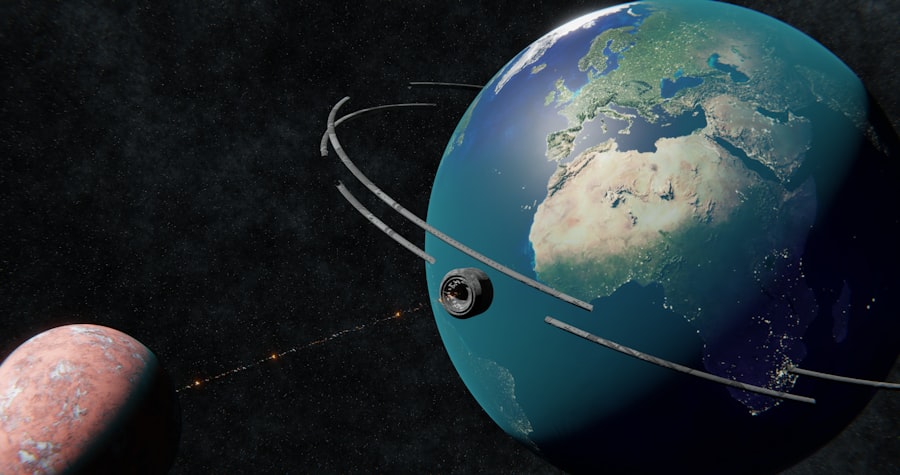
The dipole model, while useful, fails to capture the full intricate nature of Earth’s magnetic field. Scientists recognize that the field is influenced by numerous factors, leading to deviations and complexities that continue to be investigated.
Non-Dipole Components: Imperfections in the Shield
The actual magnetic field is a superposition of the main dipole field and smaller, non-dipole components. These non-dipole components are thought to arise from localized anomalies in the flow of the outer core. They manifest as variations in field strength and direction across the Earth’s surface, creating areas where the field is stronger or weaker than predicted by the dipole model.
Secular Variation: The Constant Evolution of the Field
Perhaps the most striking aspect of the Earth’s magnetic field is its dynamic nature, known as secular variation. The field is not static; it fluctuates over time. The magnetic poles drift, the intensity of the field changes, and even the overall structure can evolve. These changes, observed through historical records and modern measurements, provide invaluable data for understanding the geodynamo. The rate of secular variation has increased in recent decades, hinting at potentially significant changes in the underlying core dynamics.
The Geomagnetic Jerks: Sudden Shifts in the Flow
Occasionally, the Earth’s magnetic field experiences sudden, short-lived accelerations or decelerations in its secular variation, known as geomagnetic jerks. These “jerks” are like sudden jolts in the system, indicating rapid changes in the flow of molten iron in the outer core. Studying these events provides snapshots of the core’s behavior, offering crucial insights into the complex fluid dynamics at play.
The Magnetosphere: Earth’s Protective Bubble

The magnetic field extends far beyond the Earth’s surface, creating a vast region in space known as the magnetosphere. This dynamic shield acts as a barrier, deflecting the majority of charged particles emanating from the Sun, known as the solar wind.
The Solar Wind: A Constant Stream of Particles
The Sun, a giant nuclear furnace, constantly ejects a stream of energetic, charged particles (protons and electrons) into space. This solar wind travels at hundreds of kilometers per second and, if unimpeded, would strip away our atmosphere and bombard the Earth’s surface with harmful radiation.
Deflection and Trapping: The Magnetosphere’s Role
The magnetosphere acts as an effective shield against this onslaught. The magnetic field lines bend and guide the charged particles of the solar wind around the Earth. However, not all particles are deflected. Some are trapped within the magnetosphere, forming the Van Allen radiation belts – toroidal regions of energetic charged particles encircling the Earth.
Aurorae: The Visible Dance of the Magnetosphere
When energetic particles from the solar wind manage to penetrate deeper into the magnetosphere, they collide with atoms and molecules in the Earth’s upper atmosphere. These collisions excite the atmospheric gases, causing them to emit light, creating the mesmerizing spectacle of the aurora borealis (northern lights) and aurora australis (southern lights). The patterns and intensity of the aurorae are directly influenced by the state of the magnetosphere and the solar wind.
Understanding how Earth’s magnetic field works is essential for grasping various phenomena, from navigation to protecting our planet from solar radiation. The magnetic field is generated by the movement of molten iron in the outer core, creating a dynamo effect that produces magnetic lines of force. For a deeper dive into the intricacies of this fascinating subject, you can explore a related article that discusses the science behind Earth’s magnetic field and its implications for life on our planet. Check it out here.
Magnetic Field Reversals: A Dramatic Transformation
| Aspect | Details |
|---|---|
| Definition | The Earth’s magnetic field is a powerful force that surrounds the planet and extends into space. It is generated by the movement of molten iron in the outer core of the Earth. |
| Purpose | The magnetic field acts as a shield, protecting the Earth from harmful solar radiation and cosmic rays. It also plays a crucial role in navigation for animals and humans. |
| Polarity | The Earth’s magnetic field has a north and south pole, similar to a bar magnet. The north magnetic pole is located near the geographic North Pole, and the south magnetic pole is near the geographic South Pole. |
| Reversals | Over geological time, the Earth’s magnetic field has reversed its polarity many times. This means that the magnetic north and south poles have swapped positions. |
| Measurement | Scientists use magnetometers to measure the strength and direction of the Earth’s magnetic field. This data helps in understanding its behavior and changes over time. |
Perhaps the most dramatic and perplexing aspect of Earth’s magnetic field is its propensity to reverse polarity. Over geological timescales, the North magnetic pole has repeatedly flipped to become the South magnetic pole, and vice-versa.
Evidence in the Rocks: Paleomagnetism
The record of these magnetic field reversals is preserved in the rocks themselves. As molten lava cools and solidifies, magnetic minerals within the rock align themselves with the prevailing magnetic field at that time. This phenomenon, known as paleomagnetism, provides a direct historical archive of Earth’s magnetic past. By studying the magnetic orientation of ancient rocks, scientists have been able to construct a timeline of magnetic reversals stretching back hundreds of millions of years.
The Process of Reversal: A Gradual Decay and Rebuilding
Magnetic field reversals are not instantaneous events. They are believed to be a gradual process, taking thousands of years to complete. During a reversal, the main dipole field weakens considerably, and the field becomes more complex, with multiple north and south poles appearing. It is a period of significant instability. Eventually, the field re-establishes itself, but with the polarity flipped. The weakened field during these periods poses a potential vulnerability.
The Impact of Reversals: A Scientific Debate
The potential impact of a magnetic field reversal on life on Earth is a subject of ongoing scientific debate. During the period of a weakened field, the protection against harmful solar and cosmic radiation would be reduced. While past reversals have not been definitively linked to mass extinction events, the possibility of increased radiation exposure raises concerns about the long-term consequences for complex life. Understanding the frequency and duration of reversals, as well as the strength of the field during these events, are crucial for assessing this risk.
Predicting the Next Reversal: A Moving Target
Predicting when the next magnetic field reversal will occur is currently beyond our scientific capabilities. The geodynamo is a chaotic system, and while we can observe trends and patterns, precise forecasting remains elusive. However, observations of the recent acceleration in the drift of the magnetic poles and the weakening of the field in certain regions have led some scientists to speculate that we may be entering a period of instability, perhaps even the early stages of a reversal.
In conclusion, the mystery of Earth’s magnetic field is a testament to the dynamic and extraordinary processes occurring deep within our planet. From the churning iron of the outer core to the ethereal dance of the aurora, the magnetic field is a constant reminder of the powerful forces that shape our world. Continued research, employing sophisticated instruments and innovative theoretical models, promises to further unravel the intricate workings of the geodynamo, offering deeper insights into the planet’s evolution, the forces that protect life, and the potential future of our magnetic shield. The journey to understand this invisible force is far from over, and each discovery brings us closer to comprehending the profound connection between the Earth’s core and the very existence of life on its surface.

Birds Can Sense Something Humans Never Will
FAQs
What is Earth’s magnetic field?
Earth’s magnetic field is a protective shield that surrounds the planet and extends into space. It is generated by the movement of molten iron and nickel in the outer core of the Earth.
How does Earth’s magnetic field work?
Earth’s magnetic field is created by the movement of molten iron and nickel in the outer core of the Earth. This movement generates electric currents, which in turn produce a magnetic field.
What is the importance of Earth’s magnetic field?
Earth’s magnetic field plays a crucial role in protecting the planet from harmful solar radiation and cosmic rays. It also helps in navigation for animals and humans, as well as in the functioning of certain technologies such as compasses and GPS systems.
How does Earth’s magnetic field affect the planet?
Earth’s magnetic field affects the planet by shielding it from harmful solar radiation and cosmic rays. It also influences the behavior of compass needles and the migration patterns of certain animals.
Is Earth’s magnetic field constant?
No, Earth’s magnetic field is not constant. It has undergone numerous reversals in the past, where the magnetic north and south poles have switched places. Additionally, the strength of the magnetic field has been observed to fluctuate over time.