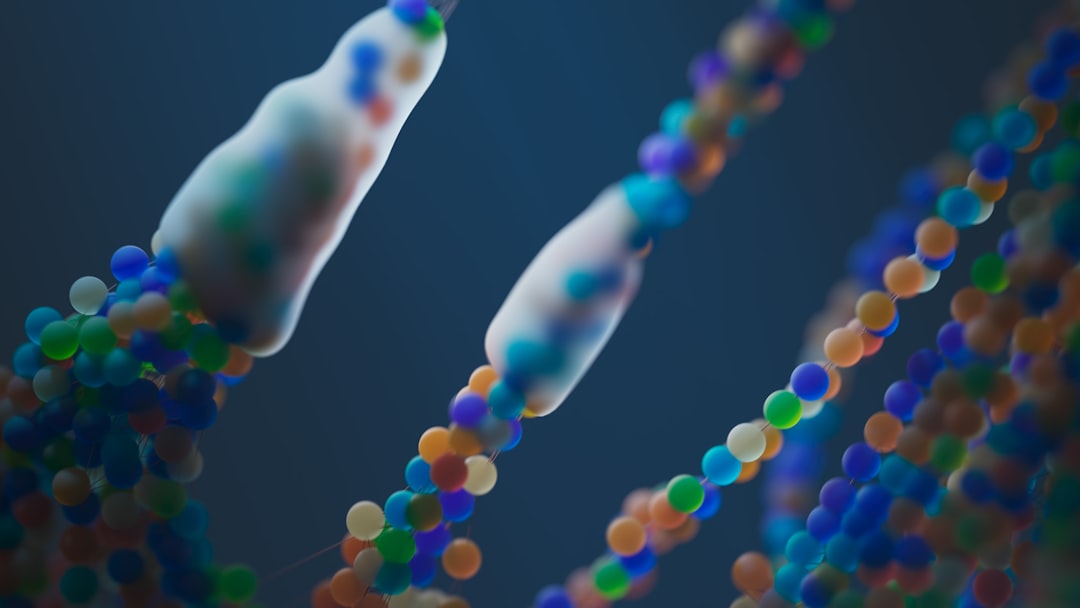
The universe, at its most fundamental level, operates according to the peculiar and often counter-intuitive rules of quantum mechanics. For decades, these principles were confined to the realm of subatomic particles and the vastness of stars. However, a groundbreaking field, quantum biology, is now illuminating how these quantum phenomena might be playing a crucial, albeit subtle, role in the very fabric of life. From the vibrant hues of a butterfly’s wing to the miraculous efficiency of photosynthesis, scientists are beginning to unravel a hidden quantum symphony orchestrating biological processes. This burgeoning discipline challenges our classical understanding of life, suggesting that the quantum world is not merely an abstract theoretical playground, but an essential partner in the intricate dance of existence.
The traditional view of biological processes has largely been framed by classical physics. Chemical reactions are often described as a series of discrete steps, governed by probabilities and energy landscapes. Molecules collide, bonds break and form, and energy is transferred. While this macroscopic perspective has been incredibly successful in explaining a vast array of biological phenomena, it begins to falter when scrutinizing the incredible efficiency and speed observed in certain natural processes. This is where quantum mechanics steps in, offering a potential explanation for these biological marvels. The concept of “quantum biology” posits that phenomena like superposition, entanglement, and quantum tunneling, which are fundamentally quantum in nature, are not just confined to the sterile environment of a physics lab but are actively influencing and driving key biological functions. This paradigm shift promises to revolutionize our understanding of life’s origins, evolution, and even the mechanisms of disease.
Challenging the Classical Paradigm
For centuries, biology has relied on the deterministic laws of classical mechanics and chemistry. Molecules were seen as miniature billiard balls, interacting in predictable ways. Energy was understood as discrete packets, but the intricate choreography of biological systems often defied simple explanations based solely on these principles. For instance, how enzymes, the biological catalysts that speed up reactions, achieve such remarkable efficiency seemed unusually high, hinting at something beyond classical diffusion and reaction rates. Similarly, the precise energy transfer in photosynthetic systems, where light energy is converted into chemical energy with near-perfect efficiency, has long been a puzzle. Classical models struggled to account for such exquisite control and minimal energy loss. Quantum mechanics, with its probabilistic nature and concepts like wave-particle duality, offered a new lens through which these biological enigmas could be re-examined.
The Emergence of a New Field
Quantum biology is not a sudden offshoot; it’s a convergence of ideas and experimental advancements from physics, chemistry, and biology. Early hints emerged from studies of photosynthesis and enzyme action, where quantum effects were suspected but difficult to prove. The development of sophisticated spectroscopic techniques and theoretical modeling tools has been instrumental in the maturation of this field. These tools allow researchers to probe molecular dynamics at incredibly short timescales and with high precision, providing the evidence needed to connect quantum phenomena with biological outcomes. Today, quantum biology is a vibrant and rapidly expanding area of research, attracting scientists from diverse backgrounds eager to explore this thrilling frontier.
Quantum biology is an intriguing field that explores the intersection of quantum mechanics and biological processes. For a deeper understanding of this fascinating topic, you can read a related article that delves into the principles and implications of quantum effects in living organisms. To learn more, visit this article which provides insights into how quantum phenomena may influence everything from photosynthesis to avian navigation.
Photosynthesis: A Quantum Maestro at Work
Photosynthesis, the fundamental process by which plants and some microorganisms convert light energy into chemical energy, has been one of the most fertile grounds for quantum biology research. The efficiency of light harvesting and energy transfer in photosynthetic complexes is astonishing, far surpassing what classical models predict. It is here that quantum phenomena appear to provide a compelling explanation for this biological marvel.
Superposition’s Role in Light Harvesting
In photosynthetic systems, light energy is captured by pigment molecules arranged in antenna complexes. This energy then needs to be transferred to a reaction center where it can be converted into chemical energy. Classical physics suggests that this transfer would be a somewhat random process, with energy hopping from one molecule to another. However, research indicates that quantum superposition plays a crucial role. Instead of being localized on a single pigment molecule, the energy, in a sense, exists in a superposition of states across multiple molecules simultaneously. This delocalized state allows the energy to explore different pathways through the antenna complex, efficiently finding the most direct route to the reaction center, minimizing energy loss and maximizing efficiency.
The “Quantum Wanderer” Analogy
To understand this better, imagine a lost hiker trying to find the fastest way out of a forest. A classical approach would be to try every path one by one. A quantum approach, however, would be akin to the hiker being able to be in multiple places at once, “sampling” different paths simultaneously. This “quantum wanderer” can quickly identify the shortest and most efficient route, much like the energy in photosynthetic complexes. This ability to explore multiple pathways concurrently is a hallmark of quantum mechanics and appears to be essential for the remarkable efficiency of photosynthesis.
Coherence and the Quantum Compass
Another critical quantum phenomenon observed in photosynthesis is quantum coherence. Coherence refers to the ability of quantum waves to maintain their phase relationships. In the photosynthetic antenna complex, this coherence allows the excited state to spread coherently across the network of pigment molecules. This coherent wavepacket can “walk” through the complex, guided by its own wave-like properties, ensuring it reaches the reaction center with minimal dissipation. This is not just a random diffusion; it’s a directed and efficient transfer facilitated by the synchronized behavior of the quantum state.
Enzyme Action: Quantum Tunneling’s Efficiency Boost
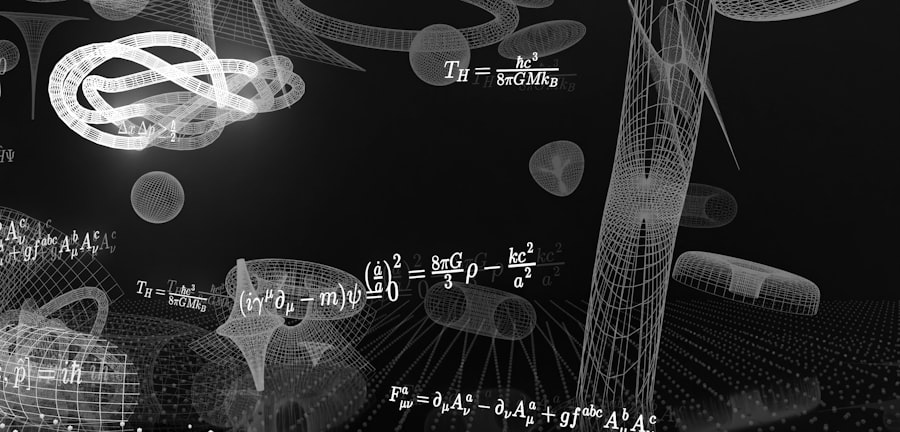
Enzymes are biological catalysts that dramatically accelerate chemical reactions, making life as we know it possible. Their speed and specificity have long been an area of intense study. While classical models explain much of their action through lock-and-key mechanisms and activation energy barriers, the astonishing rates observed in some enzymatic reactions have led scientists to consider the role of quantum tunneling.
Crossing Energy Barriers via Tunneling
Chemical reactions often involve overcoming an energy barrier. Classically, a molecule needs sufficient kinetic energy to surmount this barrier. However, quantum mechanics allows for the possibility of “tunneling” through such barriers. This means that a particle can effectively pass through a region of higher potential energy, even if it doesn’t have enough energy to classically surmount it. In the context of enzyme catalysis, it is proposed that quantum tunneling allows for the rapid transfer of protons or electrons across these energy barriers within the enzyme’s active site, significantly speeding up the reaction.
The Proton Tunneling Hypothesis
One of the most well-studied examples is proton tunneling in enzymes like alcohol dehydrogenase. Protons are fundamental to many biological reactions, and their movement within enzymes can be a rate-limiting step. Quantum tunneling provides a mechanism for protons to “hop” across the energy barrier much faster than classical diffusion would allow. This quantum leap can explain the exceptionally high catalytic rates observed in these enzymes, rates that would be unachievable through classical means alone.
Entanglement’s Potential Role in Catalysis
Recent theoretical work also suggests that entanglement, another fundamental quantum phenomenon, might play a role in enzyme catalysis. Entanglement links the fates of two or more particles in such a way that they share a common destiny, regardless of the distance separating them. In enzymatic reactions, this could manifest as the coordinated motion of atoms within the enzyme’s active site, creating a more favorable environment for the reaction to occur. The precise mechanisms are still under intense investigation, but the implications are profound, suggesting a level of molecular coordination far beyond what classical chemistry can describe.
Biological Navigation: Quantum Sensors and Magnetic Fields

The ability of certain organisms to navigate with remarkable precision, such as migratory birds or sea turtles, has long fascinated scientists. While external cues like sunlight and Earth’s magnetic field are known to play a role, the precise sensory mechanisms remain somewhat elusive. Quantum biology is now offering intriguing explanations, particularly through the concept of radical-pair mechanisms potentially linked to magnetic field sensing.
The Radical-Pair Mechanism in Avian Navigation
Bird migration is a marvel of biological navigation. It is hypothesized that birds possess a quantum compass that allows them to sense the Earth’s magnetic field. The leading theory involves the formation of radical pairs within specialized photoreceptor molecules in the bird’s eye. When light strikes these molecules, it can generate a pair of molecules with unpaired electrons – a radical pair. The spin state of these unpaired electrons is very sensitive to magnetic fields. According to quantum mechanics, the spin evolution of these radical pairs is influenced by the external magnetic field, affecting the chemical products of their reactions. This subtle change, amplified by thousands of such reactions, could provide birds with directional information.
Spin Chemistry and Quantum Effects
The key here is the quantum mechanical behavior of electron spins. The spins of the unpaired electrons in a radical pair can exist in different entangled states. The Earth’s magnetic field can influence the transition rates between these states. This spin chemistry, governed by quantum rules, is thought to be the basis of the bird’s magnetic sense. The coherence of these spin states can be maintained for long enough to be influenced by the relatively weak magnetic field of the Earth, a feat that would be incredibly difficult to achieve in a classical system.
Other Potential Quantum Senses
Beyond magnetic field sensing, researchers are exploring quantum phenomena in other sensory modalities. The exquisite sensitivity of the human nose to certain odors, for instance, could potentially involve quantum vibrations, as proposed by the “vibrational theory of olfaction.” While still a subject of debate, it highlights the growing recognition that quantum principles might extend beyond electron spin and energy transfer into fundamental aspects of sensory perception.
Quantum biology is an intriguing field that explores the intersection of quantum mechanics and biological processes, shedding light on phenomena such as photosynthesis and enzyme reactions. For those interested in a deeper understanding of this fascinating subject, you can check out a related article that delves into the principles and implications of quantum effects in living organisms. This article provides valuable insights into how quantum mechanics might influence life at the molecular level. To learn more, visit this resource for an engaging exploration of the topic.
Quantum Effects in Photosynthetic Microorganisms and Beyond
| Topic | Explanation |
|---|---|
| Quantum Biology | The study of quantum phenomena in biological systems, such as photosynthesis and bird navigation. |
| Photosynthesis | Process by which green plants and some other organisms use sunlight to synthesize foods with the help of quantum coherence. |
| Bird Navigation | Ability of birds to navigate using quantum entanglement and magnetic fields. |
While photosynthesis in plants is a well-studied example, quantum phenomena are also being investigated in other photosynthetic organisms, suggesting their ubiquitous nature in life’s energy conversion processes. The scope of quantum biology is also expanding to encompass other biological phenomena, hinting at a deeper quantum imprint across the tree of life.
Quantum Efficiency in Algae and Bacteria
Similar to higher plants, photosynthetic algae and bacteria also exhibit highly efficient light harvesting and energy transfer. Studies on these microorganisms are revealing comparable quantum effects, such as coherent energy transfer and the influence of quantum coherence on exciton dynamics. This suggests that the quantum mechanisms exploited in photosynthesis are ancient and have been conserved throughout evolution, underscoring their fundamental importance.
Implications for Artificial Photosynthesis
The insights gained from studying natural photosynthesis are not merely of academic interest. They hold immense potential for developing artificial photosynthetic systems. By mimicking the quantum-mechanical tricks employed by nature, scientists hope to create more efficient solar cells and sustainable energy technologies. Understanding these quantum processes is crucial for designing optimized artificial light-harvesting systems.
The Quantum Mind Hypothesis and Consciousness
Perhaps the most speculative, yet captivating, frontier of quantum biology is its potential connection to consciousness. The “quantum mind” hypothesis, though still highly controversial and lacking definitive experimental proof, suggests that quantum phenomena like superposition and entanglement might be involved in the complex computations of the brain that give rise to consciousness. While this remains a theoretical concept, it pushes the boundaries of our understanding of life and the universe.
Decoding Neural Processes with Quantum Mechanics
The immense complexity of neural networks and the enigmatic nature of consciousness have led some researchers to explore whether classical neuroscience alone can fully explain these phenomena. Quantum mechanics, with its ability to describe indeterminate states and non-local correlations, offers a framework that some believe could potentially account for aspects of brain function that are difficult to explain classically. However, the biological environment, with its relatively warm and “noisy” conditions, presents significant challenges for maintaining the fragile quantum states required for such processes.
Future Directions and the Interdisciplinary Challenge
The field of quantum biology is still in its nascent stages, brimming with unanswered questions and exciting avenues for exploration. The interdisciplinary nature of this field is its greatest strength, but also presents significant challenges. Bridging the gap between the rigorous language of quantum physics and the complex, multi-scale reality of biology requires new experimental techniques, theoretical frameworks, and a willingness to embrace unconventional thinking.
Advancing Experimental Techniques
The next wave of progress in quantum biology will undoubtedly depend on the development of even more sophisticated experimental tools. Techniques such as ultrafast spectroscopy, single-molecule spectroscopy, and advanced magnetic resonance imaging are crucial for probing quantum effects in biological systems with unprecedented precision. Observing quantum phenomena in vivo, within the dynamic and complex environment of living cells, remains a significant technical hurdle.
The Quest for Coherence in Biological Systems
A major focus of future research will be the continued investigation into the role and robustness of quantum coherence in biological systems. Understanding how life manages to maintain these delicate quantum states in the face of thermal fluctuations and decoherence is essential. This could involve identifying specific molecular structures or environmental conditions that protect and facilitate quantum effects.
Theoretical Modeling and Computational Power
Alongside experimental advancements, theoretical modeling and computational power will be critical in understanding the complex quantum dynamics at play in biological processes. Developing accurate quantum mechanical models for biological molecules and their interactions, and being able to simulate these systems, will unlock deeper insights into how quantum mechanics influences life.
Bridging the Divide
The ultimate success of quantum biology hinges on seamless collaboration between physicists, chemists, and biologists. Physicists bring the understanding of quantum phenomena, chemists provide insights into molecular interactions, and biologists can identify and interpret the biological relevance of these quantum effects. This interdisciplinary synergy is paramount for translating theoretical possibilities into concrete biological explanations and applications.
Unraveling Life’s Quantum Blueprint
Quantum biology is not just about explaining existing phenomena; it holds the promise of revolutionizing our approach to medicine, bioengineering, and our fundamental understanding of life itself. By unraveling how life has elegantly harnessed the quantum world, we may unlock new ways to diagnose and treat diseases, design more efficient biotechnologies, and perhaps even gain a more profound appreciation for the quantum underpinnings of our own existence. The journey into the quantum heart of biology is just beginning, and its potential to reshape our perception of life is truly extraordinary.

Birds Can Sense Something Humans Never Will
FAQs
What is quantum biology?
Quantum biology is a field of science that explores the role of quantum mechanics in biological processes, such as photosynthesis, enzyme reactions, and bird navigation.
How does quantum biology differ from traditional biology?
Traditional biology focuses on understanding biological processes at the molecular and cellular levels, while quantum biology seeks to understand these processes from a quantum mechanical perspective, taking into account phenomena such as superposition and entanglement.
What are some examples of quantum effects in biological systems?
Some examples of quantum effects in biological systems include the ability of certain birds to navigate using Earth’s magnetic field, the efficiency of photosynthesis in plants, and the role of quantum tunneling in enzyme reactions.
What are the potential implications of quantum biology?
The study of quantum biology has the potential to revolutionize our understanding of biological processes and could lead to the development of new technologies and medical treatments, such as more efficient solar cells and targeted drug delivery systems.
How is quantum biology being researched and studied?
Quantum biology is being studied using a combination of experimental techniques, such as spectroscopy and microscopy, as well as theoretical modeling and computational simulations to understand the quantum aspects of biological systems.