
The annual spectacle of bird migration, a phenomenon that has captivated humans for millennia, remains one of nature’s most profound mysteries. Each year, countless birds embark on epic journeys, traversing vast distances, often between continents, with an unerring sense of direction and purpose. Scientists have long strived to unravel the intricate mechanisms that drive these incredible feats of endurance and navigation. From the tiniest warbler to the mighty goose, their migratory patterns are a testament to evolution’s ingenuity, a complex interplay of instinct, genetics, and environmental cues. Understanding how, when, and why birds migrate is not just an academic pursuit; it holds vital implications for conservation efforts, understanding ecological processes, and even inspires technological advancements in human navigation. This article delves into the multifaceted world of bird migration, exploring the latest research and shedding light on the enduring marvels of these seasoned travelers.
The fundamental question of why birds migrate is rooted in the fundamental principles of survival and reproduction. The seasonal fluctuations in food availability and the need to find optimal breeding grounds are the primary evolutionary pressures that have shaped migratory behavior. Birds, like all living organisms, are driven by the imperative to survive and pass on their genes. Migration, for many species, is the most effective strategy to achieve this in the face of environmental challenges.
Resource Scarcity and Seasonal Abundance
The most compelling reason for migration is the seasonal fluctuation of resources critical for survival. In temperate and polar regions, winter brings harsh conditions, characterized by freezing temperatures, reduced insect life, shorter daylight hours, and a scarcity of readily available food sources like fruits and seeds. Birds that cannot adapt to these conditions by finding alternative food or by enduring the cold are compelled to move to more hospitable regions where food is abundant.
The Search for Insects and Larvae
Many insectivorous birds, for instance, rely heavily on the abundant insect populations that emerge during warmer months. As winter approaches, these insects die off or enter dormant stages, rendering them inaccessible. Migrating to warmer climates allows these birds to continue feeding on actively foraging insects, ensuring their survival. The predictable cycle of insect emergence in tropical and subtropical regions provides a reliable food source during the northern hemisphere’s winter.
The Foraging Advantage of Fruits and Seeds
Similarly, frugivorous and granivorous birds also face seasonal challenges. The fruiting and seeding seasons are finite. As these resources dwindle in temperate zones, migrating to regions where these food sources are still available or being replenished offers a crucial survival advantage. The lush vegetation and extended growing seasons in tropical areas provide a continuous supply of fruits and seeds, supporting migratory bird populations.
Breeding Success and Optimal Nesting Conditions
Beyond immediate survival, migration is intrinsically linked to maximizing reproductive success. Birds often migrate to specific breeding grounds that offer the optimal conditions for raising young. These conditions are not solely about food availability but also encompass factors like reduced predation pressure and suitable nesting habitats.
The “Bet-Hedging” Strategy for Reproduction
Migrating to northern latitudes during the summer months is a classic example of this breeding advantage. While winters are harsh, summers in these regions are characterized by long daylight hours, allowing parent birds more time to forage and feed their young. Furthermore, the sheer abundance of insects, particularly during the spring and summer, provides a rich buffet for growing chicks. Crucially, many predators that prey on eggs and nestlings are also migratory or have reduced populations during these periods, offering a relative sanctuary for nesting birds. This “bet-hedging” strategy allows birds to capitalize on favorable breeding conditions while avoiding the harshness of winter.
Avoiding Predation and Disease
Different environments present varying levels of predation and disease risk. By migrating, birds can escape areas with high predator densities or prevalent pathogens during vulnerable life stages like breeding. Conversely, they might also migrate to areas that are less challenging from a disease perspective. The constant movement inherent in migration can also help break disease cycles within bird populations.
Bird migration is a fascinating phenomenon that showcases the incredible endurance and navigational skills of various species. For a deeper understanding of the factors influencing bird migration patterns, you can explore a related article that delves into the science behind this natural event. To learn more, visit this article on Freaky Science, where you will find insights into the environmental cues that trigger migration and the challenges birds face during their journeys.
The How: Navigational Marvels and Internal Compasses
The ability of birds to navigate across vast, often featureless landscapes, and to find their way back to the same locations year after year, is arguably the most awe-inspiring aspect of migration. Scientists have identified a remarkable suite of sensory tools and internal mechanisms that enable these extraordinary feats of navigation.
Magnetic Sense: The Earth’s Invisible Compass
One of the most scientifically supported and fascinating navigational tools is the bird’s magnetic sense, often referred to as magnetoreception. Birds possess an internal compass that allows them to perceive and utilize the Earth’s magnetic field for orientation.
The Radical Pair Mechanism
Research suggests that the magnetic sense might operate through a quantum phenomenon called the “radical pair mechanism.” This involves light-sensitive molecules in the bird’s eyes, specifically cryptochromes. When photons of light interact with these molecules, they form radical pairs, whose chemical reactions are influenced by the direction of the magnetic field. This subtle interaction is believed to translate into visual cues that the bird can interpret to orient itself.
Magnetite-Based Receptors
Another proposed mechanism involves magnetite, a naturally magnetic iron oxide. Tiny crystals of magnetite have been found in the beaks and other tissues of birds. These crystals could act as tiny compass needles, providing directional information to the bird’s brain through mechanoreceptors. While the exact interplay of these mechanisms is still under investigation, the role of the Earth’s magnetic field as a primary navigational cue is well-established.
Celestial Navigation: Stars and Sun as Guides
In addition to the magnetic field, birds also utilize celestial cues for navigation. Both the sun and the stars play crucial roles in their migratory journeys.
The Sun Compass
During daylight hours, birds can use the position of the sun in the sky to orient themselves. This is not as simple as following a direct line; birds have an internal biological clock that compensates for the sun’s movement across the sky throughout the day. This allows them to maintain a consistent direction of travel, even as the sun changes its position.
The Star Compass
For nocturnal migrants, the stars provide a vital navigational aid. Experiments have shown that birds can learn to orient themselves by the patterns of stars in the night sky. They appear to focus on the constellations around the North Star (Polaris), which remains relatively stationary in the northern hemisphere. This allows them to maintain a consistent direction throughout their night flights.
Olfactory Navigation: Smelling the Way Home
While less extensively studied than magnetic and celestial cues, smell also plays a significant role in bird navigation, particularly for homing pigeons and some longer-distance migrants.
Scent Landmarks
Birds can learn to recognize and follow scent gradients. They may deposit scent during their travels, creating a “scent map” that they can revisit. This is particularly useful for navigating back to their specific breeding or wintering grounds, where familiar smells are present.
Atmospheric Odors
It is also theorized that birds can detect and interpret atmospheric odors carried on prevailing winds. These odors can act as large-scale “scent corridors,” guiding them along general migratory routes or towards specific destinations.
The When: Timing the Epic Journeys
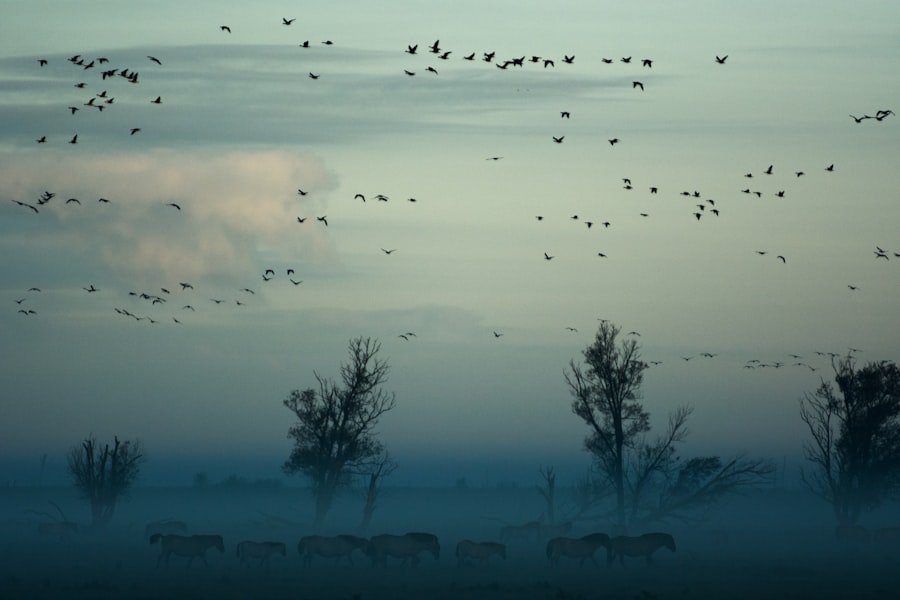
The decision of when to embark on these arduous migratory journeys is a complex one, influenced by a delicate interplay of internal biological rhythms and external environmental cues. Birds do not simply wake up one day and decide to fly south; their migration is meticulously timed.
Photoperiod: The Unwavering Signal of Shorter Days
The most significant and consistent cue that triggers migratory behavior is the change in day length, known as photoperiod. As days begin to shorten in the autumn, birds, especially those in temperate regions, experience hormonal changes that prepare them for migration.
Hormonal Cascades and Physiological Changes
The reduction in daylight hours stimulates the pineal gland, which in turn influences the production of hormones like melatonin. These hormonal cascades lead to several physiological changes. Birds experience increased appetite, leading to the accumulation of fat reserves, which are essential fuel for their flights. Their migratory restlessness, known as “zugunruhe,” often intensifies during this period. Feather replacement and molting also typically occur before or after the migratory period, ensuring that their flight feathers are in optimal condition.
Environmental Triggers: Weather and Food Availability
While photoperiod is the primary trigger, other environmental factors act as secondary cues, fine-tuning the timing of migration. These can include temperature, wind patterns, and the availability of food.
Temperature Gradients and Food Abundance
Birds often wait for favorable weather conditions before departing. Strong tailwinds can significantly reduce the energy expenditure of their journey, while headwinds can be detrimental. Similarly, a sudden decline in local food sources can accelerate departure. Conversely, an unseasonably warm spell in autumn might lead to a slight delay in migration for some species, allowing them to capitalize on lingering food resources.
El Niño and Other Large-Scale Weather Patterns
Larger-scale weather phenomena, like El Niño, can also have a profound impact on migration timing and success. These events can alter wind patterns, ocean currents, and rainfall, affecting food availability and breeding success along migratory routes. Birds that are highly attuned to these environmental cues may adjust their migration schedules accordingly.
The What: The Mysteries of Migratory Routes and Navigation Accuracy

The precision with which birds navigate their vast migratory routes is astounding. They arrive at specific destinations with remarkable accuracy, often returning to the exact same breeding sites or wintering grounds year after year. This raises questions about the level of detail in their “maps” and how they manage to overcome obstacles and correct deviations.
Innate Programming vs. Learned Behavior
The extent to which migratory behavior and navigation are innate versus learned is a subject of ongoing research. It is likely a complex interplay of both.
Genetic Predisposition and Instinct
For many young birds migrating for the first time, their journey is largely driven by an innate, genetically programmed instinct. They have an inherent direction and a general idea of how far to travel. This instinct allows them to initiate and undertake the initial stages of their migration successfully, even without prior experience.
Social Learning and Experienced Individuals
However, social learning also plays a crucial role, especially in species that migrate in flocks. Younger, less experienced birds often follow older, more experienced individuals who have previously navigated the routes. This allows them to learn about optimal stopover sites, foraging locations, and potential hazards along the way. The collective knowledge of the flock can provide a significant advantage.
Navigational Accuracy and Route Fidelity
The accuracy of bird migration often reaches astonishing levels. Many birds exhibit a high degree of “route fidelity,” meaning they follow very similar paths year after year. This suggests a sophisticated understanding of their environment and the development of detailed internal maps.
Visual Landmarks and Topographical Features
While magnetic and celestial cues provide overarching directional guidance, birds likely supplement this with visual landmarks and topographical features. Mountain ranges, coastlines, rivers, and even human-made structures can serve as important reference points, particularly when navigating closer to their destinations.
The Role of Memory and Experience
As birds gain more migratory experience, their navigational abilities likely become more refined. They develop memories of successful routes, stopover sites, and favorable conditions. This experiential learning allows them to make more informed decisions during their journeys, adapting to changing conditions and correcting for potential deviations.
Bird migration is a fascinating phenomenon that showcases the incredible adaptability and resilience of avian species. Many birds travel thousands of miles each year, navigating through various terrains and weather conditions to reach their breeding grounds. For those interested in learning more about the science behind this remarkable journey, a related article can be found here, which delves into the various factors that influence migration patterns and the challenges birds face along the way. Understanding these dynamics not only enriches our appreciation for these creatures but also highlights the importance of conservation efforts to protect their habitats.
Conservation and the Future of Migration
| Aspect | Details |
|---|---|
| Definition | Bird migration is the regular seasonal movement of birds from one place to another. |
| Reasons | Birds migrate to find better food sources, suitable breeding grounds, or to escape harsh weather conditions. |
| Types | There are two main types of bird migration: north-south migration and altitude migration. |
| Navigation | Birds use various cues for navigation including the sun, stars, Earth’s magnetic field, and landmarks. |
| Challenges | Migrating birds face challenges such as predation, exhaustion, and habitat loss. |
Understanding bird migration is not merely an academic pursuit; it has profound implications for the conservation of these species and their habitats. As human activities increasingly impact the environment, the challenges faced by migratory birds are escalating.
Habitat Fragmentation and Loss
Perhaps the most significant threat to migratory birds is the loss and fragmentation of critical habitats along their routes. Breeding grounds, stopover sites, and wintering areas are all essential for their survival.
The Importance of Stopover Sites
Stopover sites are crucial refueling stations where birds can rest and replenish their energy reserves during their long journeys. The degradation or elimination of these sites due to agricultural development, urbanization, or pollution can have devastating consequences, leading to starvation and increased mortality.
Protecting Migratory Corridors
Conserving “migratory corridors” – the broad pathways that birds use to travel between their breeding and wintering grounds – is vital. This requires international cooperation to protect a network of habitats across different countries and continents.
Climate Change Impacts
Climate change presents a myriad of challenges for migratory birds. Shifting weather patterns, altered food availability, and changes in habitat can disrupt their well-established migratory cycles.
Mismatches in Timing
One critical concern is the potential for a “phenological mismatch.” If birds arrive at their breeding grounds before their insect prey has emerged, or if their food sources bloom earlier than usual due to warming temperatures, they may struggle to feed themselves and their young, leading to reduced breeding success.
Shifting Ranges and Habitats
As temperatures rise, suitable habitats may shift poleward or to higher altitudes. Migratory birds may need to adjust their routes and destinations, but they may not always be able to do so effectively, especially if their traditional migratory corridors are blocked by human development.
Citizen Science and Future Research
The ongoing study of bird migration benefits immensely from the contributions of citizen scientists. Birdwatchers, through initiatives like banding, bird counts, and the reporting of observations, provide invaluable data that helps researchers track population trends, identify critical habitats, and monitor changes over time.
Advancements in Tracking Technologies
Technological advancements, such as lightweight GPS trackers, geolocators, and automated radio telemetry, are revolutionizing our understanding of migration. These technologies allow scientists to follow individual birds throughout their journeys, providing unprecedented insights into their routes, stopover behavior, and the challenges they face.
The Ongoing Quest for Knowledge
The mystery of bird migration continues to draw us in. Each answered question opens up new avenues for exploration. The ongoing quest to unlock the secrets of these incredible journeys underscores the importance of conservation and our commitment to preserving the natural world’s most extraordinary phenomena for generations to come. Understanding the ‘why,’ the ‘how,’ and the ‘when’ of bird migration is not just about observing nature; it’s about safeguarding the intricate web of life of which we are all a part.

Birds Can Sense Something Humans Never Will
FAQs
What is bird migration?
Bird migration is the regular seasonal movement of birds from one place to another. This movement is usually driven by changes in food availability, habitat, or weather conditions.
Why do birds migrate?
Birds migrate for various reasons, including finding better feeding grounds, breeding grounds, or escaping harsh weather conditions. Some birds migrate to take advantage of longer daylight hours in the summer for breeding, while others migrate to avoid extreme cold in the winter.
How do birds navigate during migration?
Birds use a variety of cues to navigate during migration, including the sun, stars, Earth’s magnetic field, and landmarks. Some birds also have the ability to detect polarized light patterns to orient themselves.
What are the different types of bird migration?
There are two main types of bird migration: complete migration, where birds travel to a different region for the entire year, and partial migration, where only a portion of the population migrates while others remain in their breeding or wintering grounds.
Which birds are known for long-distance migration?
Some bird species are known for their impressive long-distance migrations, including the Arctic Tern, which migrates from the Arctic to the Antarctic and back each year, covering a distance of over 44,000 miles. Other notable long-distance migrants include the Bar-tailed Godwit, the Ruby-throated Hummingbird, and the Swainson’s Thrush.