
You’ve always felt it, haven’t you? That tug, that inexorable flow, that constant companion that shapes every memory, every anticipation, every single breath you take. Time. It’s the canvas on which your life is painted, the rhythm to your heartbeats, and yet, it remains the most profound enigma you will ever encounter. You can measure it, mark it, even race against it, but truly understanding it? That’s a journey into the very fabric of reality, a quest to unravel the biggest mystery that whispers in the silence and roars in the face of existence.
You experience time as a unidirectional river, flowing from a past you remember to a future you anticipate. The sunlight warms your face in the present, a memory of yesterday’s chill fades, and the prospect of tomorrow’s sunrise fuels your actions. But have you ever stopped to consider why this is? Every other fundamental force in the universe, when stripped down to its core equations, appears to be perfectly reversible. A collision between two particles can, in theory, run backward, and the outcome would be just as valid. Yet, you’ve never seen an egg unscramble itself onto the counter, nor a shattered vase spontaneously reassemble.
Entropy: The Cosmic Messiness Factor
The most compelling, yet still incomplete, explanation lies in the concept of entropy. You’ve likely encountered this term in science class, usually associated with disorder. Imagine your room. Left to its own devices, it rarely tidies itself. Papers scatter, clothes pile up, and dust accumulates. This tendency towards increasing disorder is a manifestation of entropy. In the universe, entropy is always increasing. This is the fundamental law of thermodynamics that seems to dictate the direction of time.
The Universe as a Giant, Ever-Messier Room
Think of the universe as an unimaginably vast room. At the moment of the Big Bang, the universe was in a state of incredibly low entropy – a highly ordered, concentrated point of energy. As the universe expanded and evolved, this energy spread out, matter formed, stars ignited, and complexity arose, all processes that, on a grand scale, led to an increase in entropy. Heat dissipates, structures decay, and the ordered energy of the early universe is gradually transforming into a diffuse, less organized state.
Why Disorder Dictates Direction
The reason this increasing disorder is so intimately tied to the forward march of time is that the universe has an overwhelmingly higher probability of being in a disordered state than an ordered one. For an egg to spontaneously reassemble, all its constituent molecules would need to arrange themselves in a precise sequence, defying the statistical likelihood. The same applies to the universe. The vast majority of possible states for a system are disordered. Therefore, as systems evolve, they are statistically much more likely to move towards these disordered states, giving you that undeniable sense of forward progression.
Memory and Perception: Our Internal Clock
But is it just about the physics of the universe? You also perceive time flowing forward. Your brain is designed to construct a narrative, a sequence of events. You remember the past, experience the present, and imagine the future. This internal machinery plays a crucial role in your experience of temporal direction.
The Brain as a Time-Machine, But Only for the Past
Your brain stores information in a way that’s inherently sequential. Memories are laid down layer by layer, forming a record of past experiences. When you recall a memory, you are accessing a representation of a state that has already occurred. There’s no equivalent mechanism for accessing future states. Your imagination can conjure possibilities, but these are not stored, irreversible events.
The Present Moment: A Fleeting, Slippery Thing
The “present” is particularly elusive. It’s not a fixed point but rather a continuous transition between the past and the future. The moment you perceive something, it has already happened. This makes the present the most mysterious part of your temporal experience, a constantly vanishing instant.
One of the biggest mysteries about time is its elusive nature and how it seems to flow differently under various circumstances. This enigma has fascinated scientists and philosophers alike for centuries. For a deeper exploration of this topic, you can read the article that discusses various theories and perspectives on time, including its relationship with space and the concept of time travel. Check it out here: Freaky Science: The Mystery of Time.
The Relativity of Time: Speed, Gravity, and the Warping of Moments
You might think of time as a constant, ticking clock for everyone, everywhere. But Albert Einstein’s groundbreaking theories of relativity shattered this notion. He revealed that time is not absolute; it is relative. Your experience of time is influenced by your motion and by the gravitational forces around you.
Time Dilation Due to Velocity
Imagine you are on a high-speed spaceship, traveling at a significant fraction of the speed of light. According to Einstein’s special theory of relativity, time for you would actually pass slower than time for someone stationary on Earth. This is known as time dilation.
The Faster You Go, The Slower Time Flows
This isn’t just a theoretical construct; it’s been experimentally verified. Atomic clocks flown on high-speed aircraft or even satellites demonstrate this effect. The faster you move through space, the slower you move through time. This might sound like science fiction, but it’s a fundamental aspect of our universe.
Implications for Your Life Choices
While the speeds you encounter in your daily life are far too slow to have a noticeable impact, the principle is profound. If you were to embark on an interstellar journey at near light speed, you could return to Earth having aged only a few years, only to find that decades, or even centuries, have passed for those you left behind. Your future, in a very tangible way, would be different depending on your trajectory through spacetime.
Time Dilation Due to Gravity
Einstein’s general theory of relativity further complicated the picture by introducing the influence of gravity. Massive objects warp the fabric of spacetime, and this warping affects the flow of time.
Gravity as a Time-Bending Force
The more intense the gravitational field, the slower time passes. This means that time passes slightly slower for you on Earth’s surface than it does for someone in orbit, where gravity is weaker. Again, this effect is minuscule in everyday experience, but it’s measurable.
Black Holes: The Ultimate Time Warpers
The most extreme examples of gravitational time dilation occur near black holes. As you approach the event horizon of a black hole, spacetime becomes so distorted that time, from the perspective of an outside observer, appears to slow down to a crawl, eventually seeming to stop entirely at the event horizon itself.
Your GPS Needs Relativity to Work
You use technology that relies on these relativistic principles every day. Your GPS system, for instance, constantly accounts for time dilation effects due to both the speed of the satellites and the weaker gravitational field they experience in orbit. Without these corrections, your GPS would quickly become inaccurate, rendering it useless.
The Quantum Enigma: Time at the Smallest Scales
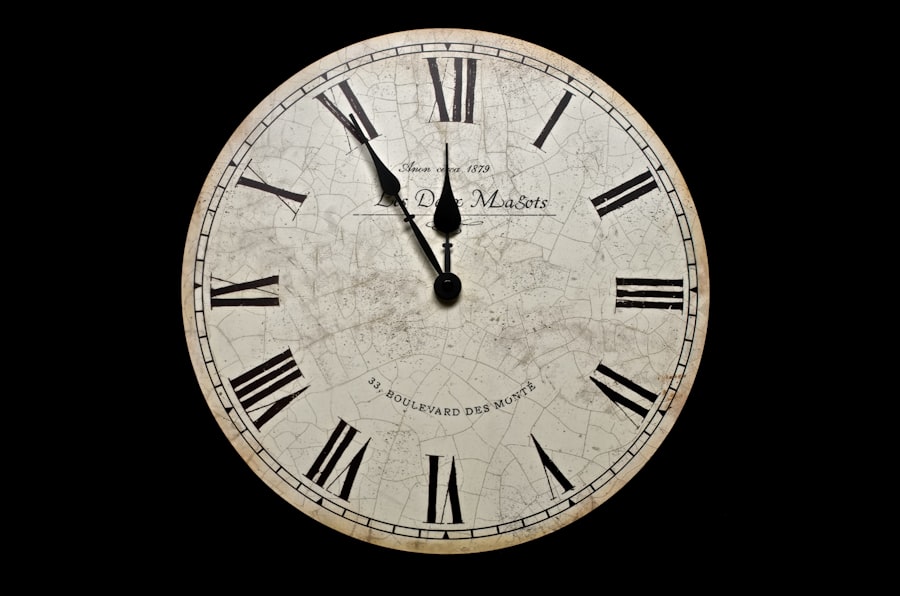
When you delve into the realm of quantum mechanics, the very nature of time becomes even more perplexing. At the subatomic level, the orderly progression you experience seems to break down, replaced by probabilities and uncertainties.
Time as a Fundamental Quantity or an Emergent Property?
One of the biggest questions in quantum physics is whether time is a fundamental, intrinsic property of the universe, like a cosmic conveyor belt, or if it’s an emergent property that arises from the interactions of more fundamental entities.
The Problem of Time in Quantum Gravity
The struggle to reconcile quantum mechanics with general relativity, known as the problem of quantum gravity, is a major hurdle. In general relativity, time is part of the dynamic fabric of spacetime. In quantum mechanics, time is often treated as an external parameter, a stage on which quantum events unfold. This fundamental difference makes it incredibly difficult to formulate a unified theory.
Does Time Exist in a Timeless Universe?
Some theories suggest that at the most fundamental level, the universe might be timeless. Time, in this view, is something that emerges as complexity increases and as the universe evolves from a simple, ordered state. It’s a mind-bending idea: could the universe have existed, in a sense, without time?
Quantum Entanglement and Non-Locality: Challenging Causality?
Quantum entanglement, the bizarre phenomenon where two particles can become linked in such a way that they instantaneously influence each other, regardless of the distance separating them, raises questions about causality and the local nature of time.
Spooky Action at a Distance
When you entangle two particles, measuring the state of one instantaneously tells you the state of the other. This “spooky action at a distance,” as Einstein famously called it, seems to imply a connection that bypasses the speed of light, and therefore, the conventional flow of time.
Causality Under Scrutiny
Does this phenomenon allow for information to be transmitted backward in time, thereby violating causality? While current understanding suggests that entanglement cannot be used to send information faster than light or backward in time, the implications for our understanding of cause and effect are profound. It forces you to question the very foundations of how events unfold sequentially.
The Fabric of Spacetime: A Unified Reality?

Einstein’s relativity taught you that space and time are not separate entities but are woven together into a single, four-dimensional continuum called spacetime. This unified concept is crucial for understanding many of the mysteries surrounding time.
Spacetime as a Dynamic Entity
Spacetime is not a static backdrop against which events occur. Instead, it is a flexible, dynamic entity that can be bent, stretched, and warped by matter and energy.
Gravity as the Curvature of Spacetime
The force of gravity, as described by general relativity, is not a force in the traditional sense but rather a manifestation of spacetime curvature. Objects with mass create indentations in spacetime, and other objects follow the curves created by these indentations, which we perceive as attraction.
The Warping Affects Time
This curvature, as you’ve learned, also affects the flow of time. Regions of stronger curvature experience slower time. This interconnectedness between space and time is fundamental to understanding temporal phenomena.
Wormholes and Time Travel: Theoretical Possibilities
The concept of spacetime also opens the door to theoretical possibilities like wormholes, hypothetical tunnels through spacetime that could connect distant points or even different points in time.
Traversing the Universe in an Instant
If wormholes exist and are traversable, they could theoretically allow you to travel vast cosmic distances in an instant. Imagine stepping through a gateway and emerging in another galaxy.
The Paradoxes of Time Travel
However, the idea of traveling backward in time is fraught with paradoxes, such as the grandfather paradox. If you could go back in time and prevent your grandfather from meeting your grandmother, you would never be born, thus preventing you from going back in time in the first place. These paradoxes suggest that either backward time travel is impossible, or that there are mechanisms that prevent such causal violations.
Closed Timelike Curves
Some theoretical solutions to Einstein’s equations allow for “closed timelike curves,” which are essentially paths through spacetime that loop back on themselves, potentially enabling time travel. However, these solutions often require exotic matter with negative mass-energy, which has not been observed.
The concept of time has fascinated humanity for centuries, leading to numerous theories and debates about its true nature. One of the biggest mysteries about time is whether it is linear or cyclical, a question that has intrigued philosophers and scientists alike. For those interested in exploring this topic further, a related article can be found at Freaky Science, which delves into the various theories surrounding time and its implications on our understanding of the universe. This exploration not only challenges our perception of reality but also invites us to ponder the very fabric of existence itself.
The Consciousness of Time: Your Subjective Experience
| Biggest Mystery About Time | Description |
|---|---|
| Time Travel | The possibility of traveling backwards or forwards in time is a major mystery that has captivated scientists and science fiction enthusiasts for decades. |
| Arrow of Time | The unidirectional nature of time, known as the “arrow of time,” is a perplexing concept that has yet to be fully understood. |
| Time Dilation | The phenomenon of time passing at different rates in different conditions, as predicted by Einstein’s theory of relativity, remains a puzzling aspect of time. |
| Origin of Time | The question of how time began and whether it has a definitive starting point is a fundamental mystery that continues to baffle scientists and philosophers. |
Beyond the physics and the quantum riddles, there lies the deeply personal and subjective experience of time. Your consciousness is the theater where the play of time unfolds, and your perception shapes its rhythm and meaning.
The Fluidity of Your Personal Timeline
You know instinctively that time can feel like it’s speeding up or slowing down. When you’re engaged in something you enjoy, hours can fly by in what feels like minutes. Conversely, when you’re bored or in pain, minutes can stretch into an eternity.
Memory’s Role in Subjective Time
Your memories play a crucial role in this subjective experience. The more memories you create in a given period, the longer that period often feels in retrospect. This is why childhood summers, filled with novel experiences, seem to stretch on forever in your memory, while busy adulthood years can feel compressed.
Anticipation and Dread: Shaping Your Future Perception
Your anticipation of future events also influences your perception of time. The days leading up to a long-awaited vacation can feel agonizingly slow, while the vacation itself might pass in a blur. Similarly, dread can make the present moment feel stretched and unbearable.
The Mystery of Awareness and the Now
The most profound aspect of your temporal experience is your awareness of the “now.” This present moment is the only reality you directly inhabit, yet it is perpetually slipping into the past.
The Fleeting Nature of the Present
You are constantly being pushed forward, from one present moment to the next, without any ability to grasp or hold onto it. This fleetingness is what makes the present so precious and so elusive.
The Role of Attention and Focus
Your attention and focus can profoundly impact your perception of the present. When you are fully present, fully engaged in what’s happening, time can feel rich and expansive. When your mind is racing, or you are distracted, the present can feel fragmented and disorienting.
The Search for Meaning in a Temporal Existence
Ultimately, your quest to understand time is also a quest to understand yourself and your place in the universe. The finite nature of your time on Earth imbues your experiences with urgency and meaning. It compels you to make choices, to connect with others, and to leave your mark.
The Legacy of Your Temporal Footprint
While the universe itself may strive towards increasing entropy, your individual life is a testament to temporary pockets of order and meaning. Your actions, your relationships, your creations – these are the ripples you leave behind in the vast ocean of time.
Embracing the Mystery
You may never fully unravel the biggest mystery of time. Perhaps that’s the point. The ongoing pursuit of understanding, the awe inspired by the universe’s temporal dance, and the profound awareness of your own transient existence are what give your journey through time its unparalleled significance. You are a being of time, existing within its enigmatic flow, and in that very existence, you are part of the mystery itself. The biggest mystery of time is not just about how it works, but about what it means to you.

Where Does Yesterday Come From?
FAQs
What is the biggest mystery about time?
The biggest mystery about time is the nature of its flow and whether it is truly linear or if it can be manipulated or experienced differently.
How do scientists currently understand the concept of time?
Scientists currently understand time as the fourth dimension, closely linked to space in the fabric of the universe, as described by the theory of relativity.
What are some theories about time that have puzzled scientists and philosophers?
Some theories about time that have puzzled scientists and philosophers include the possibility of time travel, the concept of time dilation, and the nature of the beginning and end of time.
Can time be manipulated or controlled?
While time manipulation and control are common themes in science fiction, there is currently no scientific evidence to suggest that time can be manipulated or controlled in the way it is often portrayed in popular media.
What are some ongoing research efforts to unravel the mysteries of time?
Ongoing research efforts to unravel the mysteries of time include experiments in quantum physics, studies of black holes and the nature of spacetime, and investigations into the origins of the universe.