
You stand at the edge of the unknown, a universe teeming with secrets, and physics is your map. It’s not some dry, dusty textbook; it’s the fundamental language the cosmos speaks, the intricate dance of particles and forces that governs everything you see, touch, and even think. You’ve probably encountered physics in school, perhaps as a daunting array of equations and abstract concepts. This is your invitation to unravel its mysteries, to see it not as a barrier, but as a gateway to understanding the very fabric of reality. Let’s dive in, shall we? Prepare to be amazed.
Your world, and indeed the entire universe, is constructed from an astonishingly small set of fundamental components. You might think of a LEGO brick as the ultimate building block, but in physics, the story goes much deeper.
The Humble Atom: A Miniature Solar System (Sort Of)
For centuries, humanity believed the atom was the indivisible smallest unit of matter. Imagine Ernest Rutherford, back in the early 20th century, bombarding thin gold foil with alpha particles. The results were startling: most particles zipped straight through, but a few bounced off at extreme angles. This led to the revolutionary nuclear model of the atom, where a dense, positively charged nucleus resides at the center, orbited by negatively charged electrons. It’s a catchy analogy, that miniature solar system, and it served us well for a time. You learned about protons, neutrons, and electrons, the fundamental trio making up the elements of the periodic table. But as you delve further, you realize this picture, while useful, is just the first layer of a far more complex reality.
Protons and Neutrons: Not So Elementary After All
Your journey doesn’t stop at the nucleus. You discover that protons and neutrons, those seemingly solid particles, are themselves composed of even smaller entities: quarks. This revelation, born from experiments in particle accelerators, fundamentally shifted our understanding. It’s like discovering that the LEGO brick you thought was solid is actually made of tiny, intricately interlocking pieces.
The Six Flavors of Quarks
There are six different types, or “flavors,” of quarks that we know of: up, down, charm, strange, top, and bottom. Protons, the positively charged particles in the nucleus, are made of two up quarks and one down quark. Neutrons, the neutral particles, are composed of one up quark and two down quarks. This simple combination of quarks is responsible for the amazing diversity of matter you encounter every day. You can’t directly observe a lone quark, though; they are always found bound together within larger particles called hadrons.
Electrons: The Light and Speedy Wanderers
Electrons, on the other hand, are truly fundamental. They are leptons, and as far as we know, they aren’t made of anything smaller. Their tiny mass and negative charge play crucial roles in chemical bonding, the flow of electricity, and the emission of light. You’ve experienced the power of electrons in everything from the light bulb above you to the screens you interact with.
The Quantum Realm: Where Weirdness is the Norm
As you shrink down further into the subatomic world, classical physics, the physics that describes our everyday macroscopic world, starts to break down. You enter the realm of quantum mechanics, a place governed by probabilities, uncertainties, and mind-bending phenomena.
Wave-Particle Duality: The Ultimate Identity Crisis
One of the most profound concepts in quantum mechanics is wave-particle duality. Imagine a tiny electron. Sometimes it behaves like a solid little ball, a particle with a defined position and momentum. Other times, it acts like a wave, spread out and exhibiting interference patterns, just like light waves. This isn’t a matter of “either/or”; it’s a fundamental property of quantum objects. You can’t point to a single electron and say, “That’s a wave” or “That’s a particle.” It’s both, simultaneously, until you measure it, at which point it “chooses” one manifestation. This dual nature is responsible for phenomena like quantum tunneling, where particles can pass through seemingly impenetrable barriers.
The Uncertainty Principle: You Can’t Know Everything
Heisenberg’s Uncertainty Principle is another cornerstone of quantum mechanics. It states that there’s a fundamental limit to how precisely you can know certain pairs of properties of a quantum particle simultaneously. For instance, the more precisely you know a particle’s position, the less precisely you can know its momentum, and vice versa. This isn’t a limitation of our measuring instruments; it’s an intrinsic property of the quantum universe. It implies that the universe isn’t deterministic in the way classical physics suggests. You can’t, in principle, predict the exact future state of a quantum system with perfect accuracy.
If you’re intrigued by the enigmatic phenomena of the universe, you might find the article on physics mysteries explained particularly fascinating. It delves into some of the most perplexing questions in the field, offering insights and theories that challenge our understanding of reality. To explore this captivating topic further, you can read the full article here: Physics Mysteries Explained.
The Grand Architects: Forces That Shape Existence
The universe isn’t just a collection of particles; it’s a dynamic interplay of forces that pull, push, and bind everything together. These fundamental forces are the architects of all structure and motion.
Gravity: The Universal Embrace
You experience gravity every moment. It’s what keeps your feet on the ground, what makes the apple fall from the tree, and what orchestrates the majestic ballet of planets around stars and stars within galaxies. Newton’s law of universal gravitation provided a powerful description, showing that the force of gravity between two objects is proportional to their masses and inversely proportional to the square of the distance between them.
Einstein’s Revolution: Spacetime Curvature
But Einstein, with his theory of General Relativity, offered a more profound understanding. He proposed that gravity isn’t a force in the traditional sense, but rather a consequence of the curvature of spacetime. Imagine placing a heavy ball on a stretched rubber sheet. The sheet dips, creating a curve. If you then roll a smaller marble nearby, it will curve towards the heavier ball, not because of a direct pull, but because it’s following the curvature of the sheet. Similarly, massive objects warp the fabric of spacetime around them, and other objects follow these curves, which we perceive as gravity. This elegantly explains phenomena that Newton’s laws couldn’t, such as the bending of light around massive objects.
Electromagnetism: The Glue of Chemistry and Light
You’re surrounded by the effects of electromagnetism. It’s the force that holds atoms together, drives chemical reactions, and is responsible for electricity and magnetism. Maxwell’s equations, a brilliant synthesis of earlier work, unified electricity and magnetism into a single electromagnetic force.
Electric Charges: The Opposites Attract
You learned that like charges repel and opposite charges attract. This fundamental property is the basis of all electrical phenomena. The flow of these charged particles, electrons, is what constitutes electric current.
Magnetic Fields: The Invisible Influence
Magnetic fields, generated by moving electric charges or the intrinsic magnetic moments of particles, exert forces on other moving charges and magnetic materials. You see their effects in compasses, in electric motors, and in the powerful magnets used in MRI machines. The electromagnetic force is responsible for light itself, which is a ripple in these electromagnetic fields propagating through space.
The Nuclear Forces: Powerhouses Within the Atom
Deep within the nucleus of every atom lie two incredibly powerful forces, operating on minuscule scales but with immense consequences.
The Strong Nuclear Force: Binding the Nucleus Together
The strong nuclear force is the most powerful of the fundamental forces, but it operates only over extremely short distances, within the nucleus of an atom. It’s what overcomes the repulsive electric forces between the positively charged protons, binding them tightly together with neutrons to form a stable nucleus. Without this overwhelming force, atomic nuclei would simply fly apart. This force is mediated by particles called gluons, which “glue” quarks together within protons and neutrons, and also hold protons and neutrons together within the nucleus.
The Weak Nuclear Force: Facilitating Decay and Change
The weak nuclear force is, as its name suggests, weaker than the strong nuclear force and electromagnetism, but it’s crucial for certain types of radioactive decay. It’s responsible for processes like beta decay, where a neutron can transform into a proton, an electron, and an antineutrino. This force is fundamental to stellar fusion, the process that powers stars, and is also involved in the creation of neutrinos.
The Grand Canvas: Relativity and the Cosmos

Your understanding of physics wouldn’t be complete without delving into the revolutionary theories of relativity, which fundamentally altered our perception of space, time, and the universe itself.
Special Relativity: The Speed of Light is King
Albert Einstein’s Special Relativity, published in 1905, was a paradigm shift. It’s built on two key postulates: the laws of physics are the same for all non-accelerating observers, and the speed of light in a vacuum is constant for all observers, regardless of their motion.
Time Dilation: Time Isn’t Absolute
The implications of these postulates are mind-boggling. The most famous is time dilation: time passes more slowly for an object that is moving relative to an observer. Imagine you’re on a spaceship traveling at near the speed of light. You would age slower than your twin who remained on Earth. This isn’t science fiction; it’s a experimentally verified phenomenon. Your experience of time is not universal; it depends on your motion.
Length Contraction: Space Shrinks
Similarly, Special Relativity predicts length contraction. Objects moving at very high speeds appear shorter in the direction of their motion to a stationary observer. This means that as you approach the speed of light, the universe around you appears to compress.
E=mc²: The Ultimate Equation
And then there’s the iconic equation: E=mc². This simple yet profound formula reveals the equivalence of mass and energy. It tells you that mass can be converted into energy and vice versa. This principle is the basis for nuclear power and is also at play in the immense energy output of stars. A tiny amount of mass can be converted into a vast amount of energy because the speed of light squared (c²) is an incredibly large number.
General Relativity: Gravity and the Warped Universe
As we touched upon earlier, General Relativity extends Special Relativity to include gravity. It paints a picture of the universe where massive objects don’t exert a force, but rather warp the very fabric of spacetime.
Black Holes: Cosmic Enigmas
One of the most fascinating predictions of General Relativity is the existence of black holes. When a massive star collapses under its own gravity, it can create a region of spacetime so intensely curved that nothing, not even light, can escape. Black holes are regions of extreme gravitational pull, and studying them allows us to test the limits of our understanding of physics. They are cosmic laboratories for exploring gravity at its most powerful.
Gravitational Waves: Ripples in Spacetime
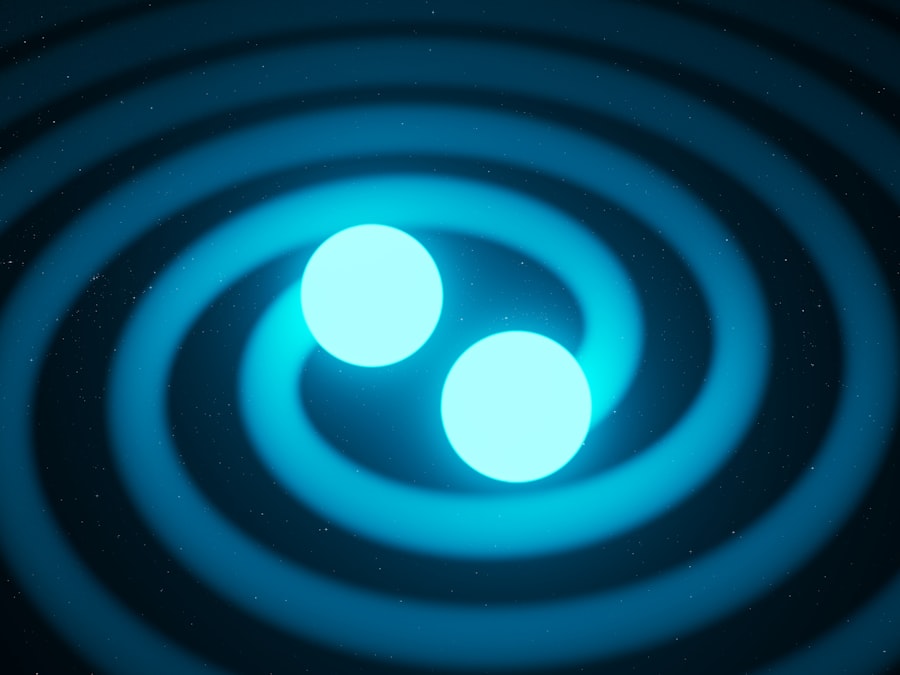
General Relativity also predicts the existence of gravitational waves, ripples in spacetime that propagate outwards from violent cosmic events, such as the collision of black holes. These waves were first directly detected in 2015, confirming Einstein’s predictions and opening up a new way to observe the universe. Imagine dropping a pebble into a pond; the ripples spread outwards. Gravitational waves are similar, but they are ripples in the very fabric of reality.
Quantum Field Theory: A Unified View of Particles and Forces
Bridging the gap between quantum mechanics and special relativity, quantum field theory (QFT) is the reigning framework for understanding fundamental particles and their interactions. It’s the most successful and precise theory in all of science.
Fields, Not Just Particles
In QFT, the fundamental entities are not particles themselves, but rather fields. Imagine the entire universe as being filled with various fields, such as the electron field, the quark field, and the photon field. Particles, like electrons or photons, are then viewed as quantized excitations or “lumps” in these underlying fields. When you see an electron, you’re witnessing a localized excitation in the electron field.
The Bosons: Force Carriers
The fundamental forces are mediated by special particles called bosons. For example, photons are the bosons that carry the electromagnetic force, and gluons are the bosons that carry the strong nuclear force. These force-carrying particles are like messengers, mediating interactions between the matter particles (fermions).
The Standard Model: Our Current Best Picture
The Standard Model of particle physics is our most comprehensive theory of fundamental particles and their interactions, built upon the principles of quantum field theory. It successfully describes all known fundamental particles and three of the four fundamental forces: electromagnetism, the strong nuclear force, and the weak nuclear force.
Fermions: The Matter Particles
The Standard Model classifies matter particles into two groups: quarks and leptons. You’ve already met some of these: up quarks, down quarks, and electrons. There are six types of quarks and six types of leptons, each with corresponding antiparticles.
The Search Beyond the Standard Model
While incredibly successful, the Standard Model isn’t complete. It doesn’t explain gravity, dark matter, or dark energy, which together make up the vast majority of the universe’s mass-energy content. Physicists are actively searching for a “theory of everything” that can unify all fundamental forces and particles.
If you’re fascinated by the enigmatic aspects of the universe, you might find the article on Freaky Science particularly intriguing, as it delves into various physics mysteries that have puzzled scientists for years. From the nature of dark matter to the complexities of quantum entanglement, this resource offers insightful explanations that can enhance your understanding of these captivating topics. Exploring such articles can provide a deeper appreciation for the wonders of physics and the ongoing quest for knowledge in this field.
The Unfolding Frontier: Cosmology and the Mysteries That Remain
| Physics Mysteries Explained | Explanation |
|---|---|
| Dark Matter | Gravitational lensing and galaxy rotation curves suggest the presence of dark matter, which is now thought to be made up of weakly interacting massive particles (WIMPs). |
| Black Holes | Black holes are regions of spacetime where gravity is so strong that nothing, not even light, can escape. They are formed from the remnants of massive stars. |
| Quantum Entanglement | Quantum entanglement is a phenomenon where particles become linked and the state of one particle instantly influences the state of the other, regardless of the distance between them. |
| Big Bang Theory | The Big Bang theory explains the origin and evolution of the universe from its initial singularity to its current state, supported by evidence such as the cosmic microwave background radiation. |
Your exploration of physics inevitably leads you to cosmology, the study of the origin, evolution, and large-scale structure of the universe. This is where the biggest questions and the most exciting frontiers lie.
The Big Bang: The Birth of Everything
The prevailing cosmological model is the Big Bang theory. It posits that the universe began in an extremely hot, dense state about 13.8 billion years ago and has been expanding and cooling ever since. Evidence for the Big Bang includes the cosmic microwave background radiation, the abundance of light elements, and the observed expansion of the universe.
Cosmic Microwave Background Radiation: Echoes of the Beginning
When you look at the sky with a sensitive radio telescope, you can detect a faint, uniform glow of microwave radiation coming from all directions. This is the cosmic microwave background (CMB) radiation, the afterglow of the Big Bang. It’s like finding a fossilized scent from a primordial explosion, providing a snapshot of the universe when it was only about 380,000 years old.
Dark Matter and Dark Energy: The Universe’s Hidden Components
The universe is not what it seems. Observations of galaxy rotation curves and the large-scale structure of the universe suggest the existence of unseen matter, dubbed “dark matter.” It doesn’t interact with light, making it invisible, but its gravitational influence is undeniable. Even more mysterious is “dark energy,” a pervasive force that appears to be driving the accelerated expansion of the universe. Together, dark matter and dark energy constitute about 95% of the universe’s total mass-energy, leaving ordinary matter, the stuff you and I are made of, as a mere 5%. These are some of the most profound unsolved mysteries in physics.
The Quest for Unification: String Theory and Beyond
As you stand at the forefront of physics, you see a vibrant landscape of ongoing research and theoretical exploration. One of the most ambitious attempts to unify all fundamental forces and particles is string theory.
String Theory: Vibrating Strings as Building Blocks
String theory proposes that the fundamental constituents of the universe are not point-like particles, but rather tiny, vibrating strings. Different vibrational modes of these strings give rise to different types of particles and forces. It’s a mathematically elegant framework that, in some formulations, naturally incorporates gravity and quantum mechanics. However, it requires extra spatial dimensions beyond the three you perceive, and experimental verification remains a significant challenge.
The Future of Physics: A Never-Ending Journey
The journey of unraveling the mysteries of physics is far from over. From the unimaginably small to the infinitely large, there are still countless questions to answer, phenomena to explain, and theories to develop. You are an active participant in this grand adventure of discovery. As you continue to learn, to question, and to explore, you’ll find that physics is not just about understanding the universe; it’s about understanding your place within it, and the incredible, intricate tapestry of reality that surrounds you. The mysteries may be vast, but your curiosity is your key. Keep asking “why.”

Where Does Yesterday Come From?
FAQs
What are some of the biggest mysteries in physics?
Some of the biggest mysteries in physics include dark matter and dark energy, the nature of gravity, the behavior of quantum particles, the origin of the universe, and the concept of time.
How are physicists working to solve these mysteries?
Physicists are working to solve these mysteries through experiments conducted at particle accelerators, observatories, and laboratories around the world. They are also developing new theories and mathematical models to better understand the fundamental forces and particles that govern the universe.
What is dark matter and dark energy?
Dark matter is a mysterious form of matter that does not emit or interact with electromagnetic radiation, but exerts gravitational forces on visible matter. Dark energy is a hypothetical form of energy that is thought to be responsible for the accelerating expansion of the universe.
What is the nature of gravity?
The nature of gravity is still not fully understood. While it is described by the theory of general relativity, physicists are still working to reconcile it with the theory of quantum mechanics and understand its behavior at the smallest scales.
How does quantum mechanics challenge our understanding of the universe?
Quantum mechanics challenges our understanding of the universe by introducing concepts such as superposition, entanglement, and wave-particle duality, which defy classical intuition. It also raises questions about the nature of reality and the role of the observer in shaping the behavior of particles.