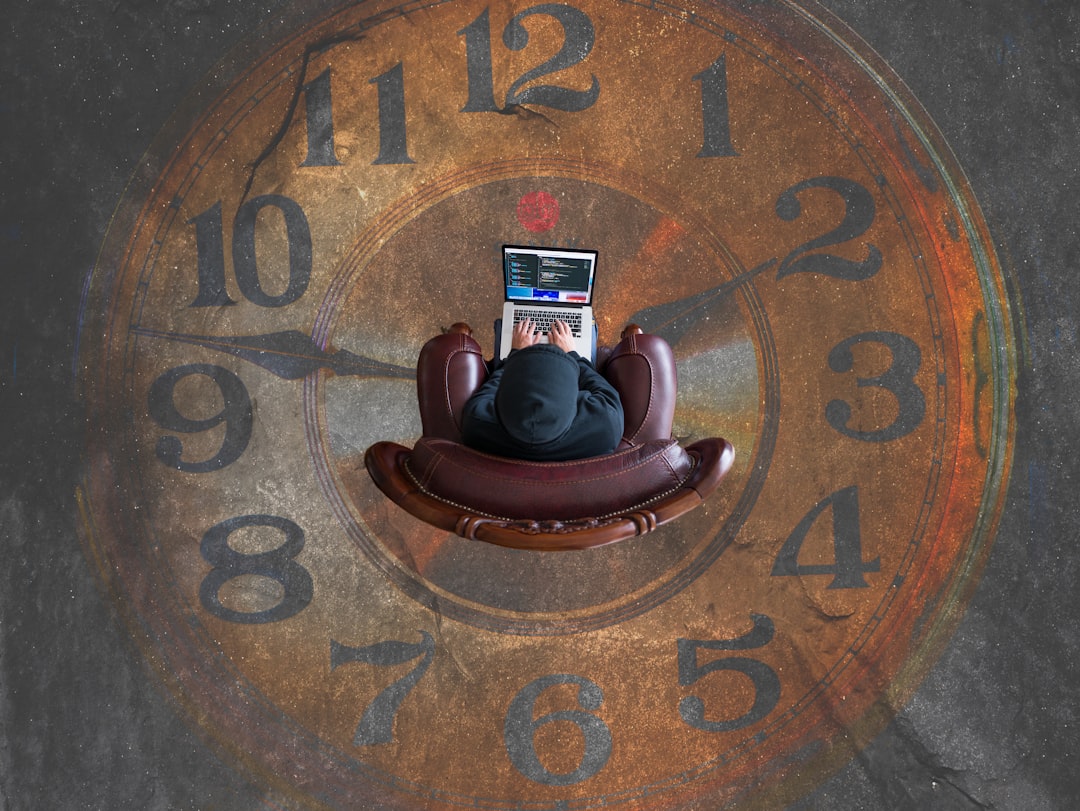
You’ve likely felt it – that ever-present hum of existence, the relentless march of seconds, minutes, hours. Time. It’s the backdrop to our lives, the invisible current carrying us from birth to… well, you know. But have you ever stopped to truly wonder about what time is? Beyond a ticking clock or a calendar page, what is the fundamental nature of this inescapable dimension? Prepare yourself, because we’re about to embark on a captivating journey into the science of time, a realm where philosophy, physics, and a touch of mind-bending wonder collide.
You’ve probably never witnessed a shattered glass spontaneously reassemble itself, have you? Or seen a spilled cup of coffee leap back into its mug? The reason you haven’t is tied to one of the most profound mysteries in physics: the arrow of time. While the fundamental laws of physics, as we understand them at the microscopic level, are largely symmetrical – meaning they work just as well forwards as backwards – the macroscopic world clearly operates with a distinct directionality. This unidirectional flow, from past to future, is what we experience as the arrow of time.
Entropy and the Second Law of Thermodynamics
At the heart of this unidirectional flow lies entropy. You can think of entropy as a measure of disorder or randomness within a system. The Second Law of Thermodynamics, a cornerstone of physics, states that in any closed system, the total entropy can only increase over time, or remain constant in ideal cases. It never decreases. This law provides a powerful explanation for why the universe, at least on a large scale, seems to perpetually move from order to disorder.
Microscopic vs. Macroscopic Behavior
Imagine a perfectly arranged deck of cards. That’s a state of low entropy, high order. Now, shuffle those cards. The arrangement becomes random, disordered – high entropy. While it’s theoretically possible to shuffle the deck and have the cards miraculously return to their original order, the odds are astronomically against it. The universe works in much the same way. Individual particles might flit about randomly, but the collective behavior of trillions upon trillions of particles tends towards increasing disorder.
Implications for Causality and Memory
This increase in entropy is intrinsically linked to causality. Events happen in a specific order: cause precedes effect. If time could reverse, you might witness an effect before its cause, which is nonsensical in our everyday experience. Similarly, our ability to remember the past, and not the future, is a consequence of this arrow. Memory formation is a process that involves increasing complexity and, therefore, entropy within our brains. We can’t “un-remember” something; that would involve reversing an entropic process.
The Big Bang and the Beginning of Time
Where did this arrow originate? Many physicists point to the Big Bang. At the moment of the Big Bang, the universe was in an incredibly low-entropy state – extremely hot, dense, and remarkably ordered. From this state of profound order, the universe has been expanding and evolving, with entropy steadily increasing ever since. This initial low-entropy state of the universe is considered by many to be the ultimate source of time’s arrow.
A Quantum Beginning?
Some theories propose that time itself might have emerged from a quantum state. In the quantum realm, our familiar notions of cause and effect can become blurred. It’s possible that at the very instant of creation, before the established laws of physics as we know them fully solidified, a unique set of conditions led to the establishment of this unidirectional flow of time.
For those interested in a deeper understanding of the intricate nature of time, a related article can be found at Freaky Science. This article delves into various theories and concepts surrounding the science of time, exploring its implications in both physics and philosophy. It provides a fascinating overview that complements the discussions on how time is perceived and measured in our daily lives.
Einstein’s Revolution: Time as a Fabric
For centuries, time was considered a constant, an absolute backdrop against which all events unfolded. Then came Albert Einstein, and with him, a radical reimagining of time. His theories of Special and General Relativity revealed that time isn’t a rigid, unyielding dimension. Instead, it’s a malleable, interconnected part of a grander structure: spacetime.
Special Relativity: Time Dilation
Einstein’s Special Relativity, published in 1905, revolutionized our understanding of motion, space, and time. One of its most mind-bending consequences is time dilation. This phenomenon states that time passes more slowly for an observer who is moving relative to another observer. The faster you move, the slower time ticks for you compared to someone who is stationary.
The Twin Paradox
Perhaps the most famous illustration of time dilation is the Twin Paradox. Imagine identical twins. One twin remains on Earth, while the other embarks on a high-speed space journey. Upon the traveling twin’s return, they will be younger than their Earth-bound sibling, despite having aged the same number of subjective years. This isn’t science fiction; it’s a confirmed consequence of relativity. While the effect is negligible at everyday speeds, it becomes significant as speeds approach the speed of light.
Relativistic Speeds and Everyday Experience
You don’t experience significant time dilation in your daily life. The speeds at which you travel are minuscule compared to the speed of light. However, this effect is crucial for technologies like GPS. Atomic clocks on satellites, moving at high speeds and experiencing weaker gravity (another relativistic effect we’ll touch upon), must be constantly synchronized with clocks on Earth to ensure accurate positioning.
General Relativity: Gravity Warps Spacetime
Einstein’s General Relativity, published in 1915, expanded upon Special Relativity by incorporating gravity. It revealed that gravity isn’t a force in the traditional sense, but rather a curvature or warping of spacetime caused by mass and energy. This warping affects both space and time.
Gravitational Time Dilation
Just as speed affects time, so does gravity. General Relativity predicts that time passes more slowly in stronger gravitational fields. This means that time ticks a tiny bit slower on Earth’s surface than it does for satellites in orbit, where gravity is weaker. Again, the effect is minuscule in our daily experience, but it’s a measurable phenomenon.
Black Holes and Extreme Gravity
The effects of gravitational time dilation become extreme near massive objects like black holes. As you approach the event horizon of a black hole, spacetime becomes so severely warped that time, for an observer outside, appears to grind to a halt. For the observer falling into the black hole, their subjective experience of time would continue, though their destination would be an unknown singularity.
Spacetime: The Unified Fabric
It’s crucial to understand that Special and General Relativity don’t treat space and time as separate entities. They are interwoven into a four-dimensional fabric called spacetime. Events occur at specific locations in space and at specific moments in time. Imagine a trampoline: placing a heavy ball on it causes a dip, warping the fabric. Similarly, massive objects warp spacetime, influencing the paths of objects and the passage of time around them.
The Quantum Realm: Time’s Elusive Nature

When we delve into the realm of the quantum, the straightforward, deterministic nature of time starts to fray. Quantum mechanics, the theory describing the behavior of matter and energy at the atomic and subatomic levels, presents a more probabilistic and, at times, even stranger picture of reality, and time is no exception.
Quantum Entanglement and Instantaneous Correlation
Quantum entanglement is a phenomenon where two or more particles become linked in such a way that they share the same fate, regardless of the distance separating them. If you measure a property of one entangled particle, you instantaneously know the corresponding property of the other, even if they are light-years apart. This “spooky action at a distance,” as Einstein famously called it, seems to defy the speed of light, the universal speed limit in relativity. However, it’s important to note that entanglement doesn’t allow for faster-than-light communication; it’s about correlation, not information transfer.
No Information Transfer, Just Correlation
While measuring one entangled particle instantaneously affects our knowledge of the other, it doesn’t mean we can use this to send a message faster than light. The outcome of the measurement is random, and without a classical channel to compare results, the recipient of the entangled particle has no way of knowing what information was “sent.”
The Quantum Foam and the Beginning of Time
Some theoretical physicists propose that at the smallest scales, below the Planck length (approximately 10⁻³⁵ meters), spacetime itself might become turbulent, a “quantum foam.” In this chaotic environment, our familiar notions of a smooth, continuous flow of time might break down. It’s even suggested that time itself might not exist as a fundamental entity at these scales, but rather emerges from the interactions within this quantum foam.
Does Time Emerge?
The idea of emergent time suggests that what we perceive as time is not a fundamental aspect of reality but a property that arises from the underlying quantum constituents of the universe. This is a complex and highly speculative area of research, but it hints at the possibility that our everyday experience of time is a macroscopic illusion.
Quantum Tunneling and the Reversal of Processes
While macroscopic processes are bound by the arrow of time, quantum phenomena can sometimes exhibit behaviors that appear to defy it. Quantum tunneling, for instance, allows a particle to pass through a potential energy barrier even if it doesn’t have enough energy to overcome it classically. Some interpretations of quantum mechanics suggest that these processes can be thought of as occurring in both directions of time.
Interpretations of Quantum Mechanics
Different interpretations of quantum mechanics, such as the Many-Worlds Interpretation or the Copenhagen Interpretation, offer varying perspectives on how to understand these quantum phenomena and their relationship to time. These interpretations are the subject of ongoing debate among physicists.
Our Perception of Time: The Brain’s Symphony

Beyond the objective measurements of physics, our subjective experience of time is a profound and complex phenomenon. It’s shaped by our brains, our memories, and our emotional states, leading to a perception that can stretch and compress with startling flexibility.
Memory and the Construction of Past
Our memories are not perfect recordings of past events. Instead, they are reconstructions, influenced by our current knowledge, beliefs, and emotions. This process of remembering is inherently tied to the passage of time, as we bring past experiences into our present consciousness. The vividness and detail of a memory can influence our perception of how long ago an event occurred.
Subjective Recall and Temporal Distortion
A traumatic event might feel as if it happened yesterday, even if years have passed, while a pleasant routine can blur together, making it feel like a short period. This is due to the way our brains process and store information, prioritizing salience and emotional impact over chronological accuracy.
Attention and the Flow of Experience
Our attention plays a crucial role in how we perceive the duration of events. When we are actively engaged and attentive, time often seems to fly by. Conversely, when we are bored or waiting, time can drag on interminably. This is because our brains are processing sensory information and constructing our experience of reality. Increased attention means more data processing, leading to the perception of time passing quickly.
The “Flow State”
The concept of the “flow state,” often described by psychologist Mihaly Csikszentmihalyi, is a prime example of this. When deeply engrossed in an activity, individuals often lose track of time, experiencing a sense of effortless movement and immersion.
Biological Clocks and Circadian Rhythms
Our bodies are equipped with internal biological clocks that regulate physiological processes over cyclical periods, most notably the circadian rhythm, which governs our sleep-wake cycle. These internal clocks are influenced by external cues like light, and they contribute to our fundamental sense of time, dictating when we feel alert and when we feel tired.
Internal Timing Mechanisms
Beyond the circadian rhythm, our bodies have other internal timing mechanisms that influence everything from hormone release to cell regeneration. These biological rhythms are essential for maintaining health and coordinating our activities with the external environment.
The science of time is a fascinating topic that delves into the nature of our universe and how we perceive its passage. For those interested in exploring this subject further, a related article can be found on Freaky Science, which offers insights into the complexities of time and its measurement. You can read more about it in this informative piece that discusses various theories and experiments that have shaped our understanding of time.
The Future of Time: Unanswered Questions
| Aspect | Explanation |
|---|---|
| Time dilation | The phenomenon where time passes at different rates in different conditions, as predicted by Einstein’s theory of relativity. |
| Time perception | The psychological experience of time, which can vary based on individual perception and environmental factors. |
| Time travel | Theoretical concept of moving between different points in time, which has been explored in science fiction and theoretical physics. |
| Chronobiology | The study of biological rhythms and how they relate to time, including circadian rhythms and the impact of time on biological processes. |
As we continue to probe the mysteries of time, numerous questions remain, pushing the boundaries of our scientific understanding and inspiring ongoing research. The quest to fully comprehend time is far from over.
The Nature of Time Travel
While time travel remains a staple of science fiction, the scientific feasibility is a complex and debated topic. According to the theories of relativity, traveling to the future is theoretically possible through time dilation: travel at near-light speeds or spend time in strong gravitational fields. However, traveling to the past presents significant theoretical hurdles, often involving paradoxes like the grandfather paradox.
Paradoxes and Theoretical Constraints
The grandfather paradox asks what would happen if you traveled back in time and prevented your own grandparents from meeting, thus preventing your own birth. Such paradoxes suggest that backward time travel might be impossible, or that the universe has mechanisms in place to prevent such contradictions.
The Beginning and End of Time
The Big Bang theory describes the origin of our universe, and thus likely the origin of time as we know it. However, what existed before the Big Bang, or what will happen at the universe’s ultimate end, are questions that probe the very limits of our current cosmological understanding. Some theories suggest a cyclical universe, while others propose a final heat death.
Cosmic Inflation and the Early Universe
Cosmic inflation, a rapid expansion of the universe in its earliest moments, plays a crucial role in models of the Big Bang. Understanding inflation helps us to better understand the initial conditions from which time emerged.
Is Time Fundamental or Emergent?
As discussed in the quantum realm, the question of whether time is a fundamental aspect of reality or an emergent property is a profound one. If time emerges, what are its underlying constituents? This is a frontier of theoretical physics, with ongoing research into areas like loop quantum gravity and string theory.
The Unification of Physics
A complete understanding of time might ultimately lie in a unified theory of physics, one that reconciles the seemingly disparate realms of quantum mechanics and general relativity. Such a theory would offer a more complete picture of the universe, including the fundamental nature of time.
Your journey into the science of time has likely revealed that this familiar concept is far more complex and wondrous than you might have imagined. From the irreversible arrow of entropy to the warping fabric of spacetime and the enigmatic whispers of the quantum realm, time remains one of the universe’s most captivating enigmas. As you move through your day, remember that each tick of the clock is a testament to the profound and ongoing scientific exploration of this fundamental dimension of our existence. The science of time is a continuous unfolding, and you, in your own present moment, are a part of its grand narrative.

Where Does Yesterday Come From?
FAQs
What is the science of time?
The science of time is the study of the measurement, perception, and understanding of time as a fundamental aspect of the universe. It encompasses various disciplines such as physics, psychology, biology, and philosophy.
How is time measured scientifically?
Time is measured scientifically using highly accurate and precise instruments such as atomic clocks, which rely on the vibrations of atoms to define the standard unit of time. Other methods include astronomical observations and the use of quartz crystals in electronic devices.
What is the concept of time dilation?
Time dilation is a phenomenon predicted by Einstein’s theory of relativity, which states that time can appear to pass at different rates for different observers depending on their relative motion or gravitational fields. This has been confirmed through experiments with atomic clocks on high-speed airplanes and in space.
How does the human brain perceive time?
The human brain perceives time through a complex interaction of neural processes involving memory, attention, and sensory perception. Studies have shown that the brain’s perception of time can be influenced by emotions, experiences, and cognitive biases.
What are some current theories and research in the science of time?
Current theories and research in the science of time include investigations into the nature of time at the quantum level, the search for a unified theory of physics that incorporates time, and studies on the potential for time travel and the implications of time in cosmology and the origins of the universe.