You stand there, amidst the shimmering chaos. The sharp, jagged edges glint under the light, a stark testament to a moment of impact, of a force applied that fractured what was once whole. You feel a pang, a residue of that energy transfer, even if you weren’t the one wielding the hammer or the careless hand. This is broken glass, and its nature is undeniably, and perhaps unsettlingly, irreversible.
You might not have been the architect of the break, but you can still witness its physics unfold. It’s a sudden, violent redistribution of energy. Before the shattering, the glass existed as a relatively stable, amorphous solid. Its molecular structure, while not crystalline, maintained a contiguous network. Then, an external force – a drop, a collision, a sudden temperature change – exceeded the material’s tensile strength.
The Anatomy of a Shard
Look closely at the individual pieces. You’ll see distinct patterns in how the glass has cleaved. There are radiating fractures, lines that spread outward from the point of impact, like the spokes of a wheel. These are the first cracks to form, propagating through the material at incredible speeds. Then, you’ll notice concentric fractures, circular or semi-circular lines that appear around the origin of the impact. These are a result of the stress waves reflecting back and forth within the glass. The geometry of these fracture patterns can actually tell you a lot about the type of force that was applied and even the direction from which it came. It’s a silent, yet eloquent, story etched in silica.
The Energy Dissipation Event
The act of breaking is fundamentally about energy dissipation. The potential energy stored within the stressed glass is rapidly converted into kinetic energy, the energy of motion, as the shards fly. This energy is also absorbed by the creation of new surfaces, the countless sharp edges that now exist where there was once a continuous expanse. You see the glint, the sparkle, not just as light reflecting, but as proof of this energetic release. This energy simply is now – it’s no longer contained within the unified structure.
The Unseen Forces at Play
Even if you can’t see them, you can infer the unseen forces that orchestrated this transformation. Was it a single, sharp blow? Or a sustained pressure? Was the glass already weakened by microscopic flaws, waiting for that one final push? The nature of the break itself whispers clues. Sharp, acute angles often indicate a rapid, forceful impact. More rounded, conchoidal fractures can suggest a slower, more sustained stress, or even thermal shock. You are a detective, piecing together the narrative of destruction from the evidence left behind.
The phenomenon of broken glass never reassembling itself is a fascinating topic that delves into the principles of entropy and the nature of physical systems. For a deeper understanding of this concept, you can explore the related article that discusses the reasons behind this irreversible process and its implications in both science and everyday life. To read more, visit this article.
The Irreversibility: A Fundamental Truth
The most profound aspect of broken glass is its irreversibility. You can pick up the pieces, you can gather them, you can even attempt to reassemble them, but you will never truly restore the original. This isn’t merely an aesthetic problem; it’s a physical impossibility.
The Loss of Structural Integrity
Once fractured, the glass loses its inherent structural integrity. Imagine trying to glue together a mosaic from shattered pottery. You can make it look like a mosaic, but it will never possess the strength and coherence of the original, unbroken pot. Each shard of glass has created new, exposed edges. These edges are inherently weaker than the original molded or blown surface. They are susceptible to further chipping, to snagging, to breaking down even further with each touch, each shift.
The Impossibility of True Homogenization
The process of manufacturing glass involves heating raw materials to extreme temperatures until they become molten, allowing them to cool and solidify into a uniform structure. Recreating this molten state and achieving the same level of homogeneity from a collection of disparate shards is an insurmountable task. Even if you were to melt the broken glass down again, the resulting material would likely be contaminated by impurities from the breakage and the joining process, and it would lack the precise molecular alignment of the original. You’re left with a reconstituted material, not a restored one.
The Memory of the Break
Think of the scars on your own skin. They are evidence of a wound, a moment of damage that has healed, but the original texture and integrity of the skin are not fully restored. Broken glass is similar. Even if you could, hypothetically, fuse the pieces back together at a molecular level, the lineage of the break – the stress lines, the microscopic imperfections – would still be present. The material remembers its moment of fracture, and that memory is indelible.
The Analogy to Other Fissures
This irreversibility extends beyond the physical realm. You can think of broken glass as a metaphor for other kinds of irreversible damage: broken trust, a shattered reputation, a lost opportunity. Once these things are fractured, the original wholeness is gone. You can strive to rebuild, to mend, but the scars of the past will always remain, influencing the present and shaping the future.
The Practical Implications: Handling the Aftermath
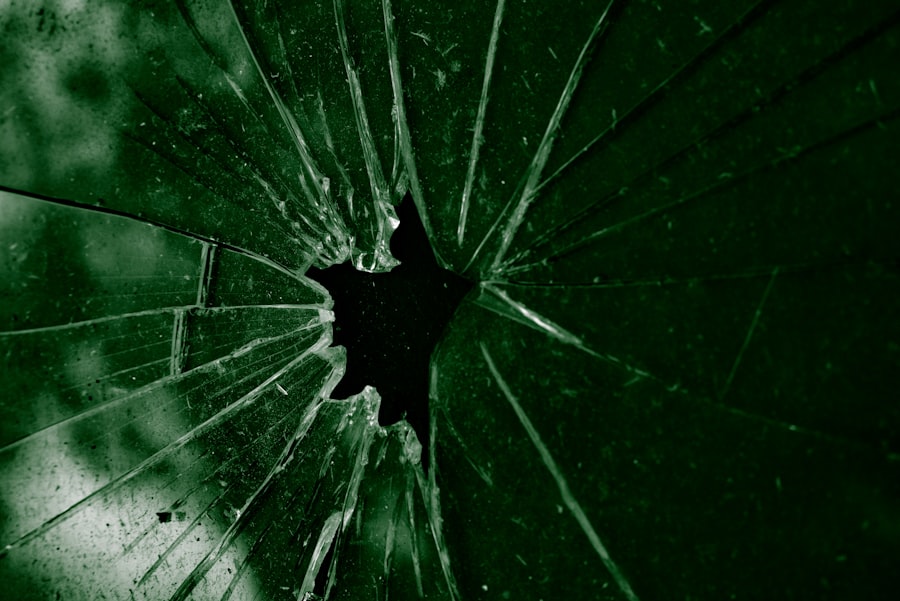
Your immediate concern after witnessing shattered glass is often practical: safety. The sharp edges are a clear and present danger.
The Art of Careful Retrieval
You learn to be deliberate, to move with caution. You might reach for a broom and dustpan, or even specialized tools like tongs or thick gloves. Each movement is calculated to avoid further injury. You are no longer interacting with a functional object, but with a hazardous byproduct. The goal is containment, minimizing the spread of the sharp fragments so that no one else inadvertently experiences the consequence of the breakage.
The Risk of Microscopic Hazards
Even after the visible shards are cleared, you must remain vigilant. Tiny slivers of glass can cling to surfaces, to fabrics, and can be easily tracked elsewhere. These microscopic hazards, though invisible, pose the same threat. You might find yourself running your hand over a surface, feeling for any residual roughness, or vacuuming areas multiple times to ensure thoroughness. The absence of tangible pieces doesn’t necessarily mean the absence of danger.
The Disposal Dilemma
What do you do with the collected fragments? You can’t simply toss them into the regular trash. The sharp edges can tear through bags, endangering sanitation workers. Special containment is often required. You might place the glass in a sturdy box or wrap it in thick newspaper before placing it in a designated receptacle. It’s a conscious effort to mitigate the ongoing risk, to ensure the hazard doesn’t simply transfer to another unsuspecting party.
The Psychological Residue
Beyond the physical danger, there’s often a psychological residue. If the glass broke due to anger or carelessness, you might feel a sense of unease, a lingering tension in the air. If it was the result of an accident, there might be a feeling of dismay or a need to assign blame. The broken glass becomes a focal point for these emotions, a tangible manifestation of what went wrong. You can’t sweep away these feelings as easily as you can sweep glass.
The Aesthetic of Shattered Beauty
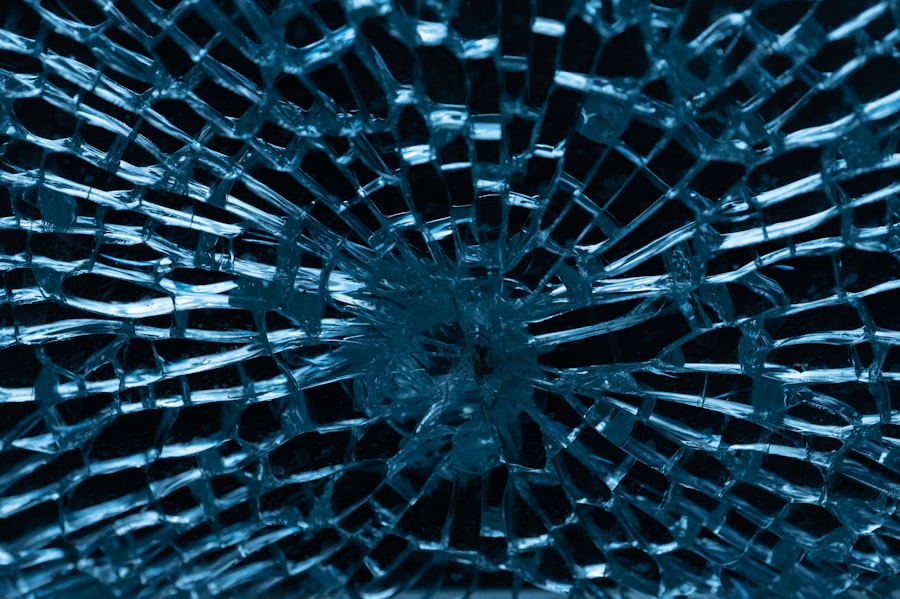
Despite the inherent danger, there’s an undeniable, almost paradoxical, aesthetic to broken glass. It captivates the eye in a way that unbroken glass sometimes cannot.
The Play of Light and Shadow
The fractured surfaces create an entirely new interplay of light and shadow. Each shard acts as a tiny prism, refracting light in a kaleidoscope of colors. The sharp edges catch the light, creating brilliant highlights, while the depths of the breaks absorb it, creating dramatic contrasts. You might find yourself mesmerized by the unexpected beauty that emerges from destruction, a testament to nature’s ability to find pattern even in chaos.
The Texture of Danger
There’s a visual texture to broken glass that is both alluring and alarming. The intricate network of cracks, the sharp, irregular lines, create a complex and variegated surface. It’s a texture that you understand on an instinctual level carries risk, yet it draws your gaze. It’s a visual paradox, a beauty that is underscored by its potential to wound.
The Art of the Unexpected
Artists have long utilized broken glass as a medium, transforming its destructive potential into something beautiful and thought-provoking. From mosaic art to sculptural installations, the shattered fragments are reimagined, their sharp edges softened by context and intent. You see how, with skillful intention, the debris of breakage can be given new life, a testament to human creativity’s ability to find value in what might otherwise be discarded.
The Reflection of Inner States
Sometimes, the beauty of broken glass can reflect certain inner states. A shattered mirror, for instance, doesn’t just break; it fragments your reflection. Each shard shows a partial, distorted image. This can be a powerful metaphor for feelings of fragmentation or internal discord. You might see in the scattered pieces a reflection of your own fractured thoughts or emotions, a visual representation of internal turmoil.
The concept of broken glass never reassembling is a fascinating topic that delves into the nature of chaos and order in our universe. This idea is explored in greater detail in a related article that discusses the principles of entropy and how they apply to various systems. For those interested in understanding the science behind why shattered objects remain in disarray, you can read more about it in this insightful piece on Freaky Science. The article not only explains the phenomenon but also provides examples from everyday life that illustrate the complexities of physical matter.
The Philosophical Underpinnings: Embracing Impermanence
| Reasons why broken glass never reassembles |
|---|
| Glass molecules do not have the ability to rearrange themselves into their original structure after being broken. |
| The process of breaking glass creates tiny fractures and stress points that prevent the pieces from fitting back together perfectly. |
| Even if the broken pieces could be reassembled, the structural integrity of the glass would be compromised, making it prone to further breakage. |
| Reassembling broken glass would require an immense amount of precision and energy, making it practically impossible to achieve. |
The irreversible nature of broken glass invites a deeper philosophical contemplation. It calls into question our desire for permanence and our struggle with change.
The Illusion of Control
We often strive for control, for stability, for things to remain as they are. The breaking of glass serves as a potent reminder that this is often an illusion. Forces beyond our immediate command can disrupt the most seemingly solid and dependable things. You learn that attempts to maintain absolute control are often futile, and that life is inherently characterized by flux.
The Acceptance of Imperfection
The inability to perfectly restore broken glass teaches us the value of acceptance. We cannot always undo the damage; sometimes, we must learn to live with the consequences, to adapt, and to find new ways forward. This applies not only to physical objects but to relationships, careers, and our own personal journeys. Embracing imperfection is a crucial step towards a more peaceful existence.
The Creation of New Possibilities
While the original form is lost, the broken pieces can, in their own right, lead to new possibilities. A broken vase might be repurposed as a planter, its shattered remnants offering a unique aesthetic. This is a metaphor for how setbacks and failures can, unexpectedly, pave the way for new opportunities and unforeseen paths. You learn that destruction can sometimes be a prelude to creation, albeit in a different form.
The Appreciation of Wholeness
Ironically, the experience of encountering broken glass can heighten your appreciation for wholeness. When you see the scattered fragments, you gain a renewed understanding of the value and elegance of a complete, unbroken object. It’s a lesson in gratitude, a recognition of the often-unnoticed perfection in things that are intact. You might find yourself more mindful of the delicate balance that keeps things from shattering, and more appreciative of that balance when it is maintained.
The Cycle of Existence
Ultimately, the irreversible nature of broken glass can be seen as a microcosm of the larger cycles of existence. Things are created, they endure for a time, and then they change, they break down, and they are perhaps transformed into something new. You are a witness to this constant process of flux, a part of the grand, ongoing cycle of formation and dissolution. The shimmering shards at your feet are just one small, but profound, illustration of this universal truth.

Where Does Yesterday Come From?
FAQs
1. Why does broken glass never reassemble?
Broken glass does not reassemble because glass is an amorphous solid, meaning it lacks the ordered structure of a crystalline solid. When glass breaks, the bonds between its molecules are permanently disrupted, preventing the pieces from rejoining in their original form.
2. Can broken glass be repaired or reassembled in any way?
While broken glass can be repaired using techniques such as gluing or welding, it cannot be reassembled in the same way that a crystalline solid can be. The repaired glass will not have the same strength or clarity as the original, and the break will always be visible.
3. What happens to the molecules in broken glass?
When glass breaks, the molecules within it are rearranged and the bonds between them are permanently disrupted. This prevents the broken pieces from rejoining in their original structure, unlike crystalline solids where the molecules can realign and reform the original structure.
4. Is there any way to reverse the breaking of glass?
Once glass is broken, there is no known way to reverse the process and reassemble the pieces into their original form. The disruption of the molecular structure is permanent, and the broken pieces cannot be restored to their original state.
5. Can glass be melted and reformed into its original shape?
Glass can be melted and reformed into new shapes, but it cannot be reformed into its original shape once it has been broken. The melting and reforming process changes the molecular structure of the glass, preventing it from returning to its original state after breaking.