You’ve always taken it for granted, haven’t you? The vibrant red of a sunset, the intricate texture of tree bark, the fleeting emotion on a loved one’s face. This effortless immersion into a world of color, form, and depth is a testament to the astonishing feats of your brain and the intricate biological machinery that underpins your ability to see. But have you ever stopped to truly consider how you see? It’s a question that has fascinated scientists, philosophers, and artists for centuries, and the answer lies within the complex and elegant science of human perception. This is your journey into understanding how your eyes, your brain, and your world intertwine to create the visual reality you experience every moment of your waking life.
Your eyes are not just passive windows to the world; they are active, sophisticated organs that capture and transform light into a language your brain can understand. Imagine them as intricate camera systems, but vastly more evolved.
Anatomy of Vision: A Delicate Dance of Structures
Before light even becomes a perception, it must navigate a series of carefully orchestrated structures within your eye.
The Cornea: The First Refractor
Your journey begins with the cornea, the transparent outer layer at the front of your eye. Think of it as the primary lens of a camera, responsible for bending light as it enters. Its smooth, curved surface precisely directs incoming light rays towards the pupil. While it does most of the heavy lifting in terms of focusing, its power is fixed, meaning it cannot adjust its shape to bring objects at different distances into sharp focus.
The Iris and Pupil: Regulating the Light Flood
Behind the cornea lies the iris, the colored part of your eye. This is a muscular diaphragm that controls the size of the pupil, the dark opening in its center. You can think of the pupil as the aperture of a camera, determining how much light enters the eye. In bright conditions, your iris constricts the pupil, reducing the amount of light to prevent overexposure and maintain sharp vision. In dim light, the iris relaxes, dilating the pupil to allow more light in, maximizing your ability to see in low-light environments. This dynamic regulation is crucial for optimal visual input.
The Lens: Fine-Tuning the Focus
Suspended behind the iris is the crystalline lens. Unlike the cornea, the lens is a flexible structure. Through a process called accommodation, tiny muscles called ciliary muscles can change the shape of the lens. When you look at distant objects, these muscles relax, causing the lens to flatten and decrease its refractive power. Conversely, when you focus on nearby objects, the ciliary muscles contract, making the lens thicker and increasing its refractive power. This remarkable ability to adjust focus is what allows you to see both the stars in the night sky and the intricate details of the text you’re reading right now.
The Retina: The Light-Sensitive Canvas
The real magic, where light is converted into neural signals, happens on the retina, a thin layer of tissue lining the back of your eye. This is where your photoreceptor cells reside – the rods and cones.
Rods: Masters of Dim Light
The retina contains about 120 million rods, which are highly sensitive to light but do not differentiate color. They are responsible for your vision in low-light conditions, allowing you to see shapes and movements in the dark. However, rods are less numerous in the fovea, the central part of your retina responsible for sharpest vision.
Cones: The Color Specialists
Scattered throughout the retina, and concentrated in the fovea, are about 6 million cones. These photoreceptors are responsible for your color vision and are most effective in bright light. There are three types of cones, each sensitive to different wavelengths of light: red, green, and blue. Your brain combines the signals from these cones to perceive the full spectrum of colors.
The Journey to the Brain: Optic Nerve and Beyond
Once light has been captured and converted into electrical signals by the rods and cones, these signals are processed by other neurons within the retina, including bipolar cells and ganglion cells. The axons of the ganglion cells bundle together to form the optic nerve, a thick cable that transmits visual information from your eye to your brain. This complex network ensures that the raw data of light is transformed into a meaningful stream of information.
Human perception is a fascinating field that explores how we interpret and understand the world around us. A related article that delves into the intricacies of this topic can be found at Freaky Science, where various aspects of sensory perception and cognitive processes are examined. This resource provides insights into how our brains process information and the factors that influence our perceptions, making it a valuable read for anyone interested in the science behind human experience.
The Brain’s Interpretation: Constructing Visual Reality
Your eyes are incredible, but they are merely the sophisticated data collectors. The true architect of your visual world is your brain, which takes the raw electrical signals from your eyes and actively constructs the rich tapestry of perception you experience. This process is far from a simple playback; it’s an active interpretation.
The Pathway of Vision: From Eye to Cortex
The journey of visual information from your eyes to your brain is a remarkable feat of neurological engineering.
The Optic Chiasm: A Crossroads of Information
The optic nerves from each eye meet at a critical junction called the optic chiasm. Here, fibers from the nasal (inner) half of each retina cross over to the opposite side of the brain, while fibers from the temporal (outer) half of each retina remain on the same side. This crossover ensures that the left side of your brain receives visual information from the right visual field (seen by both eyes), and the right side of your brain receives information from the left visual field. This is a fundamental step in processing the complete visual scene.
The Thalamus: The Visual Relay Station
After the optic chiasm, most of the visual information travels to the thalamus, specifically to a structure called the lateral geniculate nucleus (LGN). The LGN acts as a relay station, filtering and organizing the incoming visual signals before sending them on to the visual cortex. It’s here that some initial processing and routing occurs, ensuring that the right information reaches the appropriate brain regions.
The Visual Cortex: The Seat of Perception
The final destination for most visual information is the visual cortex, located in the occipital lobe at the back of your brain. The visual cortex is a highly organized area, divided into several different regions, each specializing in processing specific aspects of vision.
V1: The Primary Visual Cortex
The primary visual cortex, also known as V1, is the first cortical area to receive visual input. Here, information is broken down into basic features such as lines, edges, angles, and orientations. Neurons in V1 are like specialized detectors, firing only when they encounter specific visual stimuli. This is where the initial decoding of the visual code begins.
Higher Visual Areas: Building Complexity
From V1, visual information is projected to a hierarchy of higher visual areas. These areas are responsible for processing more complex aspects of vision, such as form, motion, color, and depth. For instance, one pathway (the dorsal stream) is involved in processing “where” an object is and how to interact with it (information about motion and spatial location), while another pathway (the ventral stream) is involved in processing “what” an object is (recognizing shapes and faces). This parallel processing allows your brain to simultaneously analyze different features of the visual scene.
Beyond Raw Data: The Active Construction of Perception
It’s crucial to understand that perception is not a passive reception of sensory input. Your brain actively constructs your visual experience based on the incoming data, your past experiences, expectations, and even your current emotional state.
Feature Detection: Building Blocks of Recognition
As mentioned, specialized neurons in the visual cortex act as feature detectors. These neurons are tuned to respond to specific basic elements of a visual scene, such as horizontal lines, vertical lines, or particular colors. When these features are combined and recognized by subsequent layers of neurons, they contribute to the perception of more complex shapes and objects.
Top-Down Processing: The Influence of Expectations
Your perception isn’t just driven by what’s hitting your retinas (bottom-up processing); it’s also heavily influenced by your prior knowledge and expectations (top-down processing). If you’re expecting to see a specific object, your brain can sometimes “fill in the gaps” or interpret ambiguous visual information in a way that aligns with your expectations. This can lead to phenomena like optical illusions, where your brain’s interpretation differs from objective reality.
Filling In the Blanks: The Blind Spot Phenomenon
A fascinating example of your brain’s active construction is the blind spot. Your optic nerve leaves the retina at a point where there are no photoreceptors. Objectively, there should be a gap in your vision. However, you don’t perceive a hole. Your brain effectively “fills in” this missing information using data from the surrounding areas of your retina and information from your other eye. This demonstrates how your brain actively creates a seamless visual experience, even in the face of incomplete sensory input.
The Illusions of Sight: When Perception Plays Tricks
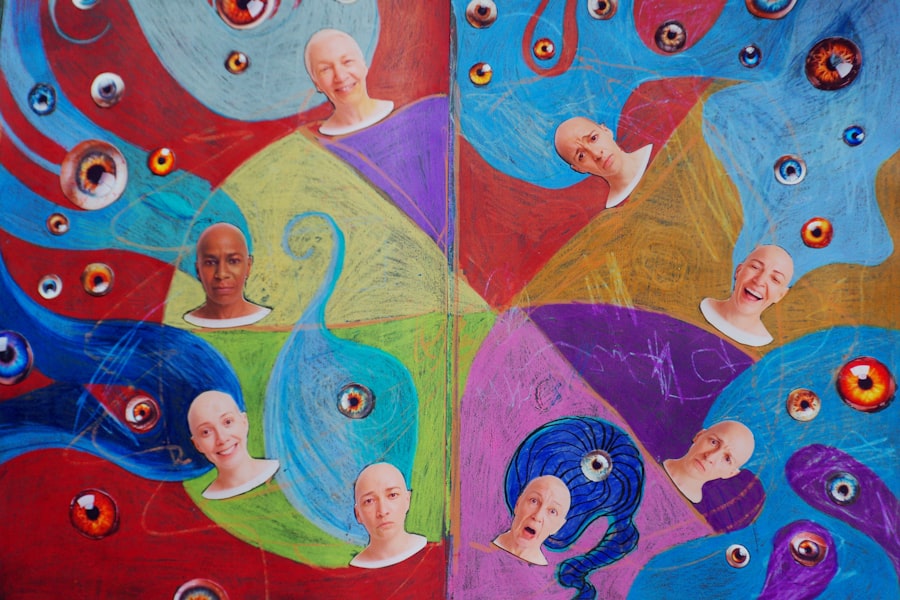
Optical illusions are not merely curiosities; they are powerful windows into the workings of your visual system. They reveal the assumptions your brain makes and the shortcuts it takes to process the overwhelming amount of visual information it receives.
Gestalt Principles: The Power of Organization
The Gestalt psychologists proposed that our brains tend to perceive incoming visual information as organized wholes rather than as collections of individual parts. They identified several principles that guide this organization.
Proximity: Grouping the Near
Objects that are close to each other tend to be perceived as belonging together. You naturally group elements that are spatially near, forming coherent units.
Similarity: Finding Common Ground
Objects that share similar features, such as color, shape, or size, are also perceived as belonging together. Your brain effortlessly identifies patterns and similarities.
Closure: Completing the Incomplete
When there are gaps in a visual pattern, your brain tends to fill them in to perceive a complete, whole object. This is the principle of closure in action, allowing you to see solid shapes even when parts are missing.
Continuity: Following the Flow
Your brain prefers to see continuous patterns rather than broken or disjointed ones. It assumes that lines and curves will continue in their established direction.
Ambiguous Figures: The Multiple Interpretations
Some images, known as ambiguous figures, can be perceived in more than one way. The classic example is the Necker cube or the Rubin vase. Your brain can’t settle on a single interpretation, and you may find yourself switching between the different perceptions. This highlights the active and subjective nature of visual processing.
Perceptual Constancies: Maintaining Stability
Despite the ever-changing conditions of light and distance, your perception of objects remains remarkably stable. This is due to perceptual constancies, where your brain adjusts for variations in the sensory input.
Size Constancy: Judging True Size
You know that a person shrinking in the distance is still the same size, even though their image on your retina is getting smaller. Your brain uses cues like depth and context to maintain a stable perception of their actual size.
Shape Constancy: Recognizing Form from Different Angles
A door appears as a trapezoid when viewed from an angle, but you still perceive it as a rectangle. Your brain adjusts for the foreshortening caused by the viewing angle, maintaining a stable perception of its shape.
Brightness Constancy: Seeing Through Shifting Light
Whether a white shirt is under bright sunlight or dim indoor lighting, you perceive it as white. Your brain adjusts for the amount of light reflecting off the shirt, allowing you to perceive its inherent brightness.
The Unseen World: Color and Depth Perception

While we often take our ability to see color and perceive depth for granted, these are complex feats of your visual system, relying on intricate processing and interpretation.
The Mystery of Color: Biology and Perception
Color is not an inherent property of objects but rather a perception created by your brain in response to different wavelengths of light.
Trichromatic Theory: The Three Cone System
As mentioned earlier, your ability to perceive color is largely attributed to the three types of cones in your retina: red-sensitive, green-sensitive, and blue-sensitive. When light of a particular wavelength hits your retina, it stimulates these cones to varying degrees. For example, long wavelengths stimulate red cones, medium wavelengths stimulate green cones, and short wavelengths stimulate blue cones.
Opponent-Process Theory: The Color Opposites
While the trichromatic theory explains how light is initially detected, the opponent-process theory explains how color information is processed further in the nervous system. This theory suggests that color vision is based on a system of opposing pairs: red-green, blue-yellow, and black-white. When one color in a pair is stimulated, the other is inhibited. This explains phenomena like afterimages. For instance, if you stare at a red object and then look at a white surface, you’ll see a green afterimage.
Decoding Space: The Art of Depth Perception
Perceiving the three-dimensional world from the two-dimensional images projected onto your retinas is a remarkable achievement. Your brain employs a variety of cues to accomplish this.
Binocular Cues: The Power of Two Eyes
Having two eyes provides crucial information for depth perception.
Retinal Disparity: The Subtle Differences
The slight difference in the images projected onto each retina from the same object is called retinal disparity. Because your eyes are a few inches apart, they view objects from slightly different angles. Your brain uses this disparity to calculate distance. Objects that are closer have a larger disparity than objects that are farther away.
Convergence: The Eye Muscles’ Role
When you focus on a close object, your eyes turn inwards, a movement called convergence. The degree to which your eyes converge provides your brain with information about the object’s distance. The more your eyes converge, the closer the object is.
Monocular Cues: Clues from a Single Eye
Even with one eye, you can still perceive depth. These monocular cues are invaluable for judging distance.
Linear Perspective: Vanishing Points
Parallel lines, such as railway tracks, appear to converge in the distance at a vanishing point. This optical illusion provides a strong cue for depth and distance.
Relative Size: Familiar Objects as Guides
If you see two objects that you know are the same size, but one appears larger than the other, you infer that the larger one is closer.
Interposition (Overlap): What’s in Front Wins
When one object partially blocks another, you perceive the object that is blocking as being in front and therefore closer.
Texture Gradient: The Fading Details
As objects in the distance become farther away, their textures become less detailed and finer. This gradual change in texture provides a cue for distance.
Motion Parallax: Observing Movement
When you move your head from side to side, closer objects appear to move faster in the opposite direction, while distant objects appear to move slower or in the same direction. This relative motion is a powerful indicator of depth.
The science of human perception is a fascinating field that explores how we interpret the world around us. A related article that delves deeper into this subject can be found at Freaky Science, where various aspects of sensory processing and cognitive interpretation are examined. Understanding these processes not only enhances our knowledge of human behavior but also sheds light on the intricacies of our interactions with the environment.
The Dynamic Nature of Perception: Learning and Adaptation
| Aspect | Metric |
|---|---|
| Visual Perception | Visual acuity, color vision, depth perception |
| Auditory Perception | Hearing sensitivity, sound localization, speech perception |
| Tactile Perception | Touch sensitivity, temperature perception, pain perception |
| Cognitive Perception | Attention, memory, decision making |
Your perceptual system is not static; it is constantly learning and adapting to your environment and experiences. This dynamic nature allows you to refine your visual abilities and navigate an ever-changing world.
Perceptual Learning: Fine-Tuning Your Vision
Through repeated exposure and practice, your ability to perceive certain stimuli can improve significantly. This is known as perceptual learning. For example, radiologists become exceptionally adept at detecting subtle abnormalities in medical images after extensive training. This isn’t because they have fundamentally different eyes, but because their brains have learned to identify and interpret specific visual patterns with remarkable accuracy.
Adaptation: Adjusting to New Environments
Your visual system can adapt to prolonged exposure to specific conditions. For instance, if you spend time in a dark room, your eyes will become more sensitive to light. When you then step out into bright sunlight, you experience a temporary discomfort as your visual system adjusts. This adaptive capacity allows you to maintain functional vision across a wide range of environmental conditions.
The Impact of Experience: Shaping What You See
Your past experiences profoundly shape what you see. If you’ve had negative encounters with a particular type of animal, you might be more attuned to spotting it in a crowd, even if it’s not actually present. Similarly, experts in any field develop enhanced perceptual abilities related to their domain. A musician can hear subtle nuances in sound that a non-musician might miss, and a botanist can distinguish between visually similar plant species.
In conclusion, your ability to see is a breathtaking symphony of biological marvels and sophisticated neural processing. From the intricate mechanics of your eyes to the complex interpretive power of your brain, every element plays a vital role in constructing the rich and vibrant visual world you inhabit. The next time you marvel at a sunset, a masterpiece of art, or simply the familiar face of a friend, remember the incredible science that makes it all possible. You are not just seeing; you are actively creating your reality, moment by moment, through the astonishing science of human perception.

You’ve Never Experienced the Present
FAQs
What is the science of human perception?
The science of human perception is the study of how humans interpret and make sense of sensory information from the environment. It involves understanding how the brain processes and organizes sensory input to create our perception of the world around us.
What are the main senses involved in human perception?
The main senses involved in human perception are sight (vision), hearing (audition), taste (gustation), smell (olfaction), and touch (somatosensation). These senses work together to provide us with a comprehensive understanding of our surroundings.
How does human perception differ from person to person?
Human perception can differ from person to person due to individual variations in sensory abilities, past experiences, cultural influences, and cognitive processes. These differences can lead to variations in how individuals perceive and interpret the same sensory stimuli.
What role does the brain play in human perception?
The brain plays a crucial role in human perception by processing and integrating sensory information from the environment. Different areas of the brain are responsible for processing specific sensory inputs and combining them to create a coherent perception of the world.
How does the study of human perception contribute to other fields?
The study of human perception contributes to various fields such as psychology, neuroscience, design, marketing, and human-computer interaction. Understanding how humans perceive and interpret sensory information is essential for designing effective communication, products, and environments.