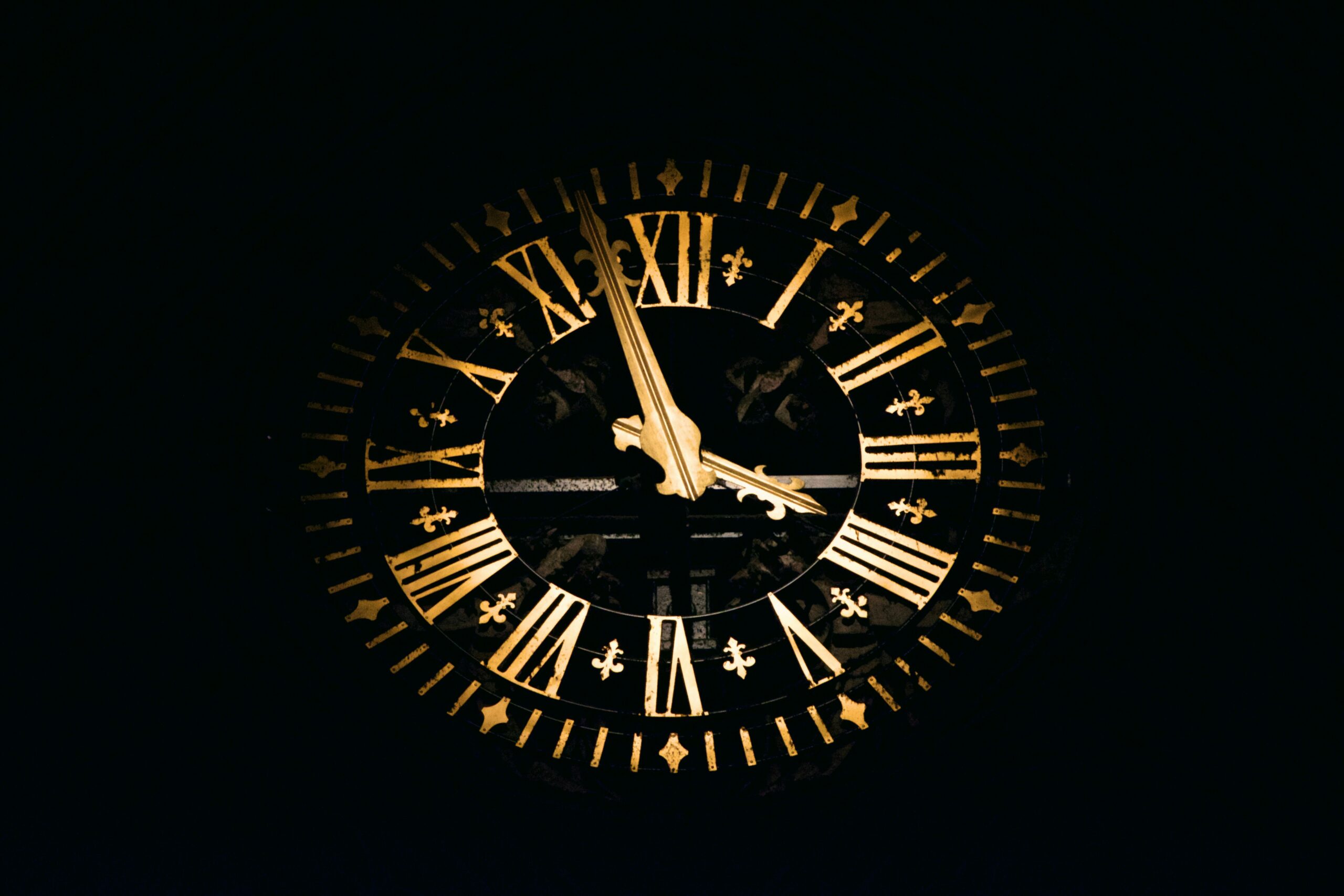
You might have experienced it: the subtle unnerving feeling. You’re walking down a street, passing a historic building, or perhaps even just glancing at a photograph. Your eyes land on a clock, and for a fleeting moment, you’re certain something is amiss. It’s not just that the time seems wrong. It’s that the clock itself feels… inert. Frozen. You might even dismiss it as a broken clock, a detail you’ll forget as soon as you move on. But there’s a deeper psychological phenomenon at play here, a fascinating trick your brain plays on you – the stopped clock illusion.
This isn’t about a faulty mechanism in a timepiece. It’s about how your perception, your expectations, and your very interpretation of reality can be subtly nudged, leading you to perceive stillness where there might be subtle movement, or to imbue an object with a significance it doesn’t inherently possess. You’re not crazy; you’re simply experiencing a well-documented quirk of human cognition. Let’s delve into the intricate workings of the stopped clock illusion, dissecting the cognitive mechanisms that make a stationary timepiece feel like more than just a broken machine.
Before we can understand why a stopped clock can feel so… wrong, we need to appreciate the remarkable engine that drives your perception: your brain. Your brain isn’t a passive recipient of sensory information. Instead, it’s a highly active, predictive system. It constantly makes educated guesses about what’s happening around you, based on past experiences, learned patterns, and current context. This predictive power is essential for navigating the world efficiently. Imagine if you had to consciously process every single detail of your surroundings. You’d be overwhelmed. Your brain, therefore, prioritizes and anticipates, allowing you to react swiftly and make decisions with minimal cognitive load.
Pattern Recognition: The Cornerstones of Perception
At the heart of your brain’s predictive engine lies an extraordinary adeptness at pattern recognition. From the moment you’re born, you begin to absorb the patterns of the world. You learn that sounds often precede visual events, that certain shapes belong to specific objects, and that objects tend to behave in predictable ways. This learned repertoire of patterns forms the blueprint your brain uses to interpret new information. When you see a clock, you’re not just seeing hands on a dial. You’re seeing an object that, based on countless prior observations, is supposed to be in motion.
The Expectation of Progress
Think about it: every clock you’ve ever encountered, in almost every context, is a functional device. It ticks, it whirs, it marches forward, second by second, minute by minute, hour by hour. This consistent experience has ingrained a profound expectation of progress within your cognitive framework. A clock is synonymous with the passage of time. It’s a symbol of continuity, of forward momentum. Therefore, when you encounter a clock that isn’t moving, it clashes violently with this deeply embedded expectation. Your brain, accustomed to seeing clocks in a state of dynamic change, is momentarily stumped. It’s like listening to a symphony and suddenly hearing a prolonged silence where a note should be. The absence of the expected is, in itself, a powerful signal. This isn’t just a passive observation; it’s an active disruption of your mental model of how clocks function.
The Role of Context and Salience
Our perception isn’t formed in a vacuum. The context in which we encounter something dramatically influences how we interpret it. A broken toy in a child’s room might be sad. The same broken toy lying on a busy sidewalk might be a potential hazard. Similarly, the context surrounding a clock heavily influences how you perceive its stillness. A clock on a derelict building, where decay and disrepair are pervasive, might be less surprising. But a clock on a grand, meticulously maintained monument, where every detail speaks of precision and care, is where the stopped clock illusion truly takes hold.
The “Outlier” Effect
Your brain is inherently designed to detect anomalies, to flag things that don’t fit the expected pattern. When you encounter a stopped clock in a setting where functioning is implied or expected, it immediately stands out as an outlier. This outlier status makes it more salient, drawing your attention and stimulating a deeper processing by your cognitive system. It’s not just a detail; it’s a detail that deviates from the norm, triggering a mild sense of surprise or even unease. This heightened salience is a crucial component of the illusion. Think of it as your brain’s internal alarm system, flagging something that doesn’t quite compute. The more incongruous the stopped clock is with its surroundings, the stronger the signal.
The stopped clock illusion is a fascinating phenomenon that highlights how our perception of time can be influenced by various factors, including attention and expectation. To delve deeper into this intriguing topic, you can explore a related article that provides further insights and explanations. For more information, visit this article which discusses the psychological aspects of time perception and the mechanisms behind the stopped clock illusion.
The Cognitive Dissonance of Stasis
The core of the stopped clock illusion lies in the psychological discomfort that arises when your expectations are unmet. This discomfort is a form of cognitive dissonance, a mental stress experienced when you hold two or more contradictory beliefs, ideas, or values, or when your actions contradict your beliefs. In the case of the stopped clock, the dissonance arises from the clash between your ingrained expectation of a clock’s movement and the observed reality of its stillness.
The Unspoken Law of Timekeeping Devices
We operate under an unspoken contract with timekeeping devices. We assume they are designed to fulfill a specific function: to accurately measure and display the passage of time. This functional imperative is so deeply ingrained that we rarely question it. A clock is, by its very definition, a device that moves forward. To see it static is to see it in violation of its fundamental purpose. This violation creates a subtle but persistent mental friction. You’re not just seeing a clock that’s stopped; you’re seeing an object that is failing at its most basic task. This perceived failure can be unsettling because it challenges our understanding of how the world is supposed to work.
The “Purposeful” Nature of Clocks
When you see a clock, you inherently attribute a purpose to it. This purpose is to mark time. When that purpose is visibly unfulfilled, your brain flags it. This isn’t necessarily a conscious thought process, but rather an automatic cognitive response. Your brain is wired to look for function and meaning. A stopped clock, in this context, presents a puzzle. It has the form of a timekeeping device, but it’s devoid of its function. This mismatch between form and function is what fuels the illusion. You might wonder, “Why is it there if it doesn’t work?” This question, even if unvoiced, highlights the cognitive tension.
The Perception of “Wrongness”
The stopped clock illusion isn’t just about recognizing that a clock is stationary. It’s about the subjective feeling that this stillness is inherently “wrong.” This feeling stems from the cognitive dissonance we’ve discussed. Your brain is actively trying to reconcile the observed reality with its ingrained expectations. This attempt to reconcile can manifest as a sense of unease, a feeling that something is out of place, or a vague sense of disruption. It’s not about judging the aesthetics of the clock; it’s about the semantic violation of its intended purpose. The illusion lies in the emotional and cognitive resonance that this violation evokes.
The Emotional Residue of Unfulfilled Expectations
Our expectations are often laden with subtle emotional undertones. The expectation of a ticking clock is usually associated with order, progress, and the smooth unfolding of events. When this expectation is unmet, it can leave a faint emotional residue – a ripple of disappointment, a touch of melancholy, or a subtle sense of decay. This emotional component contributes significantly to the “feeling” of the stopped clock illusion. It’s not just an intellectual observation; it’s a feeling that something is amiss on a deeper, more emotional level. The absence of the expected sound of ticking can even be perceived as a subtle sensory deprivation, further contributing to the overall feeling of unease.
The Influence of Memory and Association
Our past experiences and the emotional baggage we associate with them play a significant role in shaping our perception. The stopped clock illusion is no exception. The memories evoked by a particular clock, or the historical context in which it’s found, can amplify the illusion.
Echoes of the Past: Historical Significance
Many stopped clocks are found in historical settings – old churches, public squares, historic buildings. These locations are often imbued with a sense of history, of time that has passed and stories that have unfolded. A stopped clock in such a setting can feel like a more profound statement. It’s not just a broken appliance; it’s a relic, a frozen moment from the past. This association with history can amplify the feeling of stillness, making it feel almost symbolic.
The Symbol of a Frozen Moment
In historical contexts, a stopped clock can become a powerful symbol. It can represent a particular event that occurred at that exact time, a moment frozen in history. It can evoke a sense of unchanging permanence, a stark contrast to the relentless march of time in the present day. This symbolic weight elevates the stopped clock from a mere observation to an evocative experience, tapping into our human fascination with the past and the ephemeral nature of existence. You might find yourself musing about what was happening when that clock stopped, imbuing it with a narrative that extends far beyond its functional failure.
Personal Associations and Emotional Resonance
Beyond historical significance, personal memories can also contribute to the stopped clock illusion. Perhaps you remember a clock from your childhood that was always broken, or a significant event that occurred at a specific time. When you encounter a stopped clock, these personal associations can be triggered, adding a layer of emotional resonance to your perception.
The Ghost of Time Past
Your personal history is interwoven with your perception of time. If a stopped clock reminds you of a time when things felt stuck, or when a particular moment felt eternally suspended, it can tap into those memories and emotions. This personal connection can make the illusion more potent, as it becomes intertwined with your own élet narrative. It’s not just an external object; it’s an object that resonates with your internal world, magnifying the sense of stasis. The stopped clock becomes a portal to your personal past, a tangible reminder of moments that, for you, may have felt like they would never end.
The Paradox of Observation: Noticing the Unnoticed
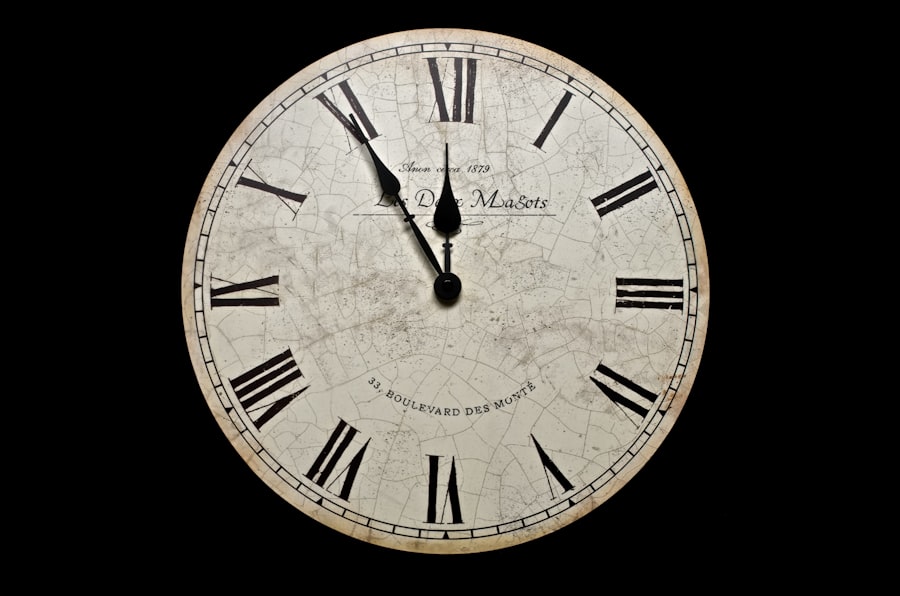
The stopped clock illusion often arises when you do notice it. This might seem counterintuitive, as one might think that noticing something would break the illusion. However, the very act of noticing can, in some instances, solidify and amplify the perceived stillness, especially when combined with the cognitive biases already discussed.
The Spotlight Effect of Attention
When your attention is drawn to a specific object, like a clock, it becomes the focus of your perception. This heightened attention can lead you to scrutinize the object more closely. If you’re looking for signs of movement, or if your brain is already primed to expect movement, the absence of any discernible shift can become even more pronounced. The spotlight of your attention, rather than breaking the illusion, can actually reinforce the perception of stillness by forcing you to confront the lack of activity.
The Over-Analysis of a Static Object
Your brain, having registered the clock as a potential anomaly, might then engage in a subtle form of over-analysis. You might consciously or subconsciously look for signs of movement – a flutter of the second hand, a barely perceptible grind of gears. When these signs are absent, your brain interprets this definitive lack of motion as confirmation that the clock is, indeed, stopped. This intensified focus on the lack of movement paradoxically strengthens the illusion. You’re not just seeing a clock; you’re actively observing its lack of motion, and this active observation can solidify the perception of its stopped state.
The “Aha!” Moment and Confirmation Bias
Once you recognize that a clock is stopped, this recognition can trigger a sense of “aha!” This feeling of discovery, of having identified something unusual, can then be amplified by confirmation bias. Confirmation bias is the tendency to search for, interpret, favor, and recall information in a way that confirms one’s pre-existing beliefs or hypotheses. In this case, your pre-existing belief might be that the clock is broken, or that there’s something odd about it. Once you’ve latched onto the idea of it being stopped, your brain will naturally seek out and emphasize evidence that supports this conclusion, making the illusion more robust.
Solidifying the “Brokenness”
The “aha!” moment of realizing a clock is stopped often leads to a confirmation of your initial suspicion, even if that suspicion was vague. Your brain then subconsciously seeks out further evidence to support this confirmation. You’ll notice the stillness more acutely, you might even feel a sense of satisfaction in having correctly identified the anomaly. This process, driven by confirmation bias, solidifies the illusion. The stopped clock becomes not just a visual observation, but a confirmed fact, reinforcing the perceived stillness. This can lead to a situation where the more you think about it being stopped, the more convinced you become that it is.
The stopped clock illusion is a fascinating phenomenon where individuals perceive the time on a clock that has stopped as being correct, particularly when it coincides with a specific moment. This intriguing concept is explored in more detail in a related article that delves into the psychological aspects of perception and time. For those interested in understanding the science behind such illusions, you can read more about it in this fascinating article that uncovers the intricacies of how our minds interpret time and reality.
Breaking the Illusion: Re-engaging with Time
| Aspect | Explanation |
|---|---|
| Definition | The stopped clock illusion is a cognitive bias where people tend to perceive time as passing more slowly when they are waiting for an event to occur. |
| Causes | It is caused by the heightened attention and anticipation of the event, which leads to a subjective feeling of time dilation. |
| Examples | Common examples include waiting for an important phone call, waiting for a deadline, or waiting for an anticipated event to happen. |
| Impact | The stopped clock illusion can lead to increased stress and anxiety as people perceive the waiting time to be longer than it actually is. |
| Overcoming | Practicing mindfulness, engaging in activities to distract oneself, and setting realistic expectations can help overcome the effects of the stopped clock illusion. |
While the stopped clock illusion can be a fascinating glimpse into your cognitive processes, it can also be “broken.” This involves actively re-engaging your brain with the dynamic nature of time and challenging the assumptions that underpin the illusion.
Conscious Re-calibration of Perception
The most direct way to break the illusion is through conscious re-calibration. This involves deliberately shifting your focus from the stillness of the clock to the surrounding environment, which is invariably in motion. Looking at the subtle movements of people, leaves rustling in the wind, or even the distant traffic can help re-ground you in the reality of temporal flow.
Shifting the Focus to Dynamic Elements
When you notice a stopped clock, try to consciously shift your attention to something that is demonstrably moving. This could be a bird flying past, a cloud drifting across the sky, or even the subtle rise and fall of your own chest as you breathe. By actively seeking out and focusing on these dynamic elements, you are providing your brain with counter-evidence to the perceived stasis of the clock. You are reminding your cognitive system that the world is a place of constant flux, and that your initial perception of the stopped clock might be an oversimplification. This act of conscious redirection is key to overcoming the illusion.
Re-evaluating the Clock’s Purpose and Context
Sometimes, the illusion is simply a matter of misinterpreting the context. A clock on an art installation might be intentionally static, serving a different purpose than timekeeping. Similarly, a replica of an antique clock might be designed to be purely decorative. By questioning the assumed purpose and considering alternative interpretations, you can often dismantle the illusion.
The Intentional Stillness of Art and Design
Not all clocks are designed to tell time in the conventional sense. Many are artistic creations, architectural features, or historical artifacts. In these cases, their stillness isn’t a malfunction but a deliberate design choice. A grand sundial, for instance, relies on the sun’s movement for its function and might appear “stopped” at certain times of the day. Understanding the context and potential artistic intent behind a clock can significantly alter your perception and break the illusion of it being simply “broken.” You might realize that the stillness is intentional, a part of its aesthetic or symbolic value, rather than a failure.
Embracing the Nuance of Time
Ultimately, the stopped clock illusion serves as a powerful reminder that our perception is not always a perfect mirror of reality. It highlights the intricate interplay between our internal cognitive processes and the external world. By understanding the mechanisms behind this illusion, you can gain a deeper appreciation for the complexities of human perception and the way your brain constructs your experience of time.
The Subjectivity of Temporal Experience
Your experience of time is not a purely objective measurement. It is shaped by your expectations, emotions, memories, and cognitive biases. The stopped clock illusion is a testament to this subjectivity. It shows how your internal world can influence how you perceive external reality, leading to fascinating and sometimes unsettling perceptual phenomena. Recognizing this subjectivity allows you to approach your perceptions with a greater degree of awareness, understanding that what you see is not always the whole story. The illusion, in its own way, teaches you about the fluid and personal nature of your own temporal experience. It encourages you to be a more critical and observant perceiver.

You’ve Never Experienced the Present
FAQs
What is the stopped clock illusion?
The stopped clock illusion is a cognitive bias where people believe that an event is more likely to occur if it has not happened for a while. This bias is based on the misconception that the longer something has not occurred, the more likely it is to happen soon.
What causes the stopped clock illusion?
The stopped clock illusion is caused by the human brain’s tendency to seek patterns and make predictions based on past experiences. When something has not occurred for a while, the brain may perceive it as overdue and therefore more likely to happen soon.
How does the stopped clock illusion affect decision making?
The stopped clock illusion can lead to poor decision making, as individuals may overestimate the likelihood of an event occurring simply because it has not happened for a while. This can lead to risky behavior or misplaced confidence in predictions.
Can the stopped clock illusion be overcome?
Awareness of the stopped clock illusion is the first step in overcoming it. By recognizing this cognitive bias, individuals can take steps to critically evaluate their assumptions and predictions, and make more informed decisions based on actual probabilities.
Are there real-life examples of the stopped clock illusion?
Yes, the stopped clock illusion can be observed in various real-life scenarios, such as in financial markets where investors may believe that a stock is more likely to rise in value simply because it has not done so for a while. It can also be seen in sports, where fans may believe that a team is due for a win after a series of losses.