Imagine waking up. The gentle hum of your alarm, the faint scent of coffee, the soft weight of your blanket – these are not direct transmissions from an objective reality. Instead, they are sophisticated interpretations, intricate creations built within the vast, complex landscape of your own brain. You don’t simply perceive the world; you construct it, moment by moment, day by day. This isn’t a philosophical musing; it’s the fundamental way your brain operates. Your reality, as you experience it, is a meticulously crafted illusion, a vibrant tapestry woven from sensory input, past experiences, and inherent biological predispositions. Let’s delve into the astonishing process of how your brain undertakes this monumental task, transforming raw data into the rich, nuanced world you inhabit.
The Sensory Gateway: Where Information Begins
Everything you perceive undeniably starts with your senses. Your eyes, ears, nose, tongue, and skin are the initial conduits, gathering information from your surroundings. However, it’s crucial to understand that these organs are not passive receivers. They actively filter, encode, and transform incoming signals before they even reach your higher cognitive centers. Think of them as sophisticated data collectors, constantly making decisions about what information is important enough to process further.
Vision: More Than Just Light
Your visual system is a prime example of this active construction. Light, a form of electromagnetic radiation, strikes the photoreceptor cells in your retina – the rods and cones. But this is where the “raw data” phase ends and the brain’s work truly begins. Your retina performs a remarkable feat of pre-processing. It detects edges, contrasts, and movement, essentially highlighting important features in the incoming visual field.
From Retina to Cortex: A Cascade of Processing
The signals generated by your retina are then transmitted via the optic nerve to the thalamus, a relay station in your brain. From the thalamus, they travel to the primary visual cortex in the occipital lobe at the back of your head. Here, the information is further broken down and analyzed. Neurons in this area are specialized to detect specific features like orientation, color, and shape.
Hierarchical Processing: Building Up Complexity
Imagine a series of processing stages. Lower-level areas detect simple features. As the information moves up through the visual hierarchy, these simple features are combined to form more complex representations. So, lines and curves are assembled into shapes, shapes into objects, and ultimately, into recognizable scenes. This hierarchical processing allows your brain to efficiently make sense of the overwhelming amount of visual information it receives. You don’t see a collection of pixels; you see a tree, a face, a room.
Audition: Decoding the Symphony of Sound
Your auditory system operates on similar principles. Sound waves, vibrations in the air, are captured by your outer ear and channeled to your eardrum. This mechanical vibration is then translated into electrical signals by the hair cells in your cochlea, a spiral-shaped structure in your inner ear.
From Ear to Cortex: Mapping Soundscapes
These electrical signals travel along the auditory nerve to the brainstem and then to the thalamus. Finally, they reach the primary auditory cortex in the temporal lobe. Here, your brain begins to decipher the meaning of these sounds. It identifies pitch, loudness, and timbre, allowing you to distinguish between different voices, musical instruments, and environmental noises.
The Importance of Context: Understanding What You Hear
Crucially, your brain doesn’t just process sound in isolation. It integrates auditory information with contextual cues. If you hear a rustling sound, your brain might interpret it differently depending on whether you’re in a quiet library or a dense forest. This contextual processing is vital for understanding speech, especially in noisy environments.
Other Senses: Touch, Taste, and Smell
While vision and audition are often highlighted, your other senses play equally vital roles in constructing your reality. Your somatosensory system, responsible for touch and proprioception (your sense of your body’s position in space), allows you to feel the texture of objects, the pressure of your clothes, and your own body’s movement. Your gustatory (taste) and olfactory (smell) systems, often working in tandem, contribute to your perception of food and your emotional responses to certain environments.
Integration is Key: A Unified Experience
It’s important to remember that your senses rarely operate in isolation. Your brain constantly integrates information from all your sensory modalities to create a coherent and unified experience of the world. The sight of a strawberry, its smell, and its taste all combine to create your unique perception of that fruit.
Understanding how our brain constructs reality is a fascinating topic that delves into the intricate processes of perception and cognition. For a deeper exploration of this subject, you can read the article on Freaky Science that discusses the mechanisms behind our sensory experiences and how they shape our understanding of the world. This article provides valuable insights into the brain’s role in interpreting stimuli and creating our personal realities. You can find it here: Freaky Science.
The Role of Memory: The Foundation of Understanding
Sensory input alone is insufficient to build reality. Your brain relies heavily on its vast library of memories to interpret and give meaning to incoming information. Without memory, every experience would be entirely novel and potentially confusing. Your past experiences act as a framework, providing context and allowing you to make predictions about the present and future.
Encoding: How Experiences Become Memories
The process of memory formation, or encoding, is incredibly complex. When you experience something, your brain creates neural pathways that represent that event. The strength and nature of these pathways are influenced by factors such as attention, emotion, and repetition.
Types of Memory: Short-Term, Long-Term, and Everything In Between
Your brain utilizes various types of memory. Short-term memory, also known as working memory, holds information for brief periods, allowing you to manipulate it. Long-term memory, on the other hand, stores information for extended durations, from days to a lifetime. Within long-term memory, there are further distinctions, such as declarative memory (facts and events) and procedural memory (skills and habits).
Retrieval: Recalling the Past
Retrieving memories is not like pulling a file from a cabinet. It’s an active process of reconstruction. When you recall an event, your brain reassembles the neural patterns associated with that experience. This reconstruction is not always perfect and can be influenced by your current emotional state, biases, and even subsequent experiences. This is why eyewitness testimony can be unreliable and why your memory of a childhood event might differ from someone else’s.
The Influence of Prior Knowledge: Shaping Perception
Your existing knowledge base, built from your memories, profoundly shapes how you perceive new information. If you have a wealth of knowledge about classical music, a symphony will carry a much richer meaning for you than it might for someone with no prior exposure. This means that your perception is not a neutral observation but an interpretation filtered through your personal history and understanding.
Attention: The Spotlight of Consciousness
In the deluge of sensory information and the vastness of your memory, how does your brain decide what to focus on? This is where attention comes in. Attention acts as a selective filter, highlighting certain stimuli while downplaying others. It’s the spotlight that illuminates what is currently relevant to your goals and survival.
Selective Attention: Focusing on What Matters
You are constantly bombarded with stimuli that you don’t consciously attend to. The hum of the refrigerator, the feel of your shirt against your skin, the distant sounds of traffic – these often fade into the background. This selective attention allows your brain to dedicate its limited processing resources to the most important information.
Top-Down vs. Bottom-Up Attention: Two Ways to Focus
Attention can be driven by external stimuli (bottom-up), such as a sudden loud noise that grabs your attention. It can also be driven by your internal goals and intentions (top-down), such as actively searching for a specific person in a crowd.
The Cost of Limited Attention: Missing Information
The flip side of selective attention is that it means you will inevitably miss things. This is why you can walk into a room and not notice something immediately obvious, only to see it later when your attention is directed towards it. This phenomenon, known as inattentional blindness, highlights the active and selective nature of your perception.
Prediction and Expectation: The Brain’s Crystal Ball
Perhaps one of the most remarkable aspects of your brain’s construction of reality is its predictive power. Your brain is not simply a reactive system; it’s a proactive one. It constantly generates predictions about what will happen next, and this creates a powerful feedback loop that shapes your experience.
The Predictive Coding Framework: Minimizing Surprise
A prominent theory in neuroscience, predictive coding, suggests that your brain is constantly trying to predict incoming sensory information. Lower-level brain areas send predictions to higher-level areas, and these predictions are compared with the actual sensory input. If there’s a mismatch, an “error signal” is generated, and the brain updates its predictions. This process aims to minimize surprise and efficiently process information.
How Expectations Shape Perception: The Power of What You Think Will Happen
Your expectations play a crucial role in how you perceive the world. If you expect a certain outcome, your brain may be primed to perceive evidence that supports that expectation. This can lead to biases in your perception. For example, if you’re anticipating a negative interaction, you might be more likely to interpret ambiguous behavior as hostile.
The Placebo Effect: A Testament to Expectation
The placebo effect is a powerful demonstration of how expectation can influence your physical experience. When individuals believe they are receiving a treatment, even if it’s inert, they can experience genuine relief from their symptoms, purely due to their expectation of improvement. This highlights the profound impact of your brain’s internal models on your perceived reality.
The way our brain constructs reality is a fascinating topic that delves into the intricate processes of perception and cognition. Understanding how we interpret sensory information can shed light on the complexities of human experience. For a deeper exploration of this subject, you might find the article on how the brain builds reality particularly insightful, as it discusses the mechanisms behind our perception and the factors that influence our understanding of the world around us.
Emotions and Motivations: The Coloring of Experience
Your reality is not a purely objective or intellectual construct; it is deeply imbued with your emotions and motivations. These internal states act as a powerful lens, coloring your perceptions and influencing your interpretations of events.
The Emotional Tagging of Memories: Stronger Memories, Stronger Feelings
Emotional events are often more vividly remembered than neutral ones. This is because the amygdala, a brain region involved in processing emotions, interacts with the hippocampus, the area responsible for forming memories. This “emotional tagging” ensures that emotionally significant experiences are prioritized for encoding and retrieval.
How Emotions Influence Perception: Seeing the World Through an Affective Lens
Your current emotional state can significantly warp how you perceive the world. When you’re happy, you might find the world to be brighter and more welcoming. When you’re sad or anxious, the world can appear darker and more threatening. This is not an illusion in the sense of being false, but rather a reflection of how your internal emotional landscape is projected onto your external experience.
Motivation and Goal-Directed Perception: What You Want to See
Your motivations also influence what you perceive. If you are hungry, you are more likely to notice food-related cues. If you are searching for something specific, your attention will be drawn to items that match your goal. Your brain is wired to prioritize information that is relevant to your current needs and desires.
The Dynamic and Subjective Nature of Reality
Given this intricate interplay of sensory input, memory, attention, prediction, and emotion, it becomes clear that your constructed reality is inherently:
Subjective: Your Perception is Uniquely Yours
The most profound takeaway is that your reality is not a perfect mirror of an objective world. It is a personal, subjective experience. While we may share a common physical environment, the way each of us perceives and interprets it can differ significantly. Your memories, your biases, your emotional state – all contribute to a unique internal world.
Dynamic and Malleable: Reality is Constantly Being Rewritten
Your brain is not a static observer. It is a dynamic system, constantly updating its models and interpretations based on new information and experiences. Your reality is not fixed but is continuously being constructed and reconstructed. What you believe and perceive today might be subtly altered by what you learn and experience tomorrow.
The Illusion of Objectivity: Our Tendency to Believe in a Shared Truth
Despite the subjective nature of our individual realities, humans have a strong tendency to believe in an objective, shared truth. We often assume that others perceive the world as we do. Recognizing the constructed nature of our own reality is a crucial step towards empathy, understanding, and a more nuanced appreciation of the diversity of human experience.
In conclusion, you are not merely a passive recipient of sensory data. You are an active architect, constantly building and rebuilding the world you inhabit. Your brain, with its intricate networks and sophisticated processes, is the ultimate artist, weaving together the threads of perception, memory, attention, prediction, and emotion to create the vibrant, dynamic, and deeply personal reality that defines your existence. It’s an ongoing masterpiece, a testament to the remarkable power and complexity of your own mind.

You’ve Never Experienced the Present
FAQs
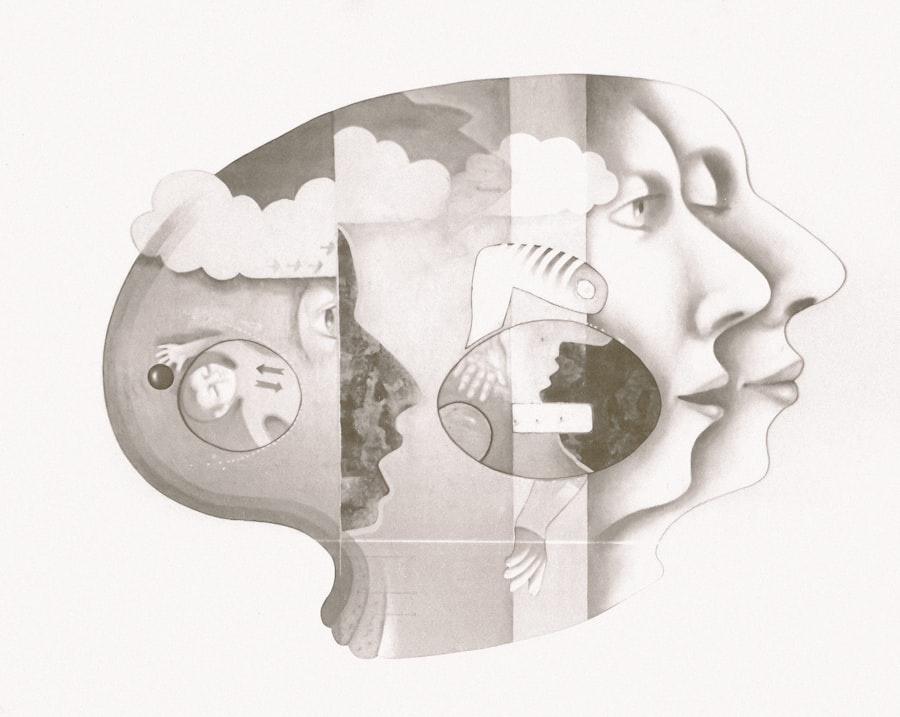
What is the brain’s role in building reality?
The brain plays a crucial role in constructing our perception of reality by processing sensory information and integrating it with past experiences and learned knowledge.
How does the brain interpret sensory information to create reality?
The brain interprets sensory information through a complex process involving the sensory organs, neural pathways, and various brain regions. It integrates this information to create a coherent perception of reality.
What factors influence the brain’s construction of reality?
The brain’s construction of reality is influenced by various factors, including past experiences, cultural influences, emotional state, and cognitive biases. These factors can shape how the brain interprets and constructs reality.
Can the brain’s construction of reality be altered?
Yes, the brain’s construction of reality can be altered through various means, such as psychoactive substances, meditation, therapy, and cognitive training. These methods can change the brain’s processing of sensory information and its construction of reality.
How does understanding the brain’s construction of reality impact daily life?
Understanding how the brain constructs reality can lead to greater awareness of cognitive biases, improved decision-making, and enhanced empathy for others’ perspectives. It can also inform strategies for mental well-being and personal growth.