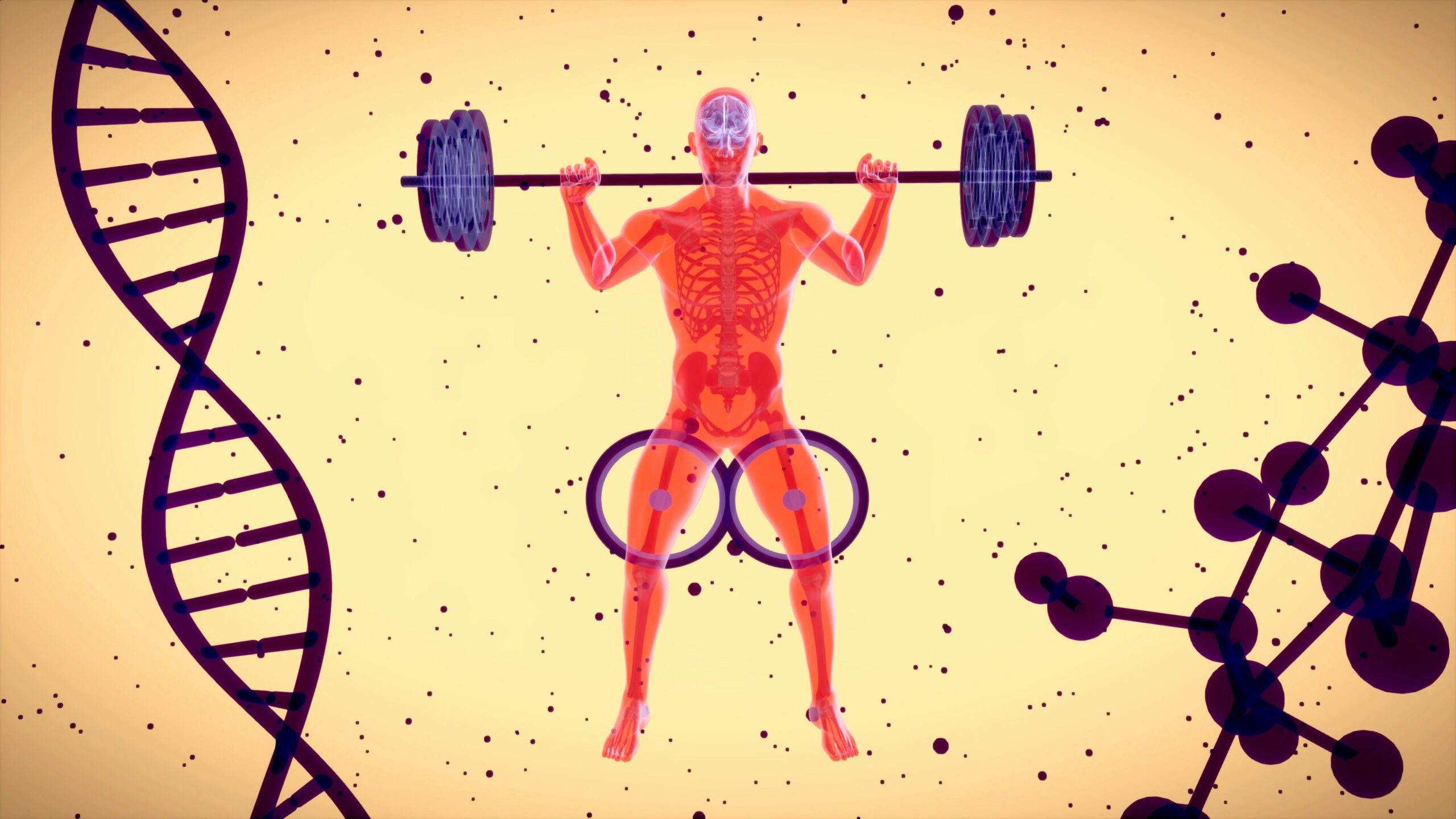
The vast emptiness of interstellar space might seem, at first glance, to be an environment devoid of any discernible pattern or cyclical activity. Yet, even on Earth, life is intrinsically linked to biological rhythms, internal temporal mechanisms that govern a myriad of physiological and behavioral processes. From the sleep-wake cycle to hormonal fluctuations and cellular repair, these endogenous clocks are fundamental to organismal function. The question arises: do these rhythms extend beyond our planet, acting as silent, internal signals even in the extreme conditions of deep space, and what evidence or theoretical frameworks support such a notion? This article explores the concept of biological rhythms as potential “satellite signals” in the cosmic arena, examining their potential existence, their role in hypothetical extraterrestrial life, and the challenges and implications of studying them.
Biological rhythms, or circadian rhythms in particular, are not learned behaviors but rather deeply ingrained genetic and molecular mechanisms. They are rooted in the fundamental processes of life and have evolved over vast geological timescales.
Evolutionary Origins of Biological Clocks
The evolutionary development of biological clocks is intrinsically linked to the Earth’s astronomical cycles. The rotation of the planet on its axis, creating day and night, and its revolution around the sun, creating seasons, exerted significant selective pressures on early life forms. Organisms that could anticipate these predictable environmental changes possessed a distinct survival advantage.
Early Prokaryotes and Light Sensing
Even the simplest life forms, prokaryotic bacteria, exhibit rudimentary timekeeping mechanisms. Studies have demonstrated that certain bacteria possess genes homologous to the “clock genes” found in complex organisms, suggesting that the molecular machinery for circadian rhythms may have originated very early in the history of life. Their ability to sense light, even without complex visual organs, allowed them to optimize metabolic processes, such as photosynthesis or DNA repair, to periods of light or darkness.
The Rise of Multicellularity and Sophisticated Rhythms
As life evolved towards multicellularity and increasing complexity, so did the sophistication of its biological rhythms. In animals, the suprachiasmatic nucleus (SCN) in the brain serves as the master clock, coordinating numerous peripheral clocks throughout the body. This intricate network ensures that diverse physiological processes, from hormone secretion to cell division, are synchronized with the external environment and with each other.
Molecular Mechanisms of Endogenous Clocks
At the molecular level, biological rhythms are driven by intricate feedback loops involving specific genes and proteins. These “clock genes” are transcribed and translated in a cyclical manner, with their protein products influencing the transcription of other clock genes.
Transcriptional-Translational Feedback Loops (TTFLs)
The core of most circadian clocks, whether in mammals, insects, or even plants, relies on a fundamental mechanism known as transcriptional-translational feedback loops (TTFLs). In a generalized model, a set of “activator” genes are transcribed and translated into proteins. These proteins then accumulate and, after a certain time, bind to the promoter regions of “repressor” genes, inhibiting their transcription. The resulting decrease in repressor proteins allows the activator genes to be transcribed again, completing the cycle. This oscillation typically takes approximately 24 hours.
Post-Translational Modifications and Other Regulatory Layers
Beyond the core TTFLs, a sophisticated array of post-translational modifications, such as phosphorylation, ubiquitination, and acetylation, further fine-tune the timing and amplitude of these molecular oscillations. These modifications can affect protein stability, localization, and interaction with other molecules, adding layers of complexity and robustness to the circadian system. In some organisms, additional regulatory pathways, not strictly dependent on TTFLs, also contribute to rhythmic processes.
Recent studies have explored the intriguing connection between biological rhythms and satellite signals in deep space, shedding light on how these cosmic signals may influence life on Earth. For a deeper understanding of this fascinating topic, you can read more in the article available at Freaky Science. This article delves into the mechanisms by which satellite signals interact with biological systems, potentially impacting everything from circadian rhythms to overall health.
Biological Rhythms in Space: The Theoretical Frontier
The concept of biological rhythms persisting in the absence of Earth’s familiar diurnal and seasonal cycles is a fascinating theoretical prospect. If life exists beyond Earth, it is highly probable that it would also be subject to endogenous temporal regulation.
Adaptation to Non-Earth Like Environments
Extraterrestrial environments may present vastly different temporal scales and light cycles, or even complete absence of them. Life evolving in such conditions would likely develop rhythms adapted to these unique circumstances.
Planets with Long Rotational Periods
Consider a planet with a significantly longer rotational period than Earth. Life on such a world might evolve rhythms that are much slower, perhaps spanning weeks or months. Organisms could exhibit extended periods of activity and dormancy, synchronized with the prolonged “days” and “nights.” Their metabolic processes might be geared towards accumulating energy during favorable periods and conserving it during unfavorable ones.
Tidally Locked Moons and Exotic Atmospheres
Tidally locked moons, perpetually presenting one face to their parent planet, offer a stable but potentially monotonous environment. Life there might develop rhythms not tied to light, but perhaps to tidal forces or subtle atmospheric pressure changes. Planets with extremely dense atmospheres, filtering or scattering light in unusual ways, could also preclude the evolution of light-entrained rhythms, favoring internal drivers.
Rhythms as Indicators of Life
The presence of biological rhythms, particularly complex ones, could serve as a strong biosignature, an indicator of life itself, even when other signs are subtle or ambiguous.
Detecting Rhythmic Metabolic Activity
The detection of rhythmic fluctuations in atmospheric composition – for instance, cyclical changes in the concentration of certain gases – could point towards biologically driven processes. If these fluctuations exhibit a periodicity that is not easily explained by geological or chemical phenomena, they might be indicative of synchronized metabolic activity in a life form.
Rhythmic Emission of Signals
The hypothetical emission of rhythmic signals, whether electromagnetic, chemical, or even gravitational, could also be a sign of life. Such signals, if they exhibit a non-random, repeating pattern, would be a compelling candidate for a biological rhythm.
Challenges in Studying Extraterrestrial Biological Rhythms
Investigating the potential existence of biological rhythms in deep space presents formidable scientific and technological challenges. The distances involved and the scarcity of potential targets make direct observation exceedingly difficult.
Detection Technologies and Methods
Current and future space exploration missions are being designed with enhanced capabilities to detect subtle signs of life, and by extension, the rhythms that might accompany it.
Advanced Spectroscopic Analysis
Sophisticated spectroscopic instruments aboard probes can analyze the composition of exoplanet atmospheres. Detecting cyclical variations in the abundance of specific molecules, especially those produced by biological processes, could be a key indicator. This requires extremely sensitive instruments capable of distinguishing minute atmospheric changes over extended observation periods.
Remote Sensing and Signal Analysis
Interstellar signals, if any exist, would require advanced radio telescopes and signal processing techniques. Differentiating artificial or biological signals from natural cosmic noise is a significant challenge. Developing algorithms that can identify repeating patterns and variations in energy emissions across the electromagnetic spectrum is crucial.
Interpreting Anomalous Data
Even if rhythmic patterns are detected, attributing them unequivocally to biological rhythms will require rigorous scientific investigation to rule out all non-biological explanations.
Differentiating Biological from Geological Cycles
Many geological processes exhibit cyclical behavior. For example, volcanic outgassing can fluctuate, and variations in planetary magnetic fields can occur rhythmically. It will be imperative to develop models that can distinguish subtle biological rhythms from these more common geological or astrophysical phenomena. Careful comparative analysis and the search for multiple corroborating biosignatures will be essential.
The Problem of Sample Size and Universality
Our understanding of biological rhythms is based on Earth life. Assuming that extraterrestrial rhythms would conform to similar patterns might be an anthropocentric bias. The diversity of life could extend to its temporal organization, making interpretation even more complex.
Biological Rhythms as Adaptations for Long-Duration Space Travel
Beyond the search for extraterrestrial life, understanding biological rhythms has implications for human endeavors in deep space, such as long-duration space missions.
Maintaining Circadian Health in Astronauts
The disruption of circadian rhythms is a well-documented issue for astronauts in space, leading to sleep disturbances, cognitive impairment, and potential long-term health problems.
Mitigating Disruption Through Environmental Control
Efforts to mitigate circadian disruption include carefully controlled lighting environments within spacecraft, scheduled sleep periods, and the use of light therapy. Artificial lighting can be programmed to mimic Earth’s daylight cycle, including variations in color temperature and intensity. Careful scheduling of work and rest periods is also paramount.
Pharmaceutical and Behavioral Interventions
Melatonin, a hormone that regulates sleep, is often used to help astronauts adjust to altered light-dark cycles. Behavioral interventions, such as relaxation techniques and strict adherence to sleep hygiene, also play a vital role in maintaining astronaut well-being.
Rhythms and the Future of Interstellar Exploration
As humanity contemplates journeys to other star systems, understanding and potentially manipulating biological rhythms could become critical for crew survival and performance.
The Challenge of Extended Mission Durations
Missions to nearby stars, even at relativistic speeds, would involve journey times measured in years or decades. Maintaining crew health and psychological stability over such extended periods, with the profound environmental shifts, is a significant challenge. Rhythmic regulation will be a cornerstone of this.
Designing Rhythms for Alien Environments
Should humans ever establish long-term habitats on other planets, the biological rhythms of settlers would need to adapt to the local temporal conditions. This might involve gradual acclimatization, the use of artificial temporal cues, or even the selective breeding of individuals with more adaptable circadian systems.
Recent studies have explored the intriguing connection between biological rhythms and satellite signals in deep space, shedding light on how these signals might influence living organisms. For a deeper understanding of this fascinating topic, you can read a related article that discusses the implications of these findings on both biology and space exploration. This research opens up new avenues for understanding the synchronization of life with cosmic phenomena, which can be further explored in the article found here: related article.
The Enigmatic Nature of Cosmic Rhythms
| Data | Metrics |
|---|---|
| Frequency | 10.7 GHz |
| Amplitude | 2.5 mV |
| Period | 24 hours |
| Phase | Shift of 12 hours |
The concept of biological rhythms as “satellite signals” in deep space is, at present, a theoretical framework, a tantalizing possibility that fuels scientific inquiry. While direct evidence remains elusive, the fundamental nature of biological clocks suggests their potential ubiquity.
The Universality of Biological Principles
If life arises under similar fundamental physical and chemical laws throughout the universe, it is plausible that certain biological principles, such as endogenous temporal regulation, might also be universal.
Thermodynamics and Information Processing
Biological systems, at their core, are complex information-processing systems that operate far from thermodynamic equilibrium. The need to efficiently manage energy and resources, and to predict and respond to environmental changes, could drive the evolution of rhythmic processes across diverse life forms. These might manifest as very different temporal scales or mechanisms compared to Earth life.
The Search for Common Ancestry or Convergent Evolution
The discovery of rhythmic biological activity on another world could provide insights into either a common origin for life in the universe, or into the powerful forces of convergent evolution that might lead to similar solutions to fundamental biological challenges.
The Philosophical Implications of Cosmic Timekeeping
The idea that life, wherever it exists, might be intrinsically linked to temporal cycles, carries profound philosophical implications. It suggests a universe where order and pattern are not solely the domain of physics and chemistry, but are woven into the very fabric of living organisms.
Life’s Inherent Temporal Dimension
Biological rhythms underscore that life is not a static entity but a dynamic, time-dependent process. This temporal dimension, perhaps universally expressed, could represent a fundamental characteristic of life itself, regardless of its specific form or location.
Our Place in a Rhythmic Cosmos
If biological rhythms are indeed prevalent throughout the cosmos, it would suggest a universe teeming with implicitly timed processes, a cosmic clockwork where even the smallest biological entities are engaged in a perpetual dance with time. This shifts our perception of life from isolated occurrences to potentially interconnected, temporally organized phenomena. The ongoing exploration of space, both in terms of seeking extraterrestrial life and understanding our own biological resilience, continues to push the boundaries of this fascinating frontier.
FAQs
What are biological rhythms?
Biological rhythms are natural fluctuations or changes in physiological and behavioral processes that occur in living organisms. These rhythms are influenced by internal biological clocks as well as external factors such as light and temperature.
How do satellite signals affect biological rhythms?
Satellite signals, particularly those related to light and electromagnetic radiation, can influence biological rhythms in organisms. For example, exposure to artificial light at night can disrupt the natural circadian rhythms of many species, including humans.
What is deep space?
Deep space refers to the vast expanse of outer space beyond the Earth’s atmosphere. It is the region of space that lies beyond the Earth-Moon system and extends to the outer reaches of the universe.
How do biological rhythms relate to deep space?
Biological rhythms are important for the survival and functioning of organisms, and understanding how they are affected by factors such as deep space conditions can provide valuable insights for space exploration and long-duration space missions.
What are the potential implications of studying biological rhythms in deep space?
Studying biological rhythms in deep space can help scientists and researchers better understand how living organisms respond to the unique environmental conditions of space. This knowledge can inform the development of strategies to support the health and well-being of astronauts during extended space missions.