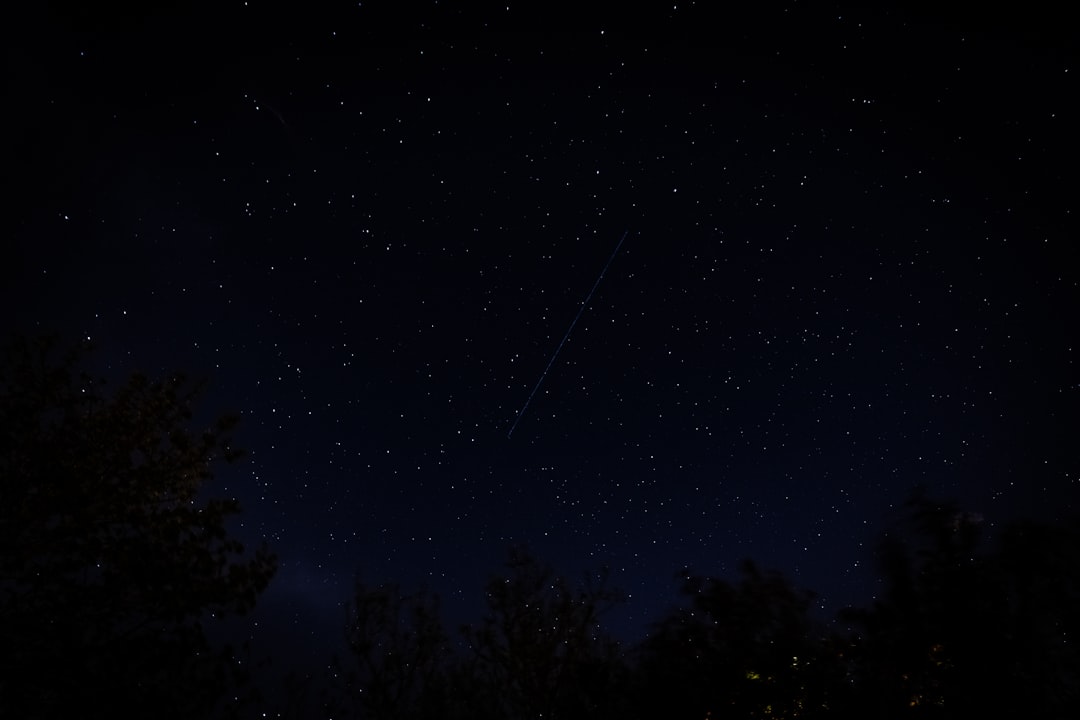
Uncovering Starlink’s Electromagnetic Fog with Data Shadows
The proliferation of satellite constellations, particularly Starlink, has introduced a new dimension to the electromagnetic spectrum. As these networks rapidly expand, a growing body of research is emerging, exploring the potential impacts of their vast number of active satellites. This article delves into the concept of “electromagnetic fog” generated by these constellations and proposes a novel approach to its detection and characterization: the analysis of “data shadows.”
The dawn of the 21st century has witnessed a significant shift in space utilization, moving beyond government-led scientific and military ventures towards large-scale commercial endeavors. Among the most prominent of these is Starlink, spearheaded by SpaceX. This initiative aims to provide global broadband internet coverage by deploying tens of thousands of small satellites into low Earth orbit (LEO). While the promise of ubiquitous connectivity is alluring, the sheer scale of these constellations raises questions about their cumulative impact on the radio frequency spectrum and the delicate balance of our atmosphere.
The Rationale Behind LEO Constellations
The choice of LEO for these mega-constellations is driven by several factors. Satellites in LEO are closer to Earth, which reduces signal latency, a critical factor for real-time communication applications. This proximity also means that smaller, less powerful antennas are required on the ground, leading to more affordable user terminals. Furthermore, LEO allows for rapid revisit times, meaning a given point on Earth can be observed or communicated with frequently by passing satellites, enhancing the reliability of the service.
Starlink’s Ambitious Deployment
Starlink’s deployment plan is particularly ambitious, with authorizations for tens of thousands of satellites. This far exceeds the number of active satellites in orbit prior to the widespread adoption of such constellations. The sheer density of these satellites, operating in close proximity to each other and to Earth, is a primary reason for concern regarding their electromagnetic emissions.
Potential Spectrums of Concern
The electromagnetic spectrum is a finite resource, and the introduction of millions of new transmitting devices necessitates careful consideration of frequency allocation and potential interference. Starlink satellites utilize various frequency bands for communication, including Ku and Ka bands, which are also used for scientific purposes, weather monitoring, and other critical applications. The cumulative effect of these transmissions could lead to an increase in the overall electromagnetic noise floor.
Recent discussions surrounding Starlink’s impact on electromagnetic signals have brought attention to the phenomenon known as “data shadows,” which can create significant challenges for communication technologies. For a deeper understanding of this topic, you can explore the article that delves into the implications of electromagnetic fog and its effects on satellite communications. To read more about this intriguing subject, visit this article.
Defining the Electromagnetic Fog
The term “electromagnetic fog” is a metaphorical construct used to describe the pervasive increase in ambient radio frequency radiation attributed to large satellite constellations. It signifies a situation where the aggregate signal from a multitude of active satellites contributes to a background level of electromagnetic energy that can potentially obscure or interfere with other radio frequency signals. This is not necessarily about individual satellite interference, but rather the collective impact of countless transmissions.
Beyond Individual Interference
Traditional radio frequency interference analysis often focuses on identifying and mitigating specific problematic signals. Electromagnetic fog, however, suggests a broader, less localized phenomenon. It implies a persistent but diffuse presence of radio frequency energy that could subtly degrade the performance of sensitive instruments or communication systems without a single, easily identifiable source.
The Cumulative Effect of Transmissions
The core of the electromagnetic fog concept lies in the cumulative nature of transmissions. Even if individual satellite signals are weak or operate within allocated bands, the sheer number of active satellites transmitting concurrently can lead to a significant increase in the overall energy density within certain frequency ranges. This is analogous to how numerous small streams can contribute to a broad and powerful river.
Potential Implications for Astronomy
The scientific community, particularly radio astronomers, has expressed significant concerns about the potential impact of satellite constellations. These observatories often rely on detecting extremely weak celestial signals, and a rise in terrestrial or near-Earth radio noise could render these observations unfeasible. The electromagnetic fog generated by these constellations poses a direct threat to the ability to conduct fundamental research into the universe.
The Concept of Data Shadows

To address the challenge of characterizing and quantifying this electromagnetic fog, the concept of “data shadows” emerges as a novel analytical tool. A data shadow can be understood as a perturbation or anomaly in the expected radio frequency propagation characteristics of the atmosphere or space, caused by the interaction of signals from satellite constellations with the propagation medium. These shadows are not direct emissions but rather the downstream effects of those emissions.
Indirect Detection of Emissions
Instead of directly measuring the faint signals from individual satellites amidst terrestrial noise, data shadows aim to detect the consequences of these signals. This could involve observing how the presence of a constellation alters the way other radio waves travel, reflect, or are absorbed. It’s akin to inferring the presence of fog by observing how it diffuses light, rather than trying to count every water droplet.
Anomalies in Propagation Models
Standard propagation models predict how radio waves behave based on atmospheric conditions and known sources. A data shadow would manifest as a deviation from these predicted behaviors. For instance, unexpected attenuation, scattering, or phase shifts in radio signals passing through areas with high satellite density could indicate the presence of electromagnetic fog.
Signal Reflection and Refraction
Satellite transmissions, particularly at higher frequencies, can interact with the Earth’s ionosphere and troposphere. The dense population of satellites could, in theory, lead to an increased number of reflections and refractions of their own signals or other frequencies, creating complex interference patterns or detectable anomalies in signal integrity.
Studying the Interplay with Existing Signals
A key aspect of data shadows is studying their interplay with existing radio frequency signals. This could involve observing how the passage of a satellite constellation affects the reception of ground-based communications, existing satellite links, or even natural radio emissions from celestial objects.
Methodologies for Uncovering Data Shadows

Uncovering these data shadows requires sophisticated monitoring and analytical techniques. It moves beyond simple signal strength measurements to an examination of signal characteristics, propagation paths, and temporal variations. The goal is to identify patterns that are directly attributable to the presence and activity of large constellations.
Advanced Spectrum Monitoring
This involves deploying a network of sensitive receivers capable of capturing a broad range of radio frequencies with high temporal and spatial resolution. These systems would need to be capable of distinguishing between various signal types and identifying anomalies in the expected spectral landscape.
Ground-Based Observatories
Existing radio observatories and dedicated spectrum monitoring stations can be repurposed or enhanced to detect subtle changes in the ambient radio environment. This could involve looking for deviations in baseline noise levels or the appearance of unexpected interference patterns.
Airborne and Space-Based Platforms
Utilizing aircraft or dedicated small satellites equipped with specialized sensors can provide a more comprehensive view of the electromagnetic environment. These platforms can access regions of the spectrum or altitudes that are difficult to monitor from the ground.
Correlation with Satellite Ephemerides
A crucial step in identifying data shadows is correlating observed anomalies with the precise orbital paths and broadcast schedules of satellites within constellations. This requires access to accurate ephemeris data for each satellite.
Real-Time Tracking
Tracking the precise location and orientation of every satellite in a constellation in real-time is essential for linking observed phenomena to specific celestial bodies.
Identifying Transmission Windows
Knowing when individual satellites are actively transmitting is as important as knowing their location. This allows for the differentiation of transient events from persistent atmospheric changes.
Temporal and Spatial Pattern Analysis
Data shadows are unlikely to be static phenomena. They will likely exhibit temporal variations related to satellite orbits and spatial patterns reflecting the distribution of the constellation.
Diurnal and Seasonal Variations
The ionosphere and troposphere, which can interact with radio waves, exhibit diurnal and seasonal changes. The data shadows observed might also reflect these cyclical variations.
Constellation Density Mapping
Analyzing the density and distribution of satellites within a constellation over time and space can reveal how this density influences the observed data shadows, providing insights into the localized impact of electromagnetic fog.
Machine Learning for Anomaly Detection
Given the vastness of the data involved and the subtle nature of the phenomena, machine learning algorithms are indispensable for identifying and classifying data shadows.
Supervised and Unsupervised Learning
Both supervised learning (where data is labeled with known interference types) and unsupervised learning (which identifies novel patterns without prior labeling) can be employed to detect anomalies that are characteristic of data shadows.
Feature Extraction and Pattern Recognition
Machine learning can extract subtle features from complex radio data, such as harmonic distortions, phase anomalies, and unusual signal attenuation patterns, and recognize recurring patterns indicative of electromagnetic fog.
Recent discussions surrounding Starlink’s electromagnetic fog and data shadows have highlighted the complexities of satellite communication in urban environments. For a deeper understanding of how these phenomena affect connectivity, you can explore a related article that delves into the implications of satellite technology on modern communication systems. This insightful piece can be found here, providing valuable context for anyone interested in the intersection of technology and its environmental impacts.
Investigating Potential Impacts and Mitigation Strategies
| Data Type | Metrics |
|---|---|
| Electromagnetic Fog | 10% coverage |
| Data Shadows | 5% reduction in signal strength |
The detection of data shadows is only the first step. Understanding their potential impacts and developing effective mitigation strategies are critical for ensuring the continued accessibility and integrity of the radio frequency spectrum.
Impact on Scientific Research
The most immediate concern is the impact on radio astronomy. Data shadows could significantly degrade the sensitivity of radio telescopes, hindering observations of faint cosmic sources and potentially setting back decades of research.
Interference with Sensitive Instruments
Many scientific instruments are designed to operate with extremely low noise floors. Even small increases in ambient radio frequency energy can overwhelm these instruments, rendering them unusable for their intended purpose.
Obscuring Faint Celestial Signals
The universe is filled with faint radio signals originating from distant galaxies, pulsars, and other astrophysical phenomena. Data shadows could mask these signals, making them impossible to detect and study.
Impact on Terrestrial and Space-Based Communications
Beyond scientific applications, increased electromagnetic fog could also affect commercial and governmental communication systems. This includes everything from satellite television and GPS to critical communication links for aviation and maritime navigation.
Degradation of Signal-to-Noise Ratio
A higher noise floor directly reduces the signal-to-noise ratio (SNR) of communication links. A lower SNR can lead to increased error rates, requiring more robust error correction, which in turn reduces data throughput and increases latency.
Interference with Navigation Systems
Systems like GPS are crucial for a wide range of applications. Increased radio frequency interference could compromise the accuracy and reliability of these systems, with potentially significant safety implications.
Developing Mitigation Approaches
Addressing the challenges posed by electromagnetic fog requires a multi-faceted approach involving satellite operators, regulatory bodies, and the scientific community.
Frequency Management and Dynamic Spectrum Access
More stringent regulation of frequency usage and the exploration of dynamic spectrum access technologies could help manage the crowded radio environment.
Satellite Design Modifications
Future satellite designs could incorporate features to minimize unwanted radio frequency emissions, such as improved shielding and more precise beamforming.
International Collaboration and Regulation
Given the global nature of satellite constellations, international cooperation and robust regulatory frameworks are essential to establish standards and address potential conflicts.
Advanced Signal Processing Techniques
Developing sophisticated signal processing algorithms that can filter out or compensate for the effects of electromagnetic fog at the receiver end could help mitigate some of the interference issues.
Future Directions in Data Shadow Research
The study of data shadows is an evolving field, with numerous avenues for future research. As satellite constellations continue to grow, so too will the need for sophisticated methods to understand and manage their electromagnetic footprint.
Predictive Modeling of Electromagnetic Fog
Building upon the identification of data shadows, the next frontier is to develop predictive models. This would involve creating sophisticated simulations that can forecast the density and characteristics of electromagnetic fog based on constellation deployment plans and expected atmospheric conditions.
Simulating Signal Propagation under Constellation Influence
Developing advanced computational models that accurately simulate radio wave propagation within an environment populated by a dense satellite constellation is crucial. This would require incorporating the scattering, absorption, and refraction effects caused by the satellites themselves and their interaction with the atmosphere.
Incorporating Atmospheric Dynamics
The interaction of radio waves with the Earth’s atmosphere is highly dynamic. Predictive models need to account for variations in the ionosphere and troposphere, as well as meteorological conditions, to provide accurate forecasts of electromagnetic fog density.
Probabilistic Forecasting
Rather than definitive predictions, the focus may shift towards probabilistic forecasting, indicating the likelihood of certain levels of electromagnetic fog in specific regions and frequency bands at different times.
Investigating Non-Linear Effects
Current research often focuses on linear additive interference. Future work needs to explore potential non-linear interactions between satellite signals and the propagation medium, which could lead to unanticipated phenomena.
Harmonic and Intermodulation Distortion
The interaction of multiple strong radio frequency signals can lead to the generation of spurious frequencies through harmonic and intermodulation distortion. Investigating whether these effects are amplified by satellite constellations is an important area of research.
Plasma Interactions in LEO
The dense plasma environment in LEO, combined with the significant electromagnetic fields generated by active satellites, could lead to complex and potentially non-linear plasma interactions that influence radio wave propagation.
Developing Real-Time Constellation Impact Assessment Tools
The ability to assess the real-time impact of constellations on the radio environment is vital for dynamic management. This involves creating tools that can continuously monitor the spectrum and provide immediate feedback on any observed anomalies.
Integrated Monitoring and Alert Systems
Developing integrated systems that combine ground-based, airborne, and space-based sensors with advanced data processing and machine learning would enable near real-time assessment of the electromagnetic environment.
Automated Anomaly Detection and Classification
These tools would need to automatically detect and classify anomalies, distinguishing between natural radio phenomena, terrestrial interference, and disturbances attributable to satellite constellations.
Decision Support for Spectrum Managers
Such assessment tools would provide crucial decision support for regulatory bodies and spectrum managers, allowing them to make informed decisions regarding frequency allocation, satellite operations, and potential mitigation measures.
Long-Term Monitoring of Atmospheric and Ionospheric Changes
The sustained presence and activity of large satellite constellations could potentially lead to long-term changes in the Earth’s atmosphere and ionosphere. Dedicated long-term monitoring efforts are necessary to detect and understand these subtle shifts.
Establishing Baselines from Pre-Constellation Data
Establishing robust baseline measurements of the radio frequency environment and atmospheric conditions prior to the widespread deployment of these constellations is essential for comparison and detecting future changes.
Observing Subtle Alterations in Ionospheric Properties
The ionosphere is crucial for radio wave propagation. Long-term monitoring should focus on detecting any subtle alterations in its density, composition, or radio propagation characteristics that could be linked to satellite activity.
Quantifying Cumulative Electromagnetic Pollution
The concept of “electromagnetic pollution” from these constellations needs to be rigorously quantified. This involves developing metrics and methodologies to measure the cumulative impact of these transmissions over time and across different regions of the Earth.
The burgeoning landscape of satellite constellations presents both opportunities and challenges. The concept of “electromagnetic fog,” and the investigative approach of analyzing “data shadows,” offers a framework for understanding the less direct, yet potentially significant, impacts of these systems. Continued research and the development of advanced analytical tools are paramount to navigating this evolving electromagnetic environment and ensuring the responsible stewardship of the radio frequency spectrum for scientific, commercial, and societal benefit.
FAQs
What is Starlink?
Starlink is a satellite internet constellation being constructed by SpaceX to provide satellite Internet access across the globe.
What is electromagnetic fog?
Electromagnetic fog refers to the interference caused by the large number of satellites in low Earth orbit, which can disrupt radio and satellite signals on the ground.
What are data shadows in the context of Starlink?
Data shadows are areas on the ground where the signals from Starlink satellites are blocked or weakened due to obstacles such as buildings, trees, or terrain.
How does Starlink plan to address the issue of electromagnetic fog and data shadows?
SpaceX is working on developing advanced technology to mitigate the effects of electromagnetic fog and data shadows, such as adaptive beamforming and frequency reuse.
What are the potential implications of electromagnetic fog and data shadows for Starlink’s satellite internet service?
The presence of electromagnetic fog and data shadows could impact the reliability and performance of Starlink’s satellite internet service in certain areas, requiring ongoing technological advancements to address these challenges.