Quantum Reality: Editing the Source Code
The Fabric of Existence
The observable universe, for all its apparent solidity and predictable laws, is increasingly understood through the lens of quantum mechanics. This subatomic realm defies common intuition, suggesting that reality at its most fundamental level is not a fixed, deterministic tapestry but a probabilistic, fluid field. The implications of this are profound, hinting at the possibility of influencing, or perhaps even editing, the very source code that underpins our existence. This exploration delves into the burgeoning understanding of quantum reality and the theoretical frameworks that suggest an active role for consciousness or external manipulation in shaping its outcomes.
The traditional view of physics painted a universe composed of discrete, localized particles with well-defined properties. However, the advent of quantum theory in the early 20th century shattered this deterministic picture. Experiments revealed phenomena that could only be explained by a radically different model, one where particles exhibit wave-like behavior, probabilities reign supreme, and the act of observation plays a crucial, and often confounding, role. This section will examine the foundational principles that define this quantum substrate.
Wave-Particle Duality: The Fundamental Ambiguity
One of the most perplexing aspects of quantum mechanics is wave-particle duality. Objects at the quantum scale, such as electrons and photons, do not behave solely as solid particles, nor solely as spread-out waves. Instead, they possess characteristics of both. An electron, for instance, can be detected at a specific point, acting like a particle, yet its behavior over time, such as its interference patterns in a double-slit experiment, is undeniably wave-like. This inherent duality suggests that quantum entities exist in a superposition of states until measured, meaning they possess multiple potential realities simultaneously. The transition from this probabilistic wave function to a definite particle state is a cornerstone of quantum observation.
Superposition and Entanglement: Entwined Possibilities
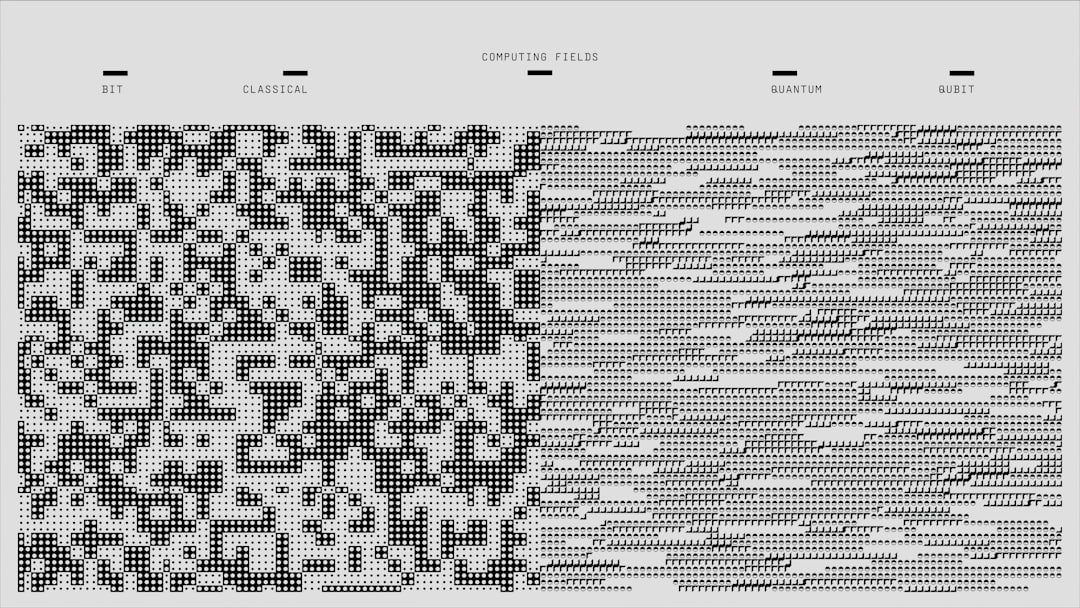
Superposition is the principle that a quantum system can exist in multiple states at once. A qubit, the quantum equivalent of a classical bit, can be both 0 and 1 simultaneously, unlike a classical bit which must be either 0 or 1. This allows for an exponential increase in computational power when applied to quantum computing. Entanglement, often described as “spooky action at a distance” by Einstein, is an even more extraordinary phenomenon. It occurs when two or more quantum particles become linked in such a way that they share the same fate, regardless of the distance separating them. Measuring the state of one entangled particle instantaneously influences the state of the other, a correlation that cannot be explained by classical physics. This interconnectedness suggests a deeper, underlying unity to reality.
The Observer Effect: Consciousness in the Equation?
The observer effect is perhaps the most debated and philosophically charged aspect of quantum mechanics. It suggests that the act of measuring or observing a quantum system can fundamentally alter its state. Before observation, a quantum system exists in a superposition of possibilities. Upon measurement, the wave function “collapses,” and the system settles into a single, definite state. The question that arises is whether this “observer” must be conscious. While many interpretations of quantum mechanics do not require a conscious observer, some, like the von Neumann-Wigner interpretation, posit that consciousness plays a direct role in collapsing the wave function. This opens a speculative but significant avenue for considering how internal states might influence external quantum phenomena.
For those interested in the fascinating concept of editing the source code of reality at a quantum level, a related article can provide deeper insights into this groundbreaking topic. You can explore the intricacies of quantum mechanics and its implications for our understanding of reality by visiting this link: here. This article delves into the theoretical frameworks and experimental findings that suggest the possibility of manipulating the fundamental aspects of our universe.
Quantifying the Unquantifiable: The Potential for Manipulation
The probabilistic nature of the quantum world, coupled with the interconnectedness of entangled particles, presents theoretical possibilities for manipulating reality at its deepest level. This is not to suggest direct, conscious control in the everyday sense, but rather the utilization of quantum principles to influence outcomes. This section will explore the theoretical underpinnings of such manipulation, moving from established quantum phenomena to more speculative applications.
Quantum Computing: Harnessing Probabilistic Power
Quantum computing represents a practical application of quantum mechanics that aims to solve problems intractable for classical computers. By leveraging superposition and entanglement, quantum computers can explore a vast number of possibilities simultaneously. This power has implications far beyond mere calculation; it could revolutionize fields like drug discovery, materials science, and cryptography. Furthermore, the development of quantum algorithms that exploit quantum tunneling or interference could be seen as a subtle form of “editing” probabilities to arrive at desired solutions more efficiently. The ability to explore multiple outcomes at once suggests a form of digital manipulation of potential realities.
Quantum Teleportation: Transmitting Information, Not Matter
Quantum teleportation, while often sensationalized, is a real phenomenon that demonstrates the power of entanglement. It does not involve the physical transmission of matter, but rather the transfer of quantum information from one location to another. By using entangled pairs of particles, the quantum state of a particle can be transferred to a distant particle without physically moving the original. This process relies on the instantaneous correlation between entangled particles. While currently limited to transferring quantum states, it hints at the potential for manipulating information across distances in ways that transcend classical limitations. This offers a conceptual metaphor for influencing distant states without direct physical intervention.
Control of Quantum Systems: Lasers and Magnetic Fields as Virtual Editors
The ability to interact with and control quantum systems is rapidly advancing. Researchers can now cool atoms to near absolute zero, trap them with laser beams, and manipulate their quantum states with exquisite precision using magnetic fields and other electromagnetic radiation. These are not merely observational tools; they are agents of change. By precisely tuning the energy and frequency of laser pulses, scientists can induce specific quantum transitions in atoms or molecules, effectively guiding their behavior. This level of control over the quantum substrate can be viewed as a rudimentary form of “editing” the potential states of quantum systems, guiding them toward desired outcomes.
The Mind-Matter Connection: Navigating the Interpretational Landscape
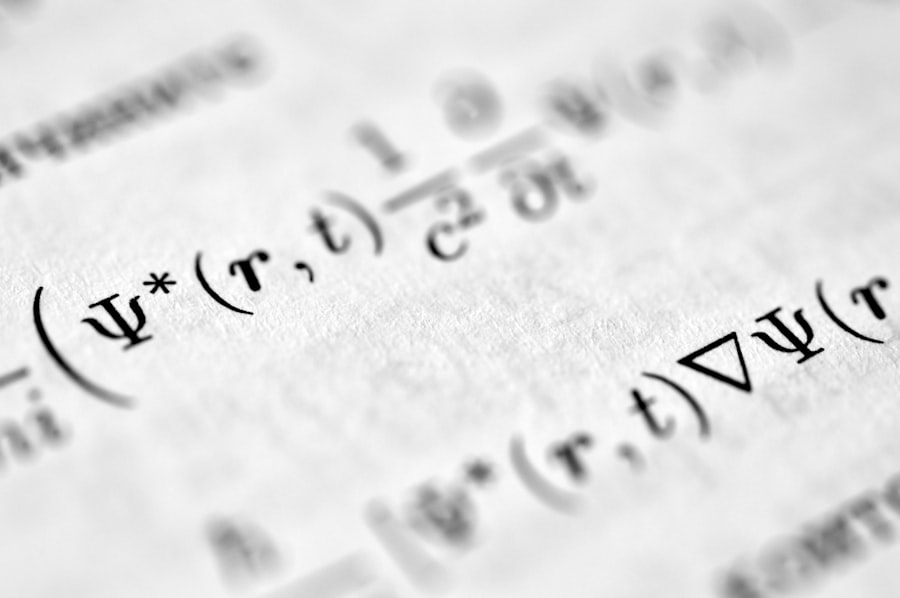
The philosophical implications of quantum mechanics, particularly concerning the role of the observer, have led to a fascinating debate about the relationship between consciousness and the physical world. While not universally accepted, some interpretations suggest a deeper, more active role for the mind in shaping quantum reality. This section will explore these controversial but intriguing perspectives.
The Copenhagen Interpretation and its Discontents
The Copenhagen interpretation, perhaps the most widely taught and accepted, views quantum phenomena as fundamentally probabilistic. The wave function describes the probabilities of a system’s states, and observation causes the wave function to collapse into a definite outcome. However, it offers little explanation for why or how this collapse occurs, leaving a gap that other interpretations seek to fill. The absence of a mechanism for collapse has led to dissatisfaction and the development of alternative frameworks.
Many-Worlds Interpretation: A Multiverse of Choices
The Many-Worlds Interpretation (MWI), proposed by Hugh Everett III, offers a radical solution to the measurement problem. Instead of a single wave function collapsing, MWI suggests that at each quantum measurement or interaction, the universe splits into multiple parallel universes, each representing a different possible outcome. In this scenario, every potential state represented by the wave function becomes a reality in some universe. While this eliminates the need for a collapse, it posits an infinite, branching multiverse, a concept that is both awe-inspiring and philosophically challenging. From this perspective, “editing” reality would imply influencing which branch of the multiverse we inhabit, a notion that remains within the realm of theoretical speculation.
Quantum Indeterminacy and Free Will: A Philosophical Nexus
The inherent randomness and indeterminacy at the quantum level have sparked discussions about the nature of free will. If the universe operates on probabilistic principles, does this open a space for genuine choice? Some argue that quantum indeterminacy provides the necessary “wiggle room” for free will to operate, overriding strict determinism. Others maintain that free will is an illusion, regardless of quantum mechanics. The idea of “editing” the source code might, in this context, be interpreted as a conscious agent subtly influencing probabilities, a concept that blurs the lines between observer and participant, and between intention and outcome.
Advanced Concepts: Towards Conscious Influence

While direct conscious control over quantum events remains highly speculative, certain theoretical advancements and ongoing research explore the boundaries of mind-matter interaction at the quantum level. This section delves into these more advanced and often controversial domains.
Biomolecular Quantum Effects: The Body as an Interface
Increasing attention is being paid to the potential role of quantum phenomena within biological systems. Theories suggest that subtle quantum effects, such as coherence and tunneling, might be involved in processes like photosynthesis, enzyme catalysis, and even consciousness itself. If biological systems exhibit quantum properties, then the state of the organism, including its conscious state, might have a more direct influence on these quantum processes. This opens the door to the idea that the body itself could act as an interface for interacting with and potentially influencing quantum reality. Research into quantum biology is a rapidly growing field seeking to bridge the gap between the quantum realm and the living world.
Entanglement-Assisted Information Transfer: Beyond Classical Limits
The implications of entanglement for information transfer are profound. While quantum teleportation demonstrates the transfer of quantum states, further theoretical work explores how entanglement might facilitate more complex forms of information processing or even influence. Imagine a network of entangled systems; an alteration in one part of the network could, in principle, have ripple effects throughout. While this is far from suggesting telepathy or overtly manipulating distant objects, it hints at subtle influences mediated by quantum correlations that are not bound by classical spatial or temporal constraints. This could be viewed as a form of remote influence, editing information rather than physical matter.
The Search for Quantum Coherence in Consciousness
A significant area of research is the exploration of quantum coherence within the brain. Coherence, the maintenance of a definite quantum state, is fragile and easily disrupted by environmental noise. However, some theoretical models propose that certain structures or processes within the brain might be able to sustain quantum coherence for durations sufficient to play a role in cognitive functions, including consciousness. If consciousness itself arises from or is intimately linked to quantum coherent states, then internal mental states – thoughts, intentions, focused attention – might directly influence these quantum processes, leading to a more nuanced understanding of how the mind interacts with the physical world. This is a highly speculative but actively investigated area.
In exploring the fascinating concept of editing the source code of reality, one can gain deeper insights by reading a related article that delves into the implications of quantum mechanics on our understanding of existence. This article provides a thought-provoking perspective on how our perceptions might be influenced by the underlying fabric of reality. To learn more about these intriguing ideas, you can visit Freaky Science, where the intersection of science and philosophy is examined in detail.
Ethical and Philosophical Dimensions: Navigating the New Frontier
| Aspect | Metric |
|---|---|
| Quantum Reality Editing | Probability Manipulation |
| Quantum Reality Editing | Entanglement Control |
| Quantum Reality Editing | Wavefunction Modification |
| Quantum Reality Editing | Observer Effect Management |
The possibility of “editing the source code” of reality, even in its most theoretical and nuanced forms, raises significant ethical and philosophical questions. As our understanding deepens, so too must our consideration of the potential consequences and responsibilities. This section addresses these crucial dimensions.
The Responsibility of Knowledge: Precautionary Principles
As humanity gains an even rudimentary understanding of how to manipulate quantum phenomena, a profound responsibility emerges. The potential for unintended consequences, even from seemingly benign interventions, necessitates a cautious and ethical approach. The precautionary principle, advocating for preventive action in the face of uncertainty, becomes paramount. Before exploring widespread applications of technologies that could influence quantum reality, thorough risk assessments and robust ethical frameworks are indispensable. The potential for a cascade of unforeseen effects underscores the need for careful deliberation.
Redefining Causality and Determinism: A Paradigm Shift
If it becomes possible to actively influence quantum outcomes, our understanding of causality and determinism will undergo a seismic shift. The traditional linear model of cause and effect, rooted in classical physics, may prove insufficient. The interconnectedness and probabilistic nature of quantum reality suggest a more complex interplay, where intentions or focused energies might subtly nudge probabilities rather than directly causing events. This could lead to a re-evaluation of free will, responsibility, and the very nature of how events unfold in the universe. The notion of a predetermined future might yield to a more fluid, emergent reality.
The Future of Reality: A Conscious Collaboration or a Controlled System?
The ultimate implication of understanding and potentially editing quantum reality is a fundamental redefinition of our place within the universe. Are we merely passive observers, or can we become active participants in shaping the fabric of existence? The pursuit of this knowledge presents a fork in the road: one path leads to a future where consciousness and quantum mechanics are understood and collaborated with, leading to innovative solutions and a deeper appreciation for the interconnectedness of all things. The other path, if not approached with wisdom and ethical rigor, could lead to attempts at overt control, with unpredictable and potentially detrimental outcomes. The ongoing exploration of quantum reality invites a profound philosophical reckoning with what it means to be an agent within the cosmos.
FAQs
What is the concept of editing the source code of reality in quantum physics?
Editing the source code of reality in quantum physics refers to the idea that the fundamental building blocks of the universe can be manipulated or altered at a quantum level. This concept is based on the theory that reality is composed of quantum information, and that by manipulating this information, it may be possible to change the fabric of reality itself.
Is it currently possible to edit the source code of reality in quantum physics?
At present, the concept of editing the source code of reality in quantum physics remains purely theoretical and speculative. While quantum mechanics allows for the manipulation of quantum states, the idea of directly editing the source code of reality is not currently supported by empirical evidence or scientific consensus.
What are some theoretical implications of editing the source code of reality in quantum physics?
Theoretical implications of editing the source code of reality in quantum physics include the potential for creating new realities, altering the laws of physics, and even potentially accessing parallel universes. These ideas are highly speculative and remain the subject of ongoing debate and exploration within the field of quantum physics.
Are there any ethical or philosophical considerations related to the concept of editing the source code of reality in quantum physics?
The concept of editing the source code of reality in quantum physics raises ethical and philosophical questions about the nature of reality, the limits of human knowledge and power, and the potential consequences of manipulating the fabric of the universe. These considerations are important to explore as the field of quantum physics continues to advance.
What are some potential practical applications of editing the source code of reality in quantum physics?
While the concept of editing the source code of reality in quantum physics is currently speculative, some potential practical applications could include the development of advanced quantum technologies, such as quantum computing and communication, as well as the potential for new forms of energy generation and manipulation. However, these applications remain purely theoretical at this time.