
Exploring the Many-Worlds Interpretation with Google’s Quantum Chip
The Many-Worlds Interpretation (MWI) of quantum mechanics presents a profound departure from classical intuition regarding reality. Instead of a single probabilistic outcome to a quantum measurement, MWI posits that all possible outcomes occur, each in its own distinct universe or “branch” of reality. This concept, initially a philosophical consequence of applying quantum theory consistently, has long been confined to theoretical discussions and thought experiments. However, advancements in quantum computing, particularly the sophisticated hardware developed by companies like Google, are beginning to offer pathways to experimentally probe aspects of this mind-bending idea, albeit indirectly. Google’s quantum chips, with their increasing qubit counts and error correction capabilities, provide a powerful new lens through which to explore the implications of quantum superposition and entanglement, phenomena central to the MWI.
The MWI, first formally articulated by Hugh Everett III in his 1957 doctoral thesis, arose as a solution to the quantum measurement problem. In quantum mechanics, a system can exist in a superposition of states, meaning it simultaneously possesses multiple properties. For instance, an electron can be in a superposition of spin-up and spin-down. However, when a measurement is performed, the system appears to collapse into a single, definite state. Traditional interpretations, like the Copenhagen interpretation, postulate a “collapse” of the wave function, an ill-defined process that introduces a seemingly arbitrary distinction between quantum systems and the classical observer.
Everett’s Universal Wave Function
Everett’s radical proposal sidestepped the issue of wave function collapse. He suggested that the wave function describing the entire universe is constantly evolving unitarily, without any special collapse mechanism. Upon measurement, the observer and the measured system become entangled. This entanglement leads to a branching of the universe. In each branch, a different outcome of the measurement is realized, and the observer in that branch perceives that specific outcome as the sole reality.
Entanglement as the Branching Mechanism
The process of branching, according to MWI, is intrinsically linked to quantum entanglement. When a quantum system in superposition interacts with another system (including measuring devices or even other quantum systems), they become entangled. This entanglement creates a correlation between the states of the interacting systems. If the initial system was in a superposition of states A and B, and it becomes entangled with another system, the entangled state will effectively be a superposition of (A interacting with the second system in state A’) and (B interacting with the second system in state B’). From the perspective of an observer within a specific branch, only one of these correlated outcomes will be observed.
The Observer’s Role in MWI
A key point of differentiation in MWI is the role of the observer. Unlike interpretations that invoke a conscious observer to trigger collapse, in MWI, the act of branching is a consequence of unitary quantum evolution and entanglement. Observers are simply quantum systems themselves, subject to the same rules of superposition and entanglement. Therefore, an observer does not cause the wave function to collapse; rather, the observer becomes part of the superposition, and their own state becomes correlated with the measured outcome.
Implications for Determinism and Probability
MWI offers a deterministic view of the universe at the fundamental level. The “universal wave function” evolves deterministically. Probability, in this framework, emerges from the observer’s subjective experience within a particular branch. The likelihood of an observer finding themselves in a branch corresponding to a particular outcome is related to the amplitude squared of that part of the wave function. This aspect of MWI has been a subject of significant debate and ongoing research, seeking to reconcile the deterministic evolution of the universal wave function with our experience of probabilistic events.
The many worlds interpretation of quantum mechanics presents a fascinating perspective on the nature of reality, suggesting that all possible outcomes of quantum measurements actually occur in separate, branching universes. This concept has gained renewed interest with advancements in quantum computing, particularly with the development of Google’s quantum chip. For a deeper exploration of these ideas and their implications, you can read a related article at Freaky Science, which delves into the intersection of quantum theory and cutting-edge technology.
Quantum Computing and the Simulation of Quantum Phenomena
Quantum computers, in contrast to classical computers, leverage quantum mechanical principles such as superposition and entanglement to perform computations. These principles are precisely the bedrock upon which interpretations like MWI are built. Google’s quantum processors, like Sycamore and its successors, are designed to harness these phenomena for tasks that are intractable for even the most powerful supercomputers. While their primary goal is often to solve specific computational problems, their ability to implement and manipulate quantum states makes them invaluable tools for exploring fundamental quantum physics.
Superposition and Qubit States
The fundamental unit of information in a quantum computer is the qubit. Unlike classical bits, which can be either 0 or 1, a qubit can exist in a superposition of both states simultaneously. This ability to represent multiple states at once is what allows quantum computers to explore vast computational spaces. For MWI, the presence of qubits in superposition directly mirrors the quantum states that, in the interpretation, give rise to different branches of reality upon measurement. A quantum computer performing a calculation involving a superposition can, in a sense, be seen as performing that calculation in multiple “parallel” quantum realities.
Simulating Quantum Systems
One of the most promising applications of quantum computing is the simulation of quantum systems. Understanding the behavior of molecules, materials, and even fundamental particles often requires solving complex quantum mechanical equations. Classical computers struggle with the exponential growth in complexity as the number of particles increases. Quantum computers, by their very nature, are well-suited for this task. They can directly map the quantum states of simulated systems onto their qubits, allowing for more accurate and efficient simulations. This ability to simulate complex quantum phenomena is crucial for any attempt to experimentally investigate concepts like MWI.
Entanglement as a Computational Resource
Entanglement, the spooky correlation between quantum particles, is another essential resource for quantum computation. It allows qubits to be linked in ways that are impossible classically, enabling powerful quantum algorithms. For MWI, entanglement is posited as the very mechanism that creates the distinct branches of reality during a quantum event. A quantum computer that can create and manipulate highly entangled states is, therefore, engaging with the fundamental building blocks that MWI describes as leading to its branching universe.
Quantum Algorithms and Their MWI Connections
Various quantum algorithms can be designed to probe the behavior of quantum systems. While no algorithm can directly “prove” MWI, algorithms that explore superposition and entanglement can shed light on the underlying quantum dynamics that MWI seeks to explain. For instance, algorithms that involve controlled interactions between multiple qubits in superposition are, in a way, enacting scenarios analogous to the branching proposed by Everett.
Google’s Quantum Chip: A Platform for Exploration
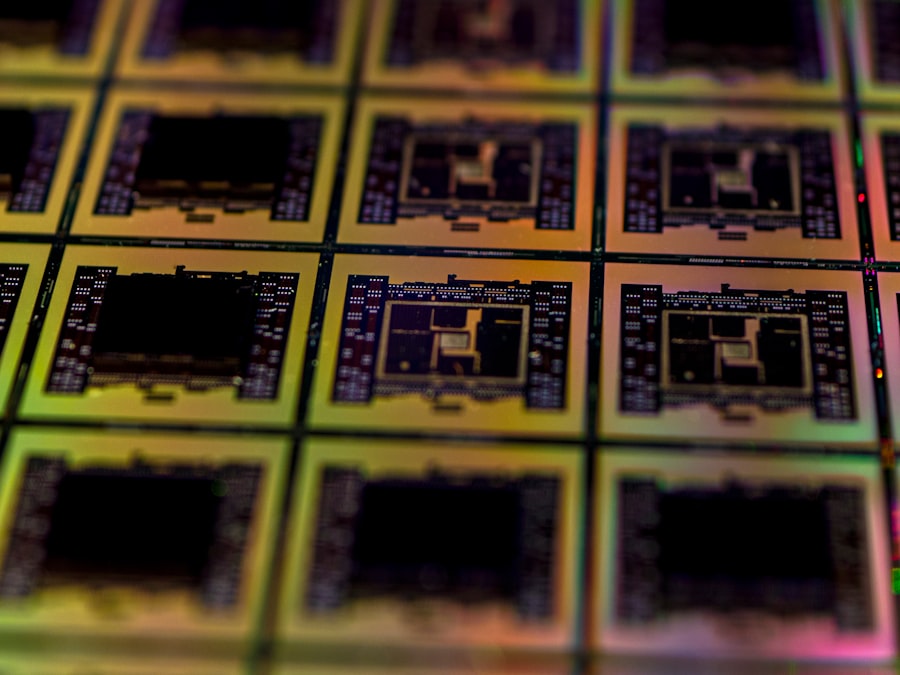
Google’s commitment to advancing quantum computing has led to the development of increasingly sophisticated quantum processors. These chips, built using superconducting circuits, are at the forefront of experimental quantum information science. Their progress in increasing qubit numbers, improving qubit coherence times, and developing error mitigation techniques makes them prime candidates for conducting experiments that could offer insights into the implications of quantum interpretations.
Sycamore and its Successors: Key Architectures
The Sycamore processor, with its 53 qubits, was a landmark achievement, demonstrating a level of quantum computational advantage. Subsequent generations of Google’s quantum chips have aimed to build upon this foundation, increasing qubit counts, connectivity, and fidelity. The architecture of these processors – how qubits are arranged and interact – directly influences the types of quantum operations that can be performed and, consequently, the quantum phenomena that can be studied.
Superconducting Qubits and Their Properties
Google primarily utilizes superconducting qubits, which are engineered electrical circuits that exhibit quantum mechanical behavior at extremely low temperatures. These qubits are manipulated using microwave pulses, allowing for precise control over their quantum states. The coherence time of these qubits – how long they can maintain their quantum properties – is a critical factor for performing complex computations and experiments. Longer coherence times mean longer durations for quantum evolution, which is essential for observing subtle quantum effects.
Control and Readout Capabilities
Effective control and measurement of qubits are paramount for any quantum experiment. Quantum processors need to be able to initialize qubits into specific states, apply a sequence of quantum gates to evolve those states, and then accurately read out the final state. Google’s quantum chips are equipped with advanced control electronics and readout mechanisms that are crucial for executing sophisticated quantum circuits and analyzing the results.
Quantum Gates and Circuit Design
Quantum gates are the fundamental building blocks of quantum algorithms and simulations. They perform unitary transformations on qubits, analogous to logic gates in classical computing. The ability to implement a wide range of high-fidelity quantum gates allows researchers to construct complex quantum circuits that can simulate or probe specific quantum phenomena relevant to MWI. Careful circuit design is necessary to translate theoretical concepts into executable experiments.
Potential Experimental Approaches to MWI

Directly testing MWI is challenging because the proposed “other worlds” are, by definition, inaccessible. However, researchers can design experiments that explore the implications of MWI’s core tenets – namely, the role of superposition, entanglement, and interference in quantum phenomena. Quantum computers provide a controlled environment to investigate these aspects with unprecedented precision.
Probing Quantum Interference Effects
Interference is a hallmark of quantum mechanics and a key prediction of superposition. In MWI, interference arises from the superposition of different branches of the wave function. Experiments on quantum computers can be designed to highlight these interference patterns. For example, variations of the double-slit experiment, performed using qubits, could be used to observe interference effects that are consistent with the idea that a particle takes “all possible paths” simultaneously.
The Quantum Zeno Effect and its Relation to MWI
The Quantum Zeno effect, where frequent measurements of a quantum system can inhibit its evolution, has been discussed in relation to MWI. In MWI, repeated measurements would lead to repeated branching. While not a direct test, exploring the Quantum Zeno effect on a quantum computer could offer insights into how measurement interacts with quantum states in a way that might be interpreted through the lens of branching.
Exploiting Entanglement for Information Probing
The strong correlations that arise from entanglement are central to MWI’s branching mechanism. Experiments that create and manipulate highly entangled states, and then probe the correlations between the entangled particles (or qubits), can indirectly inform discussions about MWI. If the observed correlations are precisely as predicted by quantum mechanics, and MWI offers a consistent explanation for these correlations, then the interpretation gains further credence as a descriptive framework.
Bell Inequalities and Non-Locality
Experiments testing Bell inequalities are a classic example of probing the non-classical nature of quantum mechanics. These experiments demonstrate that the correlations between entangled particles are stronger than any classical theory would allow, suggesting either non-locality or that reality is fundamentally different from our classical intuition. While not a direct proof of MWI, refuting local hidden variable theories strengthens the case for interpretations like MWI that embrace the strangeness of quantum entanglement.
Simulating Quantum Measurement Processes
Since measurement is the point at which branching is hypothesized to occur in MWI, simulating different measurement scenarios on a quantum computer could be informative. This could involve simulating how a quantum system interacts with a simulated measuring device and observing the resulting entanglement and potential for decoherence, which plays a crucial role in the practical separation of branches.
Environmental Interactions and Decoherence
Decoherence, the process by which a quantum system loses its quantum properties due to interaction with its environment, is a crucial concept in understanding why we don’t observe macroscopic superpositions. In MWI, decoherence is often seen as the mechanism that effectively prevents interference between different branches, making them practically separate. Quantum computers, with their susceptibility to environmental noise, can serve as models for studying decoherence.
The many worlds interpretation of quantum mechanics has gained significant attention, especially with advancements in quantum computing technologies. A fascinating article that delves into the implications of this interpretation on quantum chips can be found at Freaky Science. This piece explores how the principles of quantum mechanics, particularly the many worlds interpretation, could revolutionize the capabilities of quantum chips, leading to unprecedented computational power and new possibilities in various fields.
Challenges and Future Directions
| Aspect | Details |
|---|---|
| Number of qubits | 72 qubits |
| Quantum volume | Over 4,000,000 |
| Chip name | Sycamore |
| Quantum supremacy | Achieved in 2019 |
While Google’s quantum chips offer unprecedented capabilities, probing the Many-Worlds Interpretation remains an enormously challenging endeavor. The interpretation itself is profoundly counter-intuitive, and experimental verification faces significant conceptual and technical hurdles.
The Problem of Observation and Branching
The central difficulty lies in observing or interacting with these hypothesized parallel universes. By their very nature, they are not directly accessible to us. Any experiment designed to “witness” these other worlds would, by definition, render them less effective in their branching capacity, as the interaction itself would alter the quantum state. This leads to a philosophical quandary as much as a scientific one.
The Subjectivity of “Reality”
MWI suggests that each observer experiences a single, consistent reality within their branch. This makes it inherently difficult to devise an experiment that could be universally agreed upon as evidence for or against MWI. The subjective nature of experienced reality within each branch poses a fundamental challenge to objective verification.
Quantum Computing Limitations and Scalability
Current quantum computers, while impressive, are still noisy and prone to errors. Scaling up to the thousands or millions of qubits that might be required for highly complex simulations relevant to MWI is a long-term goal. Furthermore, the fidelity of quantum gates and the coherence times of qubits must continue to improve to perform the intricate experiments necessary to probe such subtle quantum phenomena.
Error Mitigation and Correction
Developing robust error mitigation and correction techniques is crucial. Without them, noise can overwhelm the delicate quantum signals that are essential for exploring concepts like quantum interference, which are central to MWI. The progress in these areas by Google and other research institutions is vital for the future of quantum exploration.
Theoretical Frameworks and Interpretational Debates
The debate surrounding MWI is ongoing and deeply rooted in theoretical physics. Future research will likely involve developing more rigorous theoretical frameworks that can connect observable quantum phenomena to the specific predictions of MWI in a more definitive way. This may involve exploring new mathematical formalisms or exploring connections to other fundamental theories.
Quantum Foundations and Information Theory
Investigating the connections between quantum foundations, information theory, and MWI could unlock new avenues for research. Understanding how quantum information is processed and perceived across different branches might offer novel insights.
In conclusion, while Google’s quantum chips do not offer a direct “button” to prove or disprove the Many-Worlds Interpretation, they provide an unprecedented experimental platform to explore the quantum phenomena that lie at its heart. By enabling the precise manipulation and study of superposition, entanglement, and interference, these powerful machines allow researchers to conduct experiments that can indirectly shed light on the implications of this radical interpretation of reality. The journey to understand the universe, and our place within it, continues to be driven by the interplay of theoretical inquiry and cutting-edge technological advancement.
FAQs
What is the Many Worlds Interpretation in quantum physics?
The Many Worlds Interpretation is a theory in quantum physics that suggests that every possible outcome of a quantum measurement actually occurs in a separate “world” or parallel universe.
What is the Google Quantum Chip and how does it relate to the Many Worlds Interpretation?
The Google Quantum Chip is a quantum processor developed by Google as part of their quantum computing research. It relates to the Many Worlds Interpretation as it has the potential to perform calculations that could demonstrate the existence of parallel universes, as predicted by the interpretation.
How does the Google Quantum Chip work?
The Google Quantum Chip operates using superconducting qubits, which are the basic units of quantum information in quantum computing. These qubits can exist in multiple states simultaneously, allowing for the potential to perform complex calculations at a much faster rate than classical computers.
What are the potential implications of the Many Worlds Interpretation and the Google Quantum Chip?
If the Many Worlds Interpretation is proven to be true through the use of the Google Quantum Chip, it could revolutionize our understanding of the universe and have profound implications for fields such as physics, philosophy, and technology.
What are some criticisms or challenges associated with the Many Worlds Interpretation and the Google Quantum Chip?
Critics of the Many Worlds Interpretation argue that it is a highly speculative and untestable theory, while challenges associated with the Google Quantum Chip include the need for further technological advancements to achieve practical quantum computing capabilities.