
The universe, from the smallest subatomic particle to the grandest cosmic structure, operates on principles that often elude classical human comprehension. For centuries, physicists have strived to describe these fundamental behaviors through mathematical models and observational data. However, certain phenomena, particularly those governed by quantum mechanics, present computational challenges that exceed the capabilities of even the most powerful supercomputers. This is where the nascent field of quantum computing emerges, offering a potential paradigm shift in our ability to probe, understand, and perhaps even manipulate the very fabric of reality.
Classical computers, the bedrock of modern science and technology, operate on bits that represent either a 0 or a 1. This binary system, while incredibly versatile for a vast array of problems, struggles to accurately simulate quantum mechanical systems. The reason lies in the inherent nature of quantum mechanics itself.
The Exponential Complexity of Quantum States
Quantum systems are characterized by superposition and entanglement, properties that lead to an exponential increase in complexity as the number of particles grows. A system of just a few quantum particles, each with potential states, can rapidly dwarf the memory and processing power of a classical computer. For instance, simulating the behavior of just 50 entangled qubits classically would require more bits of storage than there are atoms in the observable universe. This exponential scaling renders direct simulation of even moderately sized quantum systems computationally intractable.
Quantum Tunneling and Probability Distributions
Many quantum phenomena, such as quantum tunneling – where a particle can pass through an energy barrier that it classically shouldn’t be able to overcome – are inherently probabilistic. Classical computers can approximate these probabilities, but with a significant loss of precision and efficiency, especially when dealing with complex interactions. The wave function describing a quantum particle, containing all probabilistic information about its state, is a continuous entity that is difficult to discretize and process efficiently on a classical machine.
The Challenge of Modeling Many-Body Systems
Understanding the collective behavior of many interacting quantum particles, as found in materials science, condensed matter physics, and quantum chemistry, is crucial for scientific advancement. These “many-body problems” are notoriously difficult for classical computers to solve due to the vast number of possible interactions and correlations between particles. Accurate predictions often require approximations that can limit the fidelity of the results.
Quantum computing has the potential to revolutionize our understanding of the fabric of the universe, as it leverages the principles of quantum mechanics to perform calculations at unprecedented speeds. For a deeper exploration of this fascinating intersection between technology and fundamental physics, you can read the related article at Freaky Science, which discusses how advancements in quantum computing might unlock new insights into the nature of reality itself.
The Quantum Computing Approach: Harnessing Quantum Phenomena
Quantum computing promises to overcome these limitations by leveraging the very quantum phenomena that make classical simulation so difficult. Instead of bits, quantum computers use qubits, which can exist in a superposition of both 0 and 1 simultaneously. This fundamental difference, along with other quantum principles, forms the basis of their computational power.
Qubits and Superposition
A qubit, unlike a classical bit, can represent a value that is a linear combination of 0 and 1. Mathematically, a qubit’s state can be described as $a|0\rangle + b|1\rangle$, where $|0\rangle$ and $|1\rangle$ are basis states, and $a$ and $b$ are complex numbers such that $|a|^2 + |b|^2 = 1$. This means a single qubit can, in a sense, hold more information than a classical bit. When multiple qubits are entangled, the number of possible states grows exponentially with the number of qubits, allowing a quantum computer to explore a vast computational space simultaneously.
Entanglement: The Intertwined Fates of Qubits
Entanglement is a quantum phenomenon where two or more qubits become correlated in such a way that their fates are intertwined, regardless of the distance separating them. Measuring the state of one entangled qubit instantaneously influences the state of the others. This interconnectedness allows quantum computers to perform complex calculations by manipulating these entangled states, opening up possibilities for solving problems that are currently intractable.
Quantum Gates and Operations
Just as classical computers use logic gates (AND, OR, NOT) to manipulate bits, quantum computers employ quantum gates to manipulate qubits. These gates are unitary transformations that operate on the quantum states of qubits. Examples include the Hadamard gate (which creates superposition), the CNOT gate (a two-qubit gate crucial for entanglement), and various rotation gates. By composing these quantum gates in specific sequences, quantum algorithms are constructed to perform computations.
Applications in Unraveling the Universe’s Mysteries

The unique capabilities of quantum computers hold the potential to revolutionize our understanding of the universe across various scientific disciplines.
Simulating Quantum Materials and Their Properties
The behavior of electrons in materials at the quantum level dictates their electrical, magnetic, and optical properties. Precisely simulating these quantum interactions has been a persistent challenge. Quantum computers offer the promise of accurately modeling complex molecules and materials, assisting in the discovery of new superconductors, catalysts, and advanced electronic materials.
Designing Novel Catalysts for Chemical Reactions
Many industrial chemical processes rely on catalysts to accelerate reactions. Designing efficient and selective catalysts requires an understanding of the intricate quantum interactions between reactant molecules and the catalyst surface. Quantum simulations of these interactions could lead to the design of catalysts for more sustainable industrial processes, including carbon capture and the production of clean fuels.
Understanding High-Temperature Superconductivity
Superconductivity, the ability of a material to conduct electricity with zero resistance, has profound implications for energy transmission and technological advancement. While low-temperature superconductors are well understood, the mechanisms behind high-temperature superconductivity remain largely elusive. Quantum computers could provide the necessary computational power to model the complex electronic correlations involved, potentially leading to the discovery of room-temperature superconductors.
Advancing Fundamental Physics Research
Quantum computers are not just tools for applied science; they also hold the key to tackling some of the most profound questions in fundamental physics.
Exploring Quantum Field Theory and Particle Interactions
Quantum field theory (QFT) is the framework that describes elementary particles and their interactions. However, performing precise calculations within QFT, especially in strongly coupled regimes, is exceptionally difficult. Quantum simulations could enable more accurate calculations of particle scattering, decay rates, and the properties of exotic quantum states, shedding light on the fundamental forces that govern the universe.
Investigating Black Hole Physics and Quantum Gravity
The intersection of general relativity and quantum mechanics, particularly in extreme environments like black holes, presents a significant theoretical hurdle. The singularity at the heart of a black hole, and the information paradox associated with it, are areas where a quantum theory of gravity is needed. Quantum computers might offer a computational playground to explore toy models of quantum gravity and gain insights into the quantum nature of spacetime.
Accelerating Drug Discovery and Development
The intricate interplay of molecules in biological systems is governed by quantum mechanical principles. Simulating these interactions is crucial for understanding diseases and designing effective treatments.
Molecular Docking and Protein Folding Simulations
Drug discovery often involves identifying molecules that can bind to specific target proteins. Quantum simulations can more accurately model the forces and interactions involved in molecular docking, predicting binding affinities with greater precision than classical methods. Furthermore, understanding protein folding – the process by which a protein attains its three-dimensional structure, essential for its function – is another area where quantum computation could accelerate progress. Misfolded proteins are implicated in numerous diseases, and accurate simulations could aid in understanding and potentially preventing these processes.
Designing Personalized Medicine Through Quantum Simulations
The development of personalized medicine, tailoring treatments to an individual’s genetic makeup and molecular profile, requires sophisticated biological simulations. Quantum computers could enable the detailed modeling of individual cellular responses to drugs, leading to more effective and less toxic therapies.
The Present and Future Landscape of Quantum Computing
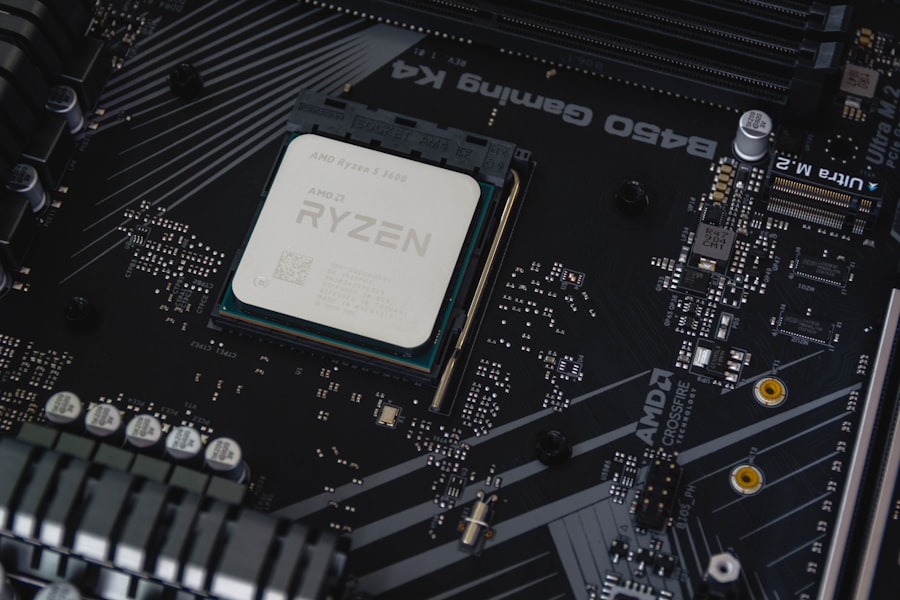
While the potential of quantum computing is immense, the field is still in its nascent stages. Current quantum computers, often referred to as Noisy Intermediate-Scale Quantum (NISQ) devices, are limited by the number of qubits they possess and their susceptibility to errors.
NISQ Devices: Current Capabilities and Challenges
Today’s quantum computers typically have tens to a few hundred qubits. These qubits are prone to decoherence, where their quantum states are lost due to environmental noise. Quantum error correction is a crucial area of research aimed at mitigating these errors, but it requires a significant overhead of extra qubits. Nevertheless, NISQ devices are already being used to explore specific problems where they might offer an advantage over classical computers, a concept known as quantum advantage.
Towards Fault-Tolerant Quantum Computers
The ultimate goal is to build fault-tolerant quantum computers that are robust against errors and can execute complex algorithms reliably. This will require advancements in qubit technology, quantum error correction codes, and the development of sophisticated control systems. The timeline for achieving fault-tolerant quantum computing remains a subject of ongoing research and development, with estimates ranging from a decade to several decades.
The Growing Ecosystem of Quantum Software and Algorithms
Parallel to hardware development, there is a burgeoning ecosystem of quantum software platforms and algorithms. Researchers are developing programming languages, simulators, and compilers specifically designed for quantum computers. The discovery and refinement of quantum algorithms, such as Shor’s algorithm for integer factorization and Grover’s algorithm for searching unsorted databases, demonstrate the theoretical power of quantum computation. New algorithms tailored for specific scientific and industrial problems are continually being developed.
Quantum computing is often discussed in relation to its potential to revolutionize technology, but it also raises intriguing questions about the very fabric of the universe. A fascinating article explores how advancements in quantum computing could provide insights into the fundamental nature of reality and the interconnectedness of all things. For those interested in delving deeper into this topic, the article can be found at Freaky Science, where it examines the implications of quantum mechanics on our understanding of existence.
The Philosophical and Societal Implications
| Topic | Metrics |
|---|---|
| Quantum Computing | Qubits, Quantum Gates, Quantum Algorithms |
| Fabric of the Universe | Space-time, Dark Matter, Dark Energy |
The advent of powerful quantum computers could have profound implications that extend beyond scientific discovery, touching upon philosophical considerations and societal structures.
Redefining the Boundaries of Predictability
Quantum mechanics itself introduces a fundamental probabilistic element into the universe. However, the ability of quantum computers to model complex quantum systems with unprecedented accuracy might lead to a more nuanced understanding of determinism and randomness. While individual quantum events remain probabilistic, the collective behavior of quantum systems, when accurately modeled, might reveal emergent deterministic patterns at larger scales.
The Ethical Considerations of Quantum Supremacy
As quantum computers approach and surpass the capabilities of classical computers for certain tasks, ethical considerations come to the forefront. The ability to break current encryption standards, for instance, necessitates the development of quantum-resistant cryptography. Furthermore, the potential for misuse of powerful quantum simulation tools in areas like biological warfare or advanced surveillance demands careful societal and governmental oversight.
A New Era of Scientific Exploration
Ultimately, quantum computing represents a paradigm shift in humanity’s ability to investigate the universe. It is a tool that can unravel complexity previously hidden from view, enabling us to ask and answer questions that were once confined to the realm of theoretical speculation. The journey to fully harness its power is ongoing, marked by both immense challenges and breathtaking possibilities, heralding a new era of scientific exploration and understanding.
FAQs
What is quantum computing?
Quantum computing is a type of computing that takes advantage of the strange ability of subatomic particles to exist in more than one state at any time. This allows quantum computers to process and store information in a way that is fundamentally different from classical computers.
How does quantum computing relate to the fabric of the universe?
Quantum computing has the potential to revolutionize our understanding of the fabric of the universe by allowing us to simulate and understand complex quantum phenomena that are currently beyond the capabilities of classical computers. This could lead to breakthroughs in fields such as quantum physics, materials science, and chemistry.
What are some potential applications of quantum computing in understanding the fabric of the universe?
Quantum computing could be used to simulate and study the behavior of quantum particles, explore the nature of dark matter and dark energy, and model the early universe. It could also help in developing new materials with unique quantum properties and in solving complex quantum mechanical problems.
What are the challenges in developing quantum computing technology for understanding the fabric of the universe?
One of the main challenges is building and maintaining stable quantum systems, as quantum computers are extremely sensitive to their environment. Additionally, developing algorithms and software that can effectively harness the power of quantum computing for understanding the fabric of the universe is a complex task.
How does quantum computing differ from classical computing in terms of understanding the fabric of the universe?
Classical computers process information using bits, which can be either 0 or 1. Quantum computers, on the other hand, use quantum bits or qubits, which can exist in multiple states simultaneously. This allows quantum computers to perform certain calculations much faster than classical computers, making them potentially more suitable for understanding the complex fabric of the universe.