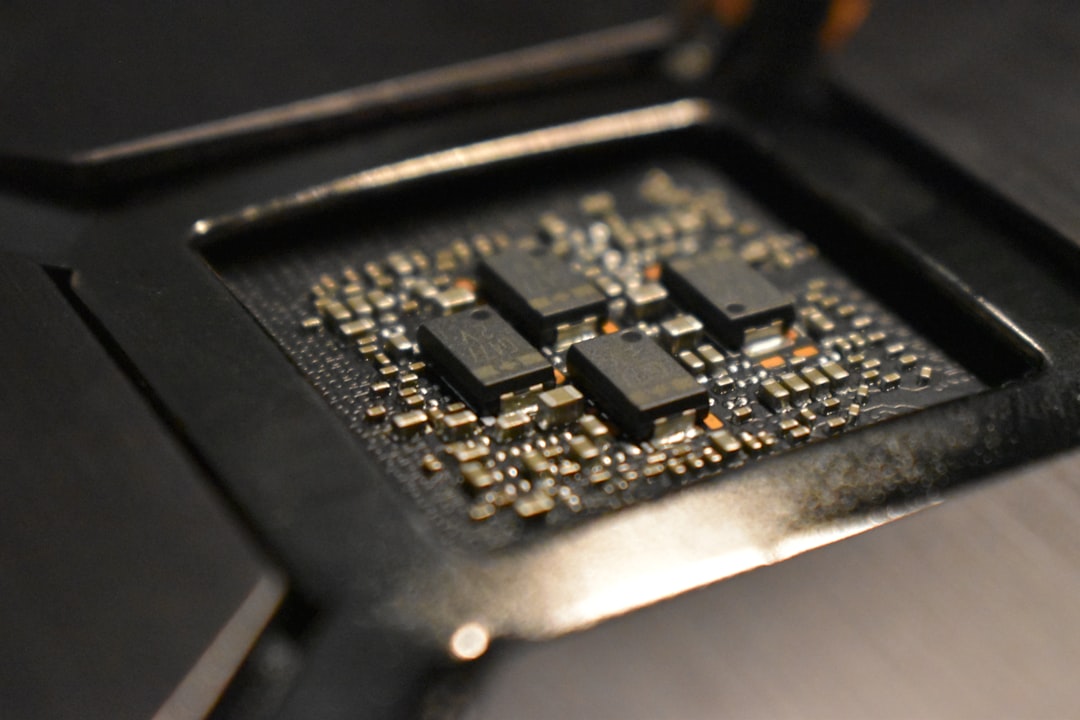
The Google Willow Quantum Chip represents a significant advancement in the pursuit of powerful quantum computation. Its development marks a critical juncture, aiming to overcome some of the inherent challenges in building stable and scalable quantum processors. Understanding the Willow chip necessitates an examination of its underlying architecture, the materials it employs, and the specific quantum bits, or qubits, it utilizes. Simultaneously, the speculative realm of multiverse theory offers a distinct, yet increasingly interconnected, landscape of thought. While seemingly disparate, the conceptual frontiers explored by quantum computing and the contemplation of parallel universes share an underlying search for fundamental truths about reality. This article will delve into the technical aspects of the Willow chip and then draw conceptual parallels with the philosophical and theoretical implications of the multiverse.
Google’s Willow quantum processor is not an isolated invention but rather the culmination of years of research and development in superconducting quantum computing. Its design prioritizes a specific approach to building qubits and their interconnections, aiming to achieve higher fidelity and a greater number of usable qubits compared to previous generations. The physical embodiment of Willow involves a carefully engineered fabrication process, where qubits are etched onto a silicon substrate.
Superconducting Qubits: The Heart of Willow
At the core of Willow, and indeed most of Google’s quantum computing efforts, are superconducting qubits. These qubits are not fundamental particles but rather engineered circuits that exhibit quantum mechanical properties when cooled to extremely low temperatures, often near absolute zero. The behavior of these circuits, governed by quantum phenomena, allows them to represent and process information in ways classical bits cannot.
Transmon Qubits and Their Role
Willow specifically employs a type of superconducting qubit known as a transmon. Transmons are a recognized and widely used design in quantum computing due to their relative stability and resistance to certain types of environmental noise. Their superconducting nature means they are made of materials that carry electrical current with zero resistance, enabling delicate quantum states to be maintained for longer periods.
Qubit Connectivity and Control
A crucial aspect of any quantum processor’s architecture is how its qubits are connected and controlled. Willow’s design focuses on creating a network of qubits where operations can be performed both between adjacent qubits and, with specific routing mechanisms, between qubits that are not directly neighbors. This connectivity is vital for executing complex quantum algorithms.
Gating Operations and Fidelity
The ability to perform precise operations, known as quantum gates, on these qubits is paramount. For Willow, the focus is on achieving high fidelity in these gate operations, meaning that the intended quantum transformation is applied with minimal error. This precision is achieved through the use of precisely timed microwave pulses, carefully calibrated to interact with the quantum states of the qubits.
The Cryogenic Environment
Superconducting qubits, including those in Willow, require an extremely cold environment to function. This is achieved through sophisticated cryogenic systems, typically involving dilution refrigerators. These refrigerators create temperatures mere fractions of a degree above absolute zero. At these temperatures, quantum effects become dominant, and the thermal noise that would disrupt quantum states is significantly reduced.
Challenges of Scaling and Coherence
While Willow represents an advancement, scaling quantum processors to include a vast number of high-quality qubits remains a significant engineering challenge. Maintaining quantum coherence, the delicate state of superposition and entanglement that quantum computers rely on, is a constant battle against environmental interference. Errors can creep in through various mechanisms, and Willow’s design aims to mitigate these through improved qubit design and control.
The recent advancements in quantum computing, particularly with Google’s Willow quantum chip, have sparked intriguing discussions about multiverse theory. This theory posits the existence of multiple, perhaps infinite, universes that could explain various phenomena in quantum mechanics. For a deeper exploration of these concepts and their implications, you can read a related article on this topic at Freaky Science.
Materials Science and Fabrication of Willow
The performance of a quantum chip is intrinsically linked to the materials used in its construction and the precision of its fabrication. Google has invested heavily in optimizing these aspects for its quantum processors.
High-Purity Superconducting Materials
The superconducting circuits that form the qubits are typically made from materials like aluminum or niobium. The purity of these materials is critical, as impurities can introduce unwanted quantum effects or increase energy dissipation, leading to decoherence.
Thin-Film Deposition Techniques
The fabrication process involves advanced techniques for depositing these superconducting materials in extremely precise thin films. Techniques such as sputtering and evaporation are employed to create the intricate patterns of circuitry that constitute the qubit network.
Silicon Substrate and Packaging
The qubits themselves are often fabricated on a silicon substrate, a material well-understood from the semiconductor industry. The packaging of the quantum chip is also crucial, designed to protect the delicate qubits from external stimuli and to facilitate the delivery of control signals and the extraction of measurement data.
Understanding Quantum Noise
Minimizing quantum noise is an ongoing pursuit. Different types of noise, such as amplitude damping, dephasing, and stray electromagnetic fields, can affect the coherence of the qubits. Willow’s design incorporates strategies to reduce the impact of these noise sources.
The Theoretical Underpinnings of Quantum Computing
The development of quantum chips like Willow is driven by the theoretical promise of what quantum computers can achieve. Unlike classical computers that store information as bits representing either 0 or 1, quantum computers use qubits that can exist in a superposition of both states simultaneously.
Superposition and Entanglement: The Quantum Advantage
The ability of a qubit to be in a superposition of states allows quantum computers to explore a vast number of possibilities concurrently. Furthermore, when qubits are entangled, their fates are linked in a way that is impossible in classical physics. Measuring the state of one entangled qubit instantaneously influences the state of the others, regardless of their physical separation.
Quantum Algorithms and Their Potential
These quantum phenomena enable the development of quantum algorithms, such as Shor’s algorithm for factoring large numbers and Grover’s algorithm for searching unsorted databases. These algorithms offer significant speedups over their classical counterparts for specific types of problems, with implications for cryptography, drug discovery, materials science, and artificial intelligence.
Error Correction and Fault Tolerance
A major hurdle in building practical quantum computers is dealing with errors. Quantum states are fragile, and environmental noise can easily disrupt them. Quantum error correction codes are being developed to detect and correct these errors, aiming to achieve fault-tolerant quantum computation, where computations can be performed reliably even in the presence of imperfect hardware.
The Road to Quantum Supremacy and Beyond
Quantum supremacy, the point at which a quantum computer can solve a problem that is practically intractable for even the most powerful classical computers, has been a significant milestone. Willow and subsequent quantum processors are part of the ongoing effort to push beyond this point towards quantum advantage and ultimately, universal quantum computation.
Multiverse Theory: A Conceptual Parallel
The concept of a multiverse, the idea that our universe might be just one of many, emerges from various branches of theoretical physics and cosmology. While distinct from the engineering challenges of quantum computing, the pursuit of understanding the multiverse shares a similar spirit of pushing the boundaries of our comprehension of reality.
Inflationary Cosmology and Eternal Inflation
One prominent theory suggesting the existence of a multiverse arises from inflationary cosmology. The theory of cosmic inflation proposes a period of rapid expansion in the very early universe. Some models of inflation, known as eternal inflation, suggest that this process could be ongoing, continuously spawning new “bubble universes” with potentially different physical laws.
The Measure Problem in Cosmology
A significant challenge within eternal inflation is the “measure problem.” This refers to the difficulty of assigning probabilities to different regions or universes within an eternally inflating spacetime. Without a well-defined measure, it becomes challenging to make testable predictions about the likelihood of observing certain phenomena.
String Theory and Brane Worlds
Another avenue leading to multiverse concepts comes from string theory, particularly the idea of brane worlds. String theory posits that fundamental particles are not point-like but rather tiny vibrating strings. In some formulations, our observable universe might be confined to a “brane” within a higher-dimensional space, with other branes representing other universes.
Quantum Mechanics and the Many-Worlds Interpretation
Perhaps the most direct conceptual link between quantum computing and multiverse theory lies in the “Many-Worlds Interpretation” (MWI) of quantum mechanics. Proposed by Hugh Everett III, MWI suggests that whenever a quantum measurement is made, the universe splits into multiple parallel branches, each representing a different possible outcome of the measurement.
The Role of Quantum Measurement
In the context of MWI, every quantum operation performed on a quantum computer, which involves measurements, would theoretically lead to a branching of universes. If a quantum computer explores multiple superpositions, each of these possibilities could, according to MWI, be realized in a separate universe.
Recent advancements in quantum computing, particularly with Google’s Willow quantum chip, have sparked intriguing discussions about multiverse theory. This innovative technology could potentially unlock new dimensions of computation, leading to a deeper understanding of parallel universes. For those interested in exploring the implications of such developments, a related article can be found here, which delves into the intersection of quantum mechanics and theoretical physics. The possibilities presented by these advancements are both exciting and thought-provoking, as they challenge our conventional understanding of reality.
Intersections and Speculative Implications
| Data/Metric | Value |
|---|---|
| Google Quantum Chip Name | Willow |
| Application | Multiverse Theory |
While the Google Willow chip is a tangible piece of technology designed for practical computation, and multiverse theories are largely theoretical constructs, there are intriguing conceptual parallels and speculative implications to consider.
The Nature of Reality and Information
Both quantum computing and multiverse theories probe the fundamental nature of reality and information. Quantum computing harnesses the counterintuitive rules of quantum mechanics to process information in novel ways. Multiverse theories, by proposing an existence beyond our observable universe, challenge our definition of what constitutes “reality.”
The Limits of Observation
A key challenge for both fields is the limit of observation. We can directly interact with and measure the qubits within the Willow chip. However, observing or interacting with other universes, if they exist, is a far more profound and perhaps insurmountable challenge. The very act of observation in quantum mechanics can influence outcomes, a concept that resonates with the difficulty of definitively confirming or refuting multiverse hypotheses.
The Search for a Unified Framework
The quest for a unified theory that reconciles quantum mechanics and general relativity is a central endeavor in physics. Similarly, the exploration of quantum computing’s potential and the contemplation of a multiverse are part of a broader scientific and philosophical journey to understand the universe at its deepest levels.
The Role of Computation in Understanding Complex Systems
Advanced quantum computers, like the one Willow aims to be, may eventually be instrumental in simulating complex quantum systems. This could include simulating phenomena related to the early universe or exploring the mathematical implications of theoretical frameworks that suggest multiverses. The computational power required to model such vast and intricate possibilities might only be achievable with quantum computers.
Philosophical and Existential Considerations
The implications of both quantum computing and multiverse theories extend beyond the scientific realm into philosophical and even existential considerations. The potential for quantum computers to revolutionize fields like medicine and materials science is profound. The idea of countless other universes, each potentially with its own unique history and forms of existence, sparks fundamental questions about our place in the cosmos and the uniqueness of our own reality.
The Unknowable and the Testable
Much of the discussion surrounding multiverses remains highly speculative and difficult to directly test, unlike the iterative development and experimental validation inherent in building quantum computers. The Willow chip, with its specific design and performance metrics, is subject to empirical verification. The existence of other universes, however, may remain a robust theoretical concept for the foreseeable future.
Ultimately, the Google Willow Quantum Chip represents a significant step in our ability to harness the power of quantum mechanics for computation. Its development is a testament to human ingenuity in manipulating the quantum realm. The contemplation of multiverse theories, while more abstract, represents a similar human drive to comprehend the vastness and complexity of existence, pushing the boundaries of our understanding of what is possible and what reality truly entails. The journey of discovery, whether through silicon and superconductivity or through the intricate equations of theoretical physics, continues to expand our horizons.
FAQs
What is the Google Willow quantum chip?
The Google Willow quantum chip is a new quantum processor developed by Google as part of their efforts in quantum computing. It is designed to perform complex calculations and solve problems that are currently beyond the capabilities of classical computers.
How does the Google Willow quantum chip relate to multiverse theory?
The Google Willow quantum chip is being used to explore the concept of multiverse theory, which suggests the existence of multiple parallel universes. By harnessing the power of quantum computing, researchers hope to simulate and study the potential existence of these parallel universes.
What are the potential implications of the Google Willow quantum chip’s exploration of multiverse theory?
The exploration of multiverse theory using the Google Willow quantum chip could have profound implications for our understanding of the universe and the nature of reality. It may lead to new insights into fundamental physics and cosmology, as well as potential applications in fields such as cryptography and optimization.
How does the Google Willow quantum chip differ from traditional computer chips?
The Google Willow quantum chip differs from traditional computer chips in that it operates based on the principles of quantum mechanics, allowing it to perform calculations using quantum bits (qubits) rather than classical bits. This enables it to tackle certain types of problems much more efficiently than classical computers.
What are the current limitations and challenges of the Google Willow quantum chip?
While the Google Willow quantum chip represents a significant advancement in quantum computing, it still faces challenges such as maintaining the stability of qubits and minimizing errors in calculations. Additionally, scaling up quantum processors to handle more complex tasks remains a major hurdle for the technology.