
The question of whether the future already exists, embedded within the very fabric of the cosmos, is a philosophical and scientific quandary that has captivated thinkers for ages. It ventures into the nature of time, reality, and our perception of both. This exploration delves into the implications of a predetermined universe, where every event, past, present, and future, exists simultaneously, as if baked into an inescapable cosmic dough.
One of the most influential conceptual frameworks that supports the idea of a pre-existent future is the “block universe” model. This perspective, often rooted in Albert Einstein’s theory of relativity, posits that time is not a flowing river but a static, four-dimensional manifold. All of existence, across all points in spacetime, is seen as a single, unchanging entity.
Relativity and the Nature of Spacetime
Einstein’s special and general relativity fundamentally altered our understanding of space and time. Instead of separate entities, space and time are interwoven into a single continuum: spacetime.
Simultaneity is Relative
A cornerstone of special relativity is the concept that simultaneity is not absolute. Two events that appear simultaneous to one observer may not be simultaneous to another observer moving at a different velocity. This means there is no universal “now” that applies to everyone. This observation suggests that the distinction between past, present, and future is, at least to some extent, observer-dependent.
Spacetime as a Geometric Entity
In general relativity, gravity is understood as the curvature of spacetime caused by mass and energy. Spacetime, in this view, becomes a dynamic, geometric entity. The equations of general relativity themselves do not inherently privilege the present moment. They describe the relationships between points in spacetime without dictating a specific direction of temporal flow. This mathematical neutrality has led some to interpret spacetime as a pre-existing structure where all moments are equally “real.”
The “Eternalism” Interpretation
The block universe perspective aligns with a philosophical stance known as eternalism, which contrasts with presentism (only the present exists) and the growing block universe theory (the past and present exist, and the future is yet to come into being).
Past, Present, and Future as Co-existing
From an eternalist viewpoint, the past is not gone, and the future is not unwritten. All of spacetime, encompassing all events from the universe’s inception to its potential end, exists concurrently. Imagine a film reel; all the frames are physically present on the reel, even though we might only be projecting a single frame at a time.
Implications for Free Will
If the future is already part of this cosmic dough, then the notion of free will becomes a complex issue. If every choice and every outcome is already encoded within spacetime, then our subjective experience of making decisions might be an illusion. The path we take, the words we speak, the actions we perform—all could be predetermined.
In exploring the intriguing concept of whether the future is already part of the cosmic dough, one might find it beneficial to read a related article that delves into the nature of time and its implications in the universe. This article provides a comprehensive overview of various theories surrounding time, space, and their interconnectedness. For more insights, you can check out the article here: Freaky Science.
Causality and Determinism: The Unfolding Script
The idea of a pre-existent future is intimately linked to the concept of determinism. If the universe operates under strict causal laws, where every effect has a preceding cause, then the entire chain of events from the Big Bang to the end of time could be seen as a single, unbroken causal sequence.
The Principle of Causality
Causality, the relationship between cause and effect, is a fundamental principle in our understanding of the physical world. We observe that events do not occur randomly; they are typically the result of prior occurrences.
Linear Progression vs. Block Spacetime
While we experience causality as a linear progression through time, the block universe model suggests that this progression is merely how we perceive the events within the static spacetime structure. The causal links still exist, but they are part of the unchanging map of spacetime.
Determinism: A Universe on Rails
Determinism, in its strictest form, proposes that given the initial conditions of the universe and the laws of physics, every subsequent event is necessitated. This implies that there is only one possible future.
Laplace’s Demon
A classic thought experiment illustrating determinism is Laplace’s Demon. This hypothetical intellect, knowing the precise location and momentum of every atom in the universe at a given instant, could, in principle, calculate all past and future states of the universe. Such a being would have complete foreknowledge not because the future influences the past, but because the future is, in essence, already there to be known.
Quantum Mechanics and Indeterminacy
However, the advent of quantum mechanics has introduced an element of indeterminacy at the fundamental level of reality. Quantum events, such as radioactive decay or the exact position of an electron, are often described in terms of probabilities rather than certainties.
Probability Waves
Schrödinger’s cat paradox, for instance, highlights the counterintuitive nature of quantum superposition, where a particle can exist in multiple states until it is observed. This suggests a potential departure from strict classical determinism.
Interpretations of Quantum Mechanics
Various interpretations of quantum mechanics attempt to reconcile these probabilistic outcomes with the nature of reality. Some interpretations, like the many-worlds interpretation, propose that all possible outcomes of a quantum event actually occur in separate, branching universes. This, in a way, could be seen as accommodating a kind of pre-existence for all potential futures, though not necessarily within a single, monolithic block.
Time Travel: Theoretical Possibilities and Paradoxes

The concept of a pre-existent future naturally leads to considerations of time travel, both forward and backward. If all moments in time exist simultaneously, then the theoretical possibility of traversing these moments arises.
Forward Time Travel
Forward time travel, as described by special relativity, is already a well-established phenomenon. Time dilation means that for an observer traveling at speeds close to the speed of light, time passes more slowly than for a stationary observer. Upon returning, the traveler will have aged less and effectively moved into the future relative to their starting point.
The Twin Paradox Revisited
The classic twin paradox illustrates this. One twin journeys at near-light speed while the other remains on Earth. The traveling twin returns to find their Earth-bound sibling significantly older. This is not a paradox in the sense of a logical contradiction but rather a counterintuitive consequence of the relativity of time.
Backward Time Travel and Causality Violations
Backward time travel, however, presents significant theoretical hurdles and engenders paradoxes. If one could travel to the past and alter events, it could lead to logical contradictions, such as the grandfather paradox.
The Grandfather Paradox
The grandfather paradox posits that if a person travels back in time and prevents their grandfather from meeting their grandmother, then that person would never be born. Consequently, they would not be able to travel back in time to cause the paradox in the first place.
Consistent Histories
Some theoretical frameworks propose mechanisms that could prevent such paradoxes, such as the Novikov self-consistency principle, which suggests that if backward time travel is possible, then the laws of physics would conspire to prevent any event that would create a paradox. Essentially, any attempt to change the past would be thwarted by the very nature of spacetime.
Wormholes and Exotic Matter
Theoretical mechanisms for backward time travel often involve exotic phenomena like wormholes, hypothetical tunnels through spacetime that could connect distant points and potentially different moments in time. However, the creation and stabilization of traversable wormholes would likely require vast amounts of “exotic matter” with negative mass-energy, something that has not been definitively observed.
Consciousness and Perception: Our Experience of Time
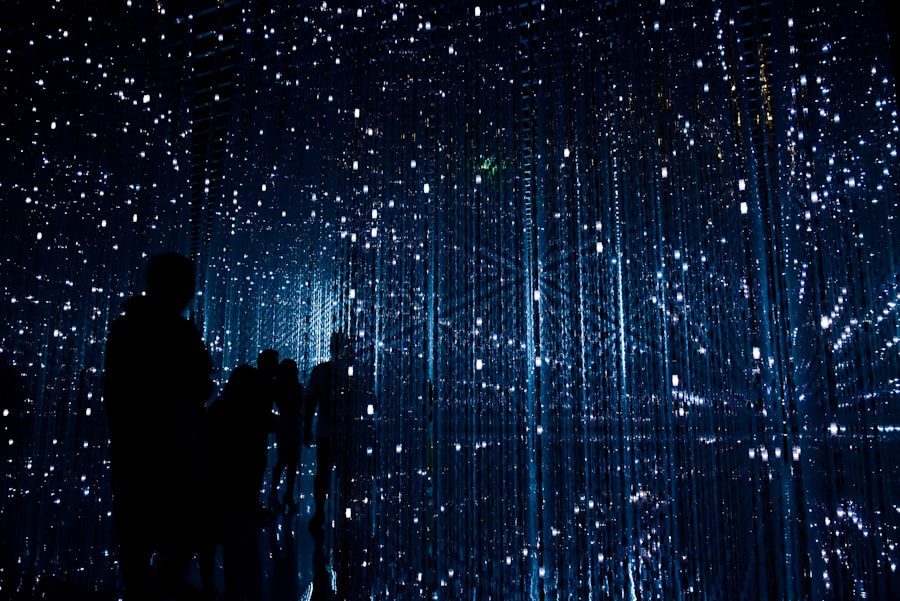
Our subjective experience of time as a linear progression, moving from past to future, is a profound aspect of our existence. The question arises whether this perception is an accurate representation of reality or a construct of our consciousness.
The Arrow of Time
The “arrow of time” refers to the unidirectional nature of time as we perceive it – it always moves forward. This is often linked to the increase of entropy in the universe, as described by the second law of thermodynamics.
Entropy and Irreversibility
Entropy, a measure of disorder or randomness, tends to increase in isolated systems. This increase is seen as a fundamental reason for the apparent irreversibility of time. Processes like breaking an egg are easy to do, but reassembling the egg is practically impossible.
Thermodynamic vs. Psychological Time
However, the thermodynamic arrow of time does not necessarily preclude the existence of a block universe. The block universe, in this context, would simply be the complete set of all states of the universe, and the thermodynamic arrow describes the temporal ordering and evolution of those states as we experience them.
The Role of Memory
Our memories are crucial in shaping our perception of a flowing past. We recall past events, and this accumulation of memories forms our sense of history.
Presentism vs. Eternalism in Perception
If eternalism is true, then our memories are not retrieving something that has ceased to exist but are perhaps accessing information encoded within spacetime itself. The act of remembering might be akin to navigating within the block to access a particular “frame.”
The Feeling of Becoming
The pervasive feeling of “becoming” – of moving from what was to what will be – is central to our lived experience. If the future is already present, then this feeling of movement might be an illusion generated by our conscious processing of sequential information within the static block.
In exploring the concept of whether the future is already part of the cosmic dough, one might find it intriguing to read a related article that delves into the nature of time and its implications on our understanding of the universe. This article offers insights into how our perception of time might be intertwined with the fabric of reality itself. For a deeper understanding, you can check out this fascinating piece on Freaky Science, which discusses the philosophical and scientific perspectives on time and existence.
Scientific Implications and the Quest for Understanding
| Data/Metric | Value |
|---|---|
| Existence of the future | Part of the cosmic dough |
| Cosmic dough composition | Unknown |
| Scientific evidence | Debated |
The contemplation of a pre-existent future has significant implications for scientific inquiry and our ongoing quest to understand the fundamental nature of the universe.
Deterministic Models in Physics
Many branches of physics, particularly classical mechanics and general relativity, are fundamentally deterministic. Their equations describe systems that evolve in predictable ways, given initial conditions.
Unification and the Search for a Theory of Everything
The pursuit of a “theory of everything” aims to unify all fundamental forces and particles into a single coherent framework. Such a theory might shed further light on the nature of time and determinism at the most fundamental level.
The Limits of Observation
Even if the universe is deterministic and the future is pre-existent, our ability to know it is limited by our position within spacetime and the speed of light. We are, in a sense, bound to our present “slice” of the cosmic dough, unable to step outside it to observe the whole.
The Unknowable Future
This intrinsic limitation means that even in a deterministic universe, the future remains unknowable to us in a practical sense. Our actions are guided by probabilities and predictions based on current information, rather than absolute foreknowledge.
Philosophical and Existential Considerations
The implications of a pre-existent future extend beyond physics, touching upon profound philosophical and existential questions about meaning, purpose, and our place in the cosmos.
Meaning in a Predetermined Universe
If all events are predetermined, does that diminish the meaning of our lives and choices? Or can meaning be found in fulfilling our predetermined roles, in experiencing the unfolding of the cosmic narrative?
The Nature of Reality
Ultimately, the question of whether the future is already part of the cosmic dough challenges our most basic assumptions about reality. It invites us to consider the possibility that our perception of time’s flow is a limited, albeit necessary, aspect of our human experience, while the universe itself might be a timeless, ordered whole. The ongoing scientific and philosophical exploration of these concepts continues to shape our understanding of existence.
FAQs
What is the concept of “the future already part of the cosmic dough”?
The concept suggests that the future is not predetermined, but rather exists as a range of possibilities that are influenced by the present and past. It implies that the future is already part of the cosmic “dough” of the universe, and our actions and choices shape how it unfolds.
What are the implications of the idea that the future is part of the cosmic dough?
This concept challenges the traditional view of time as linear and predetermined. It suggests that the future is not fixed, but rather malleable and influenced by the present moment. This idea has implications for how we understand free will, causality, and the nature of time itself.
How does the concept of the future being part of the cosmic dough relate to quantum physics?
In quantum physics, the concept of superposition suggests that particles can exist in multiple states simultaneously until they are observed or measured. This idea aligns with the notion of the future being part of the cosmic dough, as it implies that multiple potential futures exist until they are “observed” or realized through our actions and choices.
What are some criticisms of the idea that the future is part of the cosmic dough?
Critics argue that this concept may undermine the idea of personal responsibility and accountability, as it could be interpreted to suggest that the future is predetermined or beyond our control. Additionally, some may view it as a departure from traditional scientific and philosophical views of time and causality.
How does the concept of the future being part of the cosmic dough impact our understanding of the universe and our place in it?
This concept challenges our understanding of time and the nature of reality, prompting us to reconsider our relationship to the universe and the role of consciousness in shaping the future. It invites us to explore the interconnectedness of all things and the potential for co-creating our reality through our thoughts and actions.