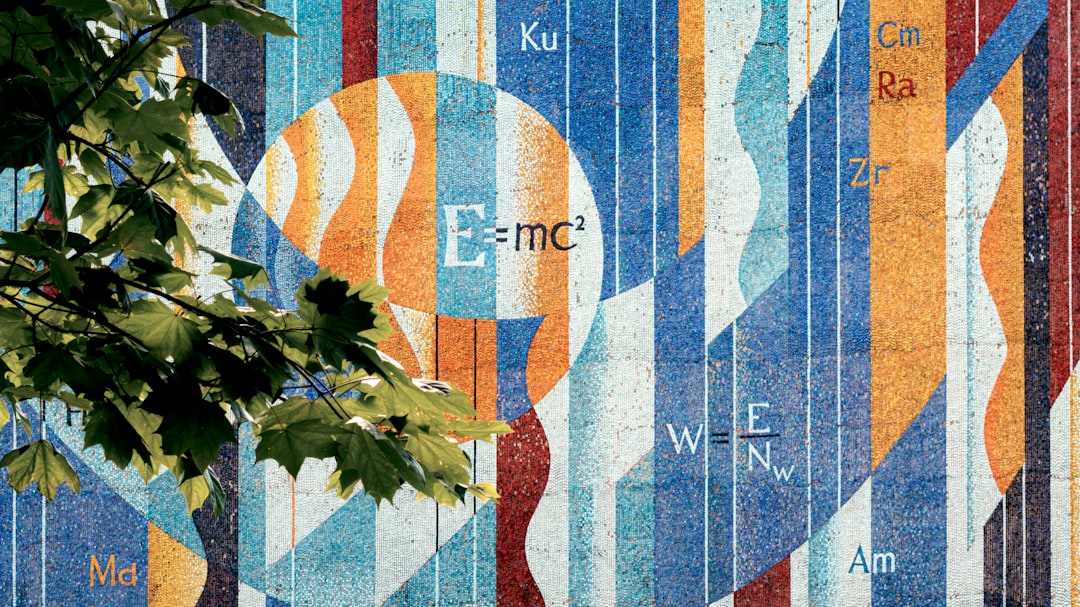
Albert Einstein’s theories of relativity, both special and general, fundamentally reshaped humanity’s understanding of space, time, and gravity. These theories, with their profound implications, have led to a philosophical concept known as the Block Universe, a model that posits a four-dimensional spacetime where past, present, and future exist concurrently. This view, while counterintuitive to our everyday experience, arises directly from the mathematical framework of relativity. It challenges our intuitive notions of a flowing present, suggesting instead a static, unchanging reality from which our perception of temporal progression emerges.
The Foundation: Unpacking Special Relativity
Einstein’s 1905 Special Theory of Relativity, a cornerstone of modern physics, began by questioning the absolute nature of space and time, concepts that had been dogma since Isaac Newton. It introduced two radical postulates.
The Invariance of the Speed of Light
The first, and perhaps most startling, postulate asserted that the speed of light in a vacuum is constant for all inertial observers, regardless of their own motion or the motion of the light source. This seemingly simple statement had profound consequences. Before Einstein, it was assumed that velocities simply added. If one were moving towards a light source, the light would appear to be approaching faster, and vice versa. Special relativity declared this intuition incorrect. Light’s speed, approximately 299,792,458 meters per second, remains uniform for everyone. This concept directly contradicts everyday experiences with moving objects, where speeds are relative and additive. The implication is that our perception of space and time must be flexible to accommodate this invariant speed.
The Principle of Relativity
The second postulate, the principle of relativity, extended Galileo’s earlier ideas. It stated that the laws of physics are the same for all observers moving at constant velocities relative to each other. In simpler terms, there is no privileged inertial frame of reference. An experiment conducted in a laboratory on Earth will yield the same results as an identical experiment conducted in a uniformly moving spaceship. This uniformity of physical laws, when combined with the constant speed of light, leads to the mind-bending consequences of time dilation and length contraction.
Einstein’s theory of relativity has profound implications for our understanding of time and space, leading to the intriguing concept of the block universe, where past, present, and future coexist simultaneously. For a deeper exploration of these ideas and their philosophical ramifications, you can read a related article on this topic at Freaky Science. This resource delves into how relativity challenges our conventional notions of time and reality, offering insights into the nature of existence itself.
Temporal and Spatial Distortions: Consequences of Special Relativity
The postulates of special relativity lead to predictions that defy common sense yet have been repeatedly confirmed by empirical evidence. These predictions highlight the interconnectedness of space and time.
Time Dilation: The Slowing of Time
One of the most significant consequences is time dilation. It dictates that time passes more slowly for an observer who is moving relative to a stationary observer. The faster the relative speed, the greater the dilation. This is not a subjective experience; it is a physical reality. Atomic clocks flown on high-speed aircraft and satellites have demonstrably shown this effect. For an astronaut traveling at near light speed, centuries might pass on Earth while only years pass for the astronaut. This phenomenon means that the rate at which time flows is not absolute but depends on the observer’s motion.
Length Contraction: The Shrinking of Space
Closely related to time dilation is length contraction. Objects moving at relativistic speeds appear shorter in the direction of their motion when measured by a stationary observer. Similar to time dilation, the faster the object moves, the more pronounced the contraction. This effect, too, has experimental backing, primarily through its indirect effects in particle accelerators where fast-moving particles behave as if they are shorter. These distortions are not optical illusions; they are fundamental alterations of spatial and temporal dimensions.
Spacetime: The Unified Continuum
The concept of spacetime, a four-dimensional manifold where three dimensions of space are intrinsically woven with one dimension of time, emerges from special relativity. Events are no longer simply happening in space and in time, but rather at specific points within spacetime. This unified framework explains how the seemingly disparate effects of time dilation and length contraction are two sides of the same coin, arising from the geometry of this four-dimensional reality. An observer’s motion through space directly impacts their passage through time, and vice versa.
The Gravitational Dance: General Relativity’s Grand Vision
Einstein’s 1915 General Theory of Relativity extended special relativity by incorporating gravity. It offered a revolutionary new perspective, moving away from the Newtonian idea of gravity as a force acting at a distance.
Gravity as Spacetime Curvature
General relativity proposes that gravity is not a force but a manifestation of the curvature of spacetime. Massive objects, such as stars and planets, warp the fabric of spacetime around them. Other objects, including light, then follow the contours of this curved spacetime, which we perceive as the effect of gravity. Imagine placing a bowling ball on a stretched rubber sheet; it creates a dip, and a marble rolled nearby will curve towards the bowling ball, not because of a direct pull, but due to the deformation of the sheet. This geometric interpretation of gravity has been remarkably successful in explaining phenomena that Newtonian physics could not.
The Equivalence Principle
A key insight driving general relativity was the equivalence principle. It states that there is no way to distinguish between the effects of gravity and the effects of acceleration. For instance, an observer in a closed elevator accelerating upwards in empty space would experience the same forces as an observer standing in an elevator at rest on Earth, subjected to its gravitational pull. This principle suggests a deep connection between gravity and acceleration, leading Einstein to link gravity to the geometry of spacetime.
Observational Triumphs and the Block Universe Hint
General relativity has been vindicated by numerous observational confirmations, each lending weight to its radical geometric depiction of the universe. These confirmations, in turn, strongly support the philosophical interpretation of the Block Universe.
Gravitational Lensing: Bending Light’s Path
One of the most striking predictions of general relativity is gravitational lensing. The curvature of spacetime by massive objects can bend the path of light. This phenomenon was famously confirmed during a solar eclipse in 1919, when observations showed starlight bending around the Sun, precisely as predicted by Einstein’s equations. This bending of light is a direct consequence of light traveling along the curved geodesics of spacetime. This observation solidified the idea that spacetime itself possesses a geometric structure influenced by mass and energy.
Mercury’s Orbital Precession: An Unexplained Anomaly Solved
General relativity also successfully explained anomalies in the orbit of Mercury that Newtonian physics could not account for. Mercury’s orbit exhibits a slight precession (a gradual rotation of its elliptical path) that did not match Newtonian predictions. General relativity’s calculation of how the Sun’s gravitational field, interpreted as spacetime curvature, affects Mercury’s orbit perfectly matched the observed precession. This provided powerful early evidence for the theory’s accuracy.
Gravitational Waves: Ripples in Spacetime
Perhaps the most direct confirmation of general relativity’s dynamic spacetime came with the first detection of gravitational waves in 2015. These are ripples in the fabric of spacetime caused by cataclysmic cosmic events, such as the merger of black holes. The detection by the LIGO and Virgo observatories opened a new window into observing the universe and provided direct evidence that spacetime is not a passive stage but an active, dynamic entity capable of being disturbed. This dynamic nature of spacetime is integral to the Block Universe concept.
Einstein’s theory of relativity has profound implications for our understanding of time and space, leading to intriguing concepts such as the block universe. This idea suggests that past, present, and future events coexist simultaneously, challenging our traditional perceptions of time. For a deeper exploration of these fascinating topics, you can read more in this related article on Freaky Science, which delves into the implications of relativity and the nature of reality.
The Block Universe: A Static Four-Dimensional Reality
The mathematical framework and observational triumphs of Einstein’s theories of relativity coalesce to suggest a particular view of time and reality: the Block Universe. This concept arises from the implications of spacetime being a unified, four-dimensional entity.
The Nature of Spacetime as a Continuum
In special relativity, the concept of simultaneity is relative. Two events that appear to happen at the same time for one observer may not appear simultaneous for another observer moving relative to the first. This relativity of simultaneity implies that there is no universal “now.” If “now” is not a universal concept, then the idea of a flowing present becomes problematic. Instead, all moments—past, present, and future—exist on an equal footing within the four-dimensional spacetime manifold.
All Moments Exist Equally in Spacetime
The Block Universe model posits that spacetime is a static, unchanging structure. Just as all points in space exist simultaneously, all moments in time also exist simultaneously within this four-dimensional block. The past, present, and future are not distinct ontological categories but rather different slices or coordinates within this unified spacetime. Our perception of time’s flow, from past to future, is seen as a subjective experience arising from our consciousness moving through this pre-existing structure. This is akin to how a line segment contains all its points at once, even though we might trace it from one end to the other.
The Illusion of Temporal Flow
The feeling of time passing, of moving from one moment to the next, is a deeply ingrained aspect of human experience. However, within the Block Universe framework, this sensation is explained as an emergent property of our consciousness, possibly tied to memory and the way our brains process information. The universe itself, as described by relativity, does not “flow.” It simply is, in its entirety, a fixed, four-dimensional reality. This challenges our intuitive understanding of causality and free will, suggesting that all events are already determined within this timeless structure.
Philosophical Ramifications: Determinism and Consciousness
The Block Universe model carries significant philosophical implications, most notably concerning the nature of determinism and the role of consciousness.
Determinism and the Unchanging Nature of Reality
If all moments in time exist simultaneously, it suggests a form of determinism. Every event, from the Big Bang to the farthest future, is already an actualized part of the spacetime block. This implies that the future is as fixed as the past, and that what we perceive as free choices or unpredictable events are simply components of the inevitable unfolding of the spacetime geometry. This deterministic view is one of the most debated aspects of the Block Universe. It raises questions about the nature of agency and responsibility.
Consciousness and the Perception of Time
Understanding consciousness within the Block Universe is a complex undertaking. If time does not truly flow, then what accounts for our subjective experience of temporal passage? Various explanations are proposed, including that consciousness is an emergent property that experiences different slices of spacetime sequentially, or that our perception of temporal order is a fundamental aspect of how our minds interact with the reality of spacetime. Some theories suggest that consciousness itself might be a dimension or property that allows for the experience of temporal order within the static block.
The Block Universe: A Modern Perspective on an Ancient Question
The Block Universe, as derived from Einstein’s theories, offers a coherent, albeit challenging, picture of reality. It is not a triumphant declaration of certainty but rather a consequence of rigorous mathematical physics that has been repeatedly tested and confirmed. The model does not invalidate our subjective experience of time but rather seeks to explain it within a larger, more encompassing framework. While presenting a static reality, it raises profound questions about the nature of existence, consciousness, and our place within the vast tapestry of spacetime. The ongoing exploration of these implications continues to shape our understanding of the universe and our experience within it.
FAQs
What is Einstein’s theory of relativity?
Einstein’s theory of relativity is a fundamental theory in physics that describes the relationship between space and time. It consists of two main theories: special relativity, which deals with the behavior of objects in inertial frames of reference, and general relativity, which extends the theory to include gravity.
What is the block universe theory?
The block universe theory, also known as the “block time” or “eternalism,” is a philosophical view of time that suggests that the past, present, and future all exist simultaneously as a four-dimensional block. This theory is often associated with Einstein’s theory of relativity, as it suggests that time is not experienced as a flowing river, but rather as a static block.
How does Einstein’s theory of relativity relate to the block universe theory?
Einstein’s theory of relativity, particularly the concept of spacetime, provides the foundation for the block universe theory. According to relativity, time is not absolute and can vary depending on the observer’s frame of reference. This aligns with the block universe theory’s view of time as a static, four-dimensional block.
What are the implications of the block universe theory?
The block universe theory has profound implications for our understanding of free will, determinism, and the nature of time. It suggests that the future is as fixed and unchangeable as the past, leading to philosophical debates about the nature of choice and the possibility of altering the course of events.
Is the block universe theory widely accepted in the scientific community?
The block universe theory is a topic of ongoing debate and discussion within the scientific and philosophical communities. While some physicists and philosophers find the theory compelling and consistent with the principles of relativity, others remain skeptical and continue to explore alternative theories of time and spacetime.