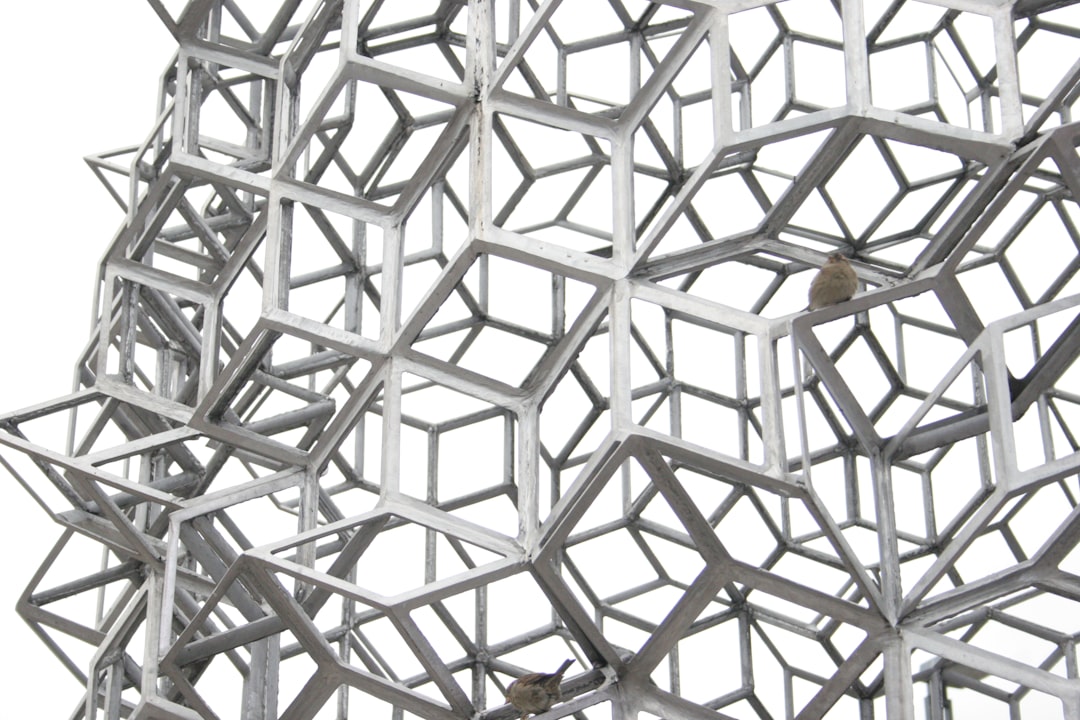
Unraveling the Lattice Sub-Quantum Structure
The quest to understand the fundamental constituents of reality has long been a driving force in scientific inquiry. From the atom to subatomic particles, each layer of discovery has unveiled ever more intricate and surprising phenomena. Now, theoretical physics is venturing into what might be the deepest layer yet: the sub-quantum realm. This domain, far below the energy scales of current experimental reach, is hypothesized to possess a structured framework, a “lattice,” that underpins the fabric of spacetime and dictates the behavior of elementary particles. Unraveling this lattice sub-quantum structure presents a formidable challenge, demanding novel theoretical approaches and a profound rethinking of our understanding of space, time, and matter.
The concept of a sub-quantum structure arises from the limitations and apparent inconsistencies encountered in current fundamental theories, primarily quantum field theory (QFT) and general relativity. While spectacularly successful within their respective domains, these theories exhibit conceptual difficulties when pushed to their extremes, particularly concerning gravity at quantum scales.
Limitations of Quantum Field Theory
Quantum field theory provides a remarkably accurate description of the electromagnetic, weak, and strong nuclear forces. It posits that fundamental particles are excitations of underlying quantum fields, and interactions occur through the exchange of force-carrying particles. However, QFT faces challenges with infinities that arise in calculations, requiring complex renormalization procedures. Furthermore, it does not naturally incorporate gravity, leading to the well-known problem of quantum gravity.
The Planck Scale and Its Implications
The Planck scale represents the theoretical limit where quantum gravitational effects are expected to become dominant. At approximately 10⁻³⁵ meters and 10⁻⁴³ seconds, the very notions of spacetime as a continuous manifold are predicted to break down. This breakdown suggests that at these scales, spacetime itself might be quantized or possess a granular structure, hinting at an underlying lattice.
String Theory and Loop Quantum Gravity as Precursors
While not directly postulating a lattice in the same sense as some contemporary sub-quantum models, both string theory and loop quantum gravity have explored the idea of a discrete or more fundamental structure to spacetime. String theory proposes that fundamental entities are not point-like particles but tiny vibrating strings, and their vibrations determine the particle’s properties. Loop quantum gravity, on the other hand, quantizes spacetime itself, suggesting that it is composed of discrete loops. These theories, though differing in their specifics, reflect a growing consensus that a smooth, continuous spacetime might be an emergent property of a deeper, discrete reality.
The exploration of lattice sub-quantum structures has garnered significant attention in recent scientific discourse, particularly in relation to their implications for quantum mechanics and material science. A related article that delves deeper into this fascinating topic can be found at Freaky Science, where the intricate relationships between lattice formations and sub-quantum phenomena are examined. This resource provides valuable insights into how these structures may influence the behavior of particles at the quantum level, paving the way for advancements in technology and our understanding of the universe.
Proposed Lattice Models and Their Architectures
Various theoretical frameworks have emerged to describe this hypothetical sub-quantum lattice. These models propose different architectures for how this fundamental structure might be organized and how the familiar laws of physics could arise from it.
Crystalline Spacetime Analogies
Some models draw analogies to crystalline structures in condensed matter physics. Imagine spacetime as a vast, highly ordered crystal, where the fundamental units are analogous to atoms in a lattice. The vibrations and excitations within this crystal, or the interactions between these fundamental units, could give rise to spacetime curvature and the fields that constitute particles.
Fractal and Network Structures
Other proposals suggest a more complex, possibly fractal or network-like, architecture for the sub-quantum realm. In a fractal structure, similar patterns repeat at different scales, implying a deep self-similarity in the fundamental fabric. A network structure would involve interconnected nodes, where the connections and their dynamics govern the emergent properties we observe.
Geometric Algebra and Tensor Networks
More abstract mathematical frameworks, such as geometric algebra and tensor networks, are being employed to describe these lattice structures. Geometric algebra offers a unified way to represent geometric objects and operations, potentially providing a more natural language for describing a discrete spacetime. Tensor networks, originating from condensed matter physics, have proven powerful in representing complex quantum states and could offer a way to model the entangled nature of the sub-quantum lattice.
The Role of Information and Computation
A recurring theme in sub-quantum lattice theories is the potential role of information and computation. Some hypotheses suggest that the universe at its most fundamental level might be computational, with the lattice representing the underlying processing unit. Information, in this view, is not merely something that exists within spacetime but is a fundamental aspect of the lattice itself, and physical laws are the result of its processing.
Mechanics of Emergence: How Particles and Forces Arise
A crucial aspect of any sub-quantum lattice theory is its ability to explain the emergence of the particles and forces we observe in the Standard Model, as well as gravity itself. This involves understanding how the dynamics of the lattice translate into the familiar quantum phenomena.
Lattice Excitations as Particles
Within a lattice framework, elementary particles are often envisioned as localized excitations or specific patterns of vibration within the lattice. Much like ripples on the surface of a pond or phonons in a solid lattice, these excitations propagate and interact, exhibiting wave-particle duality. The specific properties of a particle, such as its mass and charge, would be determined by the nature of its corresponding lattice excitation.
Interactions as Lattice Deformations
Interactions between particles would, in turn, correspond to deformations or exchanges of energy and information within the lattice. For instance, the electromagnetic force might arise from specific types of distortions that propagate through the lattice, mediating interactions between charged excitations. Gravitational effects could be understood as a more global distortion of the lattice structure itself, akin to the bending of spacetime in general relativity.
Quantum Entanglement and Lattice Connectivity
Quantum entanglement, a phenomenon where particles remain connected even when separated by vast distances, poses a significant challenge for classical intuition. However, in a lattice model, entanglement could be a natural consequence of the interconnectedness of the lattice. If fundamental lattice units are deeply interwoven, then excitations within those units could exhibit correlations that manifest as entanglement.
Symmetry Breaking and Particle Mass Generation
The emergence of the diverse spectrum of fundamental particles and their masses is another key puzzle. Lattice theories could explain this through processes of symmetry breaking within the lattice. At very high energies, the lattice might be highly symmetric, with all excitations behaving similarly. As the universe cooled, or through specific topological configurations, these symmetries could break, leading to the differentiation of particles and the generation of their masses via interactions with a fundamental pervasive field or through the lattice’s inherent structure.
Observational Signatures and Experimental Challenges

The most significant hurdle for sub-quantum lattice theories lies in their experimental verification. The energy scales involved are typically far beyond the capabilities of current particle accelerators. Therefore, indirect observational signatures and novel experimental approaches are paramount.
Deviations from Lorentz Invariance
One potential signature of a discrete spacetime is a violation of Lorentz invariance, a fundamental symmetry of special relativity. If spacetime is granular, there might be preferred directions or a minimum length scale that subtly alters the behavior of high-energy particles, leading to minute deviations in their energy-momentum relationships or propagation speeds. Detecting such deviations would require highly sensitive experiments, possibly involving advanced astrophysical observations or precision measurements of cosmic rays.
Modified Dispersion Relations for Light
The propagation of light could also exhibit unique characteristics within a lattice. Certain lattice models predict modified dispersion relations for photons, meaning their speed might depend slightly on their energy or frequency. Analyzing light from distant astronomical sources, such as gamma-ray bursts, for subtle spectral distortions or timing variations could reveal such effects.
Quantum Gravity Signatures in Cosmology
The very early universe, at Planck scales, would have been governed by the lattice structure. Therefore, cosmological observations, such as the cosmic microwave background radiation (CMB) or the distribution of large-scale structures, might carry imprints of this sub-quantum realm. Analyzing subtle anisotropies in the CMB or the statistical properties of galaxy clustering could reveal signatures of the lattice’s influence.
The Search for Exotic Particles and Phenomena
Some lattice models might predict the existence of exotic particles or phenomena not accounted for by the Standard Model. These could include particles that interact very weakly with ordinary matter, or topological defects in the lattice structure that have unique observational consequences. Dedicated searches for such anomalies in high-energy experiments or through novel detection techniques would be necessary.
Theoretical Advancements for Experimental Guidance
Crucially, theoretical developments are needed to refine predictions and identify specific, testable signatures. Without clear, falsifiable predictions, experimental efforts risk being unfocused. The development of more concrete mathematical models for the lattice and its emergent phenomena is essential for guiding experimental design and data analysis.
The concept of lattice sub quantum structures has garnered significant attention in recent research, particularly in its implications for understanding the fundamental nature of reality. A related article that delves deeper into this topic can be found on Freaky Science, where various theories and experiments are discussed in detail. For those interested in exploring this fascinating area further, you can read the article here. This resource provides valuable insights into how lattice structures might influence quantum behavior and the potential applications in advanced technologies.
Philosophical and Conceptual Ramifications
| Sub Quantum Structure | Explanation |
|---|---|
| Lattice arrangement | Regular pattern of subatomic particles |
| Energy levels | Quantized states within the lattice |
| Wave-particle duality | Manifests at the sub quantum level |
| Quantum entanglement | Influences interactions within the lattice |
Beyond the technical scientific challenges, unraveling the sub-quantum lattice structure carries profound philosophical and conceptual implications for our understanding of reality.
The Nature of Space and Time
If spacetime is not a fundamental, continuous entity but an emergent property of a discrete underlying lattice, then our ingrained notions of “emptiness” and “duration” require re-evaluation. Space might be a consequence of the arrangement and connectivity of fundamental units, and time could be related to the computational or dynamical processes within this lattice.
Determinism vs. Indeterminism
The question of determinism versus indeterminism in physics is also deeply intertwined with the nature of the sub-quantum realm. If the lattice operates on deterministic computational principles, then the apparent randomness of quantum mechanics might be a manifestation of our limited access to the underlying deterministic processes, or a consequence of the inherent complexity of the lattice. Conversely, some lattice models might still preserve a fundamental indeterminacy.
The Role of the Observer
The persistent puzzle of the observer’s role in quantum mechanics could also be illuminated by a lattice structure. Perhaps the act of observation involves a specific interaction with the lattice, influencing its state and leading to the collapse of quantum superpositions. The lattice’s fundamental properties might provide a framework for understanding how physical reality is actualized.
A Unified Framework for Physics
The ultimate goal of understanding the sub-quantum lattice is to potentially unify all fundamental forces and particles into a single, coherent theoretical framework. Such a unification would represent a monumental leap in our understanding of the cosmos, providing a truly fundamental description of nature’s building blocks and their interactions. The exploration of the sub-quantum lattice structure represents a frontier of theoretical physics, pushing the boundaries of our imagination and our understanding of the universe.
FAQs
What is the lattice sub quantum structure?
The lattice sub quantum structure refers to the hypothetical framework that underlies the fabric of space-time at the smallest possible scale. It is a concept proposed in some theories of quantum gravity, suggesting that space-time is not continuous but rather composed of discrete, indivisible units.
How does the lattice sub quantum structure relate to quantum mechanics?
The lattice sub quantum structure is related to quantum mechanics in the sense that it seeks to provide a more fundamental understanding of the nature of space-time and its interactions with quantum particles. It is a theoretical framework that attempts to reconcile the principles of quantum mechanics with the behavior of space-time at the smallest scales.
What are some implications of the lattice sub quantum structure?
Some implications of the lattice sub quantum structure include the potential for a more unified theory of quantum gravity, as well as insights into the nature of black holes, the early universe, and the behavior of particles at extremely high energies. It also raises questions about the fundamental nature of space-time and the possibility of a discrete, granular structure underlying reality.
How is the lattice sub quantum structure being studied and tested?
The lattice sub quantum structure is primarily being studied and tested through theoretical models, computer simulations, and thought experiments. Experimental verification of this concept is challenging due to the extremely small scales involved, but researchers are exploring ways to indirectly probe the nature of space-time at the quantum level through high-energy particle collisions and astrophysical observations.
What are some criticisms of the lattice sub quantum structure?
Some criticisms of the lattice sub quantum structure include the lack of direct experimental evidence, the potential for conflicting with established principles of quantum mechanics, and the difficulty in reconciling this concept with other theories of quantum gravity. Additionally, the implications of a discrete space-time structure raise philosophical and conceptual challenges that have yet to be fully addressed.