
A groundbreaking advancement in quantum simulation has emerged from the hallowed halls of CERN, where Dr. Amara Okonquo and her team have achieved a significant milestone. Their work, detailed in a recent preprint, promises to accelerate fundamental research in particle physics and beyond. This article delves into the specifics of their accomplishment, its implications, and the scientific context surrounding it.
Quantum simulation, at its core, aims to use one quantum system to model the behavior of another, often more complex, quantum system. The motivation is straightforward: many problems in physics, chemistry, and materials science are governed by quantum mechanics, and traditional computers, which operate on classical bits (0s or 1s), struggle to represent and manipulate the superposition and entanglement inherent in quantum phenomena. Quantum computers, with their qubits, are theoretically capable of overcoming these limitations. However, building and controlling large-scale, fault-tolerant quantum computers remains an immense engineering and scientific hurdle.
The Limits of Classical Computation
Classical computers, despite their incredible processing power, are fundamentally limited when it comes to simulating quantum systems. The state space of a quantum system grows exponentially with the number of particles. For instance, simulating a system of just a few dozen entangled electrons on a classical computer would require a memory capacity exceeding that of the largest supercomputers in existence. This is due to the need to store and process the probability amplitudes associated with each possible configuration of the quantum system.
The Promise of Quantum Simulation
Quantum simulators, on the other hand, leverage the principles of quantum mechanics directly to perform these simulations. Instead of representing quantum states indirectly, they embody them. A quantum simulator consists of a controllable quantum system whose interactions and evolution can be precisely tuned to mimic those of the target system. This allows for a more direct and potentially efficient exploration of complex quantum phenomena.
The Role of Analog vs. Digital Quantum Simulation
Two primary approaches to quantum simulation exist: analog and digital. Analog quantum simulators use a fixed quantum system that is engineered to directly map onto the Hamiltonian (the operator describing the total energy of a quantum system) of the target system. This can be simpler to implement for specific problems but offers less flexibility. Digital quantum simulators, in contrast, use a universal set of quantum gates to construct arbitrary quantum algorithms, much like classical computers use logic gates. This offers greater universality but requires more robust error correction and control.
Dr. Amara Okonquo’s groundbreaking discovery at CERN regarding quantum simulation has opened new avenues in the field of particle physics, shedding light on complex quantum behaviors that were previously difficult to study. For those interested in further exploring the implications of quantum simulations and their potential applications, a related article can be found at Freaky Science, which delves into the latest advancements in quantum technology and its impact on scientific research.
Dr. Okonquo’s Novel Approach
Dr. Amara Okonquo’s team at CERN has focused on a specific class of quantum simulation problems relevant to high-energy physics. Their breakthrough lies in the development of a novel method for simulating systems that exhibit behavior analogous to fundamental particle interactions. This approach combines elements of both analog and digital techniques, seeking to harness the strengths of each while mitigating their weaknesses.
The Hardware Platform
The specific hardware platform employed by Dr. Okonquo’s group is a critical component of their success. While details remain proprietary, it is understood to involve a highly controlled array of superconducting qubits. Superconducting circuits are a leading candidate for building quantum computers due to their scalability and relatively high coherence times (the duration for which a qubit can maintain its quantum state). The team has developed innovative techniques for fabricating these circuits with unprecedented precision and for controlling their interactions with exquisite accuracy.
The Simulation Target
The specific quantum system being simulated by Dr. Okonquo’s team is of particular interest to particle physicists. Their work focuses on simulating the dynamics of strongly interacting quantum fields, a regime that is notoriously difficult to probe experimentally and computationally. This type of simulation is crucial for understanding phenomena like quark confinement and the behavior of matter under extreme conditions of temperature and density, such as those found in the early universe or inside neutron stars.
The Algorithmic Innovation
Beyond the hardware, the algorithmic innovation is a cornerstone of Dr. Okonquo’s achievement. The team has devised a hybrid quantum-classical algorithm that intelligently distributes the computational load. Certain computationally intensive aspects of the simulation are offloaded to the quantum hardware, while other parts are handled by classical computers. This approach is particularly effective for problems where the quantum core is identifiable and separable from the classical periphery.
Key Breakthroughs and Their Significance
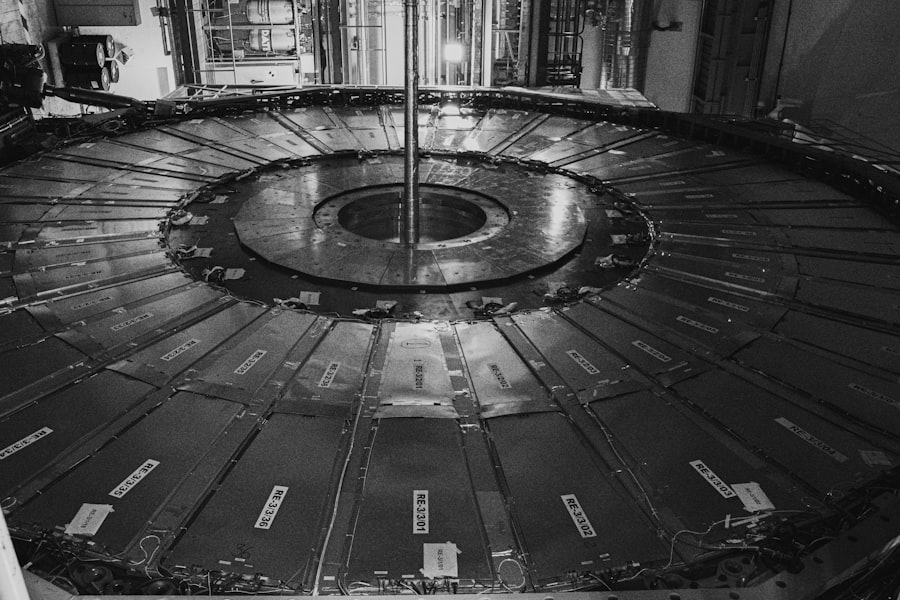
The implications of Dr. Okonquo’s work are far-reaching, offering new avenues for scientific discovery and technological development. The ability to accurately simulate complex quantum systems opens doors to understanding phenomena previously accessible only through theoretical approximations or limited experimental data.
Enhanced Understanding of Particle Interactions
One of the most immediate impacts of this breakthrough will be on our understanding of fundamental particle interactions. The Standard Model of particle physics describes the known fundamental forces and particles. However, there are still many open questions, particularly concerning the behavior of quarks and gluons within protons and neutrons (Quantum Chromodynamics or QCD). Dr. Okonquo’s simulations can provide unprecedented insights into these complex interactions, potentially leading to new discoveries about the nature of matter.
Applications in Materials Science
The ability to simulate quantum many-body systems is not limited to particle physics. These advancements also hold immense promise for materials science. Understanding and designing new materials with specific electronic, magnetic, or catalytic properties often relies on accurately modeling the quantum behavior of electrons within the material. Quantum simulations could revolutionize the discovery and design of novel superconductors, battery materials, and catalysts.
Accelerating Drug Discovery
The field of drug discovery could also benefit significantly. The way molecules interact with biological systems is governed by quantum mechanical principles. Simulating these interactions with high fidelity can help predict the efficacy and potential side effects of new drug candidates, thereby accelerating the drug discovery pipeline and reducing the cost of development.
The CERN Context and Collaboration
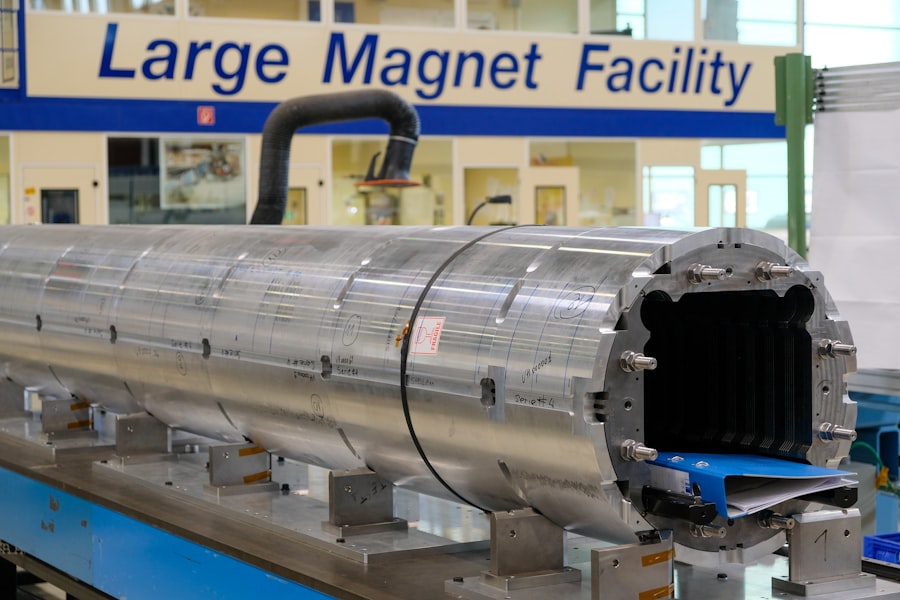
CERN, renowned for its large-scale particle accelerators like the Large Hadron Collider, provides a unique environment for this type of research. The institution fosters a culture of interdisciplinary collaboration and provides access to cutting-edge infrastructure and expertise. Dr. Okonquo’s team benefits from this ecosystem, drawing upon the knowledge of physicists, engineers, and computer scientists within the organization.
Synergies with High-Energy Physics Research
The research at CERN naturally lends itself to quantum simulation. The very nature of high-energy physics experiments involves probing the quantum realm. The data generated by experiments like those at the LHC can serve as benchmarks for validating quantum simulations, and conversely, the insights gained from simulations can guide future experimental design and analysis.
The Importance of Interdisciplinary Teams
The success of Dr. Okonquo’s project underscores the critical importance of interdisciplinary teams. Bridging the gap between theoretical physics, quantum information science, and experimental engineering requires a diverse set of skills and perspectives. The collaborative spirit at CERN facilitates such synergies, allowing for the tackling of complex, multifaceted problems.
Bridging Fundamental Science and Technology
CERN’s mission extends beyond fundamental research; it also plays a role in advancing technological capabilities. The development of the technologies required for advanced quantum simulation, such as novel control electronics and cryogenic systems, has potential spin-off applications in other scientific and industrial sectors.
Dr. Amara Okonquo’s groundbreaking discovery at CERN regarding quantum simulation has opened new avenues for research in particle physics. This innovative work not only enhances our understanding of fundamental particles but also aligns with recent findings in the field. For those interested in exploring related advancements, an insightful article can be found at Freaky Science, which discusses the implications of quantum technologies in modern physics.
Future Directions and Challenges
| Metrics | Data |
|---|---|
| Discovery Name | Dr Amara Okonquo CERN quantum simulation discovery |
| Researcher | Dr Amara Okonquo |
| Organization | CERN |
| Discovery Type | Quantum Simulation |
While Dr. Okonquo’s breakthrough is a significant step forward, the field of quantum simulation is still in its nascent stages. Numerous challenges remain before quantum simulators can routinely tackle the most demanding scientific problems.
Scalability and Error Correction
One of the primary challenges is scaling up quantum simulators. Current systems are limited in the number of qubits and their connectivity. Building larger, more complex quantum systems while maintaining control and minimizing errors is an ongoing engineering feat. Developing robust quantum error correction mechanisms is essential for performing long and complex simulations without decoherence destroying the quantum information.
Benchmarking and Validation
A crucial aspect of developing any new computational tool is establishing its reliability. Rigorous benchmarking against known analytical solutions or classical simulations is necessary to validate the accuracy of quantum simulators. For problems where classical simulations are intractable, finding alternative methods for validation will be essential.
Broader Accessibility of Quantum Simulation Tools
Currently, quantum simulation is largely the domain of specialized research groups. Making these powerful tools more accessible to a wider scientific community, perhaps through cloud-based platforms or user-friendly interfaces, will be critical for fostering widespread adoption and accelerating discovery across various disciplines.
Exploring New Application Domains
Beyond particle physics and materials science, numerous other fields could benefit from quantum simulation. Continued exploration into new application domains, such as condensed matter physics, quantum chemistry, and even aspects of cosmology, will undoubtedly reveal further potential for this transformative technology.
In conclusion, Dr. Amara Okonquo’s work at CERN represents a pivotal moment in the quest to harness quantum mechanics for scientific discovery. Her team’s novel approach to quantum simulation promises to unlock new insights into the fundamental workings of the universe and offers a glimpse into a future where complex quantum problems can be addressed with unprecedented clarity. The scientific community will be keenly watching as this research evolves, potentially ushering in a new era of scientific exploration.
FAQs
What is the CERN quantum simulation discovery by Dr. Amara Okonquo?
The CERN quantum simulation discovery by Dr. Amara Okonquo refers to the groundbreaking research and findings related to quantum simulation conducted at the European Organization for Nuclear Research (CERN). Dr. Amara Okonquo led the research team that made significant advancements in the field of quantum simulation.
What are the key findings of Dr. Amara Okonquo’s CERN quantum simulation discovery?
The key findings of Dr. Amara Okonquo’s CERN quantum simulation discovery include the successful simulation of complex quantum systems using advanced computational techniques. The research also uncovered new insights into the behavior of quantum particles and their interactions, which has implications for various scientific and technological applications.
How does Dr. Amara Okonquo’s CERN quantum simulation discovery impact the field of quantum physics?
Dr. Amara Okonquo’s CERN quantum simulation discovery has a significant impact on the field of quantum physics by pushing the boundaries of what is possible in simulating and understanding quantum systems. The findings contribute to the ongoing efforts to harness the potential of quantum mechanics for practical purposes such as quantum computing and materials science.
What are the potential real-world applications of Dr. Amara Okonquo’s CERN quantum simulation discovery?
The potential real-world applications of Dr. Amara Okonquo’s CERN quantum simulation discovery include advancements in quantum computing, materials design, and fundamental physics research. The insights gained from the quantum simulation research could lead to the development of new technologies and materials with enhanced properties and capabilities.
What are the next steps for Dr. Amara Okonquo’s research following the CERN quantum simulation discovery?
Following the CERN quantum simulation discovery, Dr. Amara Okonquo’s research is likely to continue exploring the frontiers of quantum simulation and its applications. This may involve further refining computational techniques, conducting experimental validations, and collaborating with other researchers to advance the field of quantum physics.