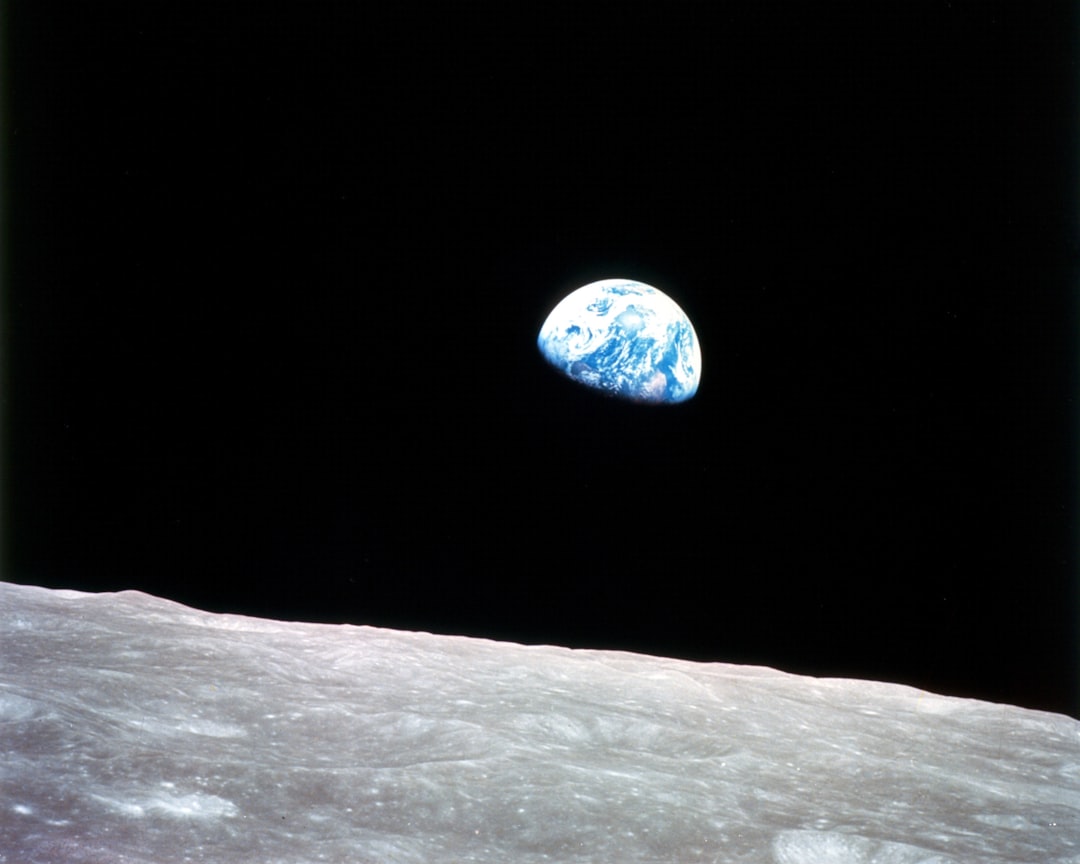
The prospect of venturing beyond Earth’s atmosphere, specifically to the Moon, has captivated humanity for centuries. From ancient myths to scientific endeavors, the lunar orb has served as a constant celestial companion, a source of wonder, and eventually, a tangible destination. The public’s reaction to this ambition has not been static; it has evolved significantly, shaped by the prevailing cultural, political, and technological landscapes of its time. Examining public opinion on moon exploration requires a retrospective lens, tracing the trajectory from nascent curiosity to instrumental scientific pursuit and the more nuanced perspectives that characterize the present day.
The Dawn of a Dream: Early Fascination and Philosophical Musings
Before the era of rocketry and space suits, public engagement with the Moon was largely confined to the realm of imagination and abstract thought. The Moon was a powerful symbol, woven into the fabric of mythology, art, and literature across diverse cultures. Its perceived influence on earthly phenomena, from tides to human behavior, fueled a persistent fascination.
Lunar Mythology and Folklore
Across ancient civilizations, the Moon was often personified and imbued with divine attributes. It was a deity in its own right, a celestial navigator, a harbinger of luck or misfortune, and a silent witness to human affairs. Stories of lunar beings, lunar landscapes populated by mythical creatures, and the Moon’s transformative powers were commonplace. This shared cultural heritage fostered a deep-seated, albeit unscientific, connection with Earth’s satellite. The public, in these early epochs, didn’t contemplate the exploration of the Moon in a practical sense, but rather its conceptual and symbolic significance. The very idea of travel to such a distant and seemingly otherworldly body was confined to speculative fiction and philosophical discourse.
Early Scientific Speculation and the Seeds of Possibility
With the advent of telescopes and astronomical observation, the Moon’s physical nature began to be demystified, though still viewed through a lens of conjecture. Figures like Galileo Galilei, observing lunar craters and mountains, challenged the notion of a perfectly celestial sphere. This sparked a budding scientific curiosity. While direct public engagement with these scientific findings was limited by literacy rates and access to information, the ideas disseminated through learned societies and publications gradually seeped into broader public consciousness. The concept of the Moon as a world, a place with topography and potentially even atmosphere, began to take root, laying the groundwork for future, more tangible aspirations. The scientific discourse, however remote from the average person, planted seeds of possibility, suggesting that the Moon was not merely a light in the sky, but a physical entity that could, in theory, be studied more closely.
Public opinion on moon exploration has evolved significantly over the decades, reflecting changes in societal values, technological advancements, and political climates. In the early years of space exploration, the Apollo missions captured the public’s imagination and support, but interest waned in the years following the moon landing. Recently, however, there has been a resurgence of enthusiasm for lunar missions, driven by new scientific discoveries and the potential for commercial opportunities. For a deeper understanding of how public sentiment has shifted over time regarding moon exploration, you can read a related article at this link.
The Space Race: National Pride and the Dawn of Public Investment
The mid-20th century witnessed a seismic shift in public perception and engagement with moon exploration, driven by the geopolitical tensions of the Cold War and the subsequent Space Race between the United States and the Soviet Union. The Moon transformed from a poetic muse into a strategic objective and a symbol of technological and ideological superiority.
The Sputnik Shock and the Call to Action
The Soviet Union’s launch of Sputnik in 1957 sent shockwaves across the United States. This unexpected demonstration of Soviet technological prowess ignited public concern and spurred a significant governmental response. Suddenly, space exploration was not just an abstract scientific pursuit, but a matter of national security and international prestige. Public opinion, fueled by media coverage and political rhetoric, largely coalesced around the necessity of catching up and surpassing the Soviets in space. The idea that “they” could reach space before “us” was a potent motivator, generating a sense of urgency and a collective desire to succeed. This era saw a dramatic shift from passive fascination to active, albeit politically engineered, engagement.
The Apollo Program: Uniting a Nation Through Celestial Ambition
President John F. Kennedy’s bold declaration in 1961 to land a man on the Moon and return him safely to Earth before the end of the decade captured the public’s imagination. The Apollo program became a national endeavor, transcending political divides and uniting Americans in a shared, ambitious goal. Public opinion surveys from this period consistently showed overwhelming support for the space program, largely driven by national pride, the perceived scientific progress it represented, and the sheer audacity of the mission. While some voices expressed reservations about the immense cost, the dominant narrative was one of progress, innovation, and American exceptionalism. Media coverage, particularly television, played a crucial role in bringing the spectacle of space exploration into living rooms, fostering a sense of shared experience and collective achievement. The image of astronauts walking on the Moon became an iconic testament to human ingenuity, solidifying a positive and deeply ingrained public perception of lunar exploration. The success of Apollo 11 in 1969 was a global event, met with widespread awe and a reaffirmation of the value of such ambitious scientific undertakings.
Post-Apollo Era: Shifting Priorities and Fading Enthusiasm
The successful culmination of the Apollo program marked a turning point. With the primary objective achieved and the immediate geopolitical imperative lessened, public interest in ongoing lunar exploration began to wane. The immense financial investment required for sustained missions became a more prominent point of contention.
The Cost-Benefit Debate: A Growing Skepticism
As the initial fervor of the Space Race subsided, questions about the economic viability and justification of continued lunar missions began to surface more prominently. Critics argued that the vast sums of money allocated to space exploration could be better spent on pressing domestic issues such as poverty, healthcare, and education. This cost-benefit analysis gained traction in public discourse, particularly during periods of economic uncertainty. While the scientific returns of Apollo were undeniable, their immediate tangible impact on the average citizen was less apparent, leading to a growing skepticism about the ongoing allocation of resources to lunar endeavors. Public opinion, once nearly monolithic in its support, began to fragment, with a noticeable segment questioning the return on investment.
The Rise of Other Space Destinations: Mars and Beyond
The late 20th and early 21st centuries saw the public imagination shift towards other celestial bodies. Mars, with its potential for harboring past or present life, emerged as a new focal point of interest. The exploration of the outer planets and the search for exoplanets also captured scientific curiosity and, by extension, a portion of public attention. This diversification of space exploration interests meant that the Moon, once the singular prize, became just one of many potential frontiers. While not entirely forgotten, its prominence in the public consciousness diminished as new, potentially more scientifically revolutionary, destinations came into focus. The narrative shifted from “going to the Moon” to “exploring the cosmos,” diluting the singular focus that had previously defined lunar ambitions.
The New Moon Age: Renewed Interest and Evolving Motivations
In recent years, there has been a palpable resurgence of interest in lunar exploration, driven by a confluence of factors including technological advancements, the rise of private enterprise, and a re-evaluation of the Moon’s strategic and resource potential. This “New Moon Age” is characterized by a more diverse set of motivations and a broader spectrum of public engagement compared to the Apollo era.
The Commercialization of Space: Private Ventures and Public-Private Partnerships
The emergent role of private companies like SpaceX, Blue Origin, and Astrobotic has fundamentally altered the landscape of space exploration. These entities, driven by commercial interests and innovative business models, are actively pursuing lunar missions, including cargo transport, resource extraction, and even tourism. This commercialization has garnered significant public attention, often framed as a testament to entrepreneurial spirit and technological progress. Public opinion is generally supportive of private sector involvement, viewing it as a more efficient and potentially less taxpayer-burdened approach to space endeavors. The idea of a thriving lunar economy, while still nascent, is capturing imaginations and generating a different kind of enthusiasm than the purely nationalistic drive of the Space Race. Public-private partnerships are seen as a way to leverage expertise and resources, making ambitious lunar projects more feasible.
Scientific Revitalization: Lunar Resources and Scientific Discovery
Beyond commercial interests, there is a renewed scientific impetus for lunar exploration. The discovery of water ice in shadowed craters has opened up new possibilities for resource utilization, including fuel for deep space missions and a potential source of sustenance. The Moon is also viewed as an unparalleled platform for astronomical observations, free from Earth’s atmospheric interference. Furthermore, understanding lunar geology can provide crucial insights into the early history of the solar system. Public opinion, while perhaps not as intensely unified as during Apollo, is increasingly receptive to these scientific rationales. The prospect of using lunar resources to facilitate further exploration, and the potential for groundbreaking astronomical discoveries, resonates with a public that is more informed about the long-term scientific potential of space.
Public opinion on moon exploration has evolved significantly over the decades, reflecting changing societal values and technological advancements. In the early years of space exploration, the excitement surrounding the Apollo missions captured the imagination of millions, fostering a sense of national pride and curiosity about the cosmos. However, as priorities shifted towards addressing pressing issues on Earth, interest in lunar missions waned. Recently, there has been a resurgence of enthusiasm for moon exploration, driven by advancements in technology and the potential for scientific discovery. For a deeper understanding of how public sentiment has shifted over time, you can read more in this insightful article on the topic at Freaky Science.
The Future of Lunar Engagement: Challenges, Opportunities, and Public Perception
The path forward for lunar exploration is fraught with both significant challenges and unprecedented opportunities. Public opinion will undoubtedly play a crucial role in shaping the trajectory of these endeavors, influencing funding decisions, policy priorities, and the overall narrative surrounding humanity’s return to the Moon.
Sustainability and Ethical Considerations in Lunar Development
As plans for sustained lunar presence and potential resource utilization become more concrete, questions surrounding sustainability and ethical considerations are increasingly entering public discourse. Concerns about environmental impact on the lunar surface, the equitable distribution of lunar resources, and the potential for conflict over these resources are gaining prominence. Public opinion is likely to be divided on these complex issues, with a growing segment advocating for responsible development and international cooperation. The narrative needs to evolve beyond simple exploration to address the long-term stewardship of the Moon.
Public Education and Engagement: Fostering Continued Support
Maintaining public support for lunar exploration in the long term will require robust and ongoing educational initiatives. Clearly communicating scientific objectives, technological advancements, and the tangible benefits of lunar endeavors will be crucial. Furthermore, fostering a sense of shared ownership and participation, perhaps through citizen science initiatives or transparent communication channels, could help to sustain public engagement. The future of lunar exploration depends not only on technological innovation and governmental will but also on the sustained interest and support of a well-informed global populace. The next chapter of lunar exploration will be written with both scientific discovery and the collective will of humanity, influenced by an ever-evolving public consciousness.
FAQs
What is the general public opinion on moon exploration over time?
Public opinion on moon exploration has generally been positive over time, with a majority of people supporting continued exploration and potential colonization of the moon.
How has public opinion on moon exploration changed over the years?
Public opinion on moon exploration has evolved over the years, with initial excitement during the Apollo missions, followed by a decrease in interest during the 1980s and 1990s, and a resurgence of support in recent years with the rise of private space companies.
What factors have influenced public opinion on moon exploration?
Factors such as scientific discoveries, technological advancements, political priorities, and media coverage have all played a role in shaping public opinion on moon exploration.
What are some common reasons for supporting moon exploration?
Common reasons for supporting moon exploration include the potential for scientific discoveries, technological advancements, economic opportunities, and the possibility of establishing a human presence beyond Earth.
What are some common reasons for opposing moon exploration?
Some common reasons for opposing moon exploration include concerns about the cost, environmental impact, prioritization of other societal needs, and ethical considerations related to space exploration.