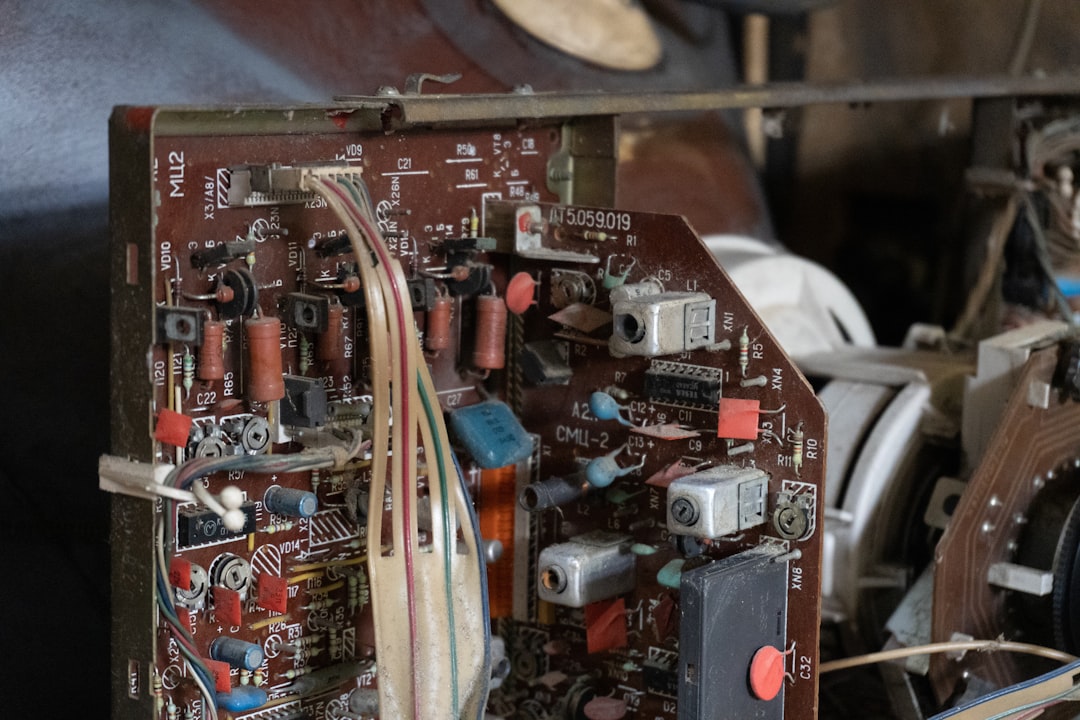
The Apollo Lunar Module, a marvel of engineering and a symbol of human ambition, represents a pivotal moment in space exploration. However, looking back through the lens of modern technology, many of its critical components and systems appear remarkably rudimentary, even obsolete by today’s standards. While its success in landing humans on the Moon is undeniable, a closer examination of its internal workings reveals a testament to ingenuity born of necessity rather than access to cutting-edge digital capabilities.
At the heart of the Lunar Module’s navigation and control lay the Apollo Guidance Computer (AGC). This unit, the brains of the operation, was a far cry from the powerful processors that inhabit even the most basic of modern devices. Its computational power, memory, and input/output mechanisms were constrained by the technology available in the 1960s, necessitating a design that prioritized simplicity and reliability above all else.
Processing Power and Speed: A World Apart from Today
The AGC operated at a clock speed of approximately 2.048 MHz. To put this into perspective, a modern smartphone, a device most people carry in their pockets, possesses processors that run at speeds measured in gigahertz – thousands of times faster. This raw processing speed difference meant that complex calculations, essential for orbital mechanics and trajectory adjustments, had to be meticulously planned and executed. The AGC was not capable of real-time dynamic adjustments in the way a modern flight computer would be. Instead, its software was designed to execute pre-programmed sequences and respond to human input through a series of discrete commands. This reliance on pre-defined routines meant that any deviation from the expected flight path required significant manual intervention and recalculation, a stark contrast to the adaptive algorithms common in contemporary aerospace. The development of this software was a monumental undertaking, involving thousands of hours of manual coding and rigorous testing. The lack of advanced debugging tools meant that errors had to be painstakingly identified and corrected through painstaking code review and simulation.
The Apollo lunar module, a marvel of engineering from the 1960s, is a prime example of obsolete technology that paved the way for modern space exploration. Despite its groundbreaking design, many of the systems used in the lunar module have since been replaced by more advanced technologies. For an in-depth look at how such outdated technology has influenced contemporary innovations, you can read a related article at Freaky Science. This article explores the evolution of space technology and highlights the lessons learned from the Apollo missions.
Memory Limitations: A Paltry Capacity
The AGC’s memory was equally constrained. It featured 64,000 words of erasable, programmable read-only memory (EPROM), a primitive form of non-volatile memory, and 2,000 words of volatile random-access memory (RAM). This translates to approximately 48 kilobytes of ROM and 1.5 kilobytes of RAM. Compare this to the gigabytes of RAM and terabytes of storage available in modern personal computers and even basic mobile devices. The limited memory capacity meant that the AGC’s software had to be incredibly efficient, utilizing every byte of storage judiciously. Complex subroutines were often optimized to the extreme, and data was meticulously managed to avoid exceeding the available RAM. This scarcity of memory underscores the challenges faced by the Apollo engineers, who had to pack all the necessary guidance, navigation, and control logic into a system with less storage than a single modern song file. The program stored in the AGC was known as the “verb-noun” language, a unique command structure that allowed astronauts to input instructions by selecting verbs (actions) and nouns (objects of the action). This system, while functional, was a far cry from the intuitive graphical user interfaces (GUIs) we take for granted today.
Input and Output: The DSKY’s Analog Charm
Interaction with the AGC was primarily through the Display and Keyboard (DSKY). This interface, with its numerical display and alphanumeric keyboard, appears remarkably primitive compared to the touchscreens and voice command systems of today. Astronauts had to input commands and interpret data through a series of numerical codes and displays. There were no graphical representations of flight paths or real-time telemetry dashboards readily available. The DSKY required a significant learning curve, and astronauts underwent extensive training to master its operation. Misinterpreting a code or making a typo could have severe consequences. The absence
FAQs
What obsolete technology was used in the Apollo lunar module?
The Apollo lunar module used technology that is now considered obsolete, such as the Apollo Guidance Computer (AGC), which had less processing power than a modern smartphone, and the use of magnetic core memory for data storage.
How did the obsolete technology in the Apollo lunar module compare to modern technology?
The technology used in the Apollo lunar module was significantly less advanced than modern technology. The AGC had limited processing power and memory capacity compared to today’s computers, and the use of magnetic core memory has been replaced by more efficient and compact storage methods.
Why was obsolete technology used in the Apollo lunar module?
At the time of the Apollo missions, the technology used in the lunar module was state-of-the-art. However, rapid advancements in technology since then have made the equipment used in the Apollo missions obsolete by today’s standards.
What challenges did the obsolete technology present during the Apollo missions?
The obsolete technology used in the Apollo lunar module presented challenges such as limited computing power, memory capacity, and reliability. These challenges had to be carefully managed by the astronauts and mission control to ensure the success of the missions.
What impact did the obsolete technology in the Apollo lunar module have on space exploration?
The obsolete technology used in the Apollo lunar module played a crucial role in the success of the Apollo missions and the historic moon landings. While it is now considered outdated, the technology paved the way for future advancements in space exploration and inspired further innovation in the field.