The subject of autism has long been a source of intense scientific inquiry, and understanding its evolutionary origins is crucial for a comprehensive grasp of this complex neurodevelopmental condition. While the precise trajectory of autism’s evolutionary path remains a topic of ongoing research and debate, several compelling hypotheses shed light on how traits associated with autism may have persisted and, in some instances, possibly even conferred adaptive advantages in specific ancestral environments. This exploration delves into the potential evolutionary underpinnings of autism spectrum disorder (ASD), examining genetic, environmental, and selective pressures that may have shaped its presence in human populations.
The evolutionary persistence of any trait hinges on its genetic basis and how those genes are passed down through generations. Autism spectrum disorder is characterized by significant heritability, indicating that genetic factors play a substantial role in its etiology. Research has identified numerous genes and genetic variations associated with an increased risk of autism.
Polygenic Inheritance and Common Variants
A key insight into the genetic origins of autism lies in the understanding of polygenic inheritance. Rather than being caused by a single gene mutation, autism is largely influenced by the cumulative effect of many genes, each contributing a small amount to an individual’s susceptibility. This complex genetic architecture makes it challenging to pinpoint a singular “autism gene” but suggests that common genetic variants, which are broadly distributed within the population, are likely to be implicated. The evolutionary question then becomes: why have these common variants, which individually confer minimal risk, persisted and even been maintained at certain frequencies?
The Role of Balancing Selection
One hypothesis is that certain genetic variants associated with autism may have been under balancing selection. Balancing selection occurs when natural selection maintains multiple alleles (gene variants) in a population. This can happen through mechanisms such as heterozygote advantage, where individuals with one copy of a particular allele have a higher fitness than those with two copies or none. In the context of autism, it is conceivable that some genes contributing to autistic traits, when present in a single copy or in specific combinations, might have conferred benefits in ancestral environments. For example, traits like heightened attention to detail, a preference for routine, or intense focus could have been advantageous for survival or resource acquisition in certain niche environments. The persistence of these variants, even if they increase the risk of ASD in homozygous or specific allelic combinations, could be explained by the fitness advantage they provided in a heterozygous state.
Founder Effects and Genetic Drift
In addition to selection, genetic drift, a random process of allele frequency change, can also play a role in the prevalence of certain genetic traits. In small, isolated populations, founder effects can lead to the disproportionate representation of specific genetic variants. If a founding population happened to carry a higher frequency of genetic variants linked to autism, these variants could become more common in subsequent generations, irrespective of any selective advantage. Similarly, genetic drift can lead to the fixation or loss of alleles over time, and in some instances, this random fluctuation might have contributed to the maintenance of autism-related genes.
De Novo Mutations and Their Evolutionary Implications
While heritability is a significant factor, de novo mutations—new genetic alterations that occur spontaneously in germ cells or early embryonic development—also contribute to the genetic landscape of autism. These mutations are not inherited from parents but arise independently. From an evolutionary perspective, de novo mutations are the ultimate source of genetic variation. Their occurrence, while seemingly detrimental when leading to a condition like autism, is a fundamental process in evolution.
The Mutation Rate and Its Trade-offs
The rate at which mutations occur is itself subject to evolutionary pressures. While a very high mutation rate could accelerate adaptation, it would also increase the burden of deleterious mutations. Conversely, a very low mutation rate would limit the raw material for evolution. The observed mutation rates in humans are thought to represent an evolutionary trade-off, balancing the need for genetic innovation with the imperative of maintaining genetic integrity. De novo mutations, including those that may increase autism risk, are a consequence of this evolutionary balance. The question remains whether these de novo mutations are simply random noise or if there are specific contexts where they might have had short-term or ancestral advantages.
Epigenetic Modifications and Heritability
Beyond direct DNA sequence changes, epigenetic modifications—heritable alterations in gene expression that do not involve changes to the underlying DNA sequence—emerge as another area of interest. Environmental factors can influence epigenetic markers, which in turn can affect gene function and development. If certain environmental exposures in ancestral populations influenced epigenetic patterns associated with neurodevelopment, these patterns could have been passed down, potentially contributing to the phenotypic spectrum of autism. The evolutionary aspect here involves understanding whether these epigenetic influences were adaptive in specific ancestral contexts.
Recent research has shed light on the evolutionary origins of the autistic brain, suggesting that certain traits associated with autism may have provided adaptive advantages in ancestral environments. This perspective aligns with the findings discussed in the article “The Evolutionary Roots of Autism” available at Freaky Science, which explores how variations in brain structure and function could have been beneficial for survival and social interaction in early human societies. Understanding these evolutionary aspects can deepen our insight into autism and its diverse manifestations in contemporary populations.
Environmental Factors and Ancestral Niches
The evolutionary perspective on autism also considers the influence of environmental factors, particularly those present in ancestral human environments. The hypothesis is that interactions between genetic predispositions and specific environmental pressures may have shaped the expression and prevalence of autism-related traits.
The Savanna Hypothesis and Sensory Processing
One prominent line of thought suggests that traits associated with autism might have been adaptive in specific ancestral ecological niches, such as the African savanna. This “Savanna Hypothesis” posits that individuals with enhanced sensory detection abilities, a focus on detail, a preference for order, and a systematic approach to information processing might have possessed advantages in environments demanding vigilance.
Hyper-vigilance and Predator Detection
In the savanna, constant awareness of one’s surroundings would have been essential for survival. Traits like heightened auditory or visual sensitivity, often observed in individuals with autism, could have facilitated the early detection of predators or other environmental threats. A meticulous focus on subtle environmental cues, such as changes in wind direction or the rustling of grass, might have provided a crucial survival advantage. From an evolutionary standpoint, individuals who were more attuned to these details would have been more likely to survive and reproduce.
Pattern Recognition and Resource Acquisition
The ability to identify patterns and anomalies in the environment could also have been beneficial for resource acquisition. For instance, recognizing subtle changes in vegetation that indicated the presence of water or edible plants, or identifying predictable animal migration routes, would have been critical for survival. Individuals who excelled at detailed observation and pattern recognition, even if this came at the cost of social engagement, might have been more successful in securing resources.
Specialization and Niche Construction
Another evolutionary perspective suggests that autistic traits might have been favored in ancestral populations that relied on specialization. In small, tightly-knit communities, individuals with a strong aptitude for specific skills, such as tool-making, tracking, or detailed craftsmanship, might have been highly valued.
The “Systemizer” Archetype
The concept of the “systemizer” proposes that individuals with a strong drive to understand and build systems—be it mechanical, biological, or abstract—may have played vital roles in early human societies. These individuals, often characterized by intense focus and a systematic approach, could have been responsible for developing and refining essential technologies, knowledge systems, and infrastructure. If these specialized roles were crucial for group survival, then the underlying cognitive styles associated with them could have been selected for, even if they were not conducive to broad social interaction.
The Trade-off Between Social and Technical Skills
Evolutionary theory often involves trade-offs. It is plausible that an evolutionary environment favored a specialization in technical skills or detailed observation at the expense of advanced social skills. In a small-group context, where roles were clearly defined and cooperation with kin was paramount, enhanced social intelligence might not have been as universally advantageous as specialized expertise. This could explain how cognitive profiles associated with autism, while potentially hindering broader social integration, might have been adaptive within specific roles or sub-groups.
Sexual Selection and Pair Bonding
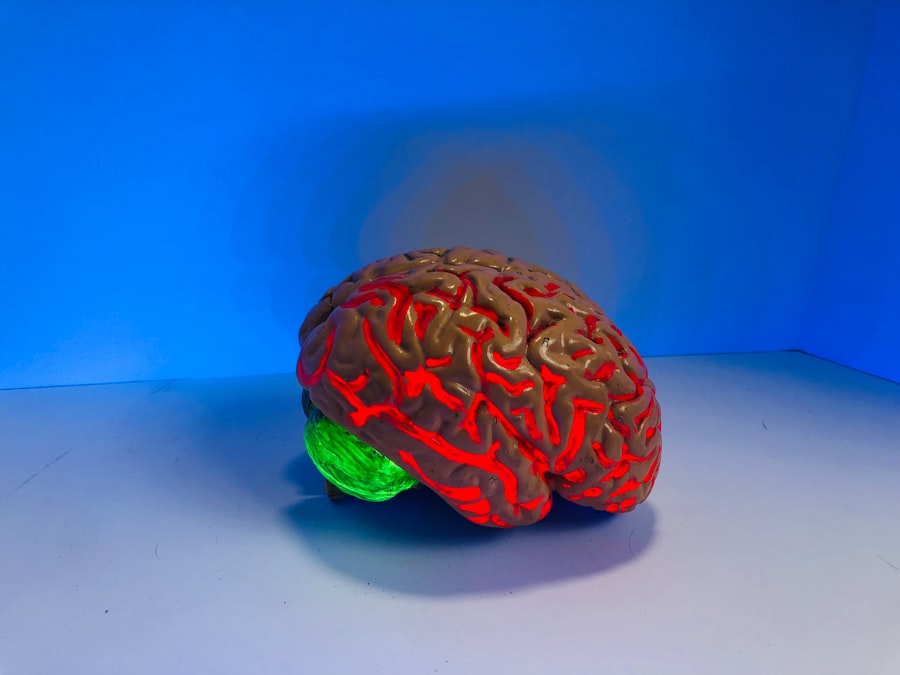
The role of sexual selection in the evolutionary history of traits associated with autism is another area of exploration. Sexual selection refers to the process by which individuals with certain traits are more likely to find mates and reproduce.
The “Extreme Male Brain” Theory
One hypothesis, the “Extreme Male Brain” (EMB) theory, suggests that autism spectrum disorder might represent one end of a spectrum of cognitive styles, with highly empathic and social styles at the other. This theory posits that in ancestral hunter-gatherer societies, a division of labor may have emerged, with males tending to specialize in “systemizing” (understanding and building systems) and females in “empathizing” (understanding and responding to the mental states of others).
The Persistence of Systemizing Traits
If systemizing traits were particularly advantageous for certain roles, such as tool innovation or territorial defense, and if these roles were predominantly occupied by males, then natural and sexual selection could have favored the amplification of these traits. The EMB theory suggests that autism might be an extreme manifestation of these systemizing tendencies, potentially leading to difficulties in social interaction and communication, but also to exceptional skills in areas requiring analytical and mechanical aptitude. The evolutionary question then becomes whether these systemizing traits, even in their extreme form, conferred a reproductive advantage through indirect mechanisms or by fulfilling crucial societal functions.
Mate Choice and Indirect Benefits
While direct mate choice based on social affability is evident, sexual selection can also operate indirectly. If individuals with certain systemizing skills, despite their social challenges, were exceptionally valuable to their group (e.g., through contributions to hunting success, defense, or technological advancement), they might have been indirectly favored in mate selection. Their ability to contribute significantly to the group’s survival and prosperity could have made them desirable partners, even if their social communication skills were less developed. This could have led to the persistence of genes associated with these traits.
Reproductive Success in Different Environments
The evolutionary success of traits associated with autism would also depend on the specific reproductive challenges and opportunities of different ancestral environments. In environments where social intelligence was paramount for group cohesion and cooperation, traits associated with autism might have been selected against. However, in environments that favored specialization, technical innovation, or individual resourcefulness, these traits might have been less detrimental and potentially even advantageous.
The Role of Cooperation and Kin Selection
Early human evolution was characterized by strongreliance on group cooperation and kin selection. While autism is often associated with social challenges, it is important to consider how individuals with these traits might have contributed to the group’s overall success. If their specialized skills were essential for the group’s survival, then kin selection and reciprocal altruism could have played a role in their integration and continued reproduction within the group.
The “Social Brain” Hypothesis and its Limits
The “social brain” hypothesis suggests that the evolution of large human brains was driven by the demands of complex social interactions. While this holds true for many aspects of human cognition, it does not negate the possibility that other cognitive specializations, even those that may appear socially counterintuitive, could also have been adaptive. The evolutionary perspective on autism acknowledges the importance of the social brain but also explores the potential adaptive value of cognitive variations that deviate from the typical “socially adept” profile.
Evolutionary Mismatch and Modern Environments
A significant aspect of understanding the evolutionary origins of autism involves considering the concept of evolutionary mismatch—the idea that traits that were adaptive in ancestral environments may become disadvantageous in modern, drastically different environments.
The Industrial Revolution and Changing Social Landscapes
The advent of the Industrial Revolution and subsequent societal changes have profoundly altered human environments. The shift from primarily agrarian and small-group societies to a more industrialized, urbanized, and technologically driven world has created new selective pressures.
The Amplification of Social Demands
Modern Western societies, in particular, place a very high premium on social communication, assertiveness, and networking for success. In this context, the social challenges associated with autism may become amplified, leading to difficulties in education, employment, and social integration. What might have been a manageable aspect of an individual’s profile in an ancestral setting, where roles were more circumscribed, can become a significant barrier in contemporary society. This mismatch, rather than indicating a purely maladaptive trait, suggests that the adaptive landscape has shifted.
The Rise of Technology and Information Processing
Conversely, modern technological advancements and the information age may inadvertently create niches where certain autistic traits are better suited. The demand for individuals with exceptional analytical skills, attention to detail, and the ability to identify patterns in vast datasets has grown considerably. Fields like computer science, data analysis, and engineering may offer environments where the cognitive strengths associated with autism can be highly valued and contribute significantly. This suggests that while some aspects may be mismatched, others may find new forms of adaptation in the modern world.
The “Intensification” of Traits
Another way to view evolutionary mismatch is through the lens of trait intensification. Certain genetic variants that were once present at moderate levels and conferred mild advantages may, in interaction with modern environmental factors, lead to more pronounced expression of autistic traits.
The Influence of Diet and Lifestyle
Changes in diet, lifestyle, and exposure to various environmental agents (e.g., pollution, chemicals) in modern times may interact with genetic predispositions for autism. While these factors are distinct from direct evolutionary pressures, they can influence gene expression and developmental trajectories, potentially leading to an increase in the observed prevalence or severity of certain autistic characteristics. This is not necessarily an evolutionary process in the strict sense of natural selection acting on gene frequencies, but rather an interaction between evolved genetic predispositions and novel environmental influences.
The Role of Education Systems
Modern education systems, with their emphasis on standardized testing, group work, and rapid social interaction, can also create a mismatch for individuals with autistic traits. The structured and predictable learning environments that might have been beneficial in the past may be less common, and the pressure to conform to neurotypical social norms can be intense. This can exacerbate challenges and make it harder for individuals to demonstrate their strengths.
Recent research has begun to explore the evolutionary origins of the autistic brain, shedding light on how certain traits may have developed over time. This fascinating topic is discussed in more detail in a related article that examines the genetic and environmental factors contributing to autism. For those interested in delving deeper into this subject, you can read more about it in this informative article. Understanding these origins not only enhances our knowledge of autism but also helps in fostering a more inclusive society.
Future Directions and Unanswered Questions
| Evolutionary Origins of the Autistic Brain | |
|---|---|
| Study | Findings |
| Research on brain development | Identified genetic changes linked to autism that occurred during human evolution |
| Comparative studies | Highlighted differences in brain structure and function between autistic and non-autistic individuals |
| Evolutionary psychology | Suggested that certain traits associated with autism may have provided evolutionary advantages in the past |
The evolutionary perspective on autism is a dynamic and evolving field, with many questions yet to be definitively answered. Continued research is vital to refining our understanding of this complex interplay between genes, environment, and selection pressures.
Comparative Studies and Primate Research
Investigating the evolutionary roots of autism might benefit from comparative studies. Examining social behavior and cognitive characteristics in non-human primates and other species could provide insights into the evolutionary trajectory of social cognition and communication. Are there primate behaviors that exhibit similarities to certain autistic traits? Understanding the evolutionary history of these behaviors across the primate lineage could illuminate the deep evolutionary origins of these cognitive styles.
Analogous Traits in Other Species
While direct parallels are unlikely, identifying analogous traits—behaviors or cognitive styles that serve similar adaptive functions but have different evolutionary origins—could be informative. For instance, solitary hunting strategies or specialized foraging behaviors in certain animals might offer indirect evidence of how non-social specialization could be evolutionarily maintained.
Investigating Epigenetic Inheritance and Transgenerational Environmental Influences
Further investigation into epigenetic inheritance and transgenerational environmental influences is crucial. If specific ancestral environmental exposures led to heritable epigenetic changes that influenced neurodevelopment, this could represent a significant evolutionary pathway. Understanding how environmental factors, even those not directly acting on DNA, can influence gene expression across generations is key to a holistic evolutionary narrative.
The Impact of Maternal Health and Nutrition
The health and nutritional status of mothers during pregnancy have been implicated in neurodevelopmental outcomes. From an evolutionary standpoint, it would be interesting to explore whether ancestral maternal health and nutritional patterns, which likely differed significantly from modern ones, could have influenced the prevalence of traits associated with autism through epigenetic mechanisms.
Reframing Autism Through an Evolutionary Lens
Ultimately, understanding the evolutionary origins of autism is not about labeling it as “good” or “bad.” Instead, it is about recognizing that the variations in human neurobiology are products of millions of years of evolutionary history.
Recognizing Strengths and Diversity
An evolutionary perspective encourages us to move beyond a deficit-based model of autism and to consider the possibility that autistic traits, in certain contexts, may have conferred advantages. This can lead to a greater appreciation for the diversity of human cognition and the unique strengths that individuals with autism bring to society, both past and present. It shifts the focus from solely asking “why is this a problem?” to also considering “what adaptive roles might these traits have played?”
The Continuum of Human Cognition
Viewing autism spectrum disorder as part of a broader continuum of human cognition, shaped by diverse evolutionary pressures, offers a more nuanced and comprehensive understanding. It highlights that the spectrum of human experience, including variations in social interaction, sensory processing, and cognitive styles, is a testament to the adaptive power of evolution in navigating a vast array of environmental challenges throughout history. This perspective offers a framework for appreciating neurodiversity not as an anomaly, but as a natural outcome of our evolutionary journey.
FAQs
What are the evolutionary origins of the autistic brain?
The evolutionary origins of the autistic brain are still not fully understood, but research suggests that genetic and environmental factors may have played a role in the development of autism spectrum disorder (ASD). Some scientists believe that certain traits associated with ASD, such as enhanced perceptual processing and attention to detail, may have provided evolutionary advantages in certain environments.
Is there a genetic basis for autism?
Yes, there is a strong genetic basis for autism. Studies have shown that individuals with a family history of autism are at a higher risk of developing the disorder. Additionally, specific genetic mutations and variations have been linked to an increased risk of autism.
How does the autistic brain differ from neurotypical brains?
The autistic brain differs from neurotypical brains in several ways, including differences in connectivity, brain structure, and neurotransmitter function. Individuals with autism may also exhibit differences in sensory processing and social cognition compared to neurotypical individuals.
Can environmental factors contribute to the development of autism?
Yes, environmental factors may contribute to the development of autism. Research has suggested that factors such as prenatal exposure to certain chemicals, maternal infections during pregnancy, and complications during birth may increase the risk of autism in some individuals.
What are some current theories about the evolutionary origins of the autistic brain?
Some current theories about the evolutionary origins of the autistic brain include the “hyper-systemizing” theory, which suggests that individuals with autism may have enhanced abilities in systemizing and pattern recognition, providing evolutionary advantages in certain contexts. Another theory, the “intense world” theory, proposes that individuals with autism experience the world with heightened sensory and emotional experiences, which may have provided evolutionary benefits in certain environments.