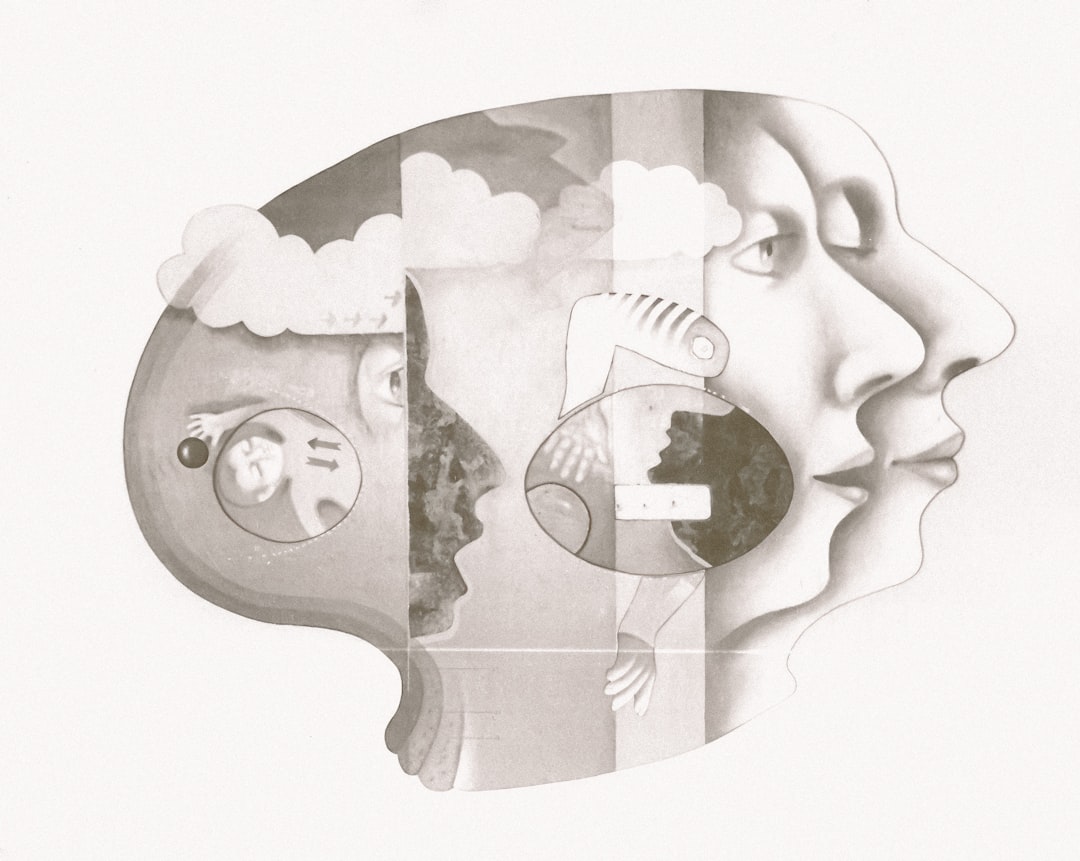
Evolution, a relentless and indifferent force, has sculpted the biological world over eons. Its impact extends far beyond the physical attributes of organisms, deeply influencing the very architecture and functioning of their minds. The diversity of cognitive abilities observed across species, and even within human populations, is not a random anomaly but a testament to the power of natural selection and other evolutionary mechanisms. Understanding how evolution shapes diverse minds requires examining the pressures faced by different species and the adaptive solutions that emerged.
The earliest forms of life, while lacking complex nervous systems, possessed rudimentary mechanisms for responding to their environment. These foundational elements, honed over billions of years, laid the groundwork for more sophisticated cognitive processes.
Early Sensory Processing and Basic Reactions
The very first life forms likely responded to simple environmental cues. Chemical gradients, light intensity, and physical stimuli would have triggered basic, pre-programmed reactions. These were not “thoughts” in the human sense, but rather direct input-output mechanisms essential for survival – finding nutrients, avoiding danger. The evolution of specialized sensory organs, from simple eyespots to more elaborate visual systems, represented a significant leap, allowing for more nuanced environmental assessment. This ability to detect and interpret information from the external world is a fundamental building block of all cognition.
The Dawn of Neural Networks
The development of neurons marked a pivotal moment. These specialized cells allowed for the integration of sensory information and the coordination of responses. Early neural networks were likely very simple, facilitating basic reflexes and rhythmic movements. The increasing complexity of these networks, however, allowed for more sophisticated behaviors. This gradual increase in neural complexity, driven by selection pressures favouring organisms that could better navigate their environments, established the biological basis for learning and memory.
Early Forms of Navigation and Resource Acquisition
Even the simplest motile organisms faced challenges in finding food and avoiding predators. This necessitated the evolution of basic navigational strategies. Whether it was moving towards a chemical attractant or away from a noxious stimulus, these early behaviors demonstrate the selective advantage of organisms that could effectively locate resources and escape threats. This fundamental drive to acquire resources and ensure safety has been a constant evolutionary driver for cognitive development.
Evolution has shaped the diverse cognitive profiles observed in humans and other species, allowing for a wide range of problem-solving abilities and social interactions. A related article that delves into this fascinating topic is available at Freaky Science, where it explores how evolutionary pressures have influenced cognitive diversity, leading to the unique mental capabilities seen across different populations. This diversity not only enhances adaptability but also fosters innovation and creativity within communities.
Environmental Pressures and Cognitive Specialization
The myriad environments across the globe have presented distinct challenges, each favoring different cognitive adaptations. From the open savanna to the dense rainforest, and from the ocean depths to the arboreal canopy, specific pressures have sculpted species-specific cognitive toolkits.
Predator-Prey Dynamics and Sensory Sophistication
The constant arms race between predators and prey has been a powerful engine for cognitive evolution. Prey animals often evolve heightened sensory perception – sharper vision, more acute hearing, a keen sense of smell – to detect threats earlier. This, in turn, drives predators to develop more sophisticated hunting strategies, which may involve deception, ambush tactics, or cooperative hunting. The cognitive demands of escaping detection or successfully ambushing prey have shaped the evolution of specialized sensory processing and behavioral planning. For instance, the development of echolocation in bats or dolphins is a remarkable example of a cognitive adaptation to a visually limited environment, enabling them to hunt and navigate in darkness.
Social Structures and Interpersonal Cognition
Many species live in social groups, and the dynamics of these groups can significantly influence cognitive abilities. Complex social interactions require individuals to understand social hierarchies, recognize individuals, and predict the behavior of others. This has led to the evolution of what is often termed “social intelligence.” In primates, for example, the ability to form alliances, understand deception, and engage in reciprocal altruism are crucial for survival and reproductive success. The cognitive load of managing these complex social relationships has driven the evolution of brain regions associated with theory of mind, empathy, and complex communication.
Foraging Strategies and Problem-Solving
The way a species obtains its food has a profound impact on its cognitive repertoire. Solitary hunters might develop sophisticated tracking and ambush skills, while herbivores might need to remember food locations and the seasonal availability of plants. Species that rely on tool use, such as some primates and birds, exhibit advanced problem-solving abilities. This might involve understanding object properties, planning sequences of actions, and adapting strategies when initial attempts fail. The cognitive demands of foraging have thus fostered diverse problem-solving skills and memory capacities.
The Role of Brain Structure and Neural Plasticity
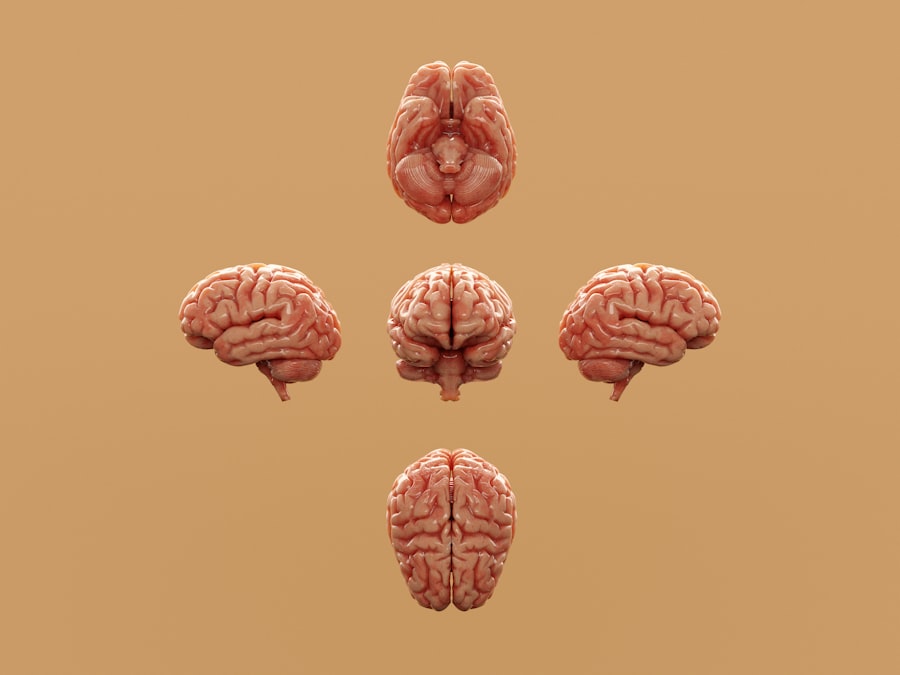
The evolutionary journey has not only selected for specific cognitive abilities but also for the underlying neural structures and the brain’s capacity for change.
Brain Size and Cognitive Complexity
While a simplistic correlation, brain size has often been linked to cognitive complexity. Organisms with larger brains, relative to their body size, tend to exhibit more sophisticated cognitive abilities. This association is particularly evident in the comparison between different mammalian orders. However, it is not merely about absolute size but also about the proportional development of specific brain regions. Evolution has favoured increased cortical surface area and the development of associative areas, which are crucial for higher-order cognitive functions like learning, memory, and reasoning.
Specialized Brain Regions and Their Evolution
Different cognitive functions are often localized to specific regions of the brain. The evolution of these specialized areas, such as the hippocampus for memory formation or the amygdala for processing emotions, has allowed for efficient and dedicated processing of information. For example, birds that are adept at caching seeds exhibit a proportionally larger hippocampus than those that are not, facilitating spatial memory crucial for remembering caches. The selective pressure to excel in particular cognitive domains has driven the disproportionate expansion and refinement of these neural circuits.
Neural Plasticity: The Adaptable Mind
Beyond fixed brain structures, neural plasticity – the brain’s ability to reorganize itself by forming new neural connections throughout life – is a critical evolutionary adaptation. This allows individuals to learn from experience, adapt to changing environments, and acquire new skills. High levels of plasticity enable organisms to fine-tune their cognitive abilities based on their specific life experiences, ensuring that their minds are not rigidly programmed but are capable of flexible responses. This capacity is particularly evident in species with long developmental periods or complex learning requirements.
Cognitive Biodiversity: A Spectrum of Abilities

The evolutionary process has generated not a single, monolithic form of intelligence, but a vast spectrum of cognitive abilities, each uniquely suited to its ecological niche.
Navigational Prowess and Spatial Memory
The ability to navigate complex environments is crucial for survival. Species have evolved diverse strategies, from the remarkable migratory abilities of birds and whales, which can traverse vast distances with incredible accuracy, to the intricate spatial memory of squirrels that can recall the locations of thousands of buried nuts. These abilities are underpinned by specialized neural mechanisms for encoding, storing, and retrieving spatial information, demonstrating how evolutionary pressures have honed the cognitive machinery for orientation and location.
Communication Systems and Information Exchange
The diversity of communication methods across species is a direct reflection of their cognitive evolution. From the complex songs of birds and whales, used for territory defense and mate attraction, to the alarm calls of meerkats that convey specific predator information, these systems are crucial for social cohesion and survival. Even seemingly simple forms of communication, like pheromone trails in insects, represent sophisticated cognitive adaptations for transmitting vital information about resources or danger. The complexity of these systems often correlates with the cognitive demands of the social environment.
Problem-Solving and Tool Use
The capacity for problem-solving, especially the use of tools, is a hallmark of advanced cognition. While often associated with humans and great apes, tool use has been observed in a surprising array of species, including crows, otters, and even octopuses. These instances highlight how evolutionary pressures can favour innovative solutions to ecological challenges, leading to the development of rudimentary or sophisticated tool-making and tool-using skills. This demonstrates an ability to understand object affordances and to mentally manipulate them to achieve a desired outcome.
Evolution has played a significant role in shaping the diverse cognitive profiles observed in different species, as it allows for a variety of adaptations that enhance survival and reproduction. This concept is further explored in a related article that discusses how environmental pressures and social structures influence cognitive development across species. For those interested in delving deeper into this fascinating topic, you can read more about it in this insightful piece on cognitive diversity. Understanding these variations can provide valuable insights into the complexities of intelligence and behavior in both humans and animals.
The Ongoing Evolution of the Mind
| Factors | Explanation |
|---|---|
| Genetic Variation | Evolution creates diverse cognitive profiles through genetic variation, leading to different cognitive abilities and traits. |
| Environmental Pressures | Evolutionary pressures in different environments can favor the development of diverse cognitive profiles to adapt to specific challenges. |
| Social Interactions | Interactions within social groups can drive the development of diverse cognitive profiles to fulfill different roles and functions within the group. |
| Reproductive Success | Diverse cognitive profiles can contribute to reproductive success by increasing the likelihood of survival and successful mating. |
Evolution is not a process that concluded in the past; it continues to shape cognitive abilities even today. Emerging research suggests that environmental changes, both natural and anthropogenic, are exerting new selective pressures on the minds of various species.
Adaptation to Changing Environments
As climates shift and habitats transform, species face novel challenges that require cognitive flexibility. For instance, the ability to adapt to new food sources, identify novel predators, or navigate altered landscapes can become critical for survival. Those individuals with greater cognitive plasticity and a predisposition for learning and innovation are more likely to thrive in these dynamic circumstances. This ongoing adaptation demonstrates that the evolutionary shaping of the mind is a continuous process.
Human Cognitive Evolution and its Drivers
Human cognitive evolution is a complex subject, influenced by a multitude of factors, including social complexity, technological advancement, and cultural transmission. While some argue that certain aspects of human cognitive evolution may have slowed, others highlight the continued impact of factors like urbanization and globalization on cognitive traits. Understanding these ongoing processes is crucial for comprehending the present-day diversity of human minds and their potential future trajectories.
The Future of Cognitive Diversity
The continuing pressures of environmental change, human impact, and interaction between species all suggest that cognitive diversity will continue to evolve. Whether this leads to further specialization, the emergence of novel cognitive abilities, or even a homogenization of certain traits remains to be seen. The evolutionary trajectory of the mind is a dynamic and unfolding narrative, deeply intertwined with the fate of the planet and its inhabitants.
FAQs
What is evolution?
Evolution is the process by which species of organisms change over time, often as a result of natural selection and genetic variation.
How does evolution create diverse cognitive profiles?
Evolution creates diverse cognitive profiles through the process of natural selection, which favors certain cognitive abilities that are advantageous for survival and reproduction in specific environments.
What are some examples of diverse cognitive profiles created by evolution?
Examples of diverse cognitive profiles created by evolution include the ability to navigate complex social relationships, solve problems related to food acquisition, and adapt to changing environmental conditions.
How do genetic variation and environmental factors contribute to diverse cognitive profiles?
Genetic variation contributes to diverse cognitive profiles by providing a range of potential cognitive abilities within a population, while environmental factors can influence the development and expression of these abilities.
What are the implications of diverse cognitive profiles for human society?
The implications of diverse cognitive profiles for human society include the recognition of individual differences in cognitive abilities, the importance of accommodating diverse learning styles, and the potential for leveraging a range of cognitive strengths in various societal roles and tasks.