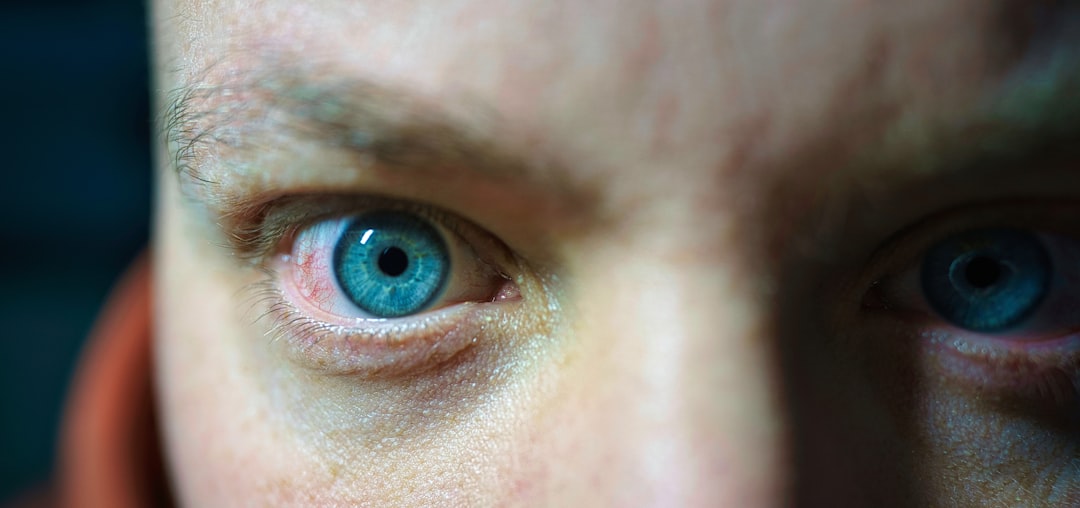
You’ve probably heard it, or maybe you’ve even used it yourself as a subtle compliment: “People with blue eyes have better night vision.” It’s a persistent myth, often woven into casual conversation or even appearing in pop culture. You might imagine the stark contrast of pale irises against the darkness, suggesting a natural advantage in low light. However, as you’ll discover, this charming notion is as fictional as a moonlit cat burglar with X-ray vision. Let’s delve into why this myth persists and what the actual science tells us about eyes, vision, and the dark.
Your ability to see in low light, known as scotopic vision, is a complex physiological process. It’s not as simple as the color of your iris. Understanding the mechanics of how your eyes gather and interpret light is crucial to debunking this myth.
Rods and Cones: The Photoreceptors
The first thing to grasp is understanding the role of the two main types of photoreceptor cells in your retina: rods and cones. You have millions of these specialized cells, and they are responsible for converting light into electrical signals that your brain interprets as vision.
The Versatile Cones
Cones are primarily responsible for your color vision and sharp detail during daylight conditions (photopic vision). You have three types of cones, each sensitive to different wavelengths of light: red, green, and blue. Located mainly in the fovea, the central part of your retina, cones require brighter light to function effectively. When you’re in bright sunlight or a well-lit room, your cones are hard at work, providing you with the crisp, colorful world you experience.
The Low-Light Specialists: Rods
Rods, on the other hand, are far more sensitive to light. You have many more rods than cones, and they are distributed more widely across your retina, particularly in the peripheral areas. Rods are monochromatic, meaning they can’t distinguish colors. Instead, they are exceptional at detecting the presence and movement of light, even in very dim conditions. This is why, when you walk into a dark room, your vision gradually adjusts. It’s your rods kicking into high gear, allowing you to perceive shapes and outlines.
The Role of Melanin in the Eye
The color of your eyes is determined by the amount and type of melanin pigment in your iris. Melanin is the same pigment that colors your skin and hair. This is where the myth often takes root, by confusing pigment with function, but the reality is far more nuanced.
Melanin and Light Absorption
In your iris, melanin acts as a light-absorbing pigment. If you have a lot of melanin, your eyes will appear darker (brown or black). If you have less melanin, your eyes will appear lighter (blue, green, or gray). The denser the melanin, the less light can pass through the iris and reach the photoreceptors in the back of your eye.
Iris vs. Retina: A Crucial Distinction
It’s vital to distinguish between the iris, the colored part of your eye that controls pupil size, and the retina, the light-sensitive tissue at the back of your eye where rods and cones reside. The amount of melanin in the iris has a direct impact on how much light enters your eye by affecting the degree to which the iris can block light. However, it has no bearing on the sensitivity or function of the rods and cones themselves. The myth incorrectly assumes a direct correlation between iris pigmentation and the efficiency of your scotopic vision.
The myth surrounding blue eyes and their supposed superior night vision has been a topic of fascination for many. Interestingly, a related article delves deeper into the science of eye color and its impact on vision, debunking common misconceptions. For those curious about the truth behind this myth, you can explore more in the article found at Freaky Science.
Examining the Blue Eye Phenomenon
The perception of blue eyes seeming to offer superior night vision likely stems from a misunderstanding of how melanin works in the eye and a misattribution of characteristics. Let’s break down the actual differences, or lack thereof, when it comes to eye color.
Pigmentation Gradient and Light Scattering
Blue eyes are characterized by a low concentration of melanin in the stroma of the iris. In the absence of significant pigment, light entering the iris is scattered by the collagen fibers within the stroma. Shorter wavelengths of light (blue) are scattered more effectively, resulting in the appearance of blue. It’s a phenomenon similar to why the sky appears blue.
Less Pigment, More Light Entry?
One might incorrectly reason that if there’s less pigment in the iris, more light can enter the eye, thus enhancing night vision. While it’s true that irises with less pigment allow more light to pass through to the retina, this effect is minimal and primarily impacts the overall brightness of the image, not necessarily the acuity of vision in low light. The pupil remains the primary aperture controlling light entry.
The Pupil’s Dominance
The pupil, the black hole in the center of your iris, expands in low light and constricts in bright light. This is your eye’s primary mechanism for regulating the amount of light that reaches the retina. Regardless of your iris color, your pupil will dilate to capture as much available light as possible in dim conditions. Therefore, the pupil’s response is a far more significant factor in low-light vision than the subtle differences in light penetration through the iris.
Evolutionary Considerations and Adaptations
Sometimes, myths arise from observed patterns that are then oversimplified or misinterpreted. Let’s consider if there are any evolutionary or adaptive reasons that might have contributed to this misconception.
Geographic Correlations
It’s observed that populations with Lighter skin and hair pigmentation, which often correlates with blue eyes, are more prevalent in regions with less sunlight. This raises the question: could there be an evolutionary link between lighter eye and skin pigmentation and adaptation to lower light environments?
Vitamin D Synthesis and Light Exposure
The evolutionary driver for lighter skin and hair is often linked to the need for more efficient Vitamin D synthesis in regions with lower UV radiation. This adaptation allowed individuals to absorb more sunlight for vitamin D production. While this adaptation relates to light exposure, it’s specifically about UV radiation and metabolic processes, not direct visual acuity in dim conditions. There’s no scientific consensus or strong evidence to suggest that this evolutionary pathway also favored enhanced scotopic vision in individuals with blue eyes.
Misinterpreting Correlates as Causes
The presence of blue eyes in populations adapted to lower light environments due to other factors (like Vitamin D synthesis) may have led to an observational bias. People might have noticed that individuals with blue eyes in these regions seemed to navigate dimly lit conditions effectively and attributed it to their eye color, rather than recognizing that other factors or simply typical human adaptation were at play.
The Role of Retinal Sensitivity in Night Vision
The actual determinant of your night vision capabilities lies within the retina itself, specifically the density and efficiency of your rod cells.
Rod Density and Distribution
The number and distribution of rod cells across your retina are the most significant factors influencing your ability to see in low light. Individuals with a higher density of rods would, in theory, have a greater capacity to detect faint light signals.
Variations Between Individuals
There are natural variations in rod density among individuals, regardless of their eye color. Some people are genetically predisposed to having more rod cells or more efficient rod cells. These variations contribute to the observable differences in how well people perceive detail and navigate in the dark. However, these variations are not demonstrably linked to iris pigmentation.
The Limits of Rod Function
Even with optimal rod function, human night vision is inherently limited. We are primarily diurnal creatures, adapted for seeing in daylight. Our scotopic vision is a functional adaptation for survival and navigation in dim light, but it does not approach the capabilities of nocturnal animals like owls or cats, which have specialized structures and a much higher proportion of rods.
Rhodopsin: The Light-Sensitive Pigment
The chemical process within rods that makes them sensitive to light involves a photopigment called rhodopsin. When light hits rhodopsin, it triggers a cascade of chemical reactions that ultimately send a signal to the brain.
Rhodopsin Regeneration
The regeneration of rhodopsin after exposure to light is a crucial aspect of adapting to darkness. In bright light, rhodopsin is broken down. It takes time for it to reassemble and become fully functional again, which is why your vision takes time to adjust when moving from bright to dim environments.
No Link to Iris Color
The production and function of rhodopsin are entirely independent of the melanin content in your iris. Whether your eyes are blue, brown, or green, the physiological process of rhodopsin phototransduction remains the same. Any differences in dark adaptation speed or scotopic acuity are due to factors within the retina, not the iris.
Myths About Other Eye Colors and Night Vision
The “blue eyes, good night vision” myth is not the only misconception floating around about eye color and visual capabilities. Other myths also lack scientific backing.
The “Brown Eyes Are More Sensitive” Counter-Myth
Conversely, you might encounter claims that brown eyes, with their higher melanin content, are somehow less suited for low light. This is also an oversimplification.
Melanin’s Role in Reducing Glare
While the primary role of melanin in the iris is color, in very bright light, denser melanin can help reduce glare and scattering of light within the eye. This might offer a slight advantage in extremely bright conditions, but it has no direct bearing on how well the rods function in dim light.
No Superiority or Inferiority
Neither brown eyes nor blue eyes possess an inherent biological advantage for night vision. Both eye colors rely on the same retinal mechanisms. Any perceived differences are most likely attributable to individual variations in rod density, visual processing, or experience, rather than the color of the iris.
Green, Hazel, and Other Eye Colors
The same logic applies to green, hazel, and any other eye color variations. These colors are also determined by the amount and distribution of melanin in the iris, often with varying degrees of yellow and brown pigments interspersed with the blue scattering effect.
A Spectrum of Pigmentation
Your eye color represents a spectrum of melanin concentration. The differences are largely aesthetic and have been incorrectly linked to functional differences in vision. The core mechanism of light detection and signal transmission in the retina remains consistent across this spectrum.
The myth surrounding blue-eyed individuals having superior night vision has intrigued many, leading to various discussions and studies on eye color and its effects on vision. Interestingly, a related article explores the science behind eye color and its impact on vision capabilities. You can read more about this fascinating topic in the article found at Freaky Science, which delves into the complexities of human eyesight and debunks common misconceptions.
Debunking the Myth: What Science Actually Says
| Myth | Blue Eyes Night Vision |
|---|---|
| Claim | People with blue eyes have better night vision |
| Evidence | There is no scientific evidence to support this claim |
| Explanation | Eye color does not affect night vision; it is determined by the amount of rod cells in the retina |
| Conclusion | The myth of blue eyes providing better night vision is not supported by scientific research |
The consistent scientific consensus is that eye color has no significant impact on night vision capability.
Studies and Research Findings
Numerous scientific studies have investigated the relationship between eye color and visual performance, including night vision. These studies, employing psychophysical tests and objective measurements, have consistently failed to find any statistically significant correlation between iris pigmentation and scotopic vision acuity or dark adaptation speed.
Objective Measurement
Researchers use various methods to assess night vision, such as charts with progressively dimmer letters or tests that measure how quickly the eye adapts to darkness. These objective measures reveal that individuals with different eye colors perform similarly when controlling for other factors.
The Real Factors Influencing Night Vision
If it’s not eye color, what does influence your ability to see in the dark? Several factors play a more critical role.
Age
As you age, your pupils tend to become smaller, and the lens inside your eye can become less clear, both of which can reduce the amount of light reaching your retina, potentially diminishing night vision.
Nutritional Status
Certain vitamins and minerals are essential for eye health and the proper functioning of photoreceptor cells. Deficiencies in nutrients like Vitamin A can significantly impair night vision.
Overall Eye Health
Conditions such as cataracts or glaucoma can affect the clarity of your vision in all lighting conditions, including the dark.
Fatigue and Overall Health
Being tired can also temporarily affect your visual acuity, including your ability to see in dim light. General health and well-being contribute to optimal visual function.
The Importance of Critical Thinking
This myth, like many others related to common human traits, persists due to its simplicity and its association with observable, though misinterpreted, characteristics. It’s a good reminder to approach such claims with a healthy dose of skepticism and to seek evidence-based explanations. Understanding the science behind vision allows you to appreciate the incredible complexity of your eyes, and to identify when a charming idea is just that – an idea, not a fact. So, the next time you hear someone mention blue eyes and superior night vision, you’ll know that the truth lies not in the color of the iris, but in the intricate workings of the retina.
FAQs
What is the myth of blue eyes and night vision?
The myth of blue eyes and night vision suggests that people with blue eyes have better night vision than those with brown eyes. This belief has been perpetuated for many years, but there is no scientific evidence to support it.
Is there any scientific evidence to support the myth of blue eyes and night vision?
No, there is no scientific evidence to support the myth that people with blue eyes have better night vision. Eye color does not have a significant impact on an individual’s ability to see in low light conditions.
What factors actually affect night vision?
Factors that affect night vision include the health of the eye, the amount of available light, and the presence of any visual impairments. Eye health, such as the condition of the retina and the amount of rhodopsin (a light-sensitive pigment) in the eyes, can impact night vision.
Are there any advantages to having blue eyes in low light conditions?
There are no inherent advantages to having blue eyes in low light conditions. Eye color does not determine an individual’s ability to see in the dark. However, individuals with lighter-colored eyes may be more sensitive to bright light and may experience more glare in certain situations.
What are some ways to improve night vision regardless of eye color?
To improve night vision, individuals can take steps to maintain overall eye health, such as getting regular eye exams, protecting the eyes from UV radiation, and consuming a diet rich in nutrients that support eye health, such as vitamin A and omega-3 fatty acids. Additionally, using aids such as night vision goggles or adjusting the lighting in the environment can also help improve night vision.