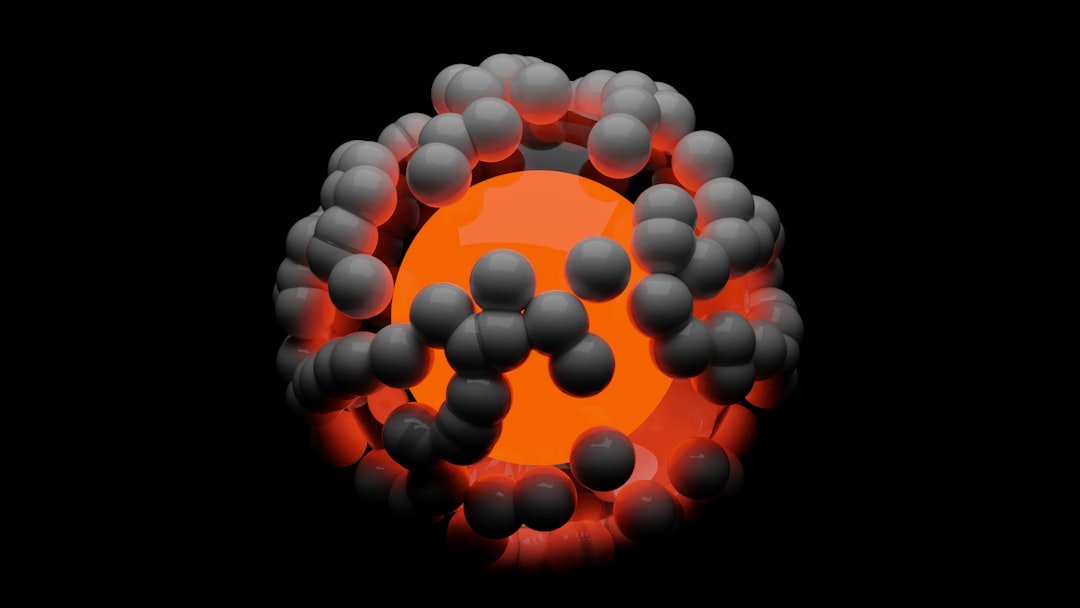
The concept of nuclear binding energy, a cornerstone of nuclear physics, describes the energy required to disassemble an atomic nucleus into its constituent protons and neutrons. It is a measure of the nucleus’s stability, with higher binding energies indicating more stable nuclei. Traditionally, this energy is understood within the context of the strong nuclear force, which operates over very short distances and overcomes the electrostatic repulsion between positively charged protons. However, considering nuclear binding energy in a “true vacuum” introduces a hypothetical scenario that probes the fundamental nature of this force and its interactions with the fabric of spacetime.
The Strong Nuclear Force
The strong nuclear force is one of the four fundamental forces of nature, responsible for holding quarks together to form protons and neutrons, and for binding protons and neutrons together within the atomic nucleus. It is an attractive force at typical nuclear distances (around 1 femtometer), but it becomes repulsive at distances shorter than about 0.5 femtometers. This short-range nature is crucial, as it prevents atomic nuclei from collapsing into infinitely dense points. The force carriers of the strong nuclear force are gluons, which interact with the quarks within protons and neutrons.
Mass Defect and Energy Equivalence
Nuclear binding energy is directly related to the mass defect of a nucleus. The mass defect is the difference between the sum of the masses of the individual protons and neutrons and the actual mass of the nucleus. This “missing” mass is converted into binding energy according to Einstein’s famous equation, $E=mc^2$. This energy is released when the nucleons (protons and neutrons) come together to form a nucleus, and conversely, it must be supplied to break the nucleus apart.
Binding Energy Per Nucleon
A commonly used metric to compare the stability of different nuclei is the binding energy per nucleon. This is calculated by dividing the total binding energy of a nucleus by the total number of nucleons (protons + neutrons) it contains. This curve exhibits a characteristic shape: binding energy per nucleon increases for lighter nuclei, reaches a peak around iron and nickel, and then gradually decreases for heavier nuclei. This trend explains why nuclear fusion is energetically favorable for light elements, releasing energy, while nuclear fission is favorable for heavy elements, also releasing energy.
Nuclear binding energy is a fundamental concept in understanding the stability of atomic nuclei, and its implications in a true vacuum environment can lead to intriguing discussions about the nature of matter and energy. For those interested in exploring this topic further, a related article can be found at Freaky Science, which delves into the intricacies of nuclear forces and their behavior in various conditions, including the theoretical implications of a true vacuum.
Defining a “True Vacuum” in Physics
The Absence of Matter and Fields
The concept of a “true vacuum” in this context implies a state devoid of all matter, energy, and fundamental fields, including electromagnetic, gravitational, and potentially even quantum fields in their excited states. It is a philosophical idealization, as even seemingly empty space in the universe contains quantum fluctuations and potentially dark energy. For the purposes of this discussion, we will consider a vacuum that is hypothetically free from any influence that could mediate or modify the strong nuclear force.
Quantum Vacuum Fluctuations
Even in the absence of particles, the quantum vacuum is not truly empty. It is a dynamic arena of virtual particles and fluctuating quantum fields. These fluctuations can exhibit transient energy and momentum, and they have observable effects, such as the Casimir effect. The presence and nature of these fluctuations in a “true vacuum” scenario would need careful consideration, as they could, in principle, interact with nucleons.
Gravitational and Electromagnetic Considerations
In the absence of any gravitational fields, the strong nuclear force operates independent of them. Similarly, in the absence of electromagnetic fields, the electrostatic repulsion between protons would be the only force countered by the strong nuclear force. A true vacuum would necessitate the absence of these influences, isolating the strong nuclear force in its purest form.
The Strong Nuclear Force in an Idealized Vacuum
The Fundamental Nature of the Force
In a true vacuum, the strong nuclear force would, in principle, operate as described by quantum chromodynamics (QCD), its underlying theory. The exchange of gluons between quarks within nucleons, and the residual interaction between nucleons themselves, would remain the primary mechanism. The force would still be characterized by its short range and its ability to overcome electrostatic repulsion.
Absence of Screening or Shielding Effects
In the presence of other particles or fields, the behavior of forces can be modified. For example, in a plasma, electromagnetic forces can be screened. In a hypothetical true vacuum, there would be no such screening or shielding effects that could alter the effective range or strength of the strong nuclear force. This would mean that the force would act precisely as dictated by its fundamental parameters.
Potential Influence of the Vacuum State
Even in its idealized state, there remains the question of whether the quantum vacuum itself, even in its ground state, could exert an influence. While typically considered a backdrop, the vacuum can possess properties. The impact of these properties on the strong nuclear force and, consequently, on nuclear binding energy, is a subject of theoretical speculation. It’s possible that the vacuum energy density itself could play a role, though its interaction with the strong force is not a directly established phenomenon.
Nuclear Binding Energy in a True Vacuum Scenario
Independence from External Fields
In a true vacuum, nuclear binding energy would be determined solely by the internal structure of the nucleus and the fundamental properties of the strong nuclear force, unperturbed by external electromagnetic or gravitational fields. The mass defect and, consequently, the binding energy would be intrinsic properties of the nuclear configuration.
Implications for Nuclear Stability
The stability of a nucleus is a direct consequence of its binding energy. In a true vacuum, the calculations of binding energy would be carried out assuming only the fundamental interactions. This means that there would be no external factors to either enhance or diminish this stability. The perceived stability of a nucleus would be purely a reflection of the internal balance of forces.
Theoretical Calculations and Models
Theoretical models of nuclear structure, such as the shell model and the liquid drop model, would be applied in this idealized vacuum. These models rely on the fundamental principles of nuclear forces. In a true vacuum, the parameters within these models, such as the strength of the nuclear potential and the exchange forces, would be used without any modifications arising from external influences. The precision of these calculations would then depend on the accuracy of the underlying QCD and nuclear many-body theories.
Nuclear binding energy plays a crucial role in understanding the stability of atomic nuclei, especially in the context of a true vacuum. This concept is explored in depth in various scientific articles, including one that discusses the implications of nuclear forces in a vacuum environment. For those interested in delving deeper into this topic, you can read more about it in this insightful article on nuclear physics. The exploration of these forces can provide a better understanding of how nuclei behave under different conditions. To learn more, visit this article.
Hypothetical Scenarios and Theoretical Considerations
| Nucleus | Binding Energy (MeV) |
|---|---|
| Hydrogen-1 | 0.0 |
| Helium-4 | 28.3 |
| Oxygen-16 | 127.6 |
| Uranium-235 | 1784.8 |
The Impact of Vacuum Energy Density
The energy density of the vacuum is a concept associated with dark energy. If this energy density were to somehow interact with the strong nuclear force, it could theoretically influence the binding energy of nuclei. However, there is no established theoretical framework detailing such an interaction. This remains a speculative avenue of inquiry.
Alterations to Fundamental Constants
In some theoretical frameworks, fundamental constants, such as the strength of the strong nuclear force or the masses of elementary particles, are not considered immutable and might vary depending on the vacuum state. If a “true vacuum” were to correspond to a different vacuum state than that in which we typically observe atomic nuclei, this could lead to altered nuclear binding energies. This is a realm of highly theoretical physics, exploring the possibility of a multiverse or varying fundamental laws.
Experimental Challenges and Observational Limitations
The concept of a “true vacuum” is largely a theoretical construct. It is impossible to create or observe such a state experimentally, as even laboratory vacuums are not truly empty and the universe is filled with fields. Therefore, any discussion of nuclear binding energy in a true vacuum remains purely theoretical, serving as a thought experiment to understand the fundamental nature of nuclear forces in isolation from their environmental context. The absence of experimental verification means that this remains a subject of abstract contemplation within physics.
In conclusion, nuclear binding energy in a true vacuum is a thought experiment that strips away all external influences to examine the strong nuclear force in its unadulterated form. It emphasizes that the binding energy and the resultant stability of atomic nuclei are fundamentally dictated by the intrinsic interactions between nucleons, governed by the principles of quantum chromodynamics. While the theoretical ideal of a true vacuum is unattainable in practice, contemplating it allows for a deeper understanding of the forces that hold matter together and the intrinsic properties of atomic nuclei, independent of their cosmic surroundings. The fundamental nature of nuclear binding energy is thus revealed as a consequence of the quantum mechanical forces at play within the nucleus itself, a stability born from the very fabric of fundamental particle interactions. The absence of external perturbations in this hypothetical scenario allows for a pure theoretical assessment of these forces.
FAQs
What is nuclear binding energy?
Nuclear binding energy is the energy required to split an atomic nucleus into its individual protons and neutrons. It is the energy that holds the nucleus together and is released when the nucleus is formed.
What is a true vacuum?
A true vacuum is a space devoid of all matter and energy, including particles and radiation. It is a theoretical concept used in physics to describe the lowest possible energy state of a system.
How does nuclear binding energy behave in a true vacuum?
In a true vacuum, nuclear binding energy would still exist as it is a fundamental property of the strong force that holds protons and neutrons together in the nucleus. However, the absence of other particles and energy in a true vacuum may affect the behavior of nuclear binding energy.
What are the implications of studying nuclear binding energy in a true vacuum?
Studying nuclear binding energy in a true vacuum can provide insights into the fundamental nature of the strong force and the behavior of nuclear interactions in extreme conditions. It may also have implications for understanding the early universe and the formation of matter.
Are there any practical applications of understanding nuclear binding energy in a true vacuum?
While the direct practical applications of studying nuclear binding energy in a true vacuum may be limited, the knowledge gained from such studies can contribute to advancements in nuclear physics, astrophysics, and potentially future technologies related to energy and matter manipulation.