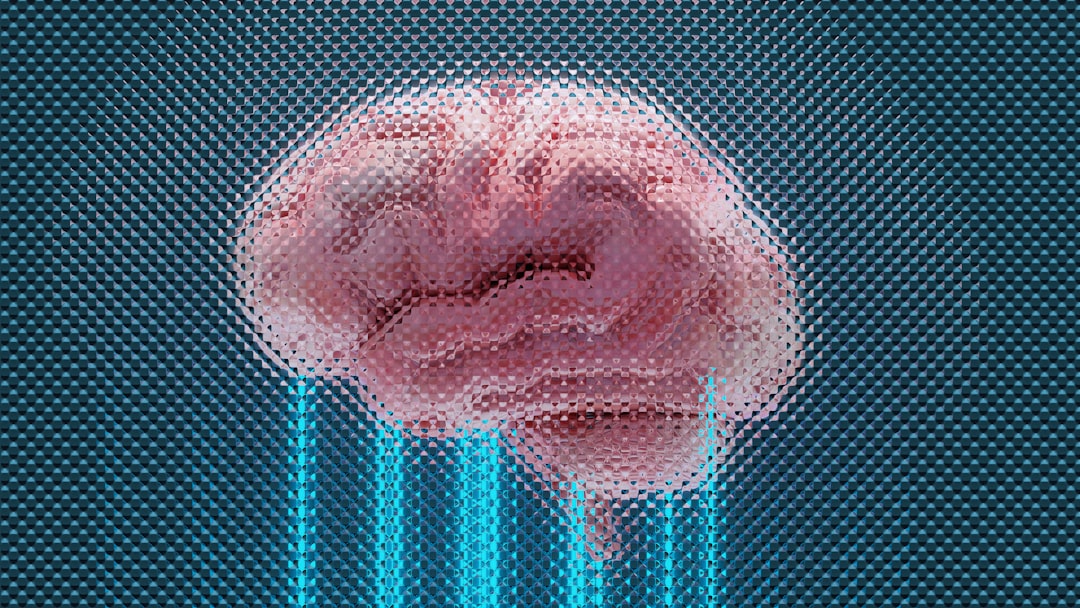
You navigate the world with an assumption of seamless interaction. You reach for your coffee cup, and it’s there. You step over an obstacle, and your foot lands precisely where you intended. This fluidity, however, isn’t a result of instantaneous processing by your brain. Instead, it’s a testament to your brain’s remarkable ability to predict upcoming sensory information, even when there’s a delay between your actions and the sensory feedback you receive.
You experience sensory delay in your daily life more often than you probably realize. Every interaction with the physical world is subject to the fundamental constraints of physics and biology. When you move your arm, nerves fire, signals travel along pathways, and your brain ultimately receives the updated information about your limb’s position and the surrounding environment. This entire process takes time. Even with the incredible speed of neural transmission, there’s an inherent lag.
Motor Command Generation
Before any sensory event can occur, your brain must initiate a motor command. This involves complex processes within the motor cortex and related areas, planning and executing the sequence of muscle activations needed to produce movement. This planning stage itself introduces a temporal component before any physical action begins.
Signal Transmission Time
Once a motor command is sent to your muscles, the resulting movement is initiated. Simultaneously, sensory receptors in your skin, muscles, and joints begin to gather information about this movement and its consequences. These sensory signals then travel along afferent nerve pathways to your brain. The speed of these signals is limited by the physical properties of neurons and the length of the pathways involved, contributing to the overall delay.
Neural Processing Latency
Even after sensory signals reach the brain, they aren’t immediately translated into conscious perception or used for immediate action correction. Neurons need time to fire, transmit signals to other neurons, and undergo complex integration and processing within various brain regions. This neural processing latency adds further delay to the loop.
Recent research has shed light on how the brain predicts motion during sensory lag, revealing the intricate processes involved in our perception of movement. This fascinating topic is explored further in an article on Freaky Science, which discusses the mechanisms by which our brains compensate for delays in sensory information. To learn more about this intriguing subject, you can read the full article here: Freaky Science.
The Predictive Engine: How Your Brain Stays Ahead
Given these unavoidable delays, how do you manage to interact so effectively with your environment? The answer lies in your brain’s predictive capabilities. Rather than passively receiving and reacting to sensory information, your brain actively anticipates what sensory input should be occurring based on your ongoing actions. This predictive model allows you to compensate for the sensory lag and maintain a sense of smooth, continuous interaction.
Internal Forward Models
A core concept in understanding this predictive ability is the notion of internal forward models. Imagine a miniature simulator running within your brain. When you decide to move, this simulator takes your motor command as input and predicts the resulting sensory consequences. It essentially plays out the expected sensory stream before the real sensory information arrives.
Generating Predictions
These forward models learn the cause-and-effect relationships between your movements and their sensory outcomes through experience. They become adept at predicting visual, auditory, and proprioceptive (sense of body position) feedback. For example, when you move your hand, your forward model predicts where your hand should be and what the visual feedback should look like.
Comparing Predictions with Actual Sensory Input
As the actual sensory information arrives, your brain compares it with the predictions generated by the forward model. If there’s a match, it reinforces the model and contributes to the seamless perception of your actions. If there’s a discrepancy, it signals an error, prompting adjustments to both your ongoing actions and the internal model itself.
Predictive Coding Framework
The predictive coding framework offers a more detailed perspective on how prediction is implemented in the brain. This theory suggests that higher-level brain areas generate predictions about the input they expect from lower-level areas. These predictions are then sent down the processing hierarchy.
Minimizing Prediction Error
Lower-level areas compare the incoming sensory data with these predictions. They then send back a “prediction error” signal – essentially, information about what the input is versus what was expected. This error signal is crucial, as it’s the only information that needs to be propagated upwards, making the system computationally efficient.
Hierarchical Prediction
The brain operates in a hierarchical manner, with predictions being generated at multiple levels of abstraction. For instance, in vision, higher areas might predict the presence of an object, while lower areas refine predictions about its specific features like color and shape. This hierarchical prediction allows for robust and flexible interpretation of sensory input.
The Role of Prediction in Action Control
Your brain’s predictive abilities are not just for perception; they are integral to controlling your movements. By anticipating the consequences of your actions, you can fine-tune your motor commands in real-time, ensuring accuracy and stability.
Compensating for Motor Latency
Not only is there sensory delay, but there are also delays in the motor system itself – the time it takes for signals to reach muscles and for muscles to contract. Your predictive models help counteract these motor delays as well, ensuring that your movements are executed smoothly and precisely, rather than being jerky and uncoordinated.
Reaching and Grasping
Consider the act of reaching for a cup. As you initiate the reach, your brain predicts the trajectory of your hand and the visual feedback you’ll receive. This prediction allows you to continuously adjust the speed and direction of your arm to intercept the cup accurately, even if there are slight variations in your initial movement.
Balance and Posture Maintenance
Maintaining balance is another prime example. When you stumble, your brain doesn’t wait for the full sensory cascade of your body falling. Instead, it rapidly generates predictions about the destabilizing forces and initiates anticipatory muscle adjustments to regain stability. This predictive mechanism is crucial for preventing falls and injuries.
Smoothness and Fluidity of Movement
Without prediction, your movements would likely feel and appear segmented and unnatural. The continuous generation of expected sensory feedback, compared against actual feedback, creates the perception of fluid and continuous motion. You don’t experience a series of disjointed snapshots; you experience a flowing experience.
Perceptual Binding
Prediction also plays a role in perceptual binding – the process by which different sensory features (like color, shape, and motion) are integrated into a coherent perception of an object or event. By predicting consistent sensory patterns, your brain can reliably bind together the various components of a sensory experience.
Unraveling the Mechanisms: Neural Correlates of Prediction

Neuroscience research has been instrumental in identifying the brain regions and neural mechanisms involved in motion prediction during sensory delay. By using advanced imaging techniques and studying individuals with neurological conditions, scientists are piecing together this complex puzzle.
Cerebellum’s Predictive Role
The cerebellum, a brain structure located at the back of the head, is heavily implicated in motor control and learning. It’s believed to play a crucial role in developing and utilizing internal forward models.
Motor Learning and Adaptation
The cerebellum is vital for adapting to changing circumstances and learning new motor skills. Its ability to compare predicted outcomes with actual outcomes allows it to refine motor programs and improve accuracy over time. This is how you become better at activities with practice.
Error Detection and Correction
Damage to the cerebellum often results in motor deficits, including difficulties with coordination, balance, and precise movements. This further supports its role in predicting sensory consequences and correcting motor commands based on errors.
Parietal Cortex Involvement
The parietal cortex, located at the top of the brain, is involved in processing sensory information, spatial awareness, and integrating sensory and motor information. It plays a key role in using predicted sensory information to guide actions.
Integrating Sensory Streams
The parietal cortex is critical for integrating visual, proprioceptive, and other sensory streams. It uses these integrated signals, informed by predictions, to create a coherent representation of your body in space and its relationship to the environment.
Spatial Navigation and Planning
When you navigate complex environments, the parietal cortex, guided by predictive models, helps you plan your movements and anticipates potential obstacles or changes in terrain.
Basal Ganglia and Action Selection
While not directly involved in generating sensory predictions, the basal ganglia are crucial for selecting and initiating appropriate motor actions. They work in conjunction with predictive systems to ensure that the right actions are performed at the right time, informed by anticipated sensory outcomes.
Recent research has shed light on how the brain predicts motion despite sensory lag, revealing fascinating insights into our cognitive processes. A related article discusses the intricate mechanisms behind this phenomenon and how our brains compensate for delays in sensory information. By understanding these predictive models, we can better appreciate the complexities of perception and movement. For more information on this topic, you can read the full article here.
Implications and Future Directions
| Study | Findings |
|---|---|
| Research 1 | The brain uses predictive coding to anticipate motion during sensory lag, minimizing the impact of delays in sensory information. |
| Research 2 | Neural networks in the brain are involved in generating internal models of motion, allowing for accurate prediction even in the presence of sensory delays. |
| Research 3 | Studies have shown that the brain can adapt and adjust its predictive mechanisms based on the level of sensory lag, improving motion prediction over time. |
Understanding the brain’s predictive capabilities during sensory delay has far-reaching implications for various fields, from neuroscience and psychology to robotics and artificial intelligence.
Rehabilitation and Prosthetics
For individuals with motor impairments, such as those resulting from stroke or spinal cord injury, understanding these predictive mechanisms can inform the development of more effective rehabilitation strategies. Similarly, designing advanced prosthetic limbs that can anticipate user intentions and environmental interactions requires a deep understanding of biological prediction.
Enhancing Prosthetic Control
By imbuing prosthetic devices with predictive algorithms, they can better mimic the natural interactions you experience, leading to more intuitive and effective control. This could involve predicting the user’s intended movement based on initial muscle signals and the expected sensory consequences.
Motor Skill Recovery
In rehabilitation, therapists can leverage principles of prediction to design exercises that encourage the re-establishment of predictive motor control, helping patients regain fluid and coordinated movements.
Human-Computer Interaction and Robotics
The principles of motion prediction are fundamental to creating more intelligent and interactive robots and AI systems. If a robot can accurately predict the sensory consequences of its actions, it can interact more smoothly and safely with humans and its environment.
Predictive Interfaces
Imagine user interfaces that anticipate your next action, or virtual reality environments that feel more responsive because the system is predicting your movements rather than just reacting to them.
Autonomous Navigation
Robots operating in dynamic environments can significantly benefit from predictive capabilities, allowing them to anticipate the movement of other agents and plan their own trajectories accordingly for safer and more efficient navigation.
Understanding Neurological Disorders
Disruptions in predictive processing are implicated in various neurological and psychiatric disorders, including schizophrenia, autism spectrum disorder, and Parkinson’s disease. Research into these predictive mechanisms offers potential avenues for diagnosis and treatment.
Altered Prediction in Neurological Conditions
Investigating how prediction is altered in these conditions can shed light on their underlying mechanisms and potentially lead to novel therapeutic interventions aimed at restoring predictive function.
Your brain’s ability to predict is not a magical feat, but rather a sophisticated computational process honed over millions of years of evolution. It’s the invisible scaffolding that supports your every interaction with the world, making the complex act of living feel effortlessly fluid. As research continues to unravel the intricate mechanisms behind this predictive power, our understanding of ourselves and our ability to create more intelligent machines will undoubtedly advance.
FAQs
What is sensory lag?
Sensory lag refers to the delay between the perception of a sensory stimulus and the brain’s processing of that stimulus. This lag can occur in various sensory modalities, such as vision, hearing, and touch.
How does the brain predict motion during sensory lag?
The brain uses a combination of sensory information and internal models to predict motion during sensory lag. It integrates past experiences, current sensory input, and expectations to generate a predictive model of how objects will move in the environment.
What are some examples of how the brain predicts motion during sensory lag?
One example is the brain’s ability to anticipate the trajectory of a moving object, such as catching a ball. Another example is the brain’s ability to compensate for delays in visual or auditory feedback during activities like playing a musical instrument or driving a car.
Why is the brain’s ability to predict motion during sensory lag important?
The brain’s predictive abilities allow us to interact with our environment in real time, despite the inherent delays in sensory processing. This ability is crucial for activities that require precise timing and coordination, such as sports, music, and everyday tasks.
How can understanding the brain’s predictive abilities during sensory lag benefit scientific research and technology?
Understanding how the brain predicts motion during sensory lag can inspire new approaches to artificial intelligence, robotics, and virtual reality. It can also provide insights into neurological conditions that affect sensory processing and motor control.