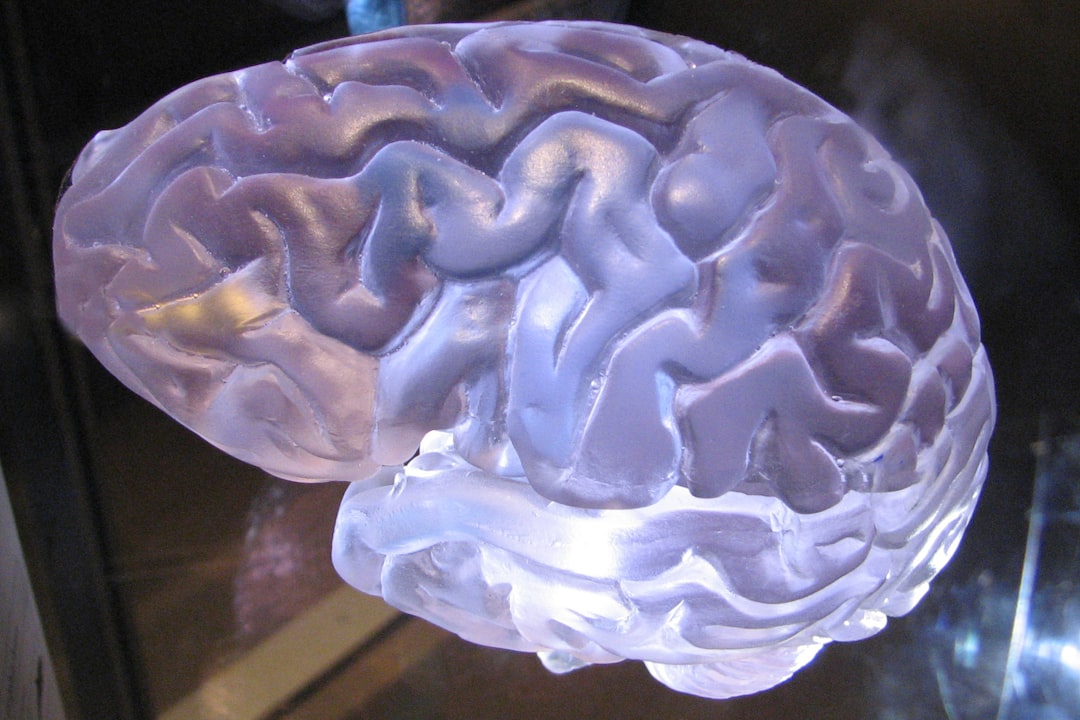
You embark on a journey into the depths of the human mind, seeking to grasp the intricate workings of consciousness and memory. Karl Pribram, a visionary neuroscientist, offers you a compelling framework for understanding these elusive phenomena: the Holographic Brain Model. Forget the simplistic image of a brain as a static filing cabinet, meticulously storing individual memories in discrete locations. Pribram’s theory paints a far more dynamic and distributed picture, one that draws inspiration from the seemingly magical world of holography.
To truly appreciate Pribram’s model, you must first understand its surprising origins. The analogy didn’t arise from a sudden flash of insight about neurons, but rather from an unexpected intersection of neuroscience and physics.
Encountering the Hologram
Imagine you have a hologram of a three-dimensional object, like a sculpture. This isn’t a mere photograph; it’s an intricate pattern of light interference etched onto a two-dimensional surface. When you shine a particular type of light onto this surface, the pattern diffracts and reconstructs the original three-dimensional image. A remarkable property of a hologram is that any small fragment of the holographic plate, when illuminated correctly, can reconstruct the entire image, albeit with reduced resolution. This is a far cry from a single photograph, where losing a piece means losing a corresponding part of the depicted scene.
Pribram, working with neurophysiologist Karl Lashley, was grappling with the “engram” problem – the physical trace of a memory in the brain. Lashley’s famous experiments, while demonstrating the distributed nature of memory (lesions in different parts of the cortex affected memory to a lesser degree than predicted by localizationist theories), ultimately failed to pinpoint a specific physical location for any particular memory. This led Pribram to seek a new conceptual model for how information, particularly complex memories, could be stored and retrieved in such a distributed manner.
The Influence of Dennis Gabor
The key catalyst for Pribram’s thinking was the work of Dennis Gabor, the inventor of holography and a recipient of the Nobel Prize in Physics. Gabor, in the 1940s, developed the mathematical framework for holography, initially as a way to improve the resolution of electron microscopes. Pribram encountered Gabor’s work in the 1960s and recognized a powerful parallel between the principles of holography and the challenges he faced in understanding brain function.
Gabor’s insight was that the interference patterns recorded on a holographic plate contained all the information necessary to reconstruct the original object. This suggested a way for information to be encoded in a non-local, distributed fashion. Pribram theorized that the brain might operate on similar principles, where memories are not confined to single neurons or small localized circuits, but are instead encoded in the wave-like properties of neural activity across vast networks.
Karl Pribram’s holographic brain model has sparked considerable interest in the fields of neuroscience and psychology, suggesting that memories are stored in a distributed manner, much like a hologram. For those looking to explore this concept further, a related article can be found at Freaky Science, which delves into the implications of Pribram’s theories and their relevance to our understanding of consciousness and perception. This resource provides a comprehensive overview of how the holographic model challenges traditional views of brain function and memory storage.
Decoding the Principles of Holographic Storage
To grasp the holographic brain model, you need to understand how its principles translate from the realm of light and interference to the electrical and chemical dances of neurons. This involves a fundamental shift in how you perceive information processing in the brain.
Distributed Representation
The most fundamental tenet of the holographic brain model is the concept of distributed representation. Instead of a memory being like a single file on your computer, stored in one specific location, it’s more like a watermark embedded across an entire page.
The “Where” and the “What” of Memory
In a traditional view, you might imagine specific neurons or small groups of neurons firing for a particular memory – say, the memory of your grandmother’s face. The holographic model proposes something different: the “what” (the visual features of her face) and the “where” (the context in which you remember seeing her, like her kitchen) are not stored separately. Instead, the pattern of neural activity, a complex interference pattern of voltage fluctuations across a large population of neurons, encodes both aspects simultaneously.
Interference and Diffraction of Neural Signals
Pribram posited that the brain utilizes neural signals that behave like waves, capable of interfering with each other. This interference, at a microscopic level, is akin to the light waves creating the interference pattern on a holographic plate.
The Fourier Transform Analogy
Mathematically, holography relies on the Fourier transform, a technique that breaks down complex waves into simpler sinusoidal components. Pribram, with quantum physicist David Bohm, suggested that the brain might also perform a similar transformation on sensory input. This would mean that raw sensory data is transformed into a pattern of wave-like neural activity, which then forms the basis of our perceptions and memories.
When you encounter a new experience, the neural activity generated is not a simple snapshot. Instead, it’s a dynamic pattern of electrical and chemical signals that interacts with existing patterns of neural activity. These interactions, much like light waves interfering, create new, complex patterns that encode the new information. Retrieval, in this model, is like shining a specific “light” – a particular internal cue or stimulus – onto this neural interference pattern, causing it to reconstruct the perceived memory.
Redundancy and Robustness
One of the most striking implications of the holographic model is its inherent redundancy, which leads to remarkable robustness.
The Fragmented Memory Advantage
Think about a shattered holographic plate. Even though many pieces are missing, you can often still see the entire object if you look closely at the remaining fragments. Similarly, if a portion of your brain is damaged, the holographic model suggests that you wouldn’t necessarily lose entire memories. Instead, the memories encoded in that area would become harder to access or less vivid, with their information being distributed elsewhere.
This provides a compelling explanation for why patients with significant brain damage can still retain a surprising amount of cognitive function and access many memories. It’s not that the memories are entirely gone; rather, their holographic “projection” is degraded.
The Brain as a Wave Interferometer
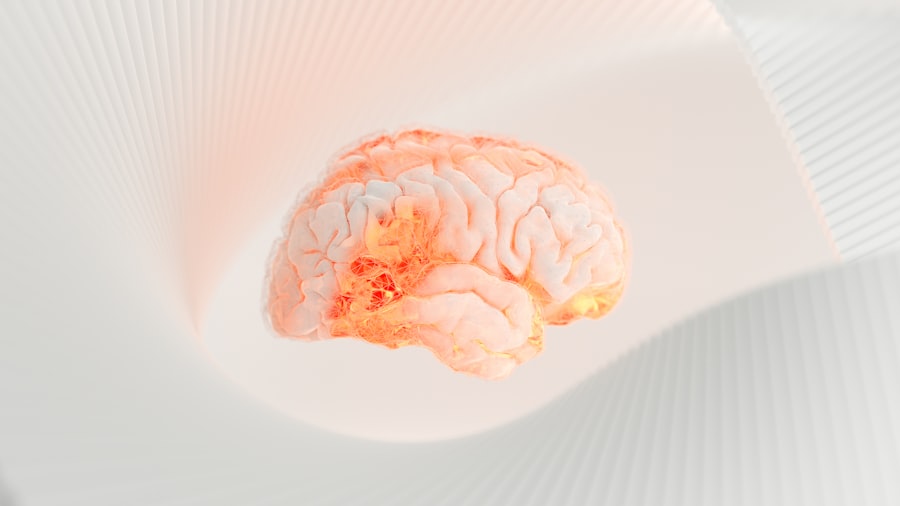
Pribram’s theory proposes a radical departure from the traditional neuronal view, suggesting that the brain operates more like a sophisticated wave interference device. This perspective opens up new avenues for understanding how meaning and experience are generated.
Beyond the Neuron Doctrine
For much of the 20th century, the “neuron doctrine” reigned supreme: the idea that neural communication is primarily based on the discrete firing of individual neurons and the synapses that connect them. While the neuron remains a fundamental unit, the holographic model suggests that the crucial processing occurs not just at the synapse, but in the complex, wave-like interactions between neurons across broader neural networks.
Quantum Field Analogies
Some interpretations of Pribram’s work have drawn parallels with quantum field theory, where fundamental reality is described in terms of interacting fields rather than discrete particles. In this analogy, neural activity could be seen as generating emergent wave fields within the brain, and it is the interactions of these fields that give rise to conscious experience and memory. This doesn’t necessarily imply that the brain is a quantum computer in the conventional sense, but rather that wave-like phenomena at a fundamental level are critical for brain function.
The “Holos” of Experience
The Greek word “holos” means “whole.” In the holographic brain model, it signifies that each part of the brain is, in a sense, connected to the whole and can contribute to the representation of any given experience.
The Whole in Every Part
This concept is profoundly different from a localized memory. If you have a memory of your child’s first steps, it’s not stored in a single neuron or even a small cluster. Instead, the entire experience – the visual image, the sounds, the emotions, the context – is encoded in the distributed wave patterns of neural activity that permeate vast areas of your brain. A small fragment of this neural activity, when properly interpreted, could theoretically evoke the entire memory.
Implications for Consciousness and Perception
Pribram’s theory doesn’t just offer a new framework for memory; it fundamentally alters how you might consider consciousness and perception. It suggests that the subjective experience of reality is not a passive reception of information, but an active reconstruction.
The Construction of Reality
According to the holographic brain model, what you perceive as reality is not a direct mirror of the external world. Instead, your brain actively constructs your experience based on the incoming sensory data and your existing internal patterns of neural activity.
The Role of Expectation
This aligns with findings in cognitive psychology that suggest our expectations play a significant role in how we perceive the world. If you anticipate seeing a certain object, your brain might be primed to interpret ambiguous sensory information in a way that confirms that expectation. In the holographic model, this would translate to pre-existing neural patterns influencing how new incoming wave patterns are interpreted and reconstructed.
Understanding Subjective Experience
The model offers a potential avenue for understanding the subjective nature of consciousness – the feeling of “what it is like” to be you.
The “Qualia” Problem
The “qualia” problem – the subjective, qualitative aspects of experience (e.g., the redness of red, the taste of chocolate) – has long been a stumbling block for purely materialistic explanations of the mind. The holographic brain model, with its emphasis on emergent wave phenomena and the holistic nature of neural processing, might provide a more fertile ground for exploring how these subjective qualities arise. The rich, interconnected nature of neural interference patterns could be seen as the substrate for the richness of our inner lives.
Karl Pribram’s holographic brain model presents a fascinating perspective on how our brains process information, suggesting that memories and experiences are stored in a distributed manner rather than in isolated locations. This concept aligns with various theories in cognitive science and neuroscience, which explore the intricate connections between perception and memory. For those interested in delving deeper into related topics, an insightful article can be found at Freaky Science, where the implications of holographic theory in understanding consciousness are discussed in detail.
Challenges and Ongoing Research
| Aspect | Details |
|---|---|
| Model Name | Karl Pribram holographic brain model |
| Key Concept | The brain functions like a hologram, storing and retrieving information in a distributed manner |
| Memory Storage | Memories are stored non-locally throughout the brain, rather than in specific locations |
| Information Processing | Information is processed in parallel across the brain, allowing for quick and efficient retrieval |
| Applications | Used in neuroscience, psychology, and artificial intelligence research |
While the holographic brain model offers a compelling and elegant framework, it is not without its challenges and continues to be a subject of ongoing investigation and debate.
Empirical Evidence and Testing
One of the primary challenges is finding definitive empirical evidence to directly support the wave-like interference hypothesis at the macroscopic neural level of the brain. While there is evidence of oscillatory brain activity, demonstrating that this activity directly and specifically encodes information through interference patterns in the way holography does is complex.
The Search for Neural Holograms
Neuroscientists are continually developing new technologies to observe and measure brain activity with greater precision. Techniques like advanced fMRI, high-density EEG, and sophisticated computational modeling are being employed to look for the predicted patterns of distributed and interference-based information processing. The difficulty lies in disentangling complex neural interactions from the simpler, more deterministic principles of light holography.
Integration with Existing Neuroscience
The holographic brain model doesn’t negate the importance of neurons and synaptic connections. Instead, it seeks to integrate these fundamental elements into a broader, more dynamic picture. The challenge lies in bridging the gap between the micro-level workings of neurons and circuits and the macro-level phenomena of consciousness and memory.
Bridging the Micro and Macro Divide
Researchers are working to develop computational models that can simulate the passage from individual neural activity to emergent system-level properties. This involves exploring how the statistical properties of large neural populations and their dynamic interactions can give rise to the complex wave-like computations proposed by Pribram.
Alternative and Complementary Theories
The field of neuroscience is vast and multi-faceted. The holographic brain model exists alongside other influential theories of brain function, such as predictive coding, computational approaches, and theories emphasizing neuronal network dynamics. The ongoing dialogue between these different perspectives is crucial for a comprehensive understanding.
A Tapestry of Understanding
It’s important to remember that scientific understanding rarely progresses with a single, all-encompassing theory. The holographic brain model, while potentially revolutionary, is likely to be one piece of a larger, more complex tapestry of understanding how the brain works. Future research may find ways to integrate its core principles with insights from other theoretical frameworks, leading to an even richer and more nuanced picture of the mind.
You stand at the threshold of understanding a truly revolutionary idea. Karl Pribram’s Holographic Brain Model invites you to shed old assumptions and embrace a vision of the brain as a fluid, interconnected, and profoundly dynamic system. It’s a model that suggests the whispers of your memories and the colors of your consciousness are not isolated events, but harmonious, emergent waves within a vast neural symphony. The journey to fully comprehending this elegant theory is ongoing, a testament to the enduring mystery and wonder of the human mind.
FAQs
What is the Karl Pribram holographic brain model?
The Karl Pribram holographic brain model is a theory proposed by neuroscientist Karl Pribram in the 1960s, which suggests that the brain processes and stores information in a manner similar to a hologram. Pribram proposed that the brain functions as a holographic storage network, where memories and information are distributed and stored throughout the entire brain rather than in specific locations.
How does the holographic brain model differ from traditional views of brain function?
The holographic brain model differs from traditional views of brain function, which often emphasize localized processing and storage of information in specific brain regions. In contrast, the holographic brain model suggests that information is distributed and stored in a non-localized manner, allowing for greater flexibility and redundancy in memory and information processing.
What evidence supports the holographic brain model?
Support for the holographic brain model comes from various lines of evidence, including studies on memory and learning, as well as neuroimaging studies that have shown patterns of brain activity that are consistent with the distributed processing and storage of information proposed by the model. Additionally, research in quantum physics has provided theoretical support for the idea of non-localized information storage and processing.
What are the implications of the holographic brain model?
The holographic brain model has implications for our understanding of memory, learning, and consciousness. It suggests that the brain may be capable of more flexible and robust information processing than previously thought, and it may also have implications for understanding phenomena such as intuition and creativity.
Is the holographic brain model widely accepted in the scientific community?
The holographic brain model has been met with both interest and skepticism in the scientific community. While some researchers have found support for the model in their own work, others have raised questions about its feasibility and have called for further research to fully understand the implications of the model for our understanding of brain function.