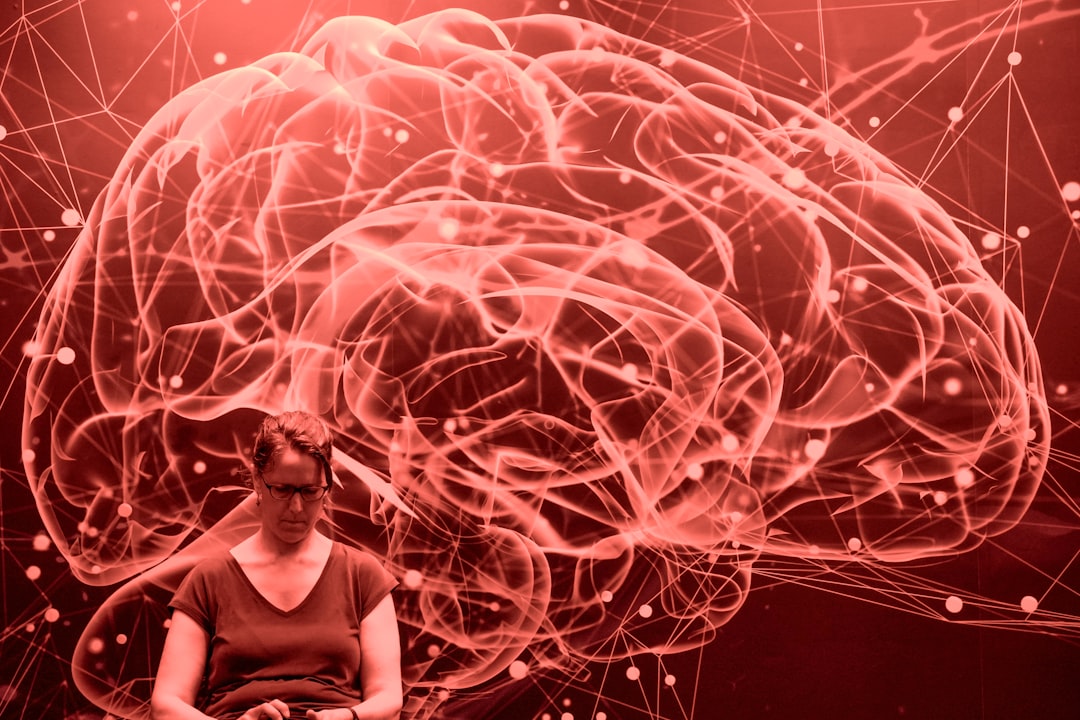
You perceive the world around you as a direct, unvarnished truth. The vibrant hues of a sunset, the solid feel of your desk, the intricate melodies of music – these all seem to be objective realities, external and independent of your own being. Yet, what if this perception is a carefully crafted illusion? What if your brain isn’t a passive receiver of information, but an active architect, constructing the very reality you experience? This is the core tenet of the Brain’s Reality Construction Theory.
Imagine your brain not as a camera, faithfully recording the external world, but as a supremely skilled illusionist, an alchemist. It takes the raw, chaotic data from your senses – the flickering light photons, the vibrating air molecules, the chemical compounds – and meticulously weaves them into a coherent, meaningful tapestry that you call reality. This theory suggests that the world you interact with is not a direct reflection of the external environment, but rather a sophisticated internal model, a predictive engine that continually updates and refines itself.
The Unseen Inputs: A Symphony of Sensory Signals
Your sensory organs are the input terminals of this intricate system. Your eyes, for instance, are bombarded with an overwhelming torrent of photons. Your ears are assaulted by countless pressure waves. Your skin registers a bewildering array of thermal and mechanical stimuli. But these raw signals, in their unadulterated form, are meaningless. They are akin to individual threads, devoid of shape or pattern. It is your brain that takes these threads and, through complex neural processes, begins the arduous task of spinning them into the fabric of your perceived world.
The Burden of Data: Why Direct Access is Impossible
Consider the sheer volume of information bombarding you every moment. If your brain were to process every single photon, every single sound wave, it would be paralyzed by data overload. It would be like trying to drink from a firehose. The reality construction theory posits that your brain employs sophisticated filtering mechanisms, prioritizing certain information and discarding the rest. This is not a failure of your sensory apparatus, but a necessary strategy for survival and efficient functioning.
The Gatekeepers of Perception: Attention and Salience
Your attention acts as a powerful spotlight, illuminating certain aspects of the sensory input while leaving others in the shadows. What captures your attention is not arbitrary; it is often driven by factors like novelty, emotional significance, or pre-existing expectations. Similarly, the concept of salience highlights how your brain prioritizes stimuli that are particularly striking or stand out from the background. This selective focus is a fundamental aspect of reality construction, ensuring that you are not overwhelmed by the sensory deluge.
Beyond the Senses: The Role of Memory and Experience
The reality you experience is not solely built upon the fleeting impressions of the present moment. Your past experiences and stored memories act as a crucial blueprint, shaping how you interpret incoming sensory data. Think of a seasoned musician hearing a complex orchestral piece. They don’t just hear a sequence of notes; they perceive harmonies, counterpoints, and recurring themes, all informed by their years of musical training and listening. Your brain uses these learned patterns and associations to make sense of the current sensory landscape.
The Ghost in the Machine: Episodic and Semantic Memory
Your episodic memory, the storehouse of your personal life events, provides a temporal and contextual framework for your present experiences. When you encounter a familiar smell, your episodic memory might flash back to a childhood vacation, instantly imbuing the current sensation with a layer of meaning and emotion. Semantic memory, on the other hand, stores general knowledge and facts about the world. This allows you to recognize objects, understand language, and navigate social situations, all based on established categories and relationships.
The Building Blocks of Understanding: Schemas and Concepts
Your brain organizes information into mental structures called schemas and concepts. These are like mental frameworks or categories that allow you to quickly process and understand new information. For example, you have a schema for “dog” that encompasses its typical features (four legs, fur, tail) and behaviors (barking, wagging its tail). When you see a new creature that fits this schema, your brain instantly recognizes it as a dog, even if it’s a breed you’ve never encountered before.
The theory of how the brain constructs reality is a fascinating area of study that delves into the intricate processes by which our perceptions shape our understanding of the world. A related article that explores this concept in depth can be found at Freaky Science, where various aspects of neuroscience and psychology are examined to reveal how our brains interpret sensory information and create a cohesive experience of reality. This exploration not only highlights the complexities of human cognition but also raises intriguing questions about the nature of perception and consciousness.
The Predictive Engine: Anticipating the Future
Perhaps the most profound aspect of the Brain’s Reality Construction Theory is its emphasis on the predictive nature of our perception. Your brain is not merely reacting to the world; it is constantly engaged in forecasting, attempting to predict what will happen next. This predictive capacity is essential for efficient action and survival. Imagine trying to catch a ball; you don’t wait for it to hit your hand to react. Your brain is already calculating its trajectory, predicting its landing point, and preparing your motor responses milliseconds before impact.
The Bayesian Brain: Probabilistic Inference at its Core
Many neuroscientists and cognitive scientists liken the brain to a sophisticated Bayesian inference machine. In simple terms, this means that your brain constantly updates its beliefs about the world based on new evidence, weighing the probability of different outcomes. It starts with prior beliefs (based on past experiences and knowledge) and then adjusts these beliefs in light of incoming sensory data. This probabilistic approach allows for flexibility and adaptation in a constantly changing environment.
Minimizing Error: The Quest for Predictive Accuracy
The ultimate goal of this predictive engine is to minimize prediction error. When your brain’s prediction aligns with the actual sensory input, it’s a confirmation of its model. When there’s a mismatch – a prediction error – it signals a need to update or revise the internal model. This constant cycle of prediction, observation, and error correction is the engine that drives your ongoing construction of reality.
The Illusory Nature of “Now”
The concept of a continuous, present “now” is itself a construct. The processing of sensory information takes time. By the time you are consciously aware of something, your brain has already performed a significant amount of processing and prediction. Your experience of the present is a carefully curated and integrated stream of information, not a direct snapshot of an instantaneous moment.
The Temporal Blurring: Integrating Past and Present Signals
Consider the feeling of motion. When you’re in a car, you perceive a smooth flow of scenery. In reality, your brain is integrating a series of still images from your eyes and combining them with information about your own movement from your vestibular system. This temporal blurring creates the illusion of continuous motion, even though it’s composed of discrete data points processed over time.
The Brain as a Generative System: Creating What Isn’t Necessarily There
The generative aspect of reality construction is particularly fascinating. Your brain doesn’t just interpret existing stimuli; it can also generate perceptions based on internal models and expectations. This is why you can experience dreams, hallucinations, or even the simple phenomenon of seeing patterns in random noise.
The Power of Imagination: Creating Worlds Within
Your imagination is a testament to your brain’s generative power. You can conjure vivid images, construct intricate narratives, and explore hypothetical scenarios without any external sensory input. This ability is not merely a recreational faculty; it’s a crucial tool for problem-solving, planning, and creativity.
Hallucinations and Dreams: When the Generator Runs Wild
When the generative processes of the brain become decoupled from external sensory input, or when internal noise becomes sufficiently amplified, you can experience hallucinations or vivid dreams. These experiences, while seemingly disruptive, highlight the active role your brain plays in creating experience. They are not typically evidence of an external reality manifesting, but rather internal processes that have gained dominance.
The Placebo Effect: The Brain’s Powerful Influence on Physiology
The placebo effect is a remarkable demonstration of how your brain’s beliefs and expectations can powerfully influence your physical state. If you believe a sugar pill will alleviate your pain, your brain can generate neurochemical responses that actually reduce your perception of pain, even though the pill has no inherent medicinal properties. This is a direct manifestation of your internal model of “healing” overriding the absence of actual pharmacological intervention.
The Role of Expectation: Shaping Your Bodily Experience
The expectation of relief, of improvement, can trigger the release of endogenous opioids and other neurotransmitters that have analgesic effects. Your brain, in essence, creates the experience of relief by altering its own internal chemistry, all driven by a constructed belief.
The Embodied Construction of Reality: The Body as a Crucial Element

The Brain’s Reality Construction Theory is not confined to the abstract workings of neurons; it is deeply entwined with your physical body. Your body is not merely a vessel for your brain; it is an integral part of the reality construction process itself.
Interoception: The Inner Landscape of Feelings
Interoception refers to the sense of the physiological state of your body. Your brain constantly receives and interprets signals from your internal organs – your heart rate, your stomach’s churning, your lungs’ expansion. These signals contribute to your emotional states, your sense of well-being, and your overall awareness of being alive.
The Language of Emotions: Gut Feelings and Bodily Cues
Your emotions are not purely abstract mental states; they are deeply rooted in your bodily sensations. A feeling of anxiety might manifest as a racing heart and a knot in your stomach. A sense of joy could be accompanied by a lightness in your chest and a relaxed posture. Your brain interprets these bodily cues as part of your emotional experience, further shaping your perceived reality.
Proprioception and Kinesthesia: Understanding Your Own Movement
Proprioception is your sense of the relative position of your body parts and the effort being employed in moving them. Kinesthesia is the sense of body movement. These senses allow your brain to build a detailed model of your body and its capabilities, enabling you to interact with the physical world with precision and control.
The Feeling of Embodiment: Being “In” Your Body
The integration of interoception, proprioception, and external sensory information creates the fundamental feeling of embodiment – the sense of being a physical self existing in the world. This embodied experience is a critical component of your constructed reality, grounding your perceptions and actions in a tangible physical presence.
The theory of how the brain constructs reality has garnered significant attention in recent years, as researchers delve into the intricate processes that shape our perceptions and experiences. A fascinating article that explores this concept in depth can be found at Freaky Science, where it discusses the interplay between sensory information and cognitive processes in creating our understanding of the world. This exploration sheds light on the remarkable capabilities of the human brain and its role in interpreting reality.
The Implications and Challenges of Reality Construction
| Theory | Data/Metrics |
|---|---|
| Perception | Visual illusions, auditory illusions, sensory adaptation |
| Memory | Recall accuracy, false memories, memory reconstruction |
| Attention | Inattentional blindness, change blindness, selective attention |
| Expectation | Confirmation bias, expectancy effects, placebo response |
| Emotion | Emotional perception, emotional memory, emotional regulation |
Understanding that your reality is constructed has profound implications for how you perceive yourself, others, and the world around you. It also presents significant challenges for scientific inquiry and for navigating shared experiences.
The Subjectivity of Experience: Why We Don’t All See the Same World
If reality is constructed, then it follows that each individual’s experience will be uniquely shaped by their own neural architecture, memories, and ongoing predictive processes. This explains why two people can witness the exact same event and have vastly different interpretations and recollections. Their internal models, built over a lifetime, are not identical.
The Nature of Consensus Reality: Bridging the Subjective Gaps
The concept of a “consensus reality” – the shared understanding of the world that most people agree upon – arises from the overlap and convergence of these individual constructions. Communication, social interaction, and shared experiences help to align these subjective models, creating a common ground for interaction and understanding. However, the fundamental subjectivity remains.
The Limits of Measurement: Can We Ever Touch Raw Reality?
The Brain’s Reality Construction Theory raises questions about the very nature of scientific measurement. If our tools and observations are themselves interpreted and filtered through our brain’s constructed reality, can we ever truly access an objective, unadulterated truth? This doesn’t invalidate scientific endeavor, but it encourages a more nuanced understanding of what scientific findings represent – often, the successful calibration and refinement of our shared, constructed model.
The Observer Effect in Science: The Knower and the Known
In some areas of physics, like quantum mechanics, the act of observation itself can influence the outcome of an experiment. This mirrors, in a way, the Brain’s Reality Construction Theory in that the observer and the observed are not entirely separate entities. The observer’s internal framework plays a role in shaping what is perceived and measured.
The Potential for Change and Manipulation: Shaping Your Own Reality
If your reality is a construction, then it is also, to some degree, malleable. By understanding the mechanisms of reality construction, you can potentially influence your own perceptions and experiences. This is the principle behind therapeutic interventions like cognitive behavioral therapy, which aims to help individuals identify and modify their unhelpful thought patterns and beliefs, thereby reshaping their experienced reality.
Neuroplasticity: The Brain’s Capacity for Rewiring
The brain is not a static entity; it possesses remarkable neuroplasticity – the ability to reorganize itself by forming new neural connections throughout life. This means that through deliberate practice, learning, and new experiences, you can actively modify the very neural structures that underlie your reality construction. Your brain is not destiny; it is a dynamic, adaptable system.
Ethical Considerations: The Responsibility of the Architect
Recognizing your brain as an architect of reality also brings a sense of responsibility. The constructions you make influence your actions, your relationships, and your understanding of justice and fairness. Being mindful of the potential biases and limitations in your own constructed reality is crucial for fostering empathy, understanding, and constructive engagement with the world and its inhabitants.
In conclusion, the Brain’s Reality Construction Theory offers a compelling perspective on the nature of human experience. It shifts the focus from a passive reception of an external world to an active, dynamic process of creation. Your reality is not simply what you see, hear, and feel, but a sophisticated, ever-evolving internal model, a testament to the extraordinary power and complexity of your own mind.
FAQs
What is the brain’s role in constructing reality?
The brain plays a crucial role in constructing our perception of reality by processing sensory information and integrating it with past experiences and learned knowledge.
What is the theory of how the brain constructs reality?
The theory suggests that the brain constructs reality through a combination of sensory input, past experiences, and learned knowledge, creating a subjective perception of the world around us.
How does the brain process sensory information to construct reality?
The brain processes sensory information through various regions such as the visual cortex for sight, the auditory cortex for hearing, and the somatosensory cortex for touch, integrating these inputs to create a coherent perception of reality.
What role do past experiences and learned knowledge play in the brain’s construction of reality?
Past experiences and learned knowledge influence the brain’s construction of reality by shaping our expectations, beliefs, and interpretations of sensory information, ultimately influencing our perception of the world.
Can the brain’s construction of reality be influenced or altered?
Yes, the brain’s construction of reality can be influenced or altered through various factors such as emotions, biases, cultural influences, and neurological conditions, leading to differences in individual perceptions of reality.