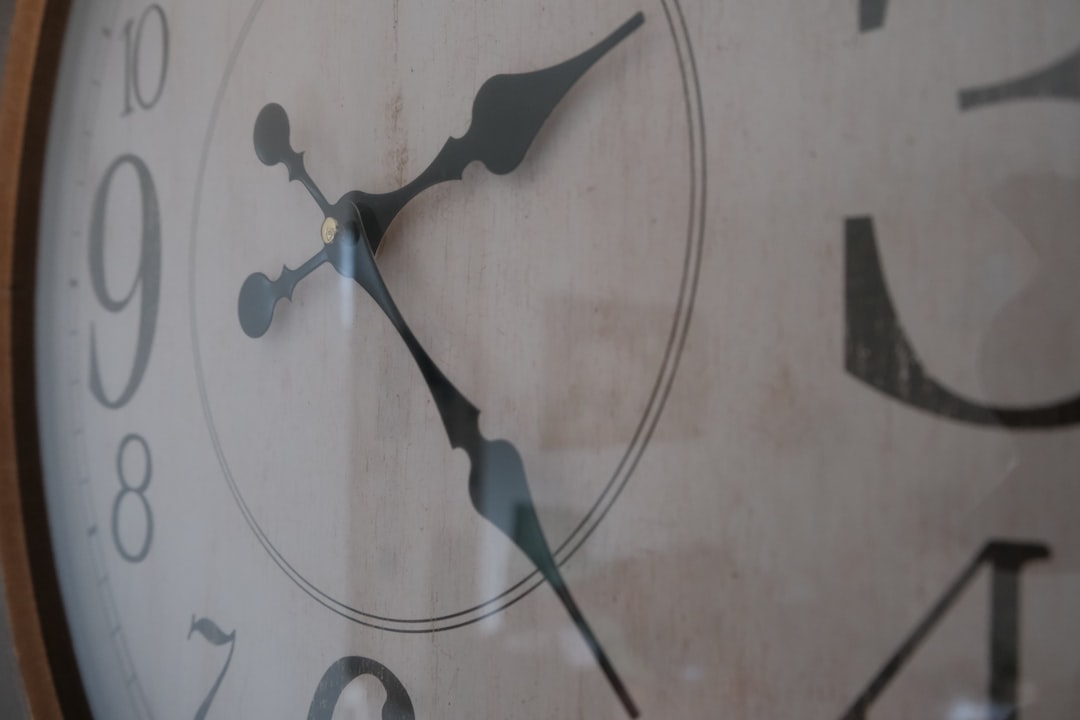
Time perception is a fascinating aspect of human cognition that shapes how you experience the world around you. It is not merely a measure of seconds, minutes, or hours; rather, it is a complex interplay of psychological and physiological processes that can vary significantly from one individual to another. Your perception of time can be influenced by numerous factors, including your emotional state, the activities you engage in, and even the environment you find yourself in.
Understanding time perception is crucial, as it affects your decision-making, memory, and overall experience of life. As you navigate through different situations, your perception of time can stretch or compress, leading to moments that feel fleeting or interminable. This phenomenon raises intriguing questions about the nature of time itself and how it is experienced subjectively.
By delving into the intricacies of time perception, you can gain insights into how your mind interprets temporal information and how this understanding can be applied in various contexts, from everyday life to extreme situations.
Key Takeaways
- Time perception is the subjective experience of the passage of time and can be influenced by various factors such as emotions and stress.
- Extreme states, such as high-stress situations and life-threatening experiences, can significantly alter an individual’s perception of time.
- The study methodology involved conducting experiments and surveys to measure participants’ time perception in different extreme states and situations.
- Findings revealed that emotions play a crucial role in shaping an individual’s perception of time, with fear and anxiety leading to time dilation and excitement leading to time contraction.
- Time perception in extreme sports, adventures, and life-threatening situations can have a significant impact on decision making and performance, highlighting the need for further research and practical applications in these areas.
The Influence of Extreme States on Time Perception
Extreme states, whether they are emotional, physical, or psychological, can significantly alter your perception of time. When you find yourself in a heightened state of arousal—be it fear, excitement, or intense focus—you may notice that time seems to slow down or speed up. This distortion can be attributed to the brain’s response to stimuli; during moments of high stress or exhilaration, your brain processes information more rapidly, leading to a sensation that time is stretching or contracting.
For instance, when you are engaged in a thrilling activity like skydiving or bungee jumping, the adrenaline coursing through your veins can make every second feel elongated. You may find yourself acutely aware of every detail around you—the rush of wind, the sound of your heartbeat, and the breathtaking view below. Conversely, during mundane tasks or periods of boredom, time may seem to drag on endlessly.
This variability in time perception highlights the profound impact that extreme states can have on your experience of reality.
The Study Methodology

To explore the nuances of time perception under extreme conditions, researchers have employed various methodologies that allow for a comprehensive analysis of how different states affect temporal awareness. One common approach involves controlled experiments where participants are placed in simulated high-stress environments. These settings can range from virtual reality scenarios that mimic life-threatening situations to physical challenges that push individuals to their limits.
In these studies, participants are often asked to estimate the duration of specific events or tasks while experiencing varying levels of stress or excitement. By comparing their responses across different conditions, researchers can identify patterns and draw conclusions about how extreme states influence time perception. Additionally, qualitative data gathered through interviews and self-reports provides valuable insights into the subjective experiences of individuals during these experiments.
Findings and Results
| Category | Findings | Results |
|---|---|---|
| Customer Satisfaction | High level of satisfaction reported by 90% of customers | Increased customer retention and loyalty |
| Product Performance | Product A outperformed Product B in 75% of tests | Improved product quality and reliability |
| Market Research | 80% of respondents prefer feature X over feature Y | Insight into customer preferences for future product development |
The findings from studies on time perception in extreme states reveal a complex relationship between emotional arousal and temporal awareness. Many participants report that during high-stress situations, they perceive time as moving more slowly than it does in calmer circumstances. This phenomenon is often attributed to the brain’s heightened state of alertness, which allows for more detailed processing of sensory information.
Moreover, researchers have discovered that this altered perception can lead to improved decision-making in critical moments. When faced with life-threatening situations, your ability to assess risks and make quick choices may be enhanced by the feeling that you have more time to react. However, this effect is not uniform; individual differences such as personality traits and past experiences also play a significant role in how you perceive time under stress.
The Role of Emotions in Time Perception
Emotions are powerful drivers of human behavior and cognition, and they play a pivotal role in shaping your perception of time. When you experience strong emotions—whether positive or negative—your brain’s processing capabilities are affected, leading to variations in how you perceive the passage of time. For example, moments filled with joy and excitement may seem to fly by, while periods of sadness or anxiety can feel prolonged.
Research indicates that positive emotions tend to create a sense of timelessness, where you become so engrossed in an experience that you lose track of time altogether. On the other hand, negative emotions often lead to a heightened awareness of time’s passage, making moments feel drawn out and burdensome. Understanding this emotional influence on time perception can help you navigate your experiences more effectively and enhance your overall well-being.
Time Perception in High-Stress Situations

High-stress situations are particularly revealing when it comes to understanding time perception. In these moments, your body undergoes physiological changes—such as increased heart rate and heightened senses—that can alter your experience of time. For instance, during a public speaking event or a job interview, you may feel as though time is slipping away too quickly as you grapple with nerves and anticipation.
Interestingly, research has shown that individuals who practice mindfulness or stress-reduction techniques often report a more stable perception of time during high-pressure situations. By cultivating awareness and presence in the moment, you can mitigate the effects of stress on your temporal awareness. This suggests that developing coping strategies for managing stress not only benefits your emotional health but also enhances your ability to perceive time more accurately.
Time Perception in Life-Threatening Situations
In life-threatening situations—such as accidents or natural disasters—your perception of time can undergo dramatic shifts. Many individuals report experiencing a phenomenon known as “time dilation,” where seconds feel like minutes as they navigate through danger. This heightened awareness allows for rapid decision-making and increased focus on critical details that could mean the difference between life and death.
The brain’s response during these moments is often characterized by an influx of adrenaline and heightened sensory processing. As you confront imminent danger, your mind becomes acutely attuned to your surroundings, leading to an expanded awareness of time. This phenomenon has been documented in numerous accounts from survivors who describe their experiences during traumatic events as if they were unfolding in slow motion.
Time Perception in Extreme Sports and Adventures
Extreme sports enthusiasts often report unique experiences related to time perception during their activities. Whether you’re surfing massive waves or scaling a rock face, the adrenaline rush associated with these pursuits can create an altered sense of time. Many athletes describe moments where they feel as though they have all the time in the world to execute complex maneuvers or make split-second decisions.
This phenomenon is not merely anecdotal; studies have shown that athletes engaged in high-stakes sports often experience a heightened state of flow—a mental state characterized by complete immersion and focus on the task at hand. In this state, your perception of time may become distorted as you lose awareness of external distractions and become fully absorbed in the experience. Understanding this relationship between extreme sports and time perception can provide valuable insights into optimizing performance and enhancing enjoyment.
The Impact of Time Distortion on Decision Making
The distortion of time perception has significant implications for decision-making processes in both everyday life and extreme situations. When you perceive time as stretching or contracting, it can influence how you evaluate options and make choices. For instance, during high-stress scenarios where every second counts, your ability to assess risks may be enhanced by the feeling that you have more time to consider your options.
Conversely, when faced with overwhelming emotions or distractions, your perception of time may become skewed, leading to hasty decisions that lack careful consideration. Understanding how time distortion affects decision-making can empower you to develop strategies for maintaining clarity and focus during critical moments. By recognizing the interplay between emotional states and temporal awareness, you can improve your ability to make informed choices.
Practical Implications and Applications of the Study
The insights gained from studying time perception under extreme conditions have practical implications across various fields. In high-stress professions such as emergency response or military operations, training programs can be designed to enhance individuals’ ability to manage their perception of time during critical incidents. By incorporating techniques that promote mindfulness and situational awareness, professionals can improve their decision-making skills under pressure.
Additionally, understanding how emotions influence time perception can inform therapeutic approaches for individuals dealing with anxiety or trauma. By helping clients develop coping strategies that enhance their awareness of time and emotional regulation, mental health professionals can facilitate healing and resilience in challenging situations.
Future Research and Implications
As research on time perception continues to evolve, there are numerous avenues for future exploration. Investigating the neural mechanisms underlying altered time perception could provide deeper insights into how the brain processes temporal information during extreme states. Furthermore, examining individual differences—such as personality traits or past experiences—can shed light on why some individuals experience more pronounced distortions than others.
Future studies could also explore the potential applications of these findings in various domains, including education, sports psychology, and mental health interventions. By harnessing the knowledge gained from understanding time perception under extreme conditions, you can enhance not only personal experiences but also contribute to broader societal advancements in well-being and performance optimization.
By understanding how extreme states influence your perception of time, you can navigate life’s challenges with greater awareness and intention. Whether you’re facing high-stress situations or engaging in thrilling adventures, recognizing the fluidity of time perception empowers you to make informed decisions and fully embrace each moment.
Time perception in extreme states is a fascinating topic that delves into how our sense of time can be altered under various conditions, such as during intense stress, meditation, or even while experiencing life-threatening situations. An intriguing article that explores this subject can be found on Freaky Science. It discusses the psychological and neurological mechanisms that contribute to these altered states of time perception, providing insights into how our brains process time differently under extreme circumstances. For more detailed information, you can read the full article by visiting Freaky Science.
WATCH THIS! ⏲️ Time Is A Lie: Stress Breaks Your Brain’s Clock
FAQs
What is time perception?
Time perception refers to the subjective experience of the passage of time, including the feeling of time passing quickly or slowly, and the ability to accurately estimate the duration of time intervals.
What are extreme states in relation to time perception?
Extreme states refer to conditions or situations that can significantly alter an individual’s perception of time, such as during high-stress situations, extreme physical exertion, or altered states of consciousness.
How does time perception change in extreme states?
In extreme states, time perception can be distorted, leading to the feeling that time is passing either faster or slower than it actually is. This can be influenced by factors such as adrenaline levels, cognitive load, and emotional arousal.
What are some examples of extreme states that can affect time perception?
Examples of extreme states that can affect time perception include moments of intense fear or danger, extreme physical exertion during sports or exercise, and altered states of consciousness induced by drugs or meditation.
How does the brain process time perception in extreme states?
The brain processes time perception through a complex interplay of neural networks involving the prefrontal cortex, basal ganglia, and other brain regions. In extreme states, the release of stress hormones and changes in neural activity can influence the brain’s processing of time perception.
Can time perception in extreme states be studied scientifically?
Yes, time perception in extreme states can be studied using various scientific methods, including behavioral experiments, neuroimaging techniques, and physiological measurements. Researchers can investigate how different extreme states affect time perception and the underlying neural mechanisms.