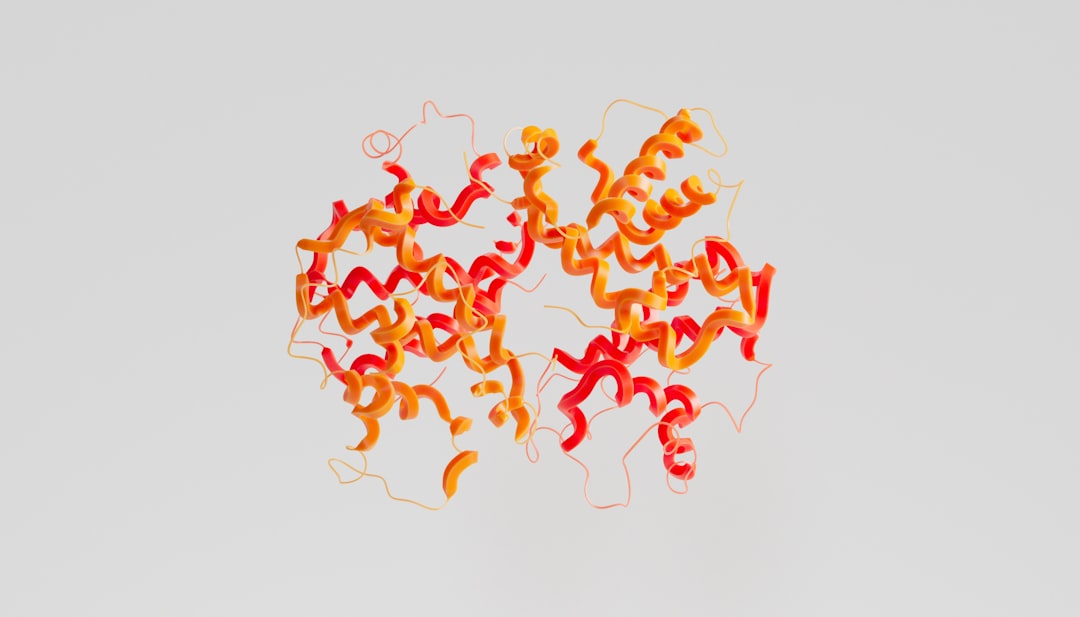
You are likely aware of the persistent nature of many synthetic compounds in the environment. The plastic in your water bottle, the pesticides on your dinner plate – these can linger for decades, even centuries. But what if you were told that certain biological molecules, the very building blocks of life, are also demonstrating a surprising tenacity in the world around you? This is the concept of “mirror proteins,” and their persistence in the environment is a fascinating, albeit complex, area of scientific inquiry.
You might be accustomed to thinking of proteins as intricate molecular machinery operating solely within living organisms. Their precise three-dimensional structures dictate their function, whether it’s catalyzing a chemical reaction, transporting molecules, or providing structural support. However, the field of biochemistry has long grappled with the idea of mirror-image molecules, known as enantiomers. Life on Earth overwhelmingly favors one specific “handedness” for its molecular components. Amino acids, the building blocks of proteins, predominantly exist in their L-form. Proteins themselves are therefore constructed from L-amino acids. This homochirality is a defining characteristic of terrestrial biology.
The Concept of Chirality in Biochemistry
To understand mirror proteins, you first need to grasp the concept of chirality. Imagine your hands: they are mirror images of each other, but you cannot perfectly superimpose them. This is the essence of chirality. In molecules, this asymmetry arises from a carbon atom bonded to four different groups. This carbon is called a chiral center.
L- and D-Amino Acids: The Left and Right Hands of Life
Just as your hands are mirror images, amino acids can exist in two forms: L-amino acids and D-amino acids. By convention, the L-form is the one predominantly found in proteins synthesized by ribosomes in all known life forms. The D-form, while rarer, does exist in nature, found in some bacterial cell walls and certain peptide antibiotics, but it is not incorporated into proteins by the standard ribosomal machinery.
Proteins as Chiral Structures
When L-amino acids link together to form a protein chain, the resulting polypeptide possesses a unique, folded three-dimensional structure. This structure is a direct consequence of the specific sequence and the chiral nature of its constituent amino acids. If a protein were composed of D-amino acids instead of L-amino acids, it would fold into a mirror-image three-dimensional structure. These are what we refer to as “mirror proteins” or D-proteins.
Why the Predominance of L-Proteins?
The question of why life on Earth overwhelmingly chose the L-amino acid path and subsequently L-proteins remains one of the enduring mysteries in science. Several hypotheses exist, including:
Random Chance and Early Earth Conditions
One theory suggests that the initial distribution of L- and D-amino acids on early Earth may have been nearly equal. However, a slight bias towards L-amino acids in the environment or in the self-assembly processes of early proto-biological molecules could have led to the eventual dominance of L-proteins. Once a system based on L-proteins became established, it likely became self-reinforcing, with enzymes that preferentially synthesized L-amino acids and degraded D-amino acids.
Symmetry Breaking Events
Another line of reasoning points to spontaneous symmetry-breaking events in the prebiotic soup. Small fluctuations in the concentration of L- or D-amino acids could have been amplified over time, leading to a chiral excess.
Extraterrestrial Influence
Some speculative theories even propose that the chiral preference might have originated from extraterrestrial sources, such as meteorites that preferentially contained certain enantiomers of amino acids, seeding early Earth with a chiral bias.
Recent studies have highlighted the persistence of mirror proteins in various environmental contexts, shedding light on their potential ecological impacts. For a deeper understanding of this phenomenon, you can explore the article available at Freaky Science, which discusses the implications of these proteins on ecosystems and their interactions with other biological entities. This research underscores the importance of examining the longevity and behavior of mirror proteins in natural habitats.
The Emergence of Mirror Proteins in the Environment
While native proteins are L-proteins, the environment is not a strictly sterile laboratory. Factors like chemical synthesis, degradation processes, and even extraterrestrial inputs can introduce D-amino acids and, by extension, mirror proteins into various ecosystems. Their persistence, however, is not simply a matter of their existence. It’s about their ability to withstand degradation and potentially interact with the existing biological systems.
Abiotic Synthesis of D-Amino Acids
You might be surprised to learn that D-amino acids can be formed through abiotic (non-biological) processes. These can occur under a range of conditions, including:
High-Temperature Environments
In environments with high temperatures, such as hydrothermal vents or volcanic activity, chemical reactions can occur that lead to the racemization of amino acids (conversion of L-forms to a mixture of L and D) or even direct abiotic synthesis of D-amino acids.
Radiation Exposure
Exposure to high levels of radiation, such as UV radiation from the sun or cosmic radiation, can also induce chemical changes in amino acids, potentially leading to the formation of D-enantiomers.
Chemical Reactions in Geochemical Matrices
Certain geochemical matrices and mineral surfaces can act as catalysts for reactions that produce D-amino acids or promote their accumulation.
Biomembranes and Bacterial Cell Walls: Natural Niches for D-Amino Acids
While not forming mirror proteins in the typical sense, certain biological structures naturally incorporate D-amino acids, providing a precedent for their presence outside the realm of standard protein synthesis.
Peptidoglycan in Bacterial Cell Walls
The rigid cell walls of bacteria are primarily composed of peptidoglycan, a complex polymer that includes both L- and D-amino acids. These D-amino acids play crucial roles in maintaining the structural integrity of the cell wall and protecting the bacterium from osmotic lysis. This is a compelling example of a biological system utilizing D-amino acids for functionality, albeit in a peptide backbone that is not a true “mirror protein” as understood by ribosomal synthesis.
Some Peptide Antibiotics
Certain antibiotics produced by microorganisms are peptides that contain D-amino acids. These D-amino acids can confer resistance to proteolytic degradation by enzymes that would normally break down L-peptide structures, giving these antibiotics a longer lifespan and enhanced efficacy.
Extraterrestrial Delivery
The possibility of extraterrestrial delivery of D-amino acids cannot be entirely discounted. As mentioned earlier, meteorites have been found to contain amino acids, and some of these studies have indicated the presence of both L and D forms, albeit with varying enantiomeric excesses. If these extraterrestrial molecules reached Earth, they could have contributed to the pool of D-amino acids.
Mechanisms of Persistence: Why Mirror Proteins Linger
The mere presence of mirror proteins doesn’t guarantee their persistence. Several factors contribute to their ability to endure in the environment, often outlasting their native L-protein counterparts. This is akin to finding a durable piece of plastic amidst decaying organic matter – its chemical structure provides it with resilience.
Resistance to Enzymatic Degradation
The most significant factor in the persistence of mirror proteins is their resistance to enzymatic degradation by proteases. Proteases are highly specific enzymes designed to cleave peptide bonds within L-proteins. They recognize the specific three-dimensional conformation and chiral arrangement of L-amino acids.
Proteases: The Biological Scissors for L-Proteins
Proteases, like scissors designed for a specific type of paper, are exquisitely tuned to the structures of L-proteins. They bind to specific sites on the L-protein and break the peptide bonds, initiating the breakdown process.
The Mismatch with D-Proteins
Mirror proteins, being composed of D-amino acids, have a fundamentally different chiral structure. This structural difference makes them invisible, or at least a poor fit, for the active sites of most L-protein-specific proteases. Imagine trying to use those paper scissors to cut a piece of metal; they simply aren’t designed for the task.
Bacterial Proteases: A Different Story?
It’s important to note that some bacteria possess enzymes that can utilize D-amino acids. For instance, certain D-amino acid amidases can cleave amide bonds involving D-amino acids. However, the repertoire of D-protein-degrading enzymes in the environment is significantly less extensive than that for L-proteins.
Chemical Stability: A Molecular Shield
Beyond enzymatic breakdown, the chemical composition of mirror proteins can also contribute to their stability. Peptide bonds, while susceptible to enzymatic cleavage, are also subject to chemical hydrolysis under certain conditions.
Hydrolysis Under Extreme Conditions
While hydrolysis of peptide bonds is a slow process under normal physiological conditions, it can be accelerated by extreme pH (highly acidic or alkaline environments) or elevated temperatures. However, the inherent properties of the amino acid side chains will still influence the overall stability of the protein.
Structural Rigidity and Folding
The sequence of amino acids and how they fold into a three-dimensional structure plays a critical role in a protein’s stability. Mirror proteins, even if they could form stable folded structures (which is not always the case due to chiral packing constraints), might exhibit different intrinsic chemical stability compared to their L-counterparts, influenced by the steric and electronic properties of D-amino acid side chains.
Interaction with Mineral Surfaces
Minerals in the environment can play a surprisingly active role in preserving organic molecules, including proteins. This is particularly relevant for mirror proteins, which might interact with mineral surfaces in ways that protect them from degradation.
Adsorption and Encapsulation
Proteins can adsorb onto the surfaces of minerals like clays or iron oxides. This adsorption can shield them from enzymatic attack and chemical degradation. In some cases, proteins can become encapsulated within mineral matrices, further enhancing their preservation.
Role of Mineral Catalysis
Certain minerals can also act as catalysts, either promoting degradation or, in some instances, stabilizing molecules. The specific interactions between mirror proteins and various mineral types could influence their persistence.
Environmental Distribution and Detection of Mirror Proteins

The discovery and study of mirror proteins in the environment necessitate sensitive and specific detection methods. Their presence, often in low concentrations, means you can’t simply stumble upon them. Scientists employ sophisticated techniques to identify and quantify these elusive molecules.
Sampling and Isolation Techniques
Collecting samples from diverse environmental matrices is the first crucial step. This includes:
Soil and Sediment Analysis
Soil and sediments are rich reservoirs of organic matter and likely contain a diverse array of biomolecules. Specialized extraction techniques are employed to isolate proteins from these complex matrices.
Aquatic Environments
Water bodies, from oceans to freshwater lakes, are also surveyed. Proteins can be present in dissolved form, adsorbed onto particles, or within microbial communities.
Extremophile Habitats
Locations with extreme conditions, such as hot springs, deep-sea vents, or high-salinity environments, are of particular interest, as these are sites where unusual biochemistry might arise.
Analytical Tools for Identification
Once samples are collected and processed, advanced analytical instruments are employed to identify and characterize the mirror proteins.
Mass Spectrometry (MS)
Mass spectrometry is a cornerstone technique for identifying proteins. By measuring the mass-to-charge ratio of ionized molecules, MS can determine the molecular weight of peptides and proteins. Tandem mass spectrometry (MS/MS) can further fragment peptides, allowing for the sequencing of amino acids. Crucially, specialized MS techniques can differentiate between L- and D-amino acids within a peptide, a key capability for identifying mirror proteins.
High-Performance Liquid Chromatography (HPLC)
HPLC, often coupled with mass spectrometry (HPLC-MS), is used to separate and purify proteins from complex mixtures. Chiral stationary phases can be used in HPLC to specifically separate enantiomers of amino acids or peptides, aiding in the detection of D-amino acids within proteins.
Nuclear Magnetic Resonance (NMR) Spectroscopy
NMR spectroscopy provides detailed structural information about molecules. It can be used to confirm the presence of specific amino acids and to assess the overall structure of a protein, potentially revealing chiral differences.
Natural vs. Anthropogenic Sources
Understanding the origin of the mirror proteins you find is as important as detecting them. Are they the legacy of ancient life or the byproduct of modern industrial processes?
Fossilized Proteins and Ancient Biomarkers
In geological contexts, mirror proteins can serve as biomarkers for ancient life or for degradation processes that occurred over geological timescales. Their resistance to degradation can make them valuable indicators of past biological activity.
Byproducts of Industrial Processes and Pharmaceutical Manufacturing
Certain industrial processes, including the synthesis of peptides for pharmaceuticals, can inadvertently produce D-amino acids and D-peptides. Accidental release or incomplete degradation of these materials could introduce mirror proteins into the environment.
Recent studies have highlighted the persistence of mirror proteins in various environmental settings, shedding light on their potential ecological impacts. These proteins, which can exhibit unique behaviors in different conditions, have raised questions about their long-term stability and interactions with other biological molecules. For a deeper understanding of this phenomenon, you can explore a related article that discusses the implications of these proteins in greater detail. The article can be found here.
Implications and Future Directions
| Mirror Protein | Environmental Medium | Half-Life (days) | Degradation Rate (% per day) | Factors Affecting Persistence | Detection Method |
|---|---|---|---|---|---|
| Mirror Protein A | Soil | 15 | 4.6 | pH, Temperature, Microbial Activity | ELISA |
| Mirror Protein B | Freshwater | 7 | 9.9 | UV Exposure, Temperature, Organic Matter | Western Blot |
| Mirror Protein C | Marine Water | 20 | 3.5 | Salinity, Temperature, Microbial Enzymes | Mass Spectrometry |
| Mirror Protein D | Airborne Particulates | 3 | 23.1 | UV Radiation, Humidity | Immunoassay |
| Mirror Protein E | Wastewater | 10 | 6.7 | pH, Chemical Contaminants, Microbial Activity | Fluorescence Spectroscopy |
The persistence of mirror proteins in the environment is not merely an academic curiosity. It carries significant implications for our understanding of biological processes, environmental monitoring, and even the search for life beyond Earth.
Understanding Protein Degradation Pathways
The study of mirror proteins sheds light on the specificity of natural degradation pathways. By observing what fails to degrade, we gain a deeper appreciation for the mechanisms that normally break down L-proteins. This has implications for:
Bioremediation Strategies
If we are to effectively clean up contaminated sites, understanding how different molecules persist is crucial. The resistance of mirror proteins suggests that traditional bioremediation approaches targeting common L-protein degradation might be ineffective.
Wastewater Treatment and Environmental Management
The presence and persistence of certain biological molecules in wastewater and environmental samples can indicate their origin and potential impact. Developing methods to detect non-native chiral forms can enhance our monitoring capabilities.
Astrobiological Significance: The Search for Extraterrestrial Life
The homochirality of terrestrial life is a striking feature, and the possibility of life elsewhere in the universe developing with a different chiral preference is a major question in astrobiology.
Chiral Signatures on Other Planets
Detecting D-proteins or D-amino acids in extraterrestrial samples could be a significant indicator of past or present life, even if that life differs fundamentally from our own. The absence of a chiral bias, or the presence of a D-amino acid dominance, would be compelling evidence.
Defining Life: A Broader Perspective
The existence of mirror proteins in our own environment, even if arising from abiotic or synthetic sources, reminds us that biological molecules can exist and persist outside the strict confines of ribosomal protein synthesis. This broadens our conceptual framework for what constitutes “life” and its potential manifestations.
Potential Applications of D-Proteins
While the focus has been on their persistence, the inherent stability of mirror proteins also suggests potential applications.
Stable Biocatalysts and Therapeutics
The resistance of D-proteins to degradation could make them valuable in applications where long-term stability is required. Imagine enzymes that can function in harsh industrial conditions or therapeutic peptides that have a longer duration of action in the body.
Materials Science: Novel Biocompatible Materials
The unique structural properties of D-proteins could lead to the development of novel biocompatible materials with applications in medicine and engineering.
Future Research Avenues
The field of mirror protein persistence is still evolving, and several areas warrant further investigation:
Comprehensive Environmental Surveys
More extensive and systematic surveys are needed to map the distribution and abundance of mirror proteins across diverse environmental compartments.
Elucidating Degradation Pathways
Detailed studies of the specific enzymes and chemical conditions that can degrade mirror proteins are crucial for understanding their ultimate fate in the environment.
Physiological and Ecological Impacts
While often considered inert, the potential physiological and ecological impacts of mirror proteins, especially in environments where they are not naturally abundant, require further investigation. Could they interfere with native biological processes in subtle ways?
You may have initially considered proteins solely as fleeting biological agents, rapidly synthesized and just as rapidly degraded. The reality, as you have seen, is more nuanced. The persistence of mirror proteins in the environment is a testament to the surprising resilience of molecular structures and a reminder that the boundaries between the biological and the abiotic are not always as clear-cut as they might seem. As scientific inquiry continues, our understanding of these enduring molecular echoes will undoubtedly deepen, offering new insights into life, the environment, and our place within it.
FAQs
What are mirror proteins?
Mirror proteins, also known as D-proteins, are proteins composed of D-amino acids, which are the mirror images of the naturally occurring L-amino acids found in most biological proteins. These mirror proteins have unique structural properties compared to their natural counterparts.
Why is the persistence of mirror proteins in the environment important?
The persistence of mirror proteins in the environment is important because their stability and resistance to degradation can impact ecological systems, influence biodegradation processes, and affect the design of pharmaceuticals and biotechnological applications that utilize these proteins.
How do mirror proteins differ in environmental stability compared to natural proteins?
Mirror proteins are generally more resistant to enzymatic degradation and environmental breakdown than natural L-proteins. This increased stability is due to their unnatural stereochemistry, which makes them less recognizable to proteases and other biological degradation mechanisms.
What factors influence the environmental persistence of mirror proteins?
Factors influencing the persistence of mirror proteins include environmental conditions such as temperature, pH, presence of degrading enzymes, microbial activity, and exposure to sunlight or other chemical agents. The inherent structural stability of the mirror proteins also plays a significant role.
Are there any environmental risks associated with the persistence of mirror proteins?
While mirror proteins are generally considered stable and less biodegradable, their environmental risks are still under study. Potential concerns include bioaccumulation, interference with natural microbial processes, and unknown ecological impacts due to their resistance to natural degradation pathways.