NASA, an acronym that resonates globally, stands as humanity’s foremost explorer of the cosmos. For over six decades, the National Aeronautics and Space Administration has been the vanguard, pushing the boundaries of scientific understanding and technological innovation. Its mission extends far beyond launching rockets; it is a relentless quest to unravel the universe’s mysteries, understand our place within it, and ultimately, enrich the human experience. This article will delve into the multifaceted endeavors of NASA, examining its pivotal missions, groundbreaking discoveries, and the enduring impact of its work on our perception of the cosmos and ourselves.
NASA’s origins are deeply intertwined with the geopolitical climate of the mid-20th century. Established on July 29, 1958, by President Dwight D. Eisenhower, its creation was a direct response to the Soviet Union’s launch of Sputnik 1 in October 1957, the world’s first artificial satellite. This event ignited the Space Race, a period of intense competition for dominance in space exploration between the United States and the Soviet Union. NASA inherited the legacy of earlier government research, primarily from the National Advisory Committee for Aeronautics (NACA), and was tasked with coordinating America’s civilian space program.
The Cold War Crucible: Forging a Spacefaring Nation
The early years of NASA were characterized by a singular focus on achieving milestones that demonstrated technological superiority. The Mercury program, beginning in 1958, was the first step, aiming to send a human into orbit. This monumental effort culminated in Alan Shepard’s suborbital flight in 1961 and John Glenn’s orbital flight in 1962, marking America’s entry into crewed spaceflight.
From Mercury to Gemini: Building the Foundation for Lunar Conquest
The Mercury program, while successful in its initial objectives, was a stepping stone. The Gemini program, spanning from 1965 to 1966, was designed to bridge the gap between Mercury and the ambitious Apollo missions. Gemini missions focused on crucial technologies for lunar exploration, including long-duration spaceflight, rendezvous and docking maneuvers, and extravehicular activities (EVAs), or spacewalks. These were the intricate steps in a cosmic ballet, refining the choreography required for a journey to the Moon.
Apollo: Reaching for the Moon and Beyond
The Apollo program, undoubtedly NASA’s most iconic achievement, began with the audacious goal set by President John F. Kennedy in 1961: to land a man on the Moon and return him safely to Earth before the end of the decade. This monumental undertaking involved unprecedented technological development, including the Saturn V rocket, the most powerful launch vehicle ever built. The program faced immense challenges, including a tragic fire during a pre-launch test that claimed the lives of three astronauts. However, perseverance and innovation led to the historic landing of Apollo 11 on July 20, 1969, with Neil Armstrong and Buzz Aldrin walking on the lunar surface. Apollo missions not only demonstrated American technological prowess but also returned invaluable scientific data and lunar samples that revolutionized our understanding of the Moon’s formation and history.
Transition and Transformation: From the Space Race to Sustained Exploration
Following the triumph of Apollo, NASA’s focus shifted. The immediate pressure of the Space Race subsided, and the agency began to explore new frontiers and foster a more sustained presence in space. This period saw the development of new capabilities and a broadened scope of scientific inquiry.
Skylab: America’s First Space Station
Skylab, launched in 1973, was NASA’s first space station and served as a vital laboratory in orbit. It provided a platform for astronauts to conduct long-duration experiments in microgravity, studying the effects of space on the human body and performing astronomical observations. Skylab demonstrated the feasibility of extended human stays in space, a crucial precursor to future endeavors.
The Space Shuttle Program: Reusable Access to Orbit
The Space Shuttle program, initiated in the 1970s and operational from 1981 to 2011, marked a paradigm shift in space access. The shuttle was designed to be a reusable spacecraft, capable of launching payloads into orbit, returning to Earth, and being refurbished for subsequent missions. This program enabled the deployment of numerous satellites, conducted vital scientific research, and facilitated the construction of the International Space Station. The shuttles, like a cosmic workhorse, brought the efficiency of repeated journeys to the final frontier. However, the program was also marked by two tragic accidents, the Challenger disaster in 1986 and the Columbia disaster in 2003, which underscored the inherent risks of space exploration and led to significant safety reevaluations.
NASA continues to push the boundaries of space exploration, and a recent article highlights some of their groundbreaking missions. For more insights into NASA’s latest projects and discoveries, you can read about it in this related article: Freaky Science. This piece delves into the technological advancements and scientific research that are shaping our understanding of the universe.
Unveiling the Cosmos: NASA’s Scientific Discoveries
NASA’s contributions extend far beyond engineering feats; its scientific discoveries have fundamentally reshaped our understanding of the universe. Through a vast array of missions, from terrestrial observation to deep space probes, NASA has brought the cosmos into sharper focus, revealing its intricate workings and breathtaking scale.
A Window to the Universe: Telescopes and Observatories
The development and deployment of advanced telescopes have been central to NASA’s astrophysical research. These instruments act as our eyes in the sky, collecting light from distant celestial objects and allowing scientists to study phenomena that are otherwise invisible.
The Hubble Space Telescope: A Celestial Icon
Launched in 1990, the Hubble Space Telescope has been one of NASA’s most profound scientific instruments. Orbiting above Earth’s atmospheric distortion, Hubble has provided unprecedentedly clear images of the universe, from nearby planets to the most distant galaxies. Its observations have been instrumental in:
- Determining the age and expansion rate of the universe: Hubble’s precise measurements of Cepheid variable stars have provided crucial data for calculating the Hubble constant, a key parameter in cosmology.
- Confirming the existence of supermassive black holes: Hubble’s observations have provided strong evidence for the presence of supermassive black holes at the centers of most galaxies.
- Studying the formation and evolution of galaxies: Hubble’s deep field images have revealed the universe in its infancy, offering insights into how galaxies formed and evolved over billions of years.
- Characterizing exoplanet atmospheres: While not its primary mission, Hubble has also played a role in studying the atmospheres of planets orbiting other stars, searching for potential signs of habitability.
The James Webb Space Telescope: Peering into the Cosmic Dawn
The James Webb Space Telescope (JWST), launched in 2021, is the successor to Hubble and represents a significant leap forward in our ability to observe the universe. Operating in the infrared spectrum, JWST can see through dust clouds that obscure visible light, allowing it to:
- Observe the first stars and galaxies: JWST’s sensitivity allows it to detect the faint light from the earliest structures in the universe, providing a glimpse into the cosmic dawn.
- Study the formation of stars and planetary systems: By observing in infrared, JWST can peer into the dusty nurseries where stars and planets are born.
- Investigate the composition of exoplanet atmospheres in unprecedented detail: JWST’s advanced instruments can analyze the chemical signatures in exoplanet atmospheres, searching for molecules that could indicate the presence of life.
Other Groundbreaking Observatories: Chandra, Spitzer, and More
Beyond Hubble and JWST, NASA has launched a suite of other specialized observatories, each designed to study different aspects of the electromagnetic spectrum and cosmic phenomena. The Chandra X-ray Observatory probes high-energy events like supernovae and black hole activity, while the now-retired Spitzer Space Telescope focused on infrared astronomy, revealing hidden details of star formation and the early universe. These observatories, working in concert, form a cosmic symphony of discovery.
Exploring Our Solar System: Robotic Emissaries
NASA’s robotic exploration of our solar system has been a cornerstone of its scientific achievements, providing a wealth of data about planets, moons, asteroids, and comets. These missions often serve as precursors to human exploration and have answered fundamental questions about the origins and evolution of our solar neighborhood.
The Mariner and Pioneer Programs: The First Interplanetary Voyagers
The Mariner program in the 1960s and 70s was NASA’s first foray into the inner planets, with missions to Venus, Mars, and Mercury. The Pioneer program extended our reach further, with Pioneer 10 and 11 becoming the first spacecraft to traverse the asteroid belt and explore the outer solar system, including Jupiter and Saturn. These early missions were like sending scouts into uncharted territory, mapping the terrain and gathering initial intelligence.
The Voyager Missions: Grand Tours of the Outer Planets
The Voyager 1 and 2 missions, launched in 1977, embarked on a “Grand Tour” of the outer planets. They provided breathtaking close-up images and invaluable data on Jupiter, Saturn, Uranus, and Neptune, revealing intricate details of their atmospheres, ring systems, and moons. These missions revolutionized our understanding of these distant giants and continue to operate today, with Voyager 1 having crossed into interstellar space, becoming humanity’s farthest-reaching artifact.
Mars Exploration: The Red Planet Unveiled
NASA’s fascination with Mars has led to a sustained and remarkable series of missions to the Red Planet. From the Viking landers in the 1970s to the sophisticated rovers like Sojourner, Spirit, Opportunity, Curiosity, and Perseverance, these missions have transformed our perception of Mars.
The Viking Landers: Initial Forays and the Search for Life
The Viking 1 and 2 landers, operating in the late 1970s, were the first to successfully land on Mars and perform scientific experiments on the surface. While their experiments yielded ambiguous results regarding the presence of life, they provided detailed images and atmospheric data, laying the groundwork for future exploration.
The Mars Exploration Rovers: Rovers on the Red Dust
Spirit and Opportunity, launched in 2003, were designed to explore the Martian surface and search for evidence of past water activity. They far exceeded their planned mission durations, covering hundreds of miles and discovering compelling geological evidence that Mars once harbored liquid water, a key ingredient for life as we know it.
The Curiosity and Perseverance Rovers: Astrobiology and Sample Return Aspirations
The Curiosity rover, landing in 2012, and the Perseverance rover, landing in 2021, are equipped with advanced instruments for astrobiological research. Curiosity’s mission has been to assess whether Mars ever had environmental conditions favorable for microbial life, while Perseverance is collecting rock and soil samples for potential future return to Earth, a critical step in the search for definitive signs of past Martian life. These rovers are like tireless geologists, meticulously examining the Martian landscape.
Missions to Icy Moons: Searching for Habitability Beyond Earth
NASA’s exploration has also extended to the icy moons of Jupiter and Saturn, such as Europa and Enceladus, which are thought to harbor subsurface oceans of liquid water beneath their frozen crusts. Missions like Galileo (Jupiter system) and Cassini (Saturn system) provided intriguing evidence for these hidden oceans, making them prime candidates in the search for extraterrestrial life. Future missions are planned to further investigate these potentially habitable worlds.
The Human Element: Living and Working in Space
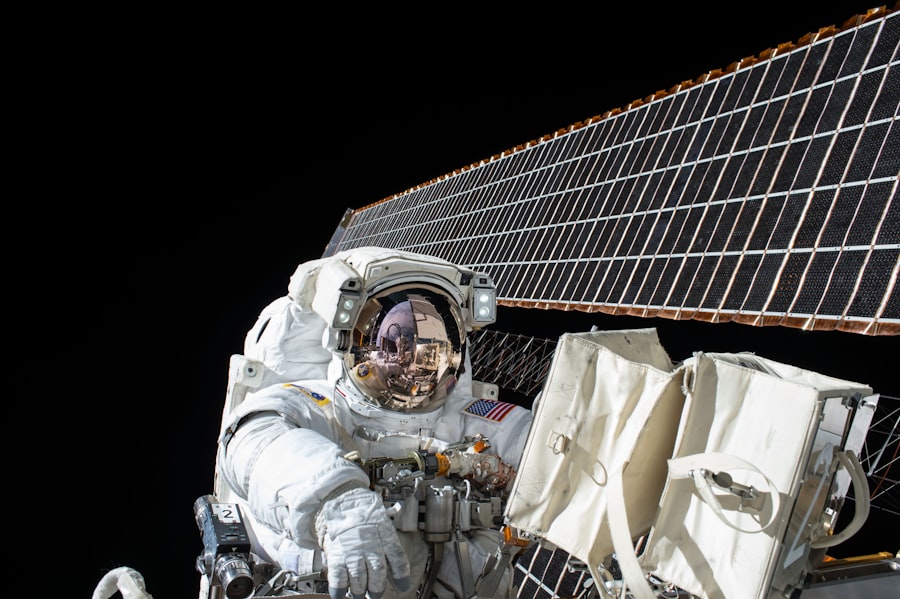
Beyond robotic probes and distant telescopes, NASA’s human spaceflight program remains a vital and inspiring aspect of its mission. Sending humans into space is a testament to our innate drive for exploration and our capacity for remarkable ingenuity.
The International Space Station: A Global Collaboration in Orbit
The International Space Station (ISS) is a testament to international cooperation and a remarkable feat of engineering. A joint project involving NASA, Roscosmos (Russia), ESA (Europe), JAXA (Japan), and CSA (Canada), the ISS has been continuously crewed since November 2000. It serves as a unique microgravity laboratory, where astronauts conduct research in a wide range of disciplines:
- Physiology and Medicine: Studying the effects of long-duration spaceflight on the human body, essential for future deep-space missions.
- Materials Science: Investigating how materials behave in microgravity, leading to advancements in terrestrial applications.
- Biology and Biotechnology: Conducting experiments on cell growth, genetics, and plant cultivation in space.
- Earth Observation: Providing a unique vantage point for monitoring Earth’s climate, weather, and environmental changes.
- Astronomy and Physics: Supporting experiments that benefit from the unique conditions of space.
The ISS represents humanity’s persistent presence among the stars, a beacon of collaboration in the void.
The Artemis Program: Returning Humans to the Moon and Beyond
The Artemis program is NASA’s current initiative to return humans to the Moon and establish a sustainable lunar presence. This ambitious program has several key objectives:
- Land the first woman and first person of color on the Moon: A significant step towards greater representation in space exploration.
- Establish a long-term human presence on the Moon: Building a base that can support scientific research, resource utilization, and serve as a stepping stone for future missions.
- Develop technologies for deep-space exploration: The Moon will serve as a testbed for technologies needed for eventual human missions to Mars.
Orion and the Space Launch System (SLS): The Next Generation of Spacecraft
The Artemis program relies on the Orion spacecraft and the Space Launch System (SLS), a powerful rocket designed to carry astronauts and payloads beyond low Earth orbit. The SLS is the most powerful rocket NASA has ever developed, capable of launching the heavy payloads required for lunar missions.
Lunar Gateway: A Staging Post for Deep Space
A crucial component of Artemis is the Lunar Gateway, a small space station that will orbit the Moon. This gateway will serve as a staging post for missions to the lunar surface, a communications hub, and a laboratory for scientific research in cis-lunar space.
The Future of Human Exploration: Mars and Beyond
The ultimate goal of NASA’s human spaceflight program is to send humans to Mars. The knowledge and experience gained from the Artemis program will be instrumental in achieving this monumental objective. Mars presents unique challenges, including radiation exposure, the vast distance from Earth, and the need for sustainable life support systems. NASA is actively developing the technologies and strategies required to make human missions to the Red Planet a reality.
Technological Innovations: Driving the Frontier of Possibility
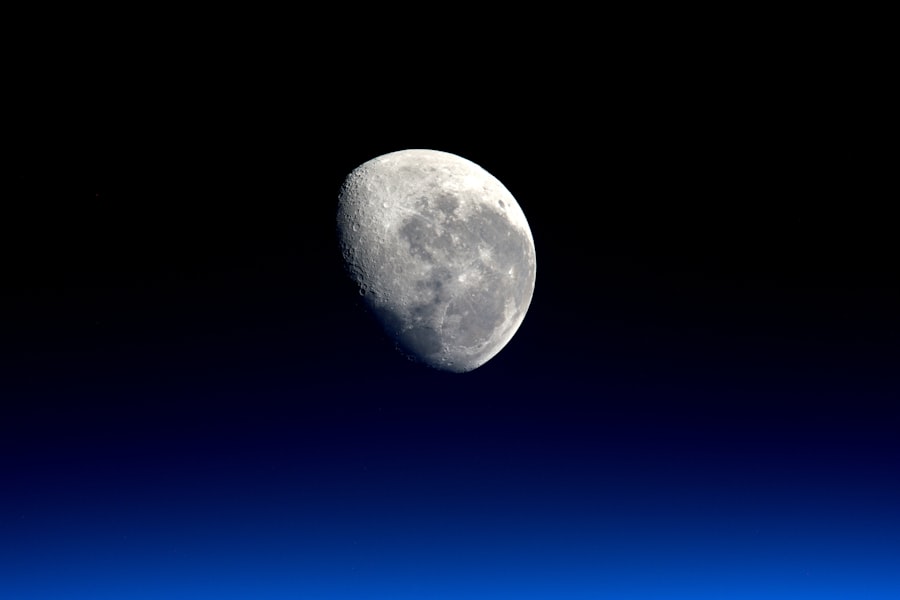
Many of NASA’s most significant achievements are rooted in its relentless pursuit of technological innovation. The challenges of space exploration demand solutions that push the boundaries of what is currently possible, leading to advancements that often have significant terrestrial applications.
Propulsion Systems: The Engines of Exploration
Developing efficient and powerful propulsion systems has been a constant focus for NASA. From the chemical rockets of the Apollo era to more advanced concepts, propulsion technology is the engine that drives our journeys to the stars.
Chemical Propulsion: Established and Reliable
Chemical rockets, which work by expelling hot gases from a nozzle, remain the workhorse of spaceflight. NASA has continuously refined these systems for greater efficiency and thrust.
Advanced Propulsion Concepts: Exploring New Avenues
NASA is also investing in research and development of advanced propulsion concepts, such as ion propulsion, electric propulsion, and potentially nuclear propulsion, which could enable faster and more fuel-efficient travel to distant destinations. These are the conceptual seeds that may one day sprout into revolutionary propulsion technologies.
Life Support Systems: Sustaining Life in Hostile Environments
For human spaceflight, robust and reliable life support systems are paramount. These systems must provide breathable air, potable water, and waste management in the closed environment of a spacecraft or space station. NASA’s work in this area has led to innovations that have applications in on-Earth scenarios, such as water purification and air filtration.
Materials Science and Engineering: Lighter, Stronger, More Resilient
The extreme conditions of space – from the vacuum and radiation to the wide temperature fluctuations – demand materials that are exceptionally strong, lightweight, and resilient. NASA’s research in materials science has yielded advancements in areas like composites, ceramics, and advanced alloys, which have found their way into industries ranging from aerospace and automotive to medical devices.
Robotics and Artificial Intelligence: The Unmanned Explorers
Robots and autonomous systems play a crucial role in NASA’s exploration efforts, especially in environments too hazardous or distant for humans. From planetary rovers to sophisticated robotic arms on the ISS, these machines are becoming increasingly intelligent and capable.
Autonomous Navigation and Decision-Making: Smarter Probes
The development of AI for autonomous navigation and decision-making allows spacecraft to explore complex environments without constant human intervention, a necessity for missions to distant worlds where communication delays are significant.
Swarm Robotics and Formation Flying: Coordinated Exploration
Future missions may involve swarms of small, coordinated spacecraft that can explore vast regions or conduct complex observations collaboratively, increasing efficiency and redundancy.
NASA continues to push the boundaries of space exploration, and recent advancements have sparked interest across various scientific communities. For those eager to learn more about innovative research and discoveries related to NASA’s missions, a fascinating article can be found at Freaky Science, which delves into the latest technologies being developed for future space travel. This resource provides insights into how these advancements could shape our understanding of the universe and enhance our capabilities in exploring distant worlds.
Beyond the Horizon: NASA’s Enduring Legacy and Future Aspirations
| Metric | Value | Notes |
|---|---|---|
| Founded | 1958 | Established on July 29, 1958 |
| Headquarters | Washington, D.C., USA | Main administrative center |
| Annual Budget | 25.4 billion | Fiscal Year 2024 |
| Number of Employees | ~17,000 | Approximate as of 2024 |
| Number of Missions | Over 200 | Includes past and current missions |
| Notable Programs | Artemis, Mars Rover, Hubble Telescope | Major ongoing and past projects |
| First Human Moon Landing | 1969 | Apollo 11 mission |
| International Collaborations | Multiple | Includes ESA, JAXA, Roscosmos, etc. |
NASA’s impact transcends scientific discovery and technological advancement. It has profoundly shaped human culture, inspiring generations and fostering a spirit of curiosity and wonder about the universe. Its legacy is a tapestry woven with threads of daring ambition, meticulous science, and unwavering human ingenuity.
Inspiring the Next Generation: STEM Education and Outreach
NASA is deeply committed to inspiring the next generation of scientists, engineers, and explorers. Through educational programs, public outreach initiatives, and the inherent allure of its missions, NASA encourages students to pursue careers in Science, Technology, Engineering, and Mathematics (STEM). The agency serves as a powerful catalyst, igniting young minds with the spark of discovery.
Planetary Defense: Protecting Our Home Planet
While exploring the cosmos, NASA also plays a vital role in protecting Earth from potential extraterrestrial threats. Through its planetary defense program, NASA monitors near-Earth objects (NEOs) such as asteroids and comets, assesses their risk, and develops strategies for potential mitigation should a threat be identified. This is a constant vigilance, a cosmic guardian ensuring the safety of our celestial home.
The Search for Extraterrestrial Life: A Fundamental Question
One of NASA’s most profound aspirations is to answer the fundamental question: Are we alone in the universe? Through its astrobiology research, exoplanet detection missions (like Kepler and TESS), and the ongoing exploration of potentially habitable worlds within our solar system, NASA is actively seeking evidence of life beyond Earth. This is the ultimate quest, the search for cosmic companionship.
The Future of Space Exploration: A Continuing Journey
NASA’s journey into the universe is far from over. With ongoing missions at our solar system’s boundaries, ambitious plans for lunar and Martian exploration, and the continuous development of new scientific instruments and technologies, the agency remains at the forefront of human endeavor. The vastness of space beckons, and NASA, with its spirit of fearless inquiry, will continue to lead the way, answering the universe’s silent invitation.
FAQs
What is NASA?
NASA, the National Aeronautics and Space Administration, is a United States government agency responsible for the nation’s civilian space program and for aeronautics and aerospace research.
When was NASA established?
NASA was established on July 29, 1958, by the National Aeronautics and Space Act, and it began operations on October 1, 1958.
What are some of NASA’s major achievements?
NASA’s major achievements include the Apollo moon landings, the Space Shuttle program, the Mars rover missions, the Hubble Space Telescope, and the International Space Station partnership.
What is NASA’s current focus in space exploration?
NASA’s current focus includes the Artemis program to return humans to the Moon, Mars exploration missions, developing new space technologies, and studying Earth and space sciences.
How does NASA contribute to scientific research?
NASA contributes to scientific research by conducting space missions that gather data about the Earth, solar system, and universe, advancing technology, and collaborating with international space agencies and scientific communities.