
You stand at a precipice, a pivotal moment in human endeavor where the relentless march of innovation is not merely reshaping industries, but fundamentally re-engineering their very DNA. You are witnessing, and more importantly, participating in, a revolution fueled by cutting-edge technology. This isn’t a gradual evolution; it’s a metamorphosis, a swift and decisive transformation akin to a caterpillar shedding its old form to emerge as a creature capable of flight. The tools you wield, the data you analyze, the systems you build – these are the catalysts that are dismantling old paradigms and erecting new ones, promising unprecedented efficiency, novel solutions, and entirely unforeseen opportunities. This article will explore how these advancements are reconfiguring the landscape of various sectors, highlighting the underlying principles and tangible impacts that are defining this era of technological reinvention.
Imagine an intelligence that can process information at speeds and scales far beyond human capacity, learning from every interaction, every data point, and continually refining its understanding. This is the core proposition of Artificial Intelligence (AI) and Machine Learning (ML). These technologies are not simply sophisticated algorithms; they are the nascent brains of the industrial revolution you are experiencing. They are the unseen architects, the silent strategists, and the tireless workers that are driving a paradigm shift in how industries operate.
Algorithmic Alchemy: Transforming Data into Insight
You are awash in data, a digital ocean stretching out before you. Without the right tools, this ocean can be a barren, unproductive expanse. AI and ML provide the navigation systems, the deep-sea submersibles, and the sophisticated filters to extract the precious pearls of insight hidden within.
Predictive Analytics for Proactive Operations
Consider the ability to foresee the future, not through divination, but through the meticulous analysis of patterns. Predictive analytics, powered by ML algorithms, allows you to anticipate equipment failures before they occur, forecast market demands with remarkable accuracy, and identify potential risks within supply chains. This is akin to possessing a crystal ball, but one forged from logic and data, allowing your operations to move from a reactive stance to a proactive, almost prescient, one. For example, in manufacturing, sensors feeding data into ML models can predict when a machine component is likely to fail, enabling scheduled maintenance rather than costly, unplanned downtime. In finance, these models can identify fraudulent transactions in real-time, safeguarding assets.
Natural Language Processing (NLP) for Enhanced Human-Machine Interaction
The barriers between human communication and machine comprehension are dissolving. Natural Language Processing (NLP) grants machines the ability to understand, interpret, and generate human language. This translates to more intuitive interfaces, automated customer service, and the ability to extract valuable information from vast libraries of text. Think of chatbots that can handle complex customer inquiries, freeing up human agents for more nuanced tasks, or sentiment analysis tools that can gauge public opinion on your products and services by sifting through millions of social media posts. This is bridging the communication gap, making technology more accessible and responsive.
Computer Vision: The Eyes of the Industrial Revolution
The ability to “see” and interpret the visual world is a monumental leap for machines. Computer vision allows for automated inspection, object recognition, and scene understanding. In industries like agriculture, drones equipped with computer vision can identify crop diseases or nutrient deficiencies, enabling targeted interventions. In retail, it can track inventory levels and even analyze customer traffic patterns within a store. This is granting machines a form of visual intelligence, augmenting human oversight and enabling new levels of automation and efficiency in tasks that were once exclusively human domains.
The Automation Wave: Reshaping Labor and Efficiency
The integration of AI and ML has accelerated the automation wave, moving beyond simple repetitive tasks to encompass complex decision-making and problem-solving. This isn’t about replacing humans wholesale, but about augmenting their capabilities and freeing them from the mundane.
Intelligent Robotics: The Next Generation of Automation
Robots are no longer confined to predictable assembly lines. With AI integration, they are becoming more adaptable, collaborative, and capable of performing a wider range of tasks in dynamic environments. These intelligent robots can learn from their surroundings, work alongside humans safely and effectively, and tackle jobs that are too dangerous, too precise, or too tedious for people. This is like equipping your workforce with a legion of highly skilled, tireless assistants, each perfectly suited to its designated task.
Process Optimization: Streamlining Operations for Peak Performance
AI and ML are exceptional at identifying bottlenecks and inefficiencies within complex processes. By analyzing operational data, these technologies can suggest improvements, automate decision-making within workflows, and ensure that every step is executed with maximum efficiency. This is akin to having a master conductor for your entire industrial orchestra, ensuring every instrument plays in perfect harmony, at the optimal tempo, to produce a flawless symphony of productivity.
In today’s rapidly evolving technological landscape, staying informed about the latest advancements is crucial. A related article that delves into the impact of artificial intelligence on everyday life can be found at Freaky Science. This resource offers insightful perspectives on how AI is reshaping various industries and influencing our daily routines, making it a must-read for anyone interested in the intersection of technology and society.
The Digital Canvas: Cloud Computing and a Connected World
You are operating in an era where computational power and storage are no longer bound by physical limitations. Cloud computing has effectively democratized access to vast resources, acting as an invisible, yet ubiquitous, infrastructure that underpins many of the technological advancements you are leveraging. This is the digital canvas upon which the revolution is being painted, providing the space and the tools for innovation to flourish.
Infrastructural Agility: Scalability and Accessibility
The cloud offers unparalleled flexibility. You can scale your computational resources up or down on demand, adapting to fluctuating needs without significant upfront investment in hardware. This agility is a game-changer, allowing businesses of all sizes to access powerful computing capabilities previously reserved for large corporations. It’s like having access to an infinite workshop, where you can summon any tool or machine you need, precisely when you need it, and then return it without a second thought.
On-Demand Computing Power for Complex Tasks
Tasks that once required supercomputers or extensive data centers can now be performed with relative ease through cloud platforms. Whether it’s complex simulations, large-scale data analysis, or the training of sophisticated AI models, the cloud provides the necessary processing power, making the previously impossible, possible.
Global Reach and Collaboration: Breaking Down Geographical Barriers
The cloud facilitates seamless collaboration across geographical boundaries. Teams can work on shared projects, access data remotely, and contribute to initiatives regardless of their physical location. This interconnectedness fosters a global marketplace of ideas and talent, accelerating innovation and breaking down the traditional limitations of distance.
Data Storage and Management: The Central Nervous System
The cloud provides a secure and scalable solution for storing and managing the ever-increasing volume of industrial data. Centralized data repositories allow for easier access, analysis, and integration, forming the backbone of intelligent operations.
Secure and Resilient Data Archiving
With robust security protocols and built-in redundancy, cloud storage offers a reliable and secure method for archiving critical business data, mitigating the risk of loss due to hardware failure or other unforeseen events.
Unified Data Ecosystems for Enhanced Analytics
By consolidating data from various sources into a unified cloud environment, you can unlock deeper insights through advanced analytics. This integration removes data silos and enables a holistic view of your operations, leading to more informed decision-making.
The Fabric of Connectivity: The Internet of Things (IoT)

You are weaving a new reality where everyday objects are imbued with intelligence and connectivity, forming a vast, interconnected network. This is the Internet of Things (IoT), a revolution that extends the reach of digital technology into the physical world, creating a continuous flow of data and enabling unprecedented levels of automation and insight. It’s like giving a voice to every object in your environment, allowing them to report their status, communicate with each other, and contribute to a grander, more intelligent system.
Bridging the Physical and Digital Divide
IoT devices act as the sensory organs of the industrial world, collecting real-time data from a multitude of sources. This data, once inaccessible, is now captured, transmitted, and analyzed, providing a level of situational awareness previously unimaginable.
Sensor Networks for Real-Time Monitoring
Everywhere you look, sensors are collecting data: temperature, pressure, location, motion, and more. These sensor networks form the foundation of IoT, providing a constant stream of real-time information about your assets, your environment, and your processes. This is like having an army of microscopic spies, diligently reporting on every aspect of your operations.
Smart Devices and Embedded Intelligence
From smart thermostats in offices to intelligent sensors on factory floors, devices are becoming more intelligent. They can not only collect data but also process it locally, make basic decisions, and communicate with other devices or central systems. This embedded intelligence allows for distributed control and faster response times.
Enabling Predictive Maintenance and Operational Efficiency
The data generated by IoT devices is a goldmine for improving operational efficiency and implementing predictive maintenance strategies. By analyzing the performance of connected assets, you can identify potential issues before they escalate into costly problems.
Condition Monitoring for Proactive Asset Management
Continuous monitoring of equipment through IoT sensors allows for early detection of anomalies and potential failures. This enables proactive maintenance scheduling, reducing downtime and extending the lifespan of your assets. This is like having a vigilant mechanic constantly observing your machinery, alerting you to the faintest hint of trouble.
Streamlined Supply Chain Visibility
IoT devices can track goods throughout the supply chain, providing real-time location data, environmental conditions (like temperature and humidity), and other critical information. This enhanced visibility allows for better inventory management, reduced spoilage, and more efficient logistics. It’s like having a transparent roadmap for your entire supply chain, allowing you to navigate with precision.
The Immersive Experience: Virtual and Augmented Reality
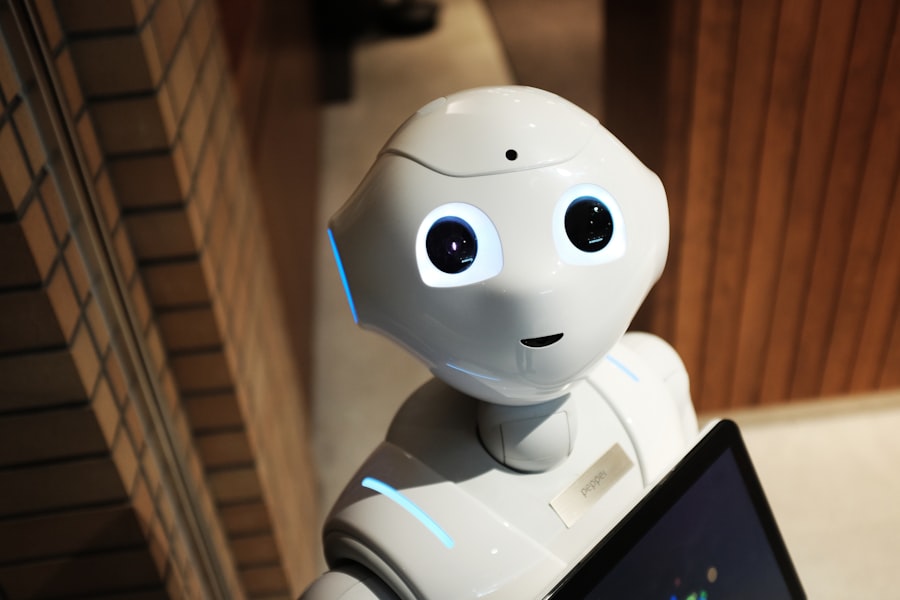
You are stepping into new dimensions of interaction and design, where digital environments are no longer confined to flat screens. Virtual Reality (VR) and Augmented Reality (AR) are transforming how you train, design, and experience the world, blurring the lines between the physical and the digital. This is like donning a new pair of eyes, allowing you to see and interact with information and environments in ways that were once the realm of science fiction.
Training and Simulation: Learning Through Experience
VR and AR offer powerful new tools for training and development. Immersive simulations can replicate complex or dangerous scenarios, allowing individuals to practice skills in a safe and controlled environment, accelerating learning and improving retention.
Realistic Training Environments for High-Risk Industries
In fields like aviation, medicine, or manufacturing, VR can create highly realistic training simulations that would be cost-prohibitive or impossible to replicate in the real world. Pilots can practice emergency landings, surgeons can rehearse complex procedures, and factory workers can be trained on new machinery without any risk of damage or injury. This is like having a virtual proving ground, where mastery can be achieved before facing real-world consequences.
Enhanced On-the-Job Assistance with AR
AR overlays digital information onto the real world, providing on-the-spot guidance and support. Technicians can receive step-by-step instructions for repairs, engineers can see real-time data about machinery overlaid onto their view, and field service personnel can access product manuals and schematics without needing to consult physical documents. This is like having a wise mentor constantly at your side, offering contextual information precisely when and where you need it.
Design and Prototyping: Visualizing the Future
VR and AR are revolutionizing the design and prototyping process. Designers can create and interact with 3D models in an immersive environment, allowing for more intuitive exploration of form, function, and aesthetics.
Collaborative Design in Virtual Spaces
Teams of designers and engineers can collaborate in shared virtual environments, manipulating and evaluating designs in real-time, regardless of their physical locations. This accelerates the iterative design process and fosters a more cohesive design outcome.
Immersive Product Visualization and Customer Engagement
AR can be used to provide customers with immersive product visualizations, allowing them to see how a product would look in their own space or how it functions before making a purchase. This enhances customer engagement and can lead to more confident purchasing decisions.
In today’s rapidly evolving digital landscape, staying informed about the latest advancements in technology is crucial. A fascinating article that delves into the impact of artificial intelligence on various industries can be found at Freaky Science. This piece explores how AI is reshaping everything from healthcare to finance, highlighting both the benefits and challenges that come with these innovations. As we continue to integrate technology into our daily lives, understanding these changes becomes increasingly important.
The Future’s Architects: The Ongoing Evolution of Technology
| Technology | Year Introduced | Global Users (Millions) | Annual Growth Rate (%) | Primary Application |
|---|---|---|---|---|
| Smartphones | 2007 | 3500 | 5 | Communication & Internet Access |
| Artificial Intelligence | 1956 | 1500 | 20 | Automation & Data Analysis |
| Cloud Computing | 2006 | 2000 | 15 | Data Storage & Services |
| Blockchain | 2008 | 500 | 25 | Secure Transactions & Records |
| Internet of Things (IoT) | 2010 | 1200 | 18 | Connected Devices & Automation |
You are not merely an observer of this technological revolution; you are an active participant, an architect of the future. The technologies discussed – AI, cloud computing, IoT, VR/AR – are not static entities. They are constantly evolving, converging, and spawning new innovations that will continue to redefine the industrial landscape.
The Convergence of Technologies: Synergistic Power
The true power of these cutting-edge technologies lies in their convergence. When AI is empowered by vast datasets stored in the cloud, accessed through IoT devices, and visualized through VR/AR interfaces, the potential for innovation becomes exponential. This is not a case of individual advancements, but of building a powerful, integrated ecosystem. The whole becomes far greater than the sum of its parts, creating a synergistic effect that drives unprecedented progress.
AI-Powered IoT for Smart Automation
Imagine IoT devices that not only collect data but also use AI to analyze it in real-time and make autonomous decisions, optimizing operations without human intervention. This is the future of smart automation, where systems are self-learning, self-optimizing, and incredibly efficient.
Cloud-Based AI Platforms for Accessible Innovation
Cloud platforms are democratizing access to advanced AI tools and computing power, enabling smaller businesses and startups to leverage these transformative technologies without massive upfront investments. This fosters a more competitive and innovative ecosystem.
The Human Element: Adaptation and Skill Development
As technology continues its relentless advance, the human element remains central. Your ability to adapt, to learn new skills, and to collaborate with these intelligent systems will be paramount. The revolution demands not just technological prowess, but also human ingenuity, critical thinking, and a willingness to embrace change. The future will be shaped by those who can effectively harness these powerful tools, not by those who resist them.
Upskilling and Reskilling for the Future Workforce
The skills required in the modern industrial landscape are shifting. You will need to invest in continuous learning and development to remain relevant, focusing on areas like data science, AI ethics, and human-machine collaboration.
Ethical Considerations in Technological Advancement
As you push the boundaries of what’s possible, it is crucial to consider the ethical implications of these technologies. Responsible innovation, addressing issues of data privacy, bias in AI, and the societal impact of automation, will be essential for ensuring a sustainable and equitable future.
You are not simply experiencing the next wave of industrial progress; you are at the vanguard of a fundamental transformation. The seeds of change have been sown, and with the fertile ground of cutting-edge technology, they are yielding a harvest of unprecedented potential. Your role is to cultivate this growth, to guide it responsibly, and to reap the rewards of this revolution, shaping a future that is more efficient, innovative, and transformative than you can currently imagine.
FAQs
What is technology?
Technology refers to the application of scientific knowledge for practical purposes, especially in industry. It includes tools, machines, techniques, and systems used to solve problems and improve human life.
How has technology evolved over time?
Technology has evolved from simple tools like the wheel and fire to complex systems such as computers, the internet, and artificial intelligence. This evolution is driven by scientific discoveries, innovation, and the need to improve efficiency and quality of life.
What are the main types of technology?
The main types of technology include information technology, biotechnology, medical technology, industrial technology, and communication technology. Each type serves different purposes and industries.
How does technology impact society?
Technology impacts society by improving communication, healthcare, education, and transportation. It also influences economic growth, social interactions, and can raise ethical and privacy concerns.
What are some current trends in technology?
Current trends in technology include artificial intelligence, machine learning, blockchain, Internet of Things (IoT), 5G connectivity, and renewable energy technologies. These trends are shaping the future of various industries and daily life.