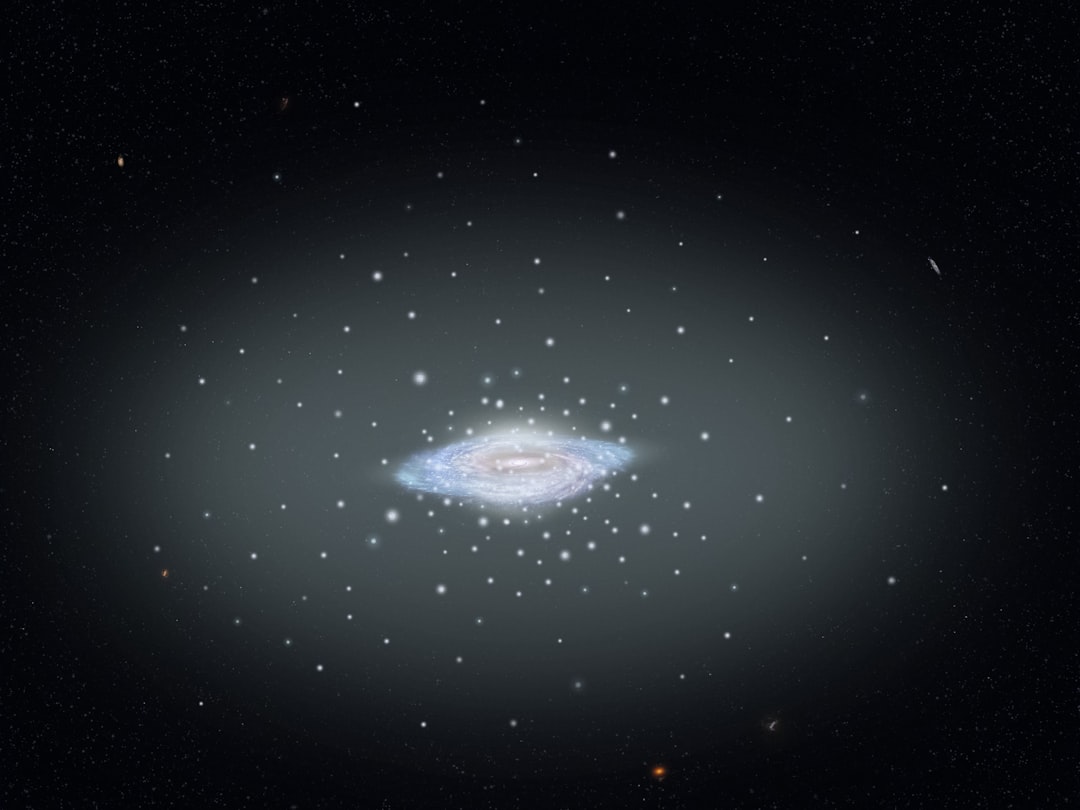
The Earth’s atmosphere, a seemingly delicate veil of gases, plays a critical role in protecting life from the constant barrage of cosmic rays. These high-energy particles, originating from beyond our solar system, can be destructive, but they are largely intercepted and degraded by our planet’s atmospheric shield. The study of cosmic ray showers, the cascade of secondary particles produced when a primary cosmic ray interacts with atmospheric atoms, offers a unique lens through which to understand this shielding effect and the nature of the cosmos itself.
Primary cosmic rays are not what we typically envision when thinking about outer space. They are not rays of light or electromagnetic radiation, but rather atomic nuclei stripped of their electrons, accelerated to incredible speeds and energies by astrophysical phenomena. Imagine them as celestial projectiles, carrying immense kinetic energy.
Composition of Primary Cosmic Rays
The bulk of primary cosmic rays consist of protons (hydrogen nuclei), with a significant fraction being alpha particles (helium nuclei). Heavier atomic nuclei – carbon, oxygen, iron, and even rarer elements – are also present, though in smaller quantities. These particles likely originate from energetic events such as supernovae, active galactic nuclei, and pulsars, where extreme forces can accelerate charged particles to near the speed of light. Their journey through the vacuum of space can span millions, even billions, of years before reaching Earth.
Energy Spectrum of Cosmic Rays
The energy of cosmic rays spans an astonishing range. While some possess energies comparable to those achievable in the most powerful terrestrial particle accelerators, others reach levels so extreme they defy conventional astrophysical explanations. This vast energy spectrum provides clues about the diverse sources and acceleration mechanisms at play in the universe. Studying this spectrum allows scientists to probe the environments of these distant cosmic accelerators.
Arrival Direction and Isotropy
Ideally, if cosmic rays were uniformly distributed throughout the galaxy, they would arrive at Earth from all directions with equal intensity. However, observations reveal subtle anisotropies in their arrival directions, particularly for very high-energy cosmic rays. These deviations suggest that magnetic fields within our galaxy, and potentially even intergalactic magnetic fields, can deflect these charged particles, subtly altering their trajectories. This bending of their paths is akin to a gentle nudge, making it challenging to pinpoint the exact origin of the most energetic cosmic rays.
Recent studies on cosmic ray showers have highlighted the importance of atmospheric shielding in protecting life on Earth from high-energy particles. The interaction of these cosmic rays with the atmosphere generates secondary particles that can have significant effects on both technology and biological systems. For a deeper understanding of this phenomenon and its implications, you can read a related article that explores the intricate dynamics of cosmic rays and their interaction with our atmosphere at Freaky Science.
The Atmospheric Gauntlet: How the Atmosphere Intervenes
Upon entering Earth’s atmosphere, primary cosmic rays encounter a dense medium composed of nitrogen, oxygen, and trace gases. This encounter triggers a dramatic transformation, initiating the formation of cosmic ray showers. The atmosphere, in essence, acts as a sophisticated detector, breaking down these colossal projectiles into a cascade of smaller, less energetic particles.
The Initial Interaction: Nuclear Collisions
The moment a primary cosmic ray, with its immense energy, collides with an atom in the upper atmosphere, a catastrophic event unfolds. This is not a gentle bump, but a high-energy nuclear collision. The projectile particle can shatter the target atom, or both particles can fragment. This initial interaction is like a single boulder striking a complex crystalline structure, shattering it and releasing a multitude of smaller fragments. The nucleus of the primary cosmic ray, and the nucleus of the atmospheric atom it strikes, break apart into their constituent protons and neutrons, and also produce a torrent of new particles.
Production of Secondary Particles
The fragments from these initial collisions are not stable. Protons and neutrons themselves can participate in further interactions. Crucially, these interactions produce a slew of new, often unstable, particles. Among the most significant are pions and kaons, which are types of mesons. These particles are short-lived and quickly decay into other particles, including muons, neutrinos, and gamma rays. This cascading process is what defines a cosmic ray shower.
The Shower Front: A Wave of Particles
As these secondary particles are produced, they propagate downwards through the atmosphere, often at speeds close to the speed of light. They continue to interact with atmospheric molecules, generating further generations of particles. The result is a complex, expanding cascade, often referred to as an air shower. The front of this shower, a wave of particles sweeping through the atmosphere, can be tens or hundreds of kilometers in extent. Imagine dropping a pebble into a pond; the ripples spread outwards, but in the case of a cosmic ray shower, these ripples are made of subatomic particles traveling near light speed.
Detecting the Aftermath: Ground-Based and Space-Based Observations
The secondary particles produced in atmospheric showers are the primary targets for observation. Because the atmosphere itself obstructs the direct observation of most primary cosmic rays, scientists have developed ingenious methods to detect the “footprints” left behind.
Ground-Based Detectors: Unveiling the Shower Pedestal
Large arrays of detectors are deployed on the Earth’s surface to capture the particles that reach ground level. These include scintillators, which emit light when charged particles pass through them, and Cherenkov detectors, which detect the faint blue light produced when charged particles travel faster than the speed of light in a medium. Muons, being relatively heavy and penetrating, are a significant component of showers detected at ground level. These detectors act like a vast net spread across the landscape, patiently waiting to catch the remnants of these celestial events.
Air Cherenkov Telescopes: Glimpsing Gamma Rays and High-Energy Particles
Specialized telescopes, known as Imaging Atmospheric Cherenkov Telescopes (IACTs), are designed to detect the faint Cherenkov radiation emitted by charged particles within the shower itself, particularly gamma rays and high-energy electrons and positrons. These telescopes are typically located in high-altitude, clear-sky regions to maximize their efficiency. By observing the pattern of light produced by a shower against the night sky, these instruments can reconstruct the properties of the primary cosmic ray. These are like sophisticated eyes, peering into the atmosphere to capture the fleeting light show of a cosmic ray shower.
Space-Based Observatories: Studying the Unshielded Universe
While the atmosphere shields us from much of the cosmic ray flux, space-based observatories offer a unique advantage: they can observe cosmic rays in their pristine, unadulterated state before they interact with our atmosphere. Telescopes like the Fermi Gamma-ray Space Telescope and the Alpha Magnetic Spectrometer (AMS-02) on the International Space Station are crucial for studying the composition and energy spectrum of primary cosmic rays, as well as searching for exotic particles like antimatter. These observatories operate above the atmospheric shield, providing a direct view of the raw cosmic material.
The Atmosphere as a Shield: Quantifying Protection

The Earth’s atmosphere is not a perfect barrier, but it is an incredibly effective one. The density and depth of the atmosphere determine how much of the cosmic ray flux is attenuated. Understanding this attenuation is vital for both astrophysics and for assessing potential radiation hazards.
Atmospheric Depth and Attenuation Length
The concept of “atmospheric depth” is crucial. It’s a measure of how much mass of atmosphere lies above a given point. The deeper one goes into the atmosphere, the greater the mass and the more interactions occur. The “attenuation length” describes how far a particle can travel in the atmosphere before undergoing a significant interaction. Different types of particles have different attenuation lengths. For example, muons, despite their high energy, can penetrate much deeper into the atmosphere than most other secondary particles.
Radiation Exposure at Different Altitudes
The shielding effect of the atmosphere directly translates to varying radiation exposure levels at different altitudes. Astronauts in orbit, for instance, are exposed to much higher levels of cosmic radiation than people on the Earth’s surface. High-altitude flights also involve slightly increased radiation doses. This gradient of exposure underscores the protective power of the atmospheric column. Imagine the atmosphere as a multi-layered blanket; the thicker the blanket, the more it insulates you from the cold outside.
Biological Implications: From Protection to Hazard
While the atmosphere primarily protects life from cosmic rays, understanding the interaction is also crucial for assessing radiation hazards in space and at high altitudes. The very particles that are energetic enough to cause harm if they reach the surface are what scientists study to understand cosmic phenomena. The balance between shielding and potential hazard is a delicate one.
Cosmic ray showers are fascinating phenomena that occur when high-energy particles from space collide with atoms in the Earth’s atmosphere, creating a cascade of secondary particles. The role of atmospheric shielding in protecting life on our planet from these energetic particles is crucial, as it helps to mitigate their potential harmful effects. For a deeper understanding of this topic, you can explore a related article that discusses the intricacies of cosmic rays and their interactions with the atmosphere. To read more about it, visit this article.
Unveiling Cosmic Secrets: The Scientific Significance of Cosmic Ray Showers
| Parameter | Description | Typical Value | Unit |
|---|---|---|---|
| Primary Cosmic Ray Energy | Energy of incoming cosmic ray particles | 10^9 to 10^20 | eV (electronvolts) |
| Atmospheric Depth | Thickness of atmosphere traversed by cosmic rays | 1030 | g/cm² |
| Shower Maximum Altitude | Altitude where particle shower reaches maximum intensity | 15 | km above sea level |
| Muon Flux at Sea Level | Number of muons reaching sea level per unit area | 1 | muon/cm²/min |
| Neutron Flux at Sea Level | Number of neutrons reaching sea level per unit area | 0.01 | neutron/cm²/s |
| Atmospheric Shielding Effectiveness | Reduction factor of cosmic ray intensity due to atmosphere | 10^3 to 10^6 | dimensionless |
| Secondary Particle Types | Common particles produced in showers | Muons, Neutrons, Electrons, Photons | — |
The study of cosmic ray showers is far more than just an academic exercise. It is a vital tool for unraveling fundamental questions about the universe, from the nature of extreme astrophysical environments to the search for new physics.
Probing Extreme Astrophysical Environments
The origin and acceleration of cosmic rays are intimately linked to the most violent and energetic processes in the cosmos. By studying the composition and energy spectrum of cosmic rays, and by observing the cascades they produce, scientists can infer the conditions within supernovae, the jets of black holes, and other enigmatic cosmic phenomena. These showers are like forensic evidence, revealing the nature of the celestial crime scenes from which they originated.
Searching for New Physics Beyond the Standard Model
The highest-energy cosmic rays, and the unusual particles sometimes observed in showers, can hint at physics that goes beyond our current understanding, the Standard Model of particle physics. Anomalies in the energy spectrum or the detection of unexpected particle types can be signatures of new particles, forces, or even extra dimensions. This is where the unexpected fragments from the cosmic collision might reveal entirely new blueprints of existence.
Radio and Optical Detection of Cosmic Ray Showers
Recent advancements have led to the development of novel detection methods. Radio telescopes are being used to detect the faint radio signals emitted by charged particles in air showers. Optical telescopes, beyond Cherenkov telescopes, are also being explored for their potential to detect the fluorescence produced by excited atmospheric molecules in the path of a shower. These innovative approaches expand our toolkit for observing these ephemeral events.
The Future of Cosmic Ray Research
The ongoing quest to understand cosmic rays and their showers continues to push the boundaries of technology and theoretical physics. Projects like the Pierre Auger Observatory and the planned Cherenkov Telescope Array (CTA) aim to significantly increase our sensitivity and resolution in detecting cosmic ray showers, promising to unlock even deeper insights into the high-energy universe. The ongoing dialogue between observation and theory fuels this persistent exploration.
FAQs
What are cosmic ray showers?
Cosmic ray showers are cascades of secondary particles produced when high-energy cosmic rays from outer space collide with atoms in the Earth’s atmosphere. These collisions generate a large number of particles that spread out and reach the Earth’s surface.
How does the Earth’s atmosphere shield us from cosmic rays?
The Earth’s atmosphere acts as a protective shield by absorbing and scattering cosmic rays. When cosmic rays enter the atmosphere, they interact with atmospheric molecules, which reduces their energy and prevents most of the harmful radiation from reaching the surface.
What types of particles are involved in cosmic ray showers?
Cosmic ray showers primarily consist of protons, neutrons, electrons, muons, pions, and gamma rays. These particles are produced through a series of nuclear reactions initiated by the primary cosmic rays hitting atmospheric atoms.
Why is atmospheric shielding important for life on Earth?
Atmospheric shielding is crucial because it significantly reduces the intensity of cosmic radiation that reaches the Earth’s surface. Without this protection, the increased radiation levels could damage living organisms’ DNA and increase the risk of cancer and other health issues.
Can cosmic ray showers affect technology on Earth?
Yes, cosmic ray showers can impact technology, especially electronic devices and satellites. High-energy particles from cosmic rays can cause malfunctions or damage in microelectronics, leading to errors or failures in communication systems, navigation, and other critical technologies.