Earth’s Magnetic Field is a vital protective layer that shields our planet from harmful solar radiation. This invisible barrier is generated by the molten iron core at Earth’s center, which creates a dynamo effect. However, scientists have observed that this shield is not as constant as once believed. The magnetic field has been weakening and shifting for decades, leading to concerns about potential consequences if it were to fail.
To truly grasp the implications of a weakened or failed magnetic shield, one must first understand its fundamental role. Think of Earth’s magnetic field as a colossal, invisible bubble, extending far out into space. This bubble, known as the magnetosphere, is our planet’s primary defense against a constant barrage of energetic particles streaming from the Sun – the solar wind. Without this shield, Earth would be a drastically different, and far more hostile, place to live.
The Dynamo Effect: Earth’s Inner Powerhouse
The genesis of this protective shield lies deep within our planet. At Earth’s core, a convection of molten iron and nickel generates electrical currents. This churning, dynamic motion acts like a colossal dynamo, converting thermal energy into a powerful magnetic field. It’s a process that has been ongoing for billions of years, shaping our planet and enabling life to flourish.
The Magnetosphere: A Deflector Shield
The magnetic field lines emanate from Earth’s poles, loop around the planet, and converge again at the opposite pole, forming the magnetosphere. When charged particles from the solar wind encounter these field lines, they are deflected, channeled, and slowed down. Most of these particles are swept away, preventing them from directly impacting our atmosphere and surface.
Auroras: Visible Manifestations of the Shield at Work
The spectacular auroras, both the aurora borealis in the north and the aurora australis in the south, are direct visual evidence of the magnetosphere’s interaction with the solar wind. When particles are channeled towards the poles, they collide with atmospheric gases, exciting them and causing them to emit light. These celestial light shows are a beautiful reminder of the constant, unseen battle being waged for our protection.
Geomagnetic Reversals: A Natural Phenomenon
It is crucial to note that Earth’s magnetic field is not static. Over geological timescales, it undergoes periodic reversals, where the north and south magnetic poles swap places. These reversals can take thousands of years to complete, and during the transition period, the magnetic field can weaken significantly. The last full reversal occurred approximately 780,000 years ago. While these events have occurred throughout Earth’s history, the current weakening trend is a subject of ongoing scientific scrutiny.
The potential consequences of a failure in Earth’s magnetic shield are profound and far-reaching, impacting everything from satellite communications to human health. For a deeper understanding of these implications, you can read a related article that explores the various risks associated with such an event. This article discusses how a weakened magnetic field could lead to increased radiation exposure and disruptions in technology. To learn more, visit Freaky Science.
The Shifting Sands: Evidence of a Weakening Shield
Scientists have been meticulously monitoring Earth’s magnetic field, and the data reveals a concerning trend. The field has been gradually weakening, and its structure is exhibiting an increasingly irregular form. This isn’t a sudden collapse, but rather a slow erosion, like a sandcastle being gradually washed away by the tide.
The South Atlantic Anomaly: A Growing Vulnerability
One of the most significant pieces of evidence for a weakening field is the existence and expansion of the South Atlantic Anomaly (SAA). This region, stretching over parts of South America and the South Atlantic Ocean, is characterized by a significantly weaker magnetic field intensity. Satellites passing through this region experience increased radiation exposure, leading to a higher risk of technical malfunctions. Imagine this as a large chink in our armor, a place where the shield is notably thinner.
Pole Wander: The Magnetic North’s Unsettled Journey
Further compounding concerns is the observed “wander” of the magnetic poles. The magnetic north pole, in particular, has been moving at an accelerating rate, especially in recent decades, charting a course from northern Canada towards Siberia. This movement indicates that the underlying dynamo processes within Earth’s core are not as stable as previously assumed. It’s like the compass needle, once predictably pointing north, is now becoming erratic, its destination shifting unpredictably.
Paleomagnetic Records: Echoes from the Past
Scientists reconstruct past magnetic field behavior by studying the magnetic imprint left in rocks as they form. These paleomagnetic records reveal periods of significant field weakening and even polarity reversals throughout Earth’s history. While these reversals are natural, the current rate of weakening and the behavior of the SAA are prompting questions about the trajectory of our planet’s magnetic shield.
Unprecedented Rate of Weakening?
While magnetic field fluctuations are normal, some researchers are highlighting that the current rate of weakening might be faster than what is observed in some paleomagnetic records for periods of weakening leading up to reversals. This accelerated decline, if it continues, could have more immediate and pronounced effects.
The Unveiled World: Consequences of a Failed Shield
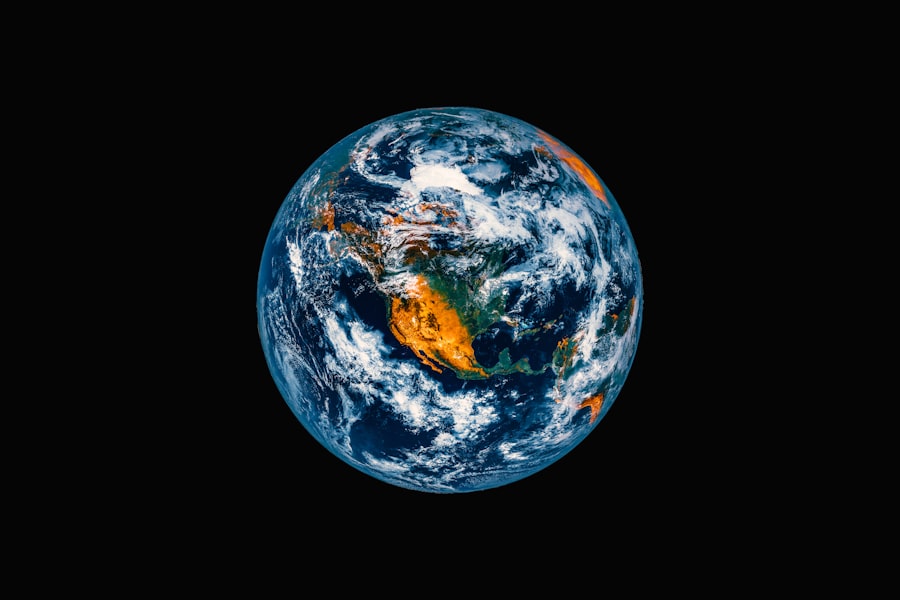
A significant weakening or complete failure of Earth’s magnetic shield would unleash a cascade of potentially devastating consequences, impacting life, technology, and the very environment we inhabit. The protective veil, once lifted, would expose us to the raw power of the cosmos.
Increased Radiation Exposure: A Silent Threat
The most immediate and direct consequence would be a dramatic increase in the amount of harmful radiation reaching Earth’s surface. The solar wind and cosmic rays, which are currently largely deflected, would penetrate our atmosphere with far greater intensity.
Impact on Biological Life: A Genetic Barrage
- Increased Cancer Rates: High-energy particles are known mutagens. Without the magnetic shield to absorb and deflect them, there would be a significant rise in DNA damage in living organisms, leading to increased rates of cancer in humans and other animals.
- Disruption of Ecosystems: Many species, from plankton to birds and even plants, have a biological sensitivity to radiation. A sudden increase could trigger widespread mutations, reproductive failures, and population declines, potentially leading to the collapse of entire ecosystems.
- Human Health Crisis: Beyond cancer, increased radiation exposure can lead to radiation sickness, cataracts, and other acute health problems. Long-term exposure could have far-reaching genetic consequences for future generations.
Impact on Technology: A Digital Vulnerability
- Satellite Damage and Malfunction: Satellites, essential for communication, navigation (GPS), weather forecasting, and scientific research, are particularly vulnerable. Increased radiation can corrupt data, fry electronic components, and shorten their operational lifespan. Imagine our modern infrastructure, like a city built without proper insulation, suddenly exposed to a hailstorm of destructive energy.
- Power Grid Instability: Geomagnetic storms, amplified by a weakened shield, can induce powerful electrical currents in long conductors like power lines. This can overload transformers, leading to widespread blackouts and potentially destroying critical infrastructure.
- Communication Blackouts: Radio communication, including air traffic control and long-distance calls, relies on the ionosphere. Increased particle bombardment would disrupt the ionosphere, leading to severe communication disruptions or complete blackouts.
Atmospheric Stripping: A Slow Erosion of Air
Over very long timescales, a weakened magnetic field can lead to atmospheric stripping. Without the magnetic field to hold our atmosphere in place, the solar wind can gradually erode it, carrying away lighter gas molecules like hydrogen and helium. While this is a slow process, over millions of years, it could significantly alter the composition and thickness of our atmosphere, making it less hospitable for life. Mars, with its weak magnetic field, is a stark example of this phenomenon.
Navigational Chaos: Losing Our Way
Many animals, including birds and sea turtles, use Earth’s magnetic field for navigation. A significantly weakened or chaotic field would disrupt these internal compasses, making it difficult for migratory species to find their way, potentially leading to population decline. For humans, reliance on compasses and magnetic navigation systems would become unreliable.
Technological Dependencies: A Double-Edged Sword
Our increasing reliance on technology makes us more vulnerable than ever to the consequences of a failing magnetic shield. The very systems that have enabled our civilization are also the most susceptible to the cosmic onslaught.
The Global Network: Interconnected Vulnerabilities
Modern society is built upon a vast and interconnected network of electronic systems. From the smartphones in our pockets to the global financial markets, everything relies on stable power and communication. A widespread disruption caused by a magnetic shield failure would ripple through this network, creating a domino effect of failures.
The Satellites We Depend On: Pillars of Modern Life
Consider the sheer number of satellites orbiting Earth. They are the eyes and ears of our planet, providing crucial data for weather forecasting, climate monitoring, agricultural planning, disaster response, and national security. These invaluable assets would be placed at extreme risk, potentially disabling vital services overnight.
The Allure and Peril of the Digital Age
The digital age has brought unparalleled convenience and progress. However, it has also created a dependence on systems that are inherently vulnerable to external forces. A magnetic shield failure would serve as a stark reminder of our planet’s susceptibility to natural phenomena, despite our technological advancements.
The potential consequences of a failure in Earth’s magnetic shield are alarming, as it could expose our planet to increased solar radiation and disrupt communication systems. This topic is explored in greater detail in a related article that discusses the implications of such an event on both technology and human health. For those interested in understanding the broader impacts, you can read more about it in this insightful piece on the subject. To learn more, visit this article.
What the Future Holds: Research and Preparedness
| Consequence | Description | Potential Impact | Estimated Duration |
|---|---|---|---|
| Increased Solar Radiation | Without the magnetic shield, Earth is exposed to higher levels of solar and cosmic radiation. | Higher cancer rates, damage to DNA, increased radiation sickness. | Years to decades depending on solar activity |
| Disruption of Satellite Operations | Satellites lose protection from charged particles, leading to malfunctions or failures. | Loss of GPS, communication, weather forecasting capabilities. | Immediate to long-term until repairs or replacements |
| Power Grid Failures | Geomagnetic storms induce currents in power lines causing blackouts. | Widespread electrical outages, damage to transformers and infrastructure. | Hours to weeks depending on severity |
| Atmospheric Erosion | Solar wind strips away the upper atmosphere over time. | Long-term loss of atmosphere, affecting climate and habitability. | Thousands to millions of years |
| Impact on Animal Navigation | Many species rely on Earth’s magnetic field for migration and navigation. | Disrupted migration patterns, ecological imbalance. | Immediate to ongoing |
While the complete collapse of Earth’s magnetic shield is not an immediate event, the ongoing weakening and the mysteries surrounding its future trajectory necessitate continued scientific research and proactive preparedness. Ignoring these warning signs would be akin to ignoring the rumbling of an approaching storm.
Monitoring and Modeling: Understanding the Dynamics
Scientists are employing a sophisticated array of instruments and techniques to continuously monitor the Earth’s magnetic field. Satellites like the European Space Agency’s Swarm mission provide invaluable data on the field’s strength and structure. Advanced computer models are being developed to better understand the complex processes within Earth’s core and to forecast potential future changes.
Predicting Geomagnetic Storms: Early Warning Systems
Efforts are underway to improve our ability to predict geomagnetic storms, which are often triggered by solar flares and coronal mass ejections. By understanding the Sun’s activity and its interaction with Earth’s magnetosphere, we can develop better early warning systems, allowing us to take protective measures for critical infrastructure.
Hardening Infrastructure: Building Resilience
Recognizing the vulnerabilities, engineers and policymakers are exploring ways to make critical infrastructure more resilient to geomagnetic disturbances. This includes strengthening power grids against induced currents, developing more radiation-hardened electronics for satellites, and creating redundant communication systems.
Public Awareness and Education: Preparing Society
An informed public is a prepared public. Raising awareness about the importance of Earth’s magnetic shield, the potential consequences of its weakening, and the steps being taken to address these challenges is crucial. Understanding the scientific basis for these concerns can foster a sense of shared responsibility and encourage support for research and preparedness initiatives.
In conclusion, Earth’s magnetic shield, while often taken for granted, is an indispensable guardian of life on our planet. The observed weakening and structural anomalies of this vital shield are not reasons for immediate panic, but they are undoubtedly calls for continued scientific vigilance, technological innovation, and a collective commitment to understanding and mitigating the potential consequences of a future where this protective veil might falter. The health of our planet’s magnetic shield is inextricably linked to the health of all life that calls it home.
FAQs
What is the Earth’s magnetic shield?
The Earth’s magnetic shield, also known as the magnetosphere, is a protective magnetic field generated by the movement of molten iron in the Earth’s outer core. It deflects harmful solar wind and cosmic radiation, protecting the planet’s atmosphere and living organisms.
What could cause the Earth’s magnetic shield to fail?
A failure of the Earth’s magnetic shield could occur due to a significant weakening or collapse of the geomagnetic field, possibly caused by changes in the Earth’s core dynamics, geomagnetic reversals, or extreme solar events.
What are the potential consequences of the Earth’s magnetic shield failing?
If the magnetic shield fails, increased solar and cosmic radiation could reach the Earth’s surface, leading to higher risks of radiation exposure for living organisms, disruption of satellite and communication systems, damage to electrical grids, and increased atmospheric erosion.
How would a magnetic shield failure affect human technology?
A failure could cause severe disruptions to GPS, satellite communications, power grids, and aviation systems due to increased exposure to solar storms and charged particles, potentially leading to widespread technological failures and economic impacts.
Is the Earth’s magnetic shield failure imminent?
Currently, there is no evidence to suggest an imminent failure of the Earth’s magnetic shield. While the magnetic field does fluctuate and occasionally reverses polarity over geological timescales, these processes occur over thousands to millions of years, allowing time for adaptation.