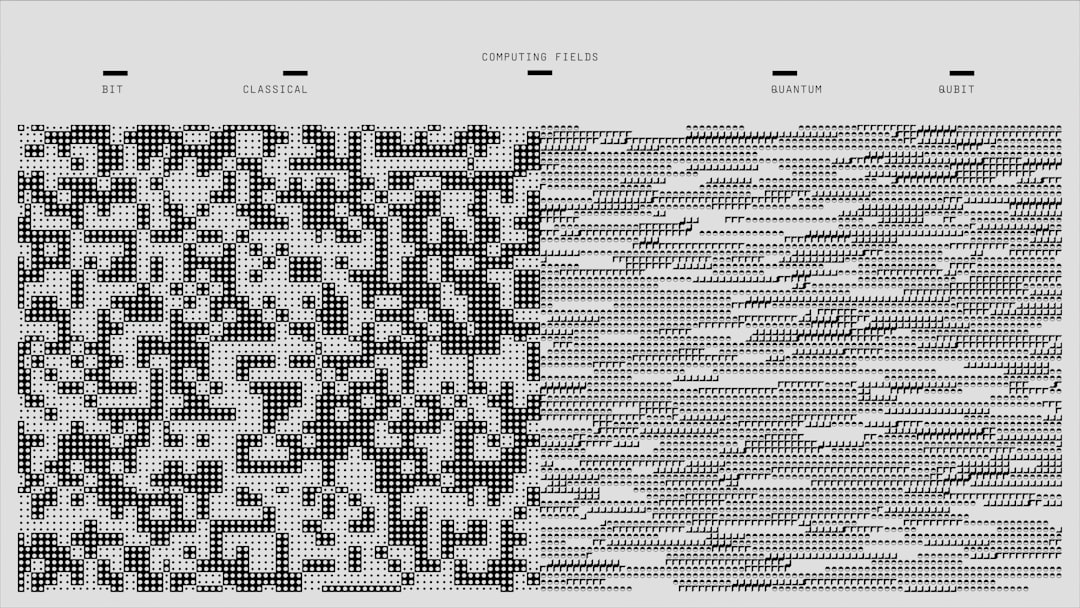
Quantum computing represents a paradigm shift in computational capability, moving beyond the binary logic of classical computers to harness the perplexing principles of quantum mechanics. At its core, this technology promises to unlock solutions to problems currently intractable for even the most powerful supercomputers, posing profound questions about the nature of reality itself.
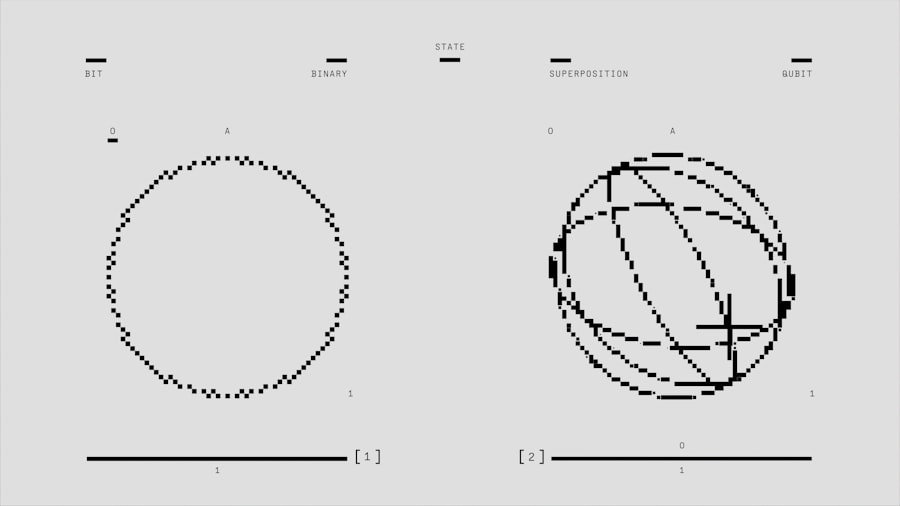
Classical computers operate on bits, which can exist in one of two states: 0 or 1. This binary system forms the bedrock of all current digital information processing. Quantum computers, however, employ qubits, which exhibit a far richer spectrum of possibilities.
Superposition: Beyond Binary
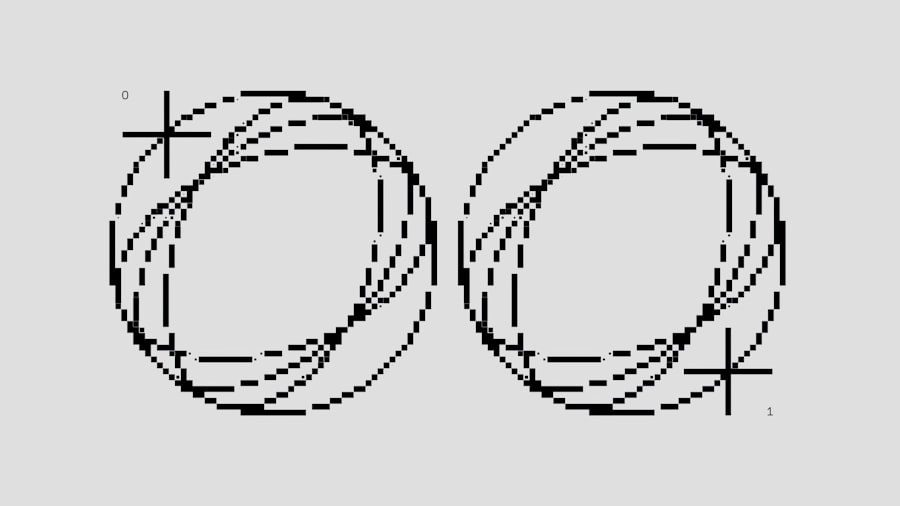
A qubit, unlike a classical bit, can exist in a superposition of both 0 and 1 simultaneously. Imagine a coin spinning in the air before it lands. It is neither heads nor tails definitively; it is in a state of being both until observed. This superposition allows a quantum computer to represent and process vastly more information than a classical one with the same number of bits. For instance, n classical bits can represent only one of 2^n possible states at any given time. In contrast, n qubits in superposition can represent all 2^n states simultaneously, creating an exponential increase in computational potential. This is akin to a library where, instead of reading one book at a time, you can somehow access and process all the books on a shelf simultaneously.
Entanglement: The Spooky Connection
Another cornerstone of quantum computing is entanglement. When qubits become entangled, they form a collective state where their fates are intrinsically linked, regardless of the physical distance separating them. Measuring the state of one entangled qubit instantaneously influences the state of the other, a phenomenon Albert Einstein famously described as “spooky action at a distance.” This correlation, while counterintuitive from a classical perspective, is a powerful resource for quantum computation, enabling complex correlations and operations that are impossible with independent classical bits. It’s like having two perfectly synchronized dancers, where a move by one instantly dictates the corresponding move of the other, even if they are on opposite sides of the stage.
Quantum Interference: Amplifying Correct Answers
Quantum computers also leverage quantum interference, a phenomenon where quantum states can constructively or destructively interfere with each other. This principle is used to amplify the probability of arriving at the correct answer while suppressing the probability of incorrect answers. During a quantum computation, different computational paths can interfere, with those leading to the desired outcome reinforcing each other, much like waves in the ocean merging to form larger crests. Conversely, paths leading to erroneous results can cancel each other out, like opposing waves diminishing each other.
Recent discussions in the realm of quantum computing have led to intriguing theories suggesting that our perception of reality may be an illusion. An article on this topic can be found at Freaky Science, where experts explore how advancements in quantum technology could challenge our understanding of existence itself. This thought-provoking piece delves into the implications of quantum mechanics and its potential to reshape our views on reality, raising questions about the nature of consciousness and the universe.
Unlocking New Computational Frontiers
The unique properties of qubits translate into the ability to tackle computational problems that are currently insurmountable. These problems span various scientific and technological domains, holding the potential to revolutionize industries.
Factoring Large Numbers: Breaking Modern Encryption
One of the most widely cited applications of quantum computing is its potential to break modern cryptographic systems. The security of many of today’s encryption methods, such as RSA, relies on the computational difficulty of factoring large numbers into their prime components. Shor’s algorithm, a quantum algorithm, can perform this factorization exponentially faster than any known classical algorithm. If large-scale, fault-tolerant quantum computers become a reality, current encryption standards could become obsolete, necessitating a transition to quantum-resistant cryptography. This is akin to a master key that can unlock any door, rendering traditional locks useless.
Optimization Problems: Finding the Needle in a Haystack
Many real-world challenges involve finding the optimal solution from an enormous number of possibilities. These are known as optimization problems, and they appear in fields like logistics, finance, drug discovery, and artificial intelligence. Examples include finding the most efficient delivery routes for a fleet of vehicles, optimizing investment portfolios, or designing new materials with specific properties. Quantum algorithms, such as the Quantum Approximate Optimization Algorithm (QAOA), show promise in finding superior solutions to these complex optimization problems more efficiently than classical approaches. Imagine trying to find the single best path through a labyrinth with billions of possible routes; a quantum computer could explore many paths simultaneously to find the optimal one.
Scientific Simulation: Modeling Complex Systems
The ability to simulate quantum systems is another area where quantum computers are expected to excel. Many natural phenomena, from the behavior of molecules in chemical reactions to the interactions of subatomic particles, are governed by quantum mechanics. Classical computers struggle to accurately simulate these systems because the complexity grows exponentially with the number of particles. Quantum computers, by their very nature, are well-suited to model these quantum systems. This capability could lead to breakthroughs in drug discovery by simulating molecular interactions more precisely, in materials science by designing novel materials with tailored properties, and in fundamental physics research. It’s like trying to understand a symphony by reading sheet music versus being able to directly hear the orchestra play; quantum computers can directly “hear” the quantum symphony.
Machine Learning and Artificial Intelligence: Accelerating Discovery
Quantum computing holds the potential to significantly accelerate advancements in machine learning and artificial intelligence. Quantum algorithms could enhance various aspects of machine learning, including pattern recognition, data analysis, and model training. Quantum machine learning algorithms might be able to process and analyze larger and more complex datasets, leading to more sophisticated AI models. This could manifest in areas like image recognition, natural language processing, and autonomous systems. The potential exists for AI to learn and adapt at an unprecedented pace, unlocking new avenues of discovery. This is akin to providing AI with a vastly expanded sensory apparatus, allowing it to perceive and understand the world in new ways.
The Illusion of Reality: Philosophical Implications
The very success of quantum computing forces a re-examination of our understanding of reality. The counterintuitive nature of quantum phenomena, such as superposition and entanglement, challenges our everyday macroscopic experiences.
Determinism vs. Probability: Shifting the Ground
Classical physics largely operates under a deterministic worldview, where the state of a system at one point in time can predict its state at any future time with certainty, given the initial conditions. Quantum mechanics, however, introduces an inherent element of probability. The outcome of a quantum measurement cannot always be predicted with certainty, only its probability. This probabilistic nature has led to much philosophical debate about free will and the fundamental nature of causality. If the universe operates on probabilistic principles at its most fundamental level, what does that mean for our perception of agency?
The Role of the Observer: Measurement and Collapse
The act of measurement in quantum mechanics is not a passive observation. The act of measuring a quantum system can cause its superposition state to “collapse” into a definite state. This has led to various interpretations, most notably the Copenhagen interpretation, which posits that the observer plays a crucial role in shaping the reality of the measured system. This raises profound questions: does reality only exist in a definite form when it is observed? What was the state of the universe before conscious observation emerged? This is like trying to define the taste of water without ever having tasted it; the act of tasting defines the experience.
Quantum Computing and the Nature of Information
Quantum computers process information in a fundamentally different way. Superposition and entanglement suggest that information is not always discrete and localized but can be distributed and interconnected. This could lead to new ways of thinking about information itself, moving beyond simply bits and bytes to a more fluid and interconnected concept. It challenges the notion of information as purely objective and separate from the system processing it.
The Road Ahead: Challenges and Realities
Despite the immense promise, the development of practical and widespread quantum computing faces significant hurdles. The current state of quantum technology is still in its nascent stages.
Decoherence: The Fragility of Quantum States
Qubits are incredibly sensitive to their environment. Interactions with heat, vibrations, or electromagnetic fields can cause their delicate quantum states to decohere, losing their superposition and entanglement properties prematurely. Maintaining coherence for extended periods is a major engineering challenge, requiring extremely low temperatures and sophisticated shielding. Imagine trying to keep a perfectly balanced spinning top from falling over indefinitely in a bustling room; even the slightest disturbance can bring it down.
Error Correction: Taming the Quantum Noise
Quantum computations are prone to errors due to decoherence and imperfect control over qubits. Developing robust quantum error correction techniques is crucial for building reliable quantum computers. Unlike classical error correction, which can simply copy and compare bits (a process that would destroy quantum information), quantum error correction is far more complex. Scientists are developing sophisticated codes and protocols to detect and correct errors without disturbing the quantum state. It is like trying to repair a delicate tapestry while it is being woven, without snagging the threads.
Scalability: From Few Qubits to Millions
Current quantum computers have a limited number of qubits, typically in the tens or a few hundred. To unlock the full potential of quantum algorithms for solving real-world problems, machines with thousands or even millions of stable qubits will be required. Scaling up quantum systems while maintaining coherence and controllability is a monumental engineering feat. The journey from a handful of qubits to a truly powerful quantum computer is like building a city from a few bricks; each addition requires careful planning and execution.
Accessibility and Democratization: Who Gets the Keys?
As quantum computing advances, questions arise about accessibility and who will benefit from this powerful technology. The initial development and deployment are likely to be concentrated in the hands of a few research institutions and large corporations. Ensuring wider access and democratizing the technology will be important to foster broad innovation and prevent the exacerbation of existing inequalities. The keys to this new computational realm will need to be shared to spark widespread discovery.
Recent discussions in the realm of quantum computing have led to intriguing theories suggesting that our perception of reality might be an illusion. A fascinating article explores these concepts in depth, highlighting how advancements in quantum technology could challenge our understanding of existence itself. For those interested in delving deeper into this thought-provoking subject, you can read more about it in this related article. The implications of these theories could reshape not only science but also philosophy, prompting us to reconsider what we truly know about the universe.
The Future Horizon: A New Era of Discovery
| Metric | Value | Description |
|---|---|---|
| Quantum Entanglement Experiments | 99.9% | Success rate of entanglement demonstrating non-local correlations |
| Qubit Coherence Time | 120 microseconds | Duration qubits maintain quantum state, enabling complex computations |
| Quantum Supremacy Achievement | 2019 | Year when quantum computers performed tasks beyond classical capabilities |
| Simulation Accuracy of Quantum Reality Models | 85% | Degree to which quantum computers simulate theoretical models suggesting reality’s nature |
| Number of Qubits in Leading Quantum Computers | 127 | Current maximum qubit count in commercially available quantum processors |
| Probability of Reality Being a Simulation (Theoretical) | 50% | Estimated likelihood based on quantum computational interpretations and philosophical models |
The journey into quantum computing is not merely a quest for faster processors; it is a deep exploration into the fundamental fabric of reality and our place within it. While the practical realization of powerful, fault-tolerant quantum computers is still some way off, the progress being made is undeniable.
Quantum Interfacing with the Classical World
The integration of quantum computers with classical high-performance computing systems will likely be a key aspect of their deployment. This hybrid approach could leverage the quantum computer for specific, complex calculations while relying on classical computers for data preparation, control, and output processing. This partnership allows for the best of both computational worlds.
New Paradigms in Science and Technology
As quantum computers become more capable, they will undoubtedly lead to unforeseen scientific discoveries and technological innovations. The ability to simulate complex quantum systems, solve intractable optimization problems, and accelerate AI development will open doors to solutions we can currently only dream of. These advancements could redefine fields ranging from medicine and materials science to climate modeling and fundamental physics.
A Reimagining of “Computational Reality”
Ultimately, quantum computing compels us to reconsider what it means to compute and what it means to understand reality. The non-intuitive behaviors of the quantum world, when harnessed for computation, challenge our classical preconceptions. The “illusion of reality” is not that reality is not real, but that our classical perception of it is an incomplete and simplified model of a much richer and more complex quantum universe. As we build these machines, we are not just building tools; we are building windows into a deeper, more mysterious, and ultimately more powerful understanding of existence. The quest for quantum computation is, in essence, a quest to understand the universe at its most fundamental level, and in doing so, to redefine our own reality.
FAQs
What is the basic idea behind quantum computers proving reality is fake?
Quantum computers leverage principles of quantum mechanics, such as superposition and entanglement, to perform computations that classical computers cannot efficiently replicate. Some theoretical discussions suggest that if reality behaves like a quantum computation, it could imply that our perceived reality is a form of simulation or “fake.” However, this remains a philosophical interpretation rather than a proven scientific fact.
How do quantum computers differ from classical computers?
Quantum computers use quantum bits, or qubits, which can exist in multiple states simultaneously due to superposition. This allows quantum computers to process a vast number of possibilities at once, unlike classical bits that are either 0 or 1. This fundamental difference enables quantum computers to solve certain problems much faster than classical computers.
Is there scientific evidence that quantum computers have proven reality is fake?
No, there is currently no scientific evidence that quantum computers have proven reality is fake. While quantum computing challenges our understanding of physics and reality, the idea that reality is a simulation or “fake” is a philosophical hypothesis and not an established scientific conclusion.
What role does quantum mechanics play in discussions about the nature of reality?
Quantum mechanics reveals that particles can exist in multiple states simultaneously and that observation can affect outcomes, which challenges classical notions of reality. These phenomena have led some scientists and philosophers to speculate about the fundamental nature of reality, including ideas about simulation or multiple universes, but these remain speculative and not empirically proven.
Can quantum computers simulate reality?
Quantum computers have the potential to simulate quantum systems more efficiently than classical computers, which could help scientists better understand complex physical phenomena. However, simulating reality in its entirety is currently beyond our technological capabilities, and such simulations do not imply that reality itself is a simulation.