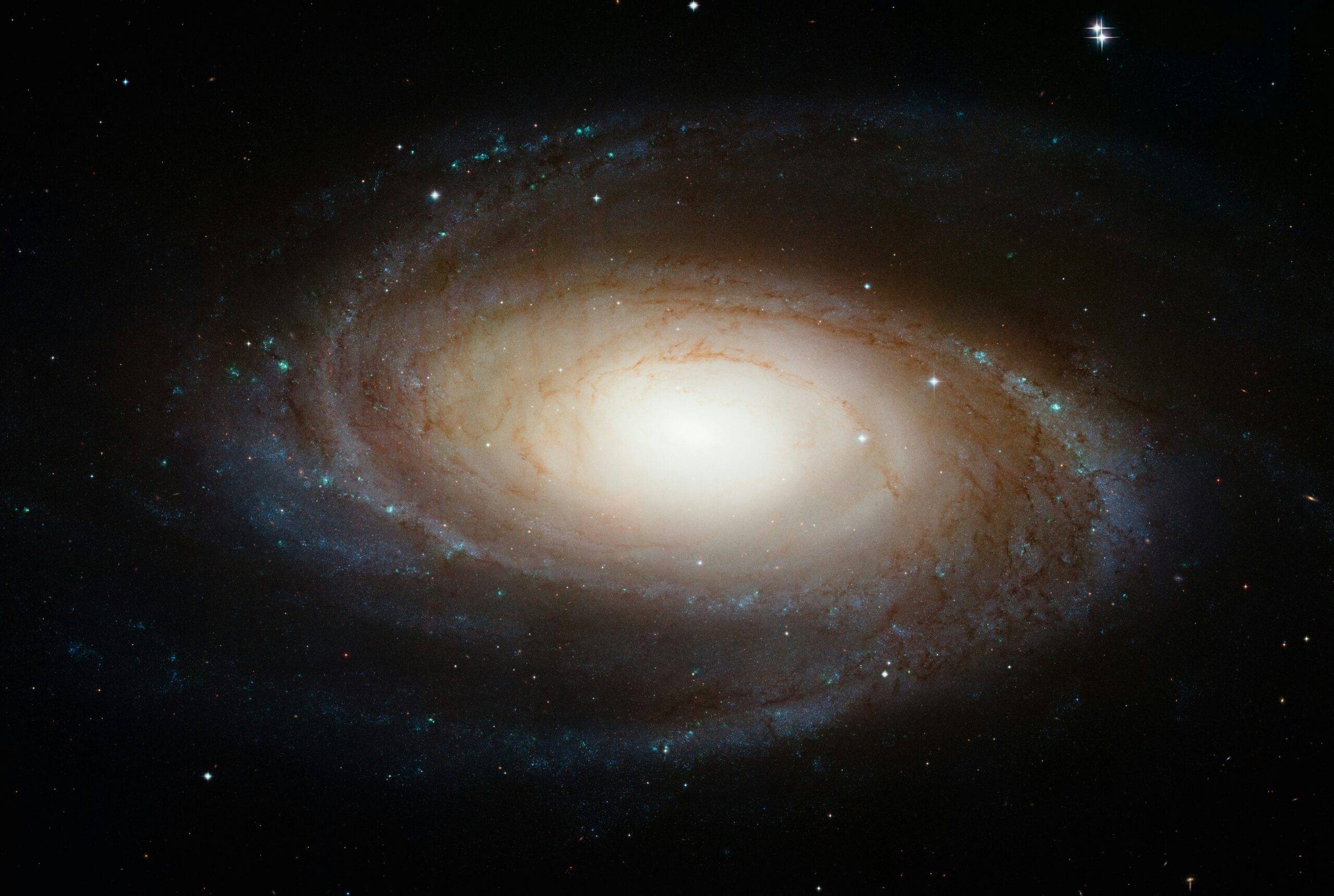
You stand at the edge of the observable universe, a speck on a speck, gazing into the cosmic abyss. You contemplate the vastness, the intricate dance of galaxies, the very fabric of spacetime. But as you peer deeper, a disquieting question arises, one that gnaws at the foundations of our understanding: why is the universe this way? This is the heart of the cosmological constant problem and the fine-tuning problem, a cosmic conundrum that challenges your very perception of reality.
Imagine the universe as a grand cosmic machine, ticking along with predictable laws. For a long time, you believed you understood its gears and springs. Then, Einstein introduced a mysterious component, an almost ghostly force that he initially added and later removed, only for it to reappear with a vengeance in modern cosmology. This is the cosmological constant, denoted by the Greek letter lambda ($Lambda$).
A Force of Repulsion: Einstein’s Initial Foray
In 1917, Albert Einstein, grappling with his nascent theory of general relativity, found that his equations suggested a dynamic universe – one either expanding or contracting. However, the prevailing scientific view at the time favored a static, unchanging universe. To force his equations to align with this dogma, Einstein introduced a new term, a repulsive force that counteracted gravity, creating an equilibrium. He called this the “cosmological constant.”
Hubble’s Revelation and the Retreat of Lambda
Just a few years later, in 1929, Edwin Hubble’s groundbreaking observations revealed that the universe was, in fact, expanding. Distant galaxies were observed to be moving away from us, and the farther they were, the faster they receded. This discovery rendered Einstein’s motivation for introducing the cosmological constant moot. Realizing his error, Einstein famously referred to the cosmological constant as his “biggest blunder.”
The Comeback Kid: Dark Energy and Accelerated Expansion
For decades, the cosmological constant remained a theoretical curiosity, largely ignored. However, in the late 1990s, observations of distant Type Ia supernovae by two independent research teams – the Supernova Cosmology Project and the High-Z Supernova Search Team – delivered a shocking verdict. The universe’s expansion wasn’t just happening; it was accelerating. This acceleration could not be explained by gravity alone. It required a mysterious force pushing things apart, a force that behaved remarkably like Einstein’s long-discarded cosmological constant. This new manifestation of $Lambda$ is what we now often refer to as “dark energy.”
The cosmological constant problem and the issue of fine-tuning in the universe have been subjects of intense debate among physicists and cosmologists. A related article that delves deeper into these topics can be found at this link: Freaky Science. This article explores the implications of the cosmological constant on our understanding of dark energy and the overall structure of the universe, providing insights into why the values we observe seem so finely tuned for the existence of life.
The Unsettling Imbalance: The Magnitude Discrepancy
Here lies the crux of the cosmological constant problem, a chasm between theoretical prediction and observational reality that is so vast it’s almost comical. When physicists attempt to calculate the vacuum energy – the inherent energy present in empty space according to quantum field theory – they arrive at a number that is staggeringly, astronomically larger than what is observed.
Quantum Fluctuations: The Sea of Virtual Particles
Quantum field theory tells us that even in what appears to be empty space, there is a seething cauldron of activity. Virtual particles are constantly popping into existence and annihilating each other. This activity contributes to the vacuum energy, a fundamental property of spacetime itself.
The Theoretician’s Wild Guess vs. The Astronomer’s Measured Value
When theoretical physicists calculate the expected value of this vacuum energy, the result they obtain is an enormous figure – around $10^{120}$ times larger than the observed value of the cosmological constant. This isn’t a minor disagreement; it’s like a carpenter expecting a single nail to hold up a skyscraper, only to find that a microscopic pin is barely keeping it from collapsing. The theoretical prediction is utterly, fantastically wrong.
The Observational Verdict: A Faint Whispers of Energy
On the other hand, astronomical observations, particularly those related to the cosmic microwave background radiation and the large-scale structure of the universe, have directly measured the contribution of dark energy to the universe’s energy budget. This observed value is incredibly small, a mere whisper compared to the theoretical roar.
The Fine-Tuning Conundrum: A Universe Sculpted for Life?
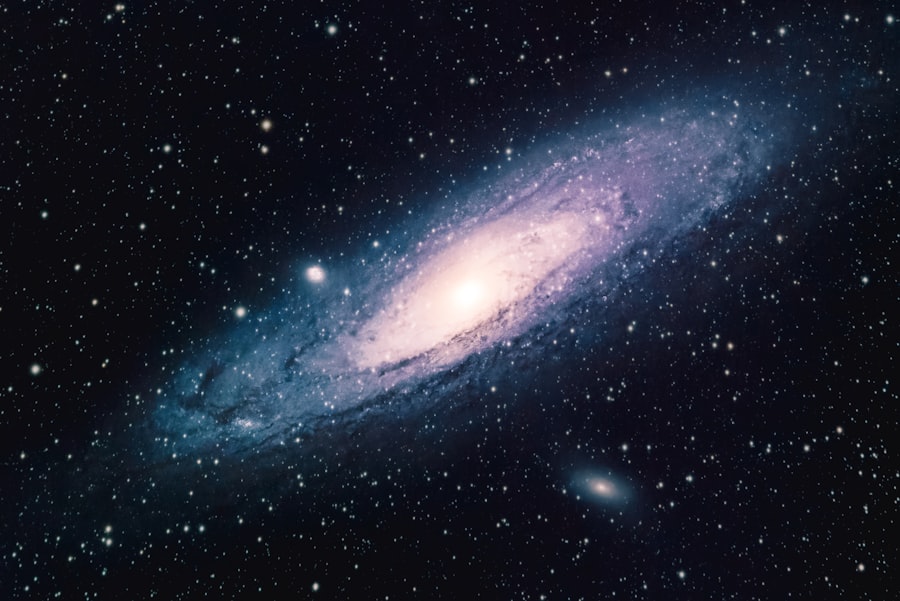
The cosmological constant problem is inextricably linked to the broader issue of fine-tuning. It suggests that if the fundamental constants of the universe, including the value of the cosmological constant, were even slightly different, the universe as you know it – and indeed, your very existence – would be impossible.
The Anthropic Principle: A Witness to the Universe
One of the most debated responses to the fine-tuning problem is the anthropic principle. This principle, in its various forms, suggests that the universe’s properties must be what they are because any other properties would preclude the existence of observers like you. It’s a sort of cosmic tautology: the universe is the way it is because if it were different, you wouldn’t be here to observe it.
The Weak Anthropic Principle: A Selection Effect
The weak anthropic principle posits that the universe has those properties which allow for life to develop within it. You observe a universe with certain physical constants because if these constants were different, you wouldn’t exist to make that observation. This is akin to you being surprised by the specific temperature of your current environment. You are only able to exist and feel comfortable in this temperature range because it happens to be suitable for your biology.
The Strong Anthropic Principle: A Designed Universe?
The strong anthropic principle goes further, suggesting that the universe must have properties that allow life to develop within it. This interpretation can verge on suggesting a form of cosmic design or teleology, implying a purpose behind the universe’s existence. This is a more controversial stance, as it steps beyond purely scientific explanation into philosophical territory.
Gravity’s Delicate Balance: The Role of the Cosmological Constant
Consider the delicate interplay between gravity and the cosmological constant. Gravity, a force of attraction, tends to pull matter together, leading to the formation of stars, galaxies, and planets. If the cosmological constant were significantly larger than its observed value, its repulsive nature would have overwhelmed gravity in the early universe. The cosmic web would never have formed; matter would have been dispersed too thinly for complex structures to coalesce. You would not have a Sun to orbit, nor planets to call home.
A Universe Too Soon, Too Late, or Just Right?
Conversely, if the cosmological constant were zero or a very small positive value, gravity might have dominated too strongly. The universe could have collapsed back on itself long before stars and galaxies had a chance to form or evolve. Alternatively, if its value were such that star formation proceeded too rapidly, perhaps the universe would have exhausted its fuel supply prematurely. The measured value of the cosmological constant appears to be precisely tuned to allow for a period of cosmic expansion long enough for stars to form, life to evolve, and for you to ponder these very questions.
The Enigma of Vacuum Energy: A Quantum Quandary
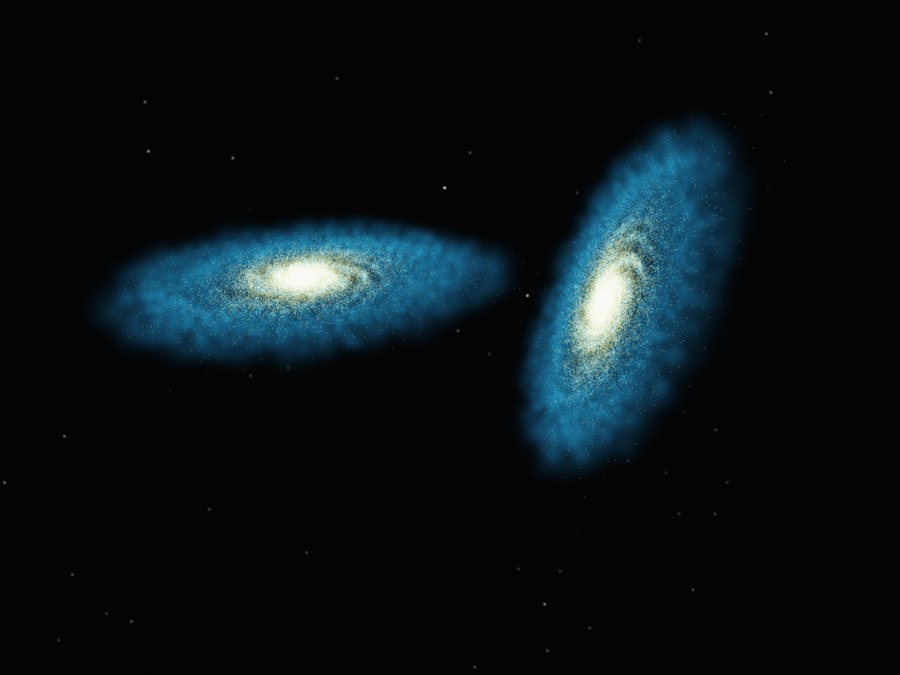
The vast discrepancy between the theoretically calculated vacuum energy and the observed cosmological constant represents one of the most profound mysteries in fundamental physics. It hints at a fundamental misunderstanding of either gravity or quantum mechanics, or perhaps both.
Quantum Field Theory’s Prediction: A Galactic-Sized Error
As mentioned, quantum field theory, our most successful framework for describing the subatomic world, predicts a vacuum energy density that is orders of magnitude larger than what we observe. This prediction arises from summing up the zero-point energies of all the quantum fields permeating spacetime. Imagine each fundamental particle having an inherent jitter, a restless energy even at absolute zero. When you add up all these jitters across all possible particle types, you get a colossal number.
The Cosmological Constant as a “Cutoff” Energy
One idea for reconciling this discrepancy is the concept of a “cutoff” energy scale in quantum field theory. It’s possible that our current understanding of quantum mechanics is only valid up to a certain energy level, and beyond that, its predictions for vacuum energy become unreliable. This cutoff might be related to the Planck scale, the smallest conceivable unit of length and time, where quantum gravity effects are expected to dominate.
Supersymmetry as a Potential Solution?
Supersymmetry (SUSY) is a theoretical framework that postulates a symmetry between fermions and bosons, the two fundamental classes of particles. If supersymmetry were unbroken, it would predict that the vacuum energy contributions from different particles would cancel each other out, leading to a much smaller, possibly zero, vacuum energy density. However, observations show that supersymmetry, if it exists, must be broken at some energy scale, explaining why the cancellation isn’t perfect.
The cosmological constant problem and the issue of fine-tuning in the universe have sparked significant debate among physicists and cosmologists. A related article that delves deeper into these concepts can be found on Freaky Science, which explores the implications of the cosmological constant and its perplexing value in the context of dark energy. For those interested in understanding the nuances of this topic, you can read more about it in this insightful piece on Freaky Science. The discussions surrounding these issues not only challenge our understanding of fundamental physics but also raise questions about the very nature of our universe.
Seeking the Missing Pieces: Theoretical Frontiers and Experimental Endeavors
| Metric / Data | Value / Description | Notes |
|---|---|---|
| Observed Cosmological Constant (Λ) | ~1.1 × 10⁻⁵² m⁻² | Measured from supernovae, CMB, and large scale structure data |
| Vacuum Energy Density (Observed) | ~6 × 10⁻¹⁰ J/m³ | Equivalent to dark energy density driving accelerated expansion |
| Vacuum Energy Density (Theoretical QFT Prediction) | ~10¹¹² J/m³ | From zero-point energy calculations in quantum field theory |
| Fine-Tuning Discrepancy | ~10¹²² orders of magnitude | Difference between theoretical and observed vacuum energy densities |
| Planck Energy Scale | ~1.22 × 10¹⁹ GeV | Natural cutoff scale for quantum gravity effects |
| Energy Scale of Dark Energy | ~2.3 meV (milli-electronvolts) | Corresponds to observed cosmological constant energy scale |
| Age of Universe | ~13.8 billion years | Relevant for cosmological constant impact on expansion history |
| Density Parameter ΩΛ | ~0.69 | Fraction of total energy density attributed to dark energy |
| Equation of State Parameter (w) | Approximately -1 | Consistent with cosmological constant as dark energy |
The cosmological constant problem and the fine-tuning conundrum are not merely academic exercises; they are powerful motivators for theoretical innovation and experimental exploration. Physicists are actively pursuing various avenues to shed light on these cosmic puzzles.
Modified Gravity Theories: Rethinking Einstein’s Legacy
Some theorists propose that our understanding of gravity itself might be incomplete. Theories of modified gravity attempt to explain the universe’s accelerated expansion without invoking dark energy or a problematic cosmological constant. These theories often introduce new fields or alter the gravitational force at large distances.
Quintessence and Scalar Fields: Beyond a Simple Constant
Instead of a fixed cosmological constant, some models propose dynamic dark energy, often represented by a scalar field called quintessence. This field’s energy density can change over time, offering a more flexible explanation for the observed acceleration. The properties of this field would need to be incredibly finely tuned to match current observations, but it offers a more nuanced approach than a static $Lambda$.
Quantum Gravity and String Theory: The Ultimate Unification
The true solution might lie in a complete theory of quantum gravity, a framework that successfully unifies general relativity and quantum mechanics. Theories like string theory offer a potential path towards such a unification. These theories often operate at energy scales far beyond our current experimental reach, but they provide a theoretical landscape where the cosmological constant problem might find its resolution.
Gravitational Wave Astronomy: A New Cosmic Lens
The advent of gravitational wave astronomy, pioneered by experiments like LIGO and Virgo, offers a revolutionary new way to probe the universe. By detecting ripples in spacetime produced by extreme cosmic events like black hole mergers, we can gather independent measurements of cosmic expansion and the distribution of matter. This could provide crucial data to constrain theoretical models and potentially reveal deviations from our current cosmological paradigm.
The Philosophical Implications: Our Place in the Cosmos
The cosmological constant problem and the fine-tuning of the universe carry profound philosophical implications, forcing you to confront questions about purpose, chance, and your own significance.
Are We Alone in a Privileged Universe?
The apparent fine-tuning of the universe for life suggests two possibilities: either you inhabit an extraordinarily rare and special universe, or there are many universes, and you simply happen to reside in one that supports your existence. The latter idea is the foundation of the multiverse concept.
The Multiverse Hypothesis: A Cosmic Census
The multiverse hypothesis suggests that our universe is just one of many, possibly an infinite number, of universes. Each universe could have different fundamental constants and laws of physics. In such a scenario, the fine-tuning would seem less miraculous; it would simply be a statistical inevitability that at least one universe would possess the right conditions for life. You are simply a inhabitant of that particular cosmic lottery winner.
The Limits of Human Understanding
Ultimately, the cosmological constant problem and the fine-tuning conundrum serve as powerful reminders of the limitations of our current scientific understanding. They highlight the vastness of the unknown and the humbling realization that our current models, however sophisticated, may only be approximations of a deeper, more complex reality. You are peering into the very blueprints of existence, and the architect’s signature remains elusive. The journey of discovery continues, fueled by curiosity and the persistent human drive to unravel the universe’s deepest secrets.

WATCH NOW ▶️ SHOCKING: The Universe Has Hit Its Compute Limit
FAQs
What is the cosmological constant problem?
The cosmological constant problem refers to the large discrepancy between the observed value of the cosmological constant, which drives the accelerated expansion of the universe, and the theoretical predictions from quantum field theory. The predicted vacuum energy density is many orders of magnitude larger than what is observed, posing a major challenge in theoretical physics.
Why is fine tuning important in the context of the cosmological constant?
Fine tuning is important because the observed cosmological constant is extremely small compared to theoretical expectations. To match observations, parameters in physical theories must be adjusted with extraordinary precision, which seems unnatural and suggests that there may be an underlying mechanism or new physics that explains this small value without such precise adjustments.
How does the cosmological constant relate to dark energy?
The cosmological constant is one possible explanation for dark energy, the mysterious form of energy that makes up about 70% of the universe and causes its accelerated expansion. In the simplest models, dark energy is modeled as a constant energy density filling space, which corresponds to the cosmological constant in Einstein’s equations.
What are some proposed solutions to the cosmological constant problem?
Proposed solutions include theories involving new symmetries, modifications of gravity, anthropic reasoning within the multiverse framework, and dynamical dark energy models such as quintessence. None of these solutions have been universally accepted, and the problem remains an open question in cosmology and fundamental physics.
How does the cosmological constant problem impact our understanding of the universe?
The problem challenges our understanding of the relationship between quantum mechanics, gravity, and cosmology. It suggests that current theories are incomplete and that new physics may be required to explain why the vacuum energy does not gravitate as expected. Resolving this problem could lead to significant advances in fundamental physics and cosmology.