The universe, a vast and enigmatic expanse, holds within its fabric phenomena that challenge our deepest understanding of reality. Among these, the cosmic event horizon and vacuum decay stand out as particularly profound concepts, each representing a boundary or a potential transformative event that could fundamentally alter our perception of existence. Exploring these concepts requires delving into the realms of general relativity and quantum field theory, where the very nature of space, time, and energy is unraveled.
The cosmic event horizon is a concept arising from the study of black holes, those voracious entities whose gravitational pull is so immense that nothing, not even light, can escape their grasp once it crosses a certain boundary. This boundary is the event horizon. Imagine it as a cosmic waterfall, so powerful that any object unfortunate enough to drift too near will be pulled over the edge, its fate sealed.
The Physics of Gravitational Collapse
The formation of black holes, and thus their event horizons, is a direct consequence of Einstein’s theory of general relativity. When a massive star exhausts its nuclear fuel, it can no longer withstand the inward pull of its own gravity. This leads to a catastrophic gravitational collapse, compressing the star’s matter into an infinitesimally small point called a singularity. The region around this singularity where the escape velocity exceeds the speed of light is defined as the event horizon. Mathematically, the radius of this horizon for a non-rotating, uncharged black hole is given by the Schwarzschild radius, $r_s = \frac{2GM}{c^2}$, where G is the gravitational constant, M is the mass of the black hole, and c is the speed of light.
Schwarzschild and Kerr Metrics: Describing Black Hole Geometries
Karl Schwarzschild’s solution to Einstein’s field equations in 1916 provided the first mathematical description of a non-rotating, spherically symmetric black hole. This solution introduced the Schwarzschild metric, which accurately describes the spacetime curvature around such an object. For rotating black holes, known as Kerr black holes, the situation becomes more complex. The Kerr metric, developed by Roy Kerr in 1963, accounts for the angular momentum of the black hole, leading to additional features such as the ergosphere, a region where spacetime is dragged along with the black hole’s rotation, forcing objects within it to rotate as well. The event horizon of a Kerr black hole is not perfectly spherical but is oblate.
Information Paradox: A Quantum Conundrum
One of the most perplexing aspects of the event horizon is the information paradox. According to classical general relativity, anything that falls into a black hole is lost forever, its information seemingly destroyed. However, quantum mechanics suggests that information cannot be destroyed. Stephen Hawking’s groundbreaking work on Hawking radiation, a faint thermal radiation emitted by black holes, further complicates this issue. Hawking radiation implies that black holes slowly evaporate over time. If a black hole completely evaporates, what happens to the information that fell into it? This paradox lies at the intersection of general relativity and quantum mechanics, hinting at a deeper, as yet undiscovered, theory of quantum gravity. It’s like a cosmic shredder from which no document can ever be retrieved.
Observational Evidence for Event Horizons
While we cannot directly “see” an event horizon, astronomical observations provide compelling indirect evidence for their existence. The detection of gravitational waves from merging black holes by the LIGO and Virgo observatories, and the imaging of the shadow of a supermassive black hole by the Event Horizon Telescope, are significant milestones. These observations are consistent with the predictions of general relativity regarding the presence and properties of event horizons. The shadow observed by the Event Horizon Telescope represents the region light rays cannot escape from, effectively outlining the event horizon.
The concept of cosmic event horizons and vacuum decay presents intriguing implications for our understanding of the universe. For a deeper exploration of these phenomena and their potential consequences, you can read the related article available at Freaky Science. This resource delves into the complexities of cosmic structures and the theoretical frameworks that govern them, providing valuable insights into the nature of reality itself.
Exploring Vacuum Decay: A Cosmic Flip of the Coin
Vacuum decay, also known as vacuum metastability, presents a more speculative, yet equally profound, cosmic scenario. It proposes that the vacuum of our universe, the lowest energy state of quantum fields, might not be the absolutely lowest possible energy state. If so, our universe could be in a metastable state, akin to a ball resting in a dip on a hillside, rather than at the very bottom of the valley.
The Nature of the Quantum Vacuum
In quantum field theory, the vacuum is not an empty void but a dynamic medium filled with fluctuating quantum fields. These fluctuations can give rise to virtual particles that pop in and out of existence. The “energy” of the vacuum is determined by the lowest possible energy configuration of these fields. If a configuration with even lower energy exists, the current vacuum state is not truly stable. Imagine a perfectly still lake surface; seemingly calm, but containing immense potential energy that could be released by a disturbance.
False Vacuum vs. True Vacuum
The concept of vacuum decay hinges on the distinction between a “false vacuum” and a “true vacuum.” Our current universe, if metastable, exists in a false vacuum, a local minimum in the potential energy landscape of quantum fields. The true vacuum, on the other hand, represents the absolute global minimum of this energy landscape. A transition from a false vacuum to a true vacuum would be a phase transition, similar to how water freezes into ice, but on a cosmic scale and with far more dramatic consequences.
The Higgs Field and Electroweak Vacuum Stability
A prominent candidate for this metastability lies within the Higgs field. The Higgs field is responsible for giving mass to fundamental particles. Its potential energy landscape is characterized by a complex shape, and current measurements of the mass of the Higgs boson and the top quark suggest that the universe might reside in a metastable electroweak vacuum. This means that at extremely high energies, or if certain parameters were slightly different, the Higgs field could tunnel to a lower energy state. This is like a delicate balance on a knife’s edge, where a slight nudge could send it tumbling.
The Bubbles of the True Vacuum
If vacuum decay were to occur, it would likely begin with the spontaneous formation of a “bubble” of true vacuum somewhere in the universe. This bubble would expand outward at nearly the speed of light, converting the surrounding false vacuum into true vacuum as it goes. The transition to a true vacuum could drastically alter the fundamental constants of nature, the masses of particles, and the laws of physics themselves. Anything within this expanding bubble would be subject to entirely new physical laws, potentially rendering existing structures, including ourselves, incompatible with the new reality. It’s like a cosmic wavefront, capable of rewriting the rules of existence.
Consequences of Vacuum Decay for Our Universe
The consequences of vacuum decay for our universe are dire. If a bubble of true vacuum were to reach us, it would effectively obliterate our current reality. The fundamental constants that govern the universe would shift, and the very atoms that make up our existence might no longer be stable. Life as we know it would be impossible. However, the timescale for such an event is highly uncertain. Current estimates, based on the known masses of fundamental particles, suggest that this transition, if it occurs, is likely to be billions of years in the future. This gives us a great deal of time, but it also underscores the potentially finite nature of our cosmic existence.
Linking the Horizon and Decay: Cosmic Boundaries and Transformations
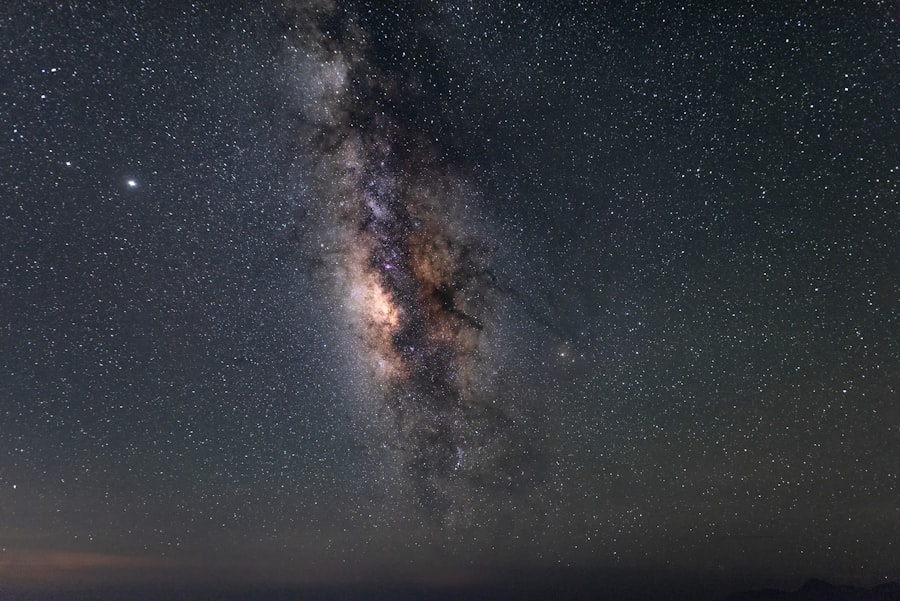
While seemingly disparate, the cosmic event horizon and vacuum decay both represent ultimate boundaries or transformations in our universe. The event horizon defines the edge of our observable universe and the point of no return for objects entering a black hole. Vacuum decay, on the other hand, represents a potential fundamental change in the fabric of reality itself.
Boundaries of Observation and Existence
The event horizon of a black hole is a boundary beyond which we cannot directly observe or interact. It is a one-way membrane, separating the known from the unknown. Similarly, the potential true vacuum represents a boundary of existential possibility, a state of reality fundamentally different from our own. If a bubble of true vacuum were to expand, it would become a new cosmic frontier, forever inaccessible to our current physical laws.
The “What If” Scenarios of Physics
Both concepts push the boundaries of our current physical understanding. The event horizon challenges our notions of information and causality, while vacuum decay questions the fundamental stability of our universe. These are the extreme “what if” scenarios that drive scientific inquiry, forcing us to refine our theories and explore the limits of what is possible. They are like explorers charting unknown territories, constantly asking, “What lies beyond?”
The Role of Fundamental Constants
The stability of the vacuum is intimately tied to the values of fundamental constants, such as the mass of the Higgs boson and the coupling constants of various forces. These constants are what define the laws of physics as we know them. A transition to a true vacuum would imply that these constants could change, leading to a universe with entirely different properties. The event horizon’s properties are also dictated by fundamental constants, particularly G and c, showing how deeply these values underpin our universe.
Future Endeavors: Probing the Unknown
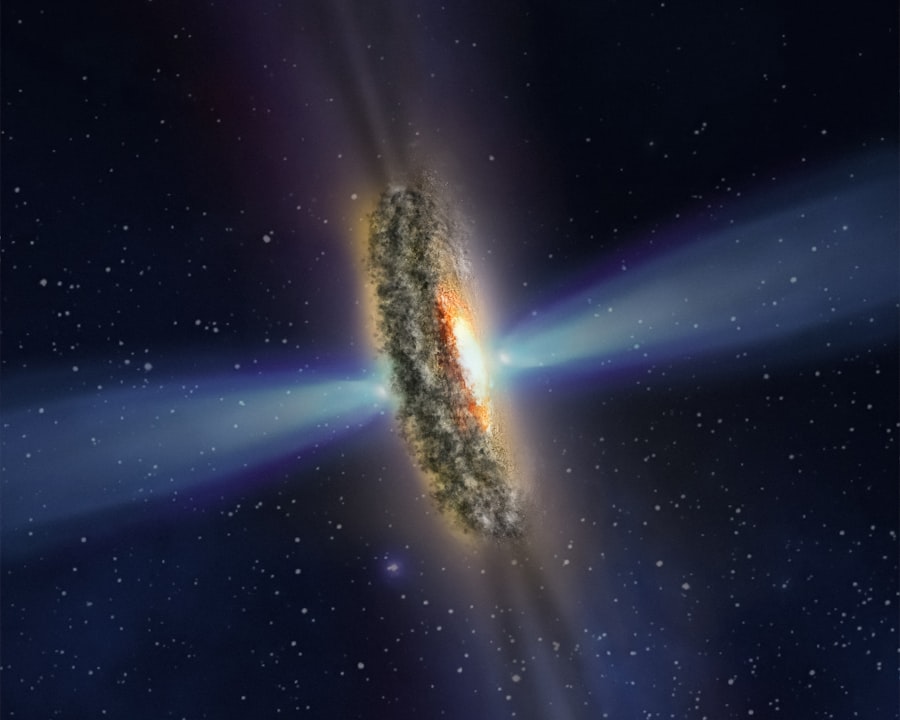
Our exploration of the cosmic event horizon and vacuum decay is far from over. Future advancements in observational astronomy, gravitational wave detection, and theoretical physics hold the key to unraveling the mysteries surrounding these phenomena.
Next-Generation Telescopes and Observatories
The development of more powerful telescopes, such as the James Webb Space Telescope, and upcoming gravitational wave observatories promises to provide unprecedented insights into the astrophysical environments where black holes reside. These instruments will allow us to observe phenomena closer to event horizons and study the dynamics of extreme gravitational events with greater precision.
Theoretical Advancements in Quantum Gravity
Unifying general relativity and quantum mechanics remains one of the grand challenges of modern physics. Progress in theories like string theory and loop quantum gravity could shed light on the nature of singularities within black holes and the quantum processes that might lead to vacuum decay. Without a unified theory of quantum gravity, our understanding of these extreme phenomena will remain incomplete.
Experimental Searches for Vacuum Instability
While direct experimental verification of vacuum decay is currently impossible, theoretical physicists are exploring potential indirect signatures. These could involve searching for subtle anomalies in particle physics experiments or cosmological observations that deviate from the predictions of our current “metastable” vacuum state. Such searches are like looking for faint whispers in a cacophony, hoping to discern a hidden truth.
Recent discussions on cosmic phenomena have highlighted the intriguing concepts of cosmic event horizons and vacuum decay. These topics delve into the fundamental nature of our universe and the potential implications for its fate. For those interested in exploring these ideas further, a related article can be found at Freaky Science, which provides insights into the complexities of cosmic structures and their impact on our understanding of reality.
The Philosophical Implications: Our Place in the Cosmos
| Metric | Description | Estimated Value / Range | Units |
|---|---|---|---|
| Cosmic Event Horizon Radius | Maximum distance from which light emitted now can ever reach the observer in the future | ~16 billion | light years |
| Hubble Constant (H₀) | Rate of expansion of the universe, related to the cosmic event horizon size | 67 – 74 | km/s/Mpc |
| Vacuum Decay Lifetime | Estimated time before a metastable vacuum state decays to a lower energy state | 10^100 or more | years (estimated) |
| Energy Barrier for Vacuum Decay | Potential energy difference between false vacuum and true vacuum states | ~10^10 to 10^15 | GeV (giga-electronvolts) |
| Bubble Nucleation Rate | Probability per unit volume and time for vacuum decay bubble formation | Extremely low (model dependent) | events per cubic meter per year |
| Speed of Vacuum Decay Bubble Expansion | Speed at which the true vacuum bubble expands through space | Close to speed of light | fraction of c |
Beyond their scientific significance, the concepts of the cosmic event horizon and vacuum decay carry profound philosophical implications about our place in the universe and the nature of reality itself.
The Finite Nature of Cosmic Structures
The event horizon of a black hole reminds us that even the most seemingly eternal celestial objects have boundaries beyond which interaction is impossible. This can be seen as a metaphor for the limitations of our knowledge and experience. Similarly, vacuum decay suggests a potential limit to the stability and longevity of our current universe, implying that even existence itself might be a temporary state.
The Search for Fundamental Truths
Our quest to understand the event horizon and vacuum decay is a manifestation of humanity’s innate desire to comprehend the fundamental truths of existence. These concepts, however daunting, push us to think beyond our immediate perceptions and grapple with the deepest questions about the origin, nature, and fate of the cosmos. They are beacons in the vast darkness, guiding our intellectual journey.
Humility in the Face of the Unknown
Ultimately, exploring these cosmic frontiers instills a sense of humility. The immense scales and extreme conditions associated with event horizons and potential vacuum transitions dwarf our everyday experiences. They remind us of the vastness of the universe and the ongoing nature of scientific discovery, where each answer often leads to more profound questions. Our exploration is a humbling reminder that we are but specks of dust in an unimaginably grand cosmic tapestry.
FAQs
What is the cosmic event horizon?
The cosmic event horizon is a boundary in the universe beyond which events cannot affect an observer because the space between them is expanding faster than the speed of light. It limits the observable universe and defines the maximum distance from which light emitted now can ever reach the observer in the future.
What does vacuum decay mean in cosmology?
Vacuum decay refers to a hypothetical process in which the universe’s current vacuum state, considered metastable, transitions to a lower-energy vacuum state. This transition could cause a bubble of “true vacuum” to expand at the speed of light, potentially altering the laws of physics and the structure of the universe.
How are the cosmic event horizon and vacuum decay related?
The cosmic event horizon limits the observable universe and the causal influence of events, while vacuum decay involves a sudden change in the vacuum state that could propagate through space. If vacuum decay occurs beyond the event horizon, its effects would not be observable until the bubble reaches the observer, potentially crossing the horizon and altering the local vacuum state.
Can vacuum decay affect the fate of the universe?
Yes, if vacuum decay occurs, it could drastically change the universe’s fundamental properties, potentially destroying existing structures and altering physical constants. This catastrophic event would redefine the universe’s fate, possibly ending it as we know it.
Is there any evidence that vacuum decay has occurred or will occur soon?
Currently, there is no direct evidence that vacuum decay has occurred or is imminent. Theoretical models suggest it is a possibility based on particle physics and cosmology, but the timescales involved are likely much longer than the current age of the universe, making it a speculative but important area of study.