
The philosophical concept of simulation theory posits that our perceived reality may be an artificial construct, much like a meticulously crafted video game. This idea, while speculative, finds intriguing resonance with certain interpretations and phenomena observed within the realm of quantum mechanics. By exploring these intersections, one can begin to appreciate how the strangeness of the subatomic world might, in some abstract ways, mirror the characteristics of a simulated environment.
The simulation hypothesis, in its most prominent contemporary form, was articulated by philosopher Nick Bostrom. He argues that if it is possible for a sufficiently advanced civilization to run ancestor simulations – detailed recreations of their past – then it is statistically probable that we are living within such a simulation. The core of Bostrom’s argument rests on a trilemma: either all civilizations at our stage of development go extinct before reaching a posthuman stage capable of creating ancestor simulations, or posthuman civilizations are not interested in running such simulations, or we are almost certainly living in a simulation. The sheer computational power required for a realistic simulation becomes a key factor, hinting at a level of technological advancement far beyond our current capabilities.
Bostrom’s Trilemma and Its Implications
Bostrom’s trilemma presents a stark choice. The first horn suggests that technological progress, or perhaps existential threats, prevent civilizations from ever reaching a point where vast computational resources are available for running complex simulations. The second horn posits that even if a civilization reaches such a technological zenith, the ethical or practical considerations might dissuade them from creating ancestor simulations. They might deem it unethical to create conscious beings within a simulated reality, or they might simply have no desire to do so, focusing their computational power on other pursuits. The third horn, which Bostrom finds particularly plausible, concludes that if the first two are false, then the number of simulated realities would vastly outnumber the single base reality, making our existence within a simulation extraordinarily probable.
The Nature of Consciousness in a Simulation
A significant philosophical hurdle for simulation theory is the nature of consciousness. If we are merely lines of code or patterns of information within a simulated universe, what does that imply for our subjective experience? Does consciousness require a biological substrate, or can it emerge from complex computational processes? This question remains a frontier of both philosophy and neuroscience. If consciousness can arise from computation, then a sufficiently advanced simulation could, in principle, host conscious beings. The universe, in this view, would be the ultimate operating system.
Simulation theory and quantum mechanics intersect in fascinating ways, particularly when considering the nature of reality and consciousness. An intriguing article that explores these connections is found on Freaky Science, which delves into the implications of quantum phenomena on our understanding of simulated realities. For more insights, you can read the article here: Freaky Science.
Quantum Mechanics: The Universe’s Underlying Code
Quantum mechanics, the theory describing the behavior of matter and energy at the atomic and subatomic levels, presents a suite of phenomena that can, at first glance, appear to align with the idea of a simulated reality. The probabilistic nature of quantum events, the observer effect, and the concept of superposition all hint at a reality that is not as deterministic or as concrete as our everyday macroscopic experience suggests. Think of it as peering beneath the visually polished surface of a video game to see the underlying code and algorithms that govern its behavior.
The Probabilistic Nature of Reality
Unlike classical physics, which aims to predict the exact trajectory and properties of objects, quantum mechanics is fundamentally probabilistic. We cannot predict with certainty the outcome of a quantum event, such as the decay of a radioactive atom or the position of an electron. Instead, quantum mechanics provides probabilities of different outcomes. For example, an electron does not have a definite position until it is measured; rather, it exists as a probability wave, and the act of measurement “collapses” this wave into a specific state. This inherent uncertainty and the reliance on probabilities can be seen as analogous to the computational processes of a simulation, where certain outcomes might be determined by random number generators or algorithmic processes that produce probabilistic results. This is not to say that the universe is a random number generator, but rather that its fundamental workings, as revealed by quantum mechanics, share a characteristic of uncertainty that is also present in simulated systems.
Superposition and Quantum Indeterminacy
Superposition is a core principle in quantum mechanics, stating that a quantum system can exist in multiple states simultaneously until it is observed or measured. An electron, for instance, could be in several locations at once, or a photon could have both horizontal and vertical polarization concurrently. Only upon measurement does the system “choose” a single, definite state. This phenomenon has been likened to a video game character whose state is not fully rendered or determined until the player interacts with it or it comes into the player’s field of view. The virtual world might only calculate and display the definitive properties of an object when it is necessary for processing or interaction, thereby optimizing computational resources. Imagine a vast open-world game; the developers wouldn’t render every blade of grass in the entire map constantly. Instead, elements are rendered and defined as the player approaches them.
The Measurement Problem and the Role of the Observer
The measurement problem in quantum mechanics is one of its most perplexing aspects. It concerns the transition of a quantum system from a superposition of states to a single definite state upon measurement. The question of what constitutes a “measurement” and how it causes this collapse of the wave function remains a subject of intense debate. Does it require a conscious observer? Or is it any interaction with a macroscopic system? If consciousness plays a role, it opens up a potential avenue for philosophical speculation about the observer’s participation in “constructing” reality within a simulation. Could the “observer” in quantum mechanics be analogous to a user interacting with a simulated environment, forcing the simulation to render specific details or states? The act of observation, in this context, could be interpreted as the demand for information that the simulation then provides.
Analogies Between Quantum Phenomena and Simulation Behavior
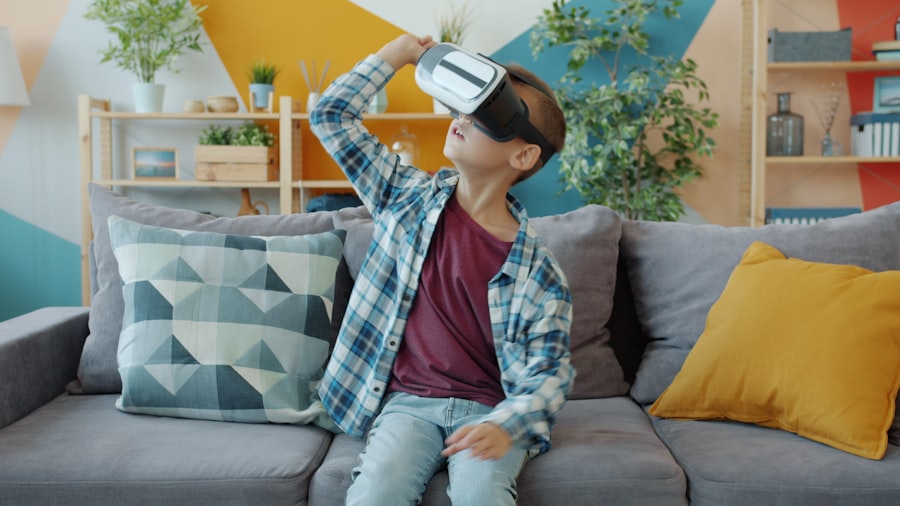
The characteristics observed in quantum mechanics offer a fertile ground for drawing analogies to how a sophisticated simulation might operate. While these are not proof of simulation theory, they highlight intriguing parallels.
Information as Fundamental Building Blocks
Quantum mechanics suggests that information might be more fundamental than matter or energy. Concepts like entanglement, where particles remain connected regardless of distance, and the holographic principle, which posits that all the information contained within a volume of space can be represented on its boundary, hint at an information-centric universe. In a simulation, information is also the primary currency. The “state” of every object, every particle, is defined by its information. If our universe is a simulation, then the underlying reality might be composed of data and algorithms, with what we perceive as physical reality emerging from the processing of this information. The very fabric of the universe, from this perspective, could be thought of as a colossal database being constantly updated and queried.
The Universe as an Optimized System
Simulations, especially those designed to be computationally efficient, often employ optimization techniques. Instead of rendering every detail of a vast world all the time, aspects are only generated or defined when necessary. This can lead to phenomena that appear “unreal” or inconsistent from a classical physics perspective. Quantum mechanics, with its probabilistic nature and the observer effect, could be interpreted as remnants of such an optimization strategy. The universe might not waste computational resources defining the precise state of every particle until an interaction or observation demands it. This aligns with the idea that the universe is running on a set of rules and processes that prioritize efficiency, much like any well-designed software program.
Glitches in the Matrix: Anomalous Quantum Behavior
Some might interpret certain quantum phenomena as analogous to “glitches” in a simulated reality – unexpected behaviors or limitations that reveal the artificial nature of the system. Examples include quantum tunneling, where a particle can pass through a barrier it classically shouldn’t have the energy to overcome, or apparent violations of locality in entanglement. While these are explained by the formalism of quantum mechanics, their counter-intuitive nature can, for proponents of simulation theory, evoke comparisons to encountering unexpected behaviors in a computer program. These “anomalies” might be side effects of the simulation’s underlying algorithms or resource management.
Evidence and Counterarguments
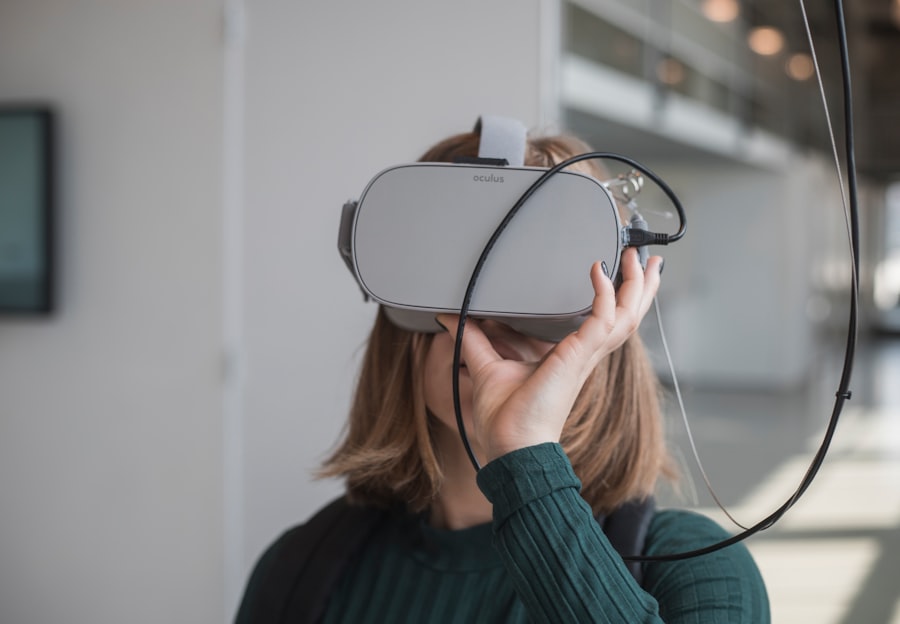
While the parallels between quantum mechanics and simulation theory are thought-provoking, it is crucial to acknowledge the lack of direct empirical evidence and the significant counterarguments.
Lack of Direct Empirical Evidence
Despite the intriguing analogies, there is currently no definitive empirical evidence that directly supports or refutes simulation theory. The phenomena observed in quantum mechanics can be fully explained by the established mathematical framework of quantum theory itself, without recourse to the idea of a simulation. Scientists continue to refine our understanding of quantum mechanics within its own established theoretical boundaries. The burden of proof lies on those proposing a simulation, and thus far, no experiment has been devised that could conclusively distinguish our reality from a simulation.
The Confounding Nature of Quantum Interpretation
Quantum mechanics is notoriously difficult to interpret. Different interpretations, such as the Copenhagen interpretation, the Many-Worlds interpretation, and others, offer varying perspectives on what the mathematical formalism actually implies about reality. Some interpretations, like the Many-Worlds interpretation, where all possible outcomes of a quantum event occur in separate universes, might seem even more akin to a multiverse of simulations. However, these are philosophical interpretations of the mathematics, not evidence of our universe being a simulation. The ongoing debate about quantum interpretation highlights the deep conceptual challenges in understanding the quantum realm, irrespective of simulation theory.
The Infinite Regress Problem
A significant philosophical challenge to simulation theory is the problem of infinite regress. If we are living in a simulation, then what about the reality that created our simulation? Is that reality also a simulation? This could lead to an endless chain of simulations within simulations, which, while not logically impossible, becomes increasingly unproductive and less explanatory. It prompts the question of where the “base reality” resides and why it would be compelled to create simulations.
Simulation theory has gained traction in recent years, particularly in discussions surrounding quantum mechanics and the nature of reality. A fascinating article explores the intersection of these concepts, delving into how the principles of quantum mechanics might support the idea that our universe could be a sophisticated simulation. For those interested in this intriguing perspective, you can read more about it in this related article, which examines the implications of viewing our existence through the lens of simulation theory.
The Future of Exploration
| Concept | Description | Relevance to Simulation Theory | Key Metrics / Data |
|---|---|---|---|
| Quantum Superposition | Particles exist in multiple states simultaneously until measured. | Suggests reality is probabilistic and may be rendered upon observation, similar to a simulation’s resource optimization. | Double-slit experiment results; coherence times vary from femtoseconds to seconds depending on system. |
| Quantum Entanglement | Particles become linked, with states instantly correlated regardless of distance. | Implies non-local connections that could be explained by underlying computational rules in a simulated universe. | Bell test experiments show violation of classical locality; entanglement fidelity often >90% in labs. |
| Wavefunction Collapse | The process by which a quantum system’s multiple possibilities reduce to a single outcome upon measurement. | Analogous to rendering a scene in a simulation only when observed. | Collapse timescales are instantaneous in theory; measurement outcomes probabilistic with defined probabilities. |
| Planck Scale | Smallest measurable length and time scales in physics (~1.6 x 10^-35 m). | Could represent the ‘pixel size’ or resolution limit of a simulated reality. | Planck length: 1.616 x 10^-35 meters; Planck time: 5.39 x 10^-44 seconds. |
| Quantum Decoherence | Loss of quantum coherence causing transition from quantum to classical behavior. | May indicate limits of simulation fidelity or the boundary between simulated quantum states and classical rendering. | Decoherence times vary widely; e.g., microseconds in superconducting qubits, nanoseconds in photons. |
| Holographic Principle | The idea that all information in a volume can be described on its boundary surface. | Supports the notion that the universe’s information content is finite and encoded, similar to data in a simulation. | Entropy bounds proportional to surface area, not volume; black hole entropy measured in bits per Planck area. |
The intersection of simulation theory and quantum mechanics remains a vibrant area of philosophical and scientific inquiry. Future research may uncover new avenues for exploration.
Exploring Quantum Computing and Its Implications
The development of quantum computing, which harnesses quantum mechanical principles for computation, may offer new perspectives. If our universe is a simulation, then it is a computation. Understanding how to build and operate quantum computers could, in theory, provide insights into the nature of such computational universes. The ability to simulate complex quantum systems on quantum computers might even lead to deeper understanding of the very processes that might underpin our own reality if it were simulated.
Potential for Falsifiable Predictions
While difficult, the pursuit of falsifiable predictions remains the gold standard in scientific inquiry. Researchers are actively exploring theoretical frameworks that could potentially lead to observable consequences if our universe were a simulation. These might involve looking for evidence of computational limitations, “granularity” at extremely small scales, or deviations from known physical laws under specific extreme conditions, which could be indicative of an underlying computational substrate. The search for a “pixelation” of spacetime, for instance, is one such theoretical avenue.
Redefining Our Understanding of Reality
Ultimately, the exploration of simulation theory and its links to quantum mechanics encourages a profound re-evaluation of our understanding of reality. It challenges our assumptions about the fundamental nature of existence and our place within it. Whether or not we are living in a simulation, the questions raised by this concept push the boundaries of our knowledge and inspire curiosity about the universe at its most fundamental levels, forcing us to consider that what we perceive as solid and immutable might, in fact, be far more fluid and contingent than we ever imagined.

WATCH NOW ▶️ The Universe Is A False State: Is Reality a Simulation?
FAQs
What is simulation theory?
Simulation theory is the hypothesis that reality, including the Earth and the universe, could be an artificial simulation, such as a computer simulation, rather than an objective physical reality.
How does quantum mechanics relate to simulation theory?
Quantum mechanics, which studies the behavior of particles at the smallest scales, introduces concepts like superposition and entanglement that some interpret as evidence that reality might be computational or informational in nature, lending speculative support to simulation theory.
What are some key principles of quantum mechanics relevant to simulation theory?
Key principles include wave-particle duality, quantum superposition, entanglement, and the observer effect, which suggest that particles exist in multiple states until measured, leading some to argue that reality behaves like a programmed system.
Is there scientific evidence supporting simulation theory?
Currently, there is no direct scientific evidence proving simulation theory; it remains a philosophical and theoretical idea. Some researchers propose experiments to detect computational limits or anomalies in physical laws, but these are inconclusive.
Can quantum mechanics disprove simulation theory?
Quantum mechanics neither proves nor disproves simulation theory. It provides a framework for understanding physical phenomena at microscopic scales, but the interpretation of these phenomena in terms of simulation remains speculative and philosophical rather than empirical.