
The burning of fossil fuels, the very engine of much of modern civilization, is fundamentally an act of oxidation. This process, deeply rooted in the principles of chemistry, dictates a precise relationship between the fuel consumed and the oxygen required for its complete combustion. Understanding this stoichiometry is not merely an academic exercise; it is a crucial cornerstone for assessing the environmental impact of energy production, designing efficient combustion systems, and developing strategies for mitigating greenhouse gas emissions. This article delves into the stoichiometry of fossil fuel oxygen consumption, offering a factual overview for the interested reader.
Your journey into understanding how fossil fuels breathe involves grasping the molecular dance of combustion. Just as a sprinter needs a precise amount of oxygen to fuel their burst of energy, so too does a fossil fuel molecule require a specific molar ratio of oxygen to transform into its oxidized counterparts. Deviations from this ideal ratio can lead to incomplete combustion, the release of harmful byproducts, and a decrease in the efficiency of energy conversion.
Fossil fuels are not monolithic entities. They are complex mixtures, primarily composed of hydrocarbons, with varying amounts of sulfur, nitrogen, and inorganic matter. However, for the purposes of stoichiometric analysis, we often simplify these fuels into their dominant components.
Hydrocarbon Composition: The Primary Fuel
The backbone of all fossil fuels, including coal, petroleum (oil), and natural gas, is carbon and hydrogen. The ratio of these elements varies significantly.
Natural Gas: A Simpler Case
Natural gas is predominantly methane (CH₄), the simplest hydrocarbon. Its combustion reaction is a cornerstone for understanding more complex fuels. Methane consists of one carbon atom and four hydrogen atoms. When it burns completely in the presence of sufficient oxygen, it transforms into carbon dioxide (CO₂) and water (H₂O).
The Methane Combustion Equation
The balanced chemical equation for the complete combustion of methane is:
CH₄ + 2O₂ → CO₂ + 2H₂O
This equation tells us that one mole of methane reacts with two moles of oxygen to produce one mole of carbon dioxide and two moles of water. This fundamental ratio is the key to understanding oxygen consumption for this specific fuel.
Petroleum: A Complex Mixture
Petroleum is a much more heterogeneous fuel, consisting of a wide range of hydrocarbons, from light volatile compounds to heavy, viscous tars. Its composition is often characterized by its average molecular formula. For illustrative purposes, a simplified average hydrocarbon like octane (C₈H₁₈), often used to represent gasoline, can be considered.
Octane Combustion: A Step Up in Complexity
The combustion of octane follows a similar pattern to methane, but with a larger molecule:
2C₈H₁₈ + 25O₂ → 16CO₂ + 18H₂O
In this case, two moles of octane react with twenty-five moles of oxygen to yield sixteen moles of carbon dioxide and eighteen moles of water. The stoichiometric oxygen requirement for octane is significantly higher per mole of fuel due to its larger carbon and hydrogen content.
Coal: The Most Complex
Coal is the most complex of the fossil fuels, with a highly variable composition. It contains not only hydrocarbons but also significant amounts of sulfur, nitrogen, and inorganic ash. The carbon content in coal can range from 40% to over 90%, depending on the rank of the coal (e.g., lignite, bituminous, anthracite).
Simplified Coal Combustion
Representing coal stoichiometrically often involves using an empirical formula that reflects its average elemental composition, typically expressed as a weighted average of carbon, hydrogen, oxygen, and sulfur. For example, a simplified representation might be CH₀.₆O₀.₂S₀.₀₁.
The combustion reaction for such a simplified coal component would involve the oxidation of carbon to CO₂, hydrogen to H₂O, and sulfur to sulfur dioxide (SO₂). The stoichiometry becomes significantly more intricate as we account for these additional elements.
Other Elements: Sulfur and Nitrogen
While carbon and hydrogen are the primary reactants in fossil fuel combustion, the presence of sulfur and nitrogen introduces additional stoichiometric considerations.
Sulfur Combustion: The Source of Acid Rain
Fossil fuels, particularly coal and some crude oils, contain sulfur. During combustion, sulfur is oxidized, primarily to sulfur dioxide (SO₂), and to a lesser extent, sulfur trioxide (SO₃).
Sulfur Dioxide Formation
The stoichiometric reaction for sulfur dioxide formation is:
S + O₂ → SO₂
This indicates that one mole of sulfur reacts with one mole of oxygen to produce one mole of sulfur dioxide. This reaction consumes additional oxygen and contributes to air pollution.
Nitrogen Combustion: NOx Formation
Nitrogen is present in fossil fuels (bound within organic molecules) and also as an atmospheric component (N₂). High combustion temperatures can lead to the oxidation of atmospheric nitrogen, forming various nitrogen oxides (NOx).
Thermal NOx Formation
The formation of nitrogen oxides is a complex series of reactions, but the initial steps involve:
N₂ + O₂ → 2NO
2NO + O₂ → 2NO₂
These reactions consume oxygen and contribute to atmospheric pollution and smog formation.
In exploring the intricacies of fossil fuel oxygen consumption stoichiometry, one can gain further insights by examining related research articles that delve into the environmental impacts of fossil fuel combustion. A particularly relevant article can be found at Freaky Science, which discusses the broader implications of fossil fuel usage on atmospheric chemistry and climate change. This resource provides a comprehensive overview of how the stoichiometric relationships in fossil fuel combustion contribute to greenhouse gas emissions and their subsequent effects on global warming.
Calculating Stoichiometric Oxygen Requirements
The stoichiometric oxygen requirement for a given fossil fuel can be calculated by determining the number of moles of each element in the fuel and then applying the stoichiometry of their oxidation reactions.
Empirical Formulas and Molecular Weight
The first step in determining oxygen consumption is to establish the empirical formula of the fossil fuel. For well-known fuels like methane, this is straightforward (CH₄). For more complex fuels like petroleum fractions or coal, empirical formulas are often derived from proximate and ultimate analyses.
Determining Moles of Fuel
Once the composition is known, the mass of the fuel can be converted into moles. This requires knowledge of the molecular weight of the primary components or the average molecular weight for complex mixtures.
Atom-by-Atom Analysis
Imagine disassembling the fuel molecule atom by atom. For methane (CH₄), you have one mole of carbon atoms and four moles of hydrogen atoms. The molar mass of carbon is approximately 12.01 g/mol, and that of hydrogen is approximately 1.008 g/mol.
Applying Reaction Stoichiometry
With the moles of each element in the fuel determined, you can then apply the stoichiometric coefficients from the balanced combustion reactions.
Oxygen for Carbon
For every mole of carbon in the fuel, one mole of oxygen is required to form carbon dioxide (C + O₂ → CO₂).
Oxygen for Hydrogen
For every two moles of hydrogen in the fuel, one mole of oxygen is required to form water (2H + ½O₂ → H₂O, or H₂ + ½O₂ → H₂O). It is often easier to think of it per mole of H₂: 1 mole of H₂ requires 0.5 moles of O₂.
Oxygen for Sulfur
For every mole of sulfur, one mole of oxygen is required to form sulfur dioxide (S + O₂ → SO₂).
Expressing Oxygen Demand
The stoichiometric oxygen demand can be expressed in several ways.
Molar Ratio
The most fundamental expression is the molar ratio of oxygen to fuel. For methane, this ratio is 2 moles of O₂ per 1 mole of CH₄.
Mass Ratio
Another common expression is the mass of oxygen required per unit mass of fuel. This is calculated by multiplying the molar ratio by the molecular weights of oxygen and the fuel.
From Moles to Mass
For methane:
- Moles of O₂ per mole of CH₄ = 2
- Molecular weight of O₂ ≈ 32.00 g/mol
- Molecular weight of CH₄ ≈ 16.05 g/mol
- Mass of O₂ per mole of CH₄ = 2 moles O₂ * 32.00 g/mol O₂ = 64.00 g O₂
- Mass of CH₄ = 1 mole CH₄ * 16.05 g/mol CH₄ = 16.05 g CH₄
- Mass ratio O₂:CH₄ = 64.00 g O₂ / 16.05 g CH₄ ≈ 3.99 g O₂/g CH₄
This means that approximately 3.99 grams of oxygen are needed to completely combust 1 gram of methane.
Air-Fuel Ratio
In practical combustion systems, air, not pure oxygen, is used. Air is approximately 21% oxygen by volume, or about 23.2% oxygen by mass. Therefore, the stoichiometric air-fuel ratio is calculated by dividing the stoichiometric oxygen-fuel mass ratio by the mass fraction of oxygen in air.
The Role of Air
Using our methane example:
- Stoichiometric O₂:CH₄ mass ratio ≈ 3.99
- Mass fraction of oxygen in air ≈ 0.232
- Stoichiometric Air:CH₄ mass ratio = 3.99 / 0.232 ≈ 17.19 g air/g CH₄
This means about 17.19 grams of air are theoretically required to completely combust 1 gram of methane.
Stoichiometry in Real-World Combustion
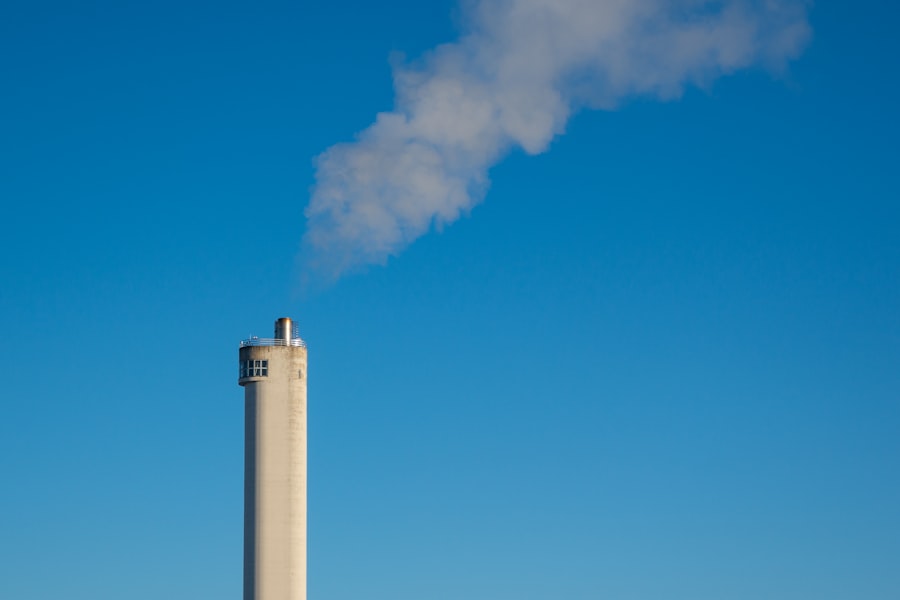
In reality, achieving perfect stoichiometric combustion is exceedingly rare. Combustion systems, whether in power plants, engines, or industrial furnaces, operate under specific conditions that influence the actual oxygen consumption and the composition of the exhaust gases.
Excess Air: The Practical Necessity
To ensure complete combustion and prevent the formation of unburned hydrocarbons or incomplete combustion products like carbon monoxide (CO), combustion engineers typically introduce more air than the theoretical stoichiometric requirement. This is known as excess air.
The Balancing Act of Excess Air
Introducing excess air is like adding a bit more fuel to a fire to make sure it burns brightly. However, too much excess air can lead to significant energy losses, as the excess air absorbs heat and is itself heated to exhaust temperatures, carrying that thermal energy away. It can also promote the formation of NOx.
Quantifying Excess Air
Excess air is often expressed as a percentage of the stoichiometric air requirement. For instance, 20% excess air means that 1.2 times the stoichiometric amount of air is supplied.
Incomplete Combustion: When Atoms Don’t Get Enough
When the supply of oxygen is insufficient, or when the mixing of fuel and air is poor, incomplete combustion occurs. This is a critical deviation from stoichiometric ideals, leading to the formation of undesirable byproducts.
Carbon Monoxide Formation
A primary indicator of incomplete combustion is the presence of carbon monoxide (CO) in the exhaust. This occurs when carbon is partially oxidized instead of fully oxidizing to CO₂.
The CO Reaction Pathway
The reaction leading to CO formation can be simplified from the complete combustion of methane:
2CH₄ + 3O₂ → 2CO + 4H₂O
Notice that this reaction requires less oxygen per mole of methane than complete combustion. This highlights why oxygen deficiency leads to this less oxidized product.
Soot and Other Hydrocarbons
In even more severely oxygen-deficient conditions, soot (elemental carbon) and other unburned hydrocarbons can be released. These are visible manifestations of incomplete combustion.
The Stoichiometric Equation as a Blueprint
The stoichiometric equation serves as a fundamental blueprint for combustion engineers. It allows them to:
- Calculate the minimum amount of air required for a specific fuel.
- Predict the theoretical amount of products formed, assuming complete combustion.
- Understand the basis for optimizing combustion efficiency and minimizing emissions.
Applications of Fossil Fuel Stoichiometry
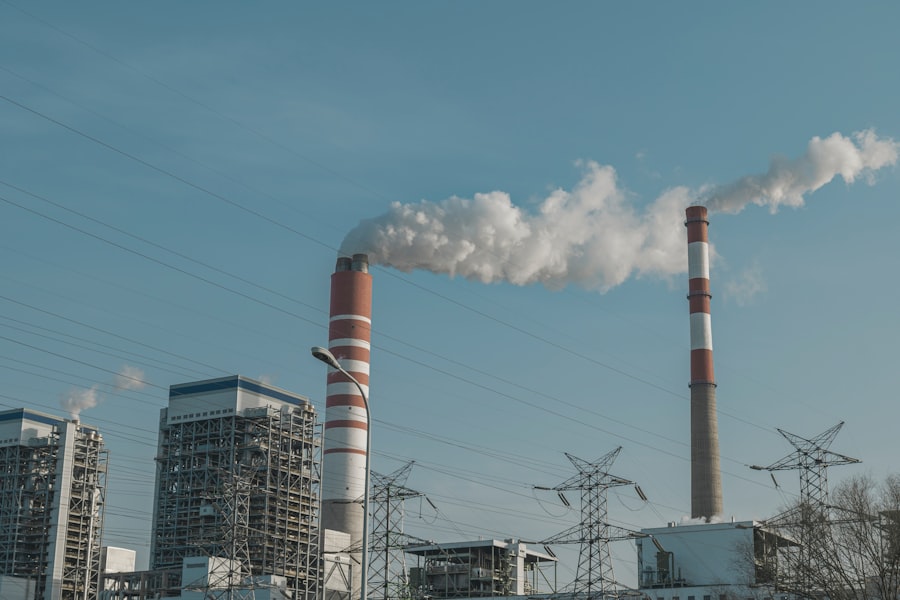
The principles of fossil fuel oxygen consumption stoichiometry are not confined to dusty textbooks. They have direct and profound implications across various sectors.
Power Generation: The Engine of Society
Fossil fuel-fired power plants are massive consumers of fuel and, consequently, oxygen. Understanding stoichiometry is paramount for designing boilers, optimizing burner performance, and controlling emissions.
Boiler Design and Efficiency
The design of boilers in power plants is intrinsically linked to stoichiometric calculations. The required airflow, the geometry of the combustion chamber, and the strategies for fuel-air mixing are all informed by the fuel’s stoichiometry. Efficient combustion, guided by stoichiometric principles, maximizes energy conversion and minimizes fuel waste.
Fuel-Water Ratio
In many industrial burners, the fuel-water ratio is a critical parameter. While not directly about oxygen, the complete combustion of fuel is dependent on the availability of oxygen in the air supply.
Emissions Control Technologies
Many emissions control technologies are designed to manage the products of combustion, which are directly related to the stoichiometry of the process.
Selective Catalytic Reduction (SCR)
SCR systems, used to reduce NOx emissions, rely on the controlled injection of a reductant (typically ammonia or urea) that reacts with NOx in the presence of a catalyst. The efficiency of this reaction is influenced by the upstream combustion conditions, which are governed by stoichiometry.
Flue Gas Desulfurization (FGD)
FGD systems remove sulfur dioxide (SO₂) from flue gases. The amount of SO₂ produced is directly dependent on the sulfur content of the fuel and the combustion stoichiometry.
Internal Combustion Engines: The Wheels of Transportation
The engines powering our vehicles are another prime example where stoichiometry plays a critical role, albeit with specific operational nuances.
Air-Fuel Ratio Control
In gasoline engines, the air-fuel ratio is precisely controlled by the engine control unit (ECU). The ECU uses oxygen sensors in the exhaust and pre-programmed stoichiometric data for gasoline to maintain an optimal air-fuel mixture, often close to stoichiometric (stoichiometric ratio for gasoline is around 14.7:1 air-to-fuel by mass).
The Three-Way Catalytic Converter
Modern gasoline engines utilize a three-way catalytic converter, which is most effective when operating at or very near the stoichiometric air-fuel ratio. This allows the catalyst to simultaneously oxidize CO and unburned hydrocarbons to CO₂ and H₂O, and reduce NOx to N₂.
Diesel Engines: A Different Approach
Diesel engines, on the other hand, typically operate with a lean air-fuel ratio (excess air). This is part of their design for higher fuel efficiency and lower particulate emissions.
Lean Burn’s Stoichiometric Basis
While operating with excess air, the underlying stoichiometric calculations for diesel fuel are still fundamental for understanding the potential for complete combustion and the formation of various byproducts.
Industrial Furnaces and Boilers: The Workhorses of Industry
Numerous industrial processes rely on furnaces and boilers that combust fossil fuels for heat generation. Stoichiometry is central to their efficient and safe operation.
Process Optimization
Optimizing the fuel input and air supply in industrial furnaces directly impacts process efficiency, energy costs, and environmental compliance. Incorrect stoichiometric control can lead to wasted fuel, reduced product quality, and increased emissions.
Combustion Monitoring
Continuous monitoring of combustion parameters, often including oxygen levels in the flue gas, allows for real-time adjustments to maintain optimal stoichiometric conditions.
Recent studies on fossil fuel oxygen consumption stoichiometry have shed light on the intricate balance between energy production and environmental impact. For a deeper understanding of this topic, you might find the article on energy transformations in combustion processes particularly insightful. It explores the chemical reactions involved and their implications for atmospheric chemistry. You can read more about it in this related article, which provides a comprehensive overview of how these reactions contribute to our current energy landscape.
Future Directions: Beyond Stoichiometry
| Fossil Fuel Type | General Chemical Formula | Stoichiometric Oxygen Consumption (O₂ per mole of fuel) | CO₂ Produced (moles per mole of fuel) | H₂O Produced (moles per mole of fuel) | Example Reaction |
|---|---|---|---|---|---|
| Methane (Natural Gas) | CH₄ | 2 | 1 | 2 | CH₄ + 2 O₂ → CO₂ + 2 H₂O |
| Octane (Gasoline) | C₈H₁₈ | 12.5 | 8 | 9 | C₈H₁₈ + 12.5 O₂ → 8 CO₂ + 9 H₂O |
| Coal (Approximate formula) | C₁₀H₆ | 11.5 | 10 | 3 | C₁₀H₆ + 11.5 O₂ → 10 CO₂ + 3 H₂O |
| Propane | C₃H₈ | 5 | 3 | 4 | C₃H₈ + 5 O₂ → 3 CO₂ + 4 H₂O |
| Butane | C₄H₁₀ | 6.5 | 4 | 5 | C₄H₁₀ + 6.5 O₂ → 4 CO₂ + 5 H₂O |
While stoichiometry provides a fundamental framework, understanding and addressing the challenges posed by fossil fuel consumption requires looking beyond the simple calculation of reactants.
Advanced Combustion Technologies
Research and development into advanced combustion technologies aim to improve efficiency and reduce emissions. These often involve manipulating the combustion process in ways that go beyond traditional stoichiometric control.
Flameless Combustion
Flameless combustion, also known as MILD (Moderate or Intense Low-oxygen Dilution) combustion, involves extremely high levels of dilution with combustion products or air, leading to very low local flame temperatures and reduced NOx formation. While still an oxidation process, the dynamics of oxygen availability and mixing are very different from conventional combustion.
Alternative Fuels and Synergies
The shift towards alternative fuels, such as hydrogen or biofuels, necessitates a recalculation of stoichiometric requirements, as their elemental compositions differ significantly from fossil fuels.
Hydrogen Combustion: A Clean Burner
The stoichiometric combustion of hydrogen is remarkably clean:
2H₂ + O₂ → 2H₂O
This reaction produces only water vapor, making hydrogen a promising low-emission fuel.
Carbon Capture and Utilization (CCU)
Technologies aimed at capturing CO₂ emissions from fossil fuel combustion are crucial for mitigating climate change. Understanding the volume and concentration of CO₂ produced, which is dictated by stoichiometry, is essential for designing and operating these capture systems.
The CO₂ Footprint
The stoichiometric equation provides the theoretical maximum amount of CO₂ that can be produced from a given amount of fuel. This directly informs the scale of the challenge in capturing and utilizing these emissions.
In conclusion, the stoichiometry of fossil fuel oxygen consumption is a fundamental chemical principle that underpins much of our understanding of energy conversion and environmental impact. From the simplest hydrocarbon to the complex matrix of coal, the precise molar relationships between fuel and oxygen dictate the efficiency, byproducts, and ultimate sustainability of our reliance on these energy sources. As we navigate the path towards a more sustainable future, a deep appreciation for these chemical foundations will continue to be an indispensable tool.

WATCH NOW ▶️ SHOCKING: Why Your Air Is Literally A Lie
FAQs
What is fossil fuel oxygen consumption stoichiometry?
Fossil fuel oxygen consumption stoichiometry refers to the quantitative relationship between the amount of oxygen required to completely combust a given amount of fossil fuel. It involves calculating the precise oxygen needed to oxidize the carbon, hydrogen, sulfur, and other elements present in the fuel.
Why is understanding oxygen consumption stoichiometry important in fossil fuel combustion?
Understanding oxygen consumption stoichiometry is crucial for optimizing combustion efficiency, reducing pollutant emissions, and ensuring safe operation of combustion systems. Accurate stoichiometric calculations help in designing burners, controlling air-to-fuel ratios, and minimizing excess air to improve fuel utilization.
How is the stoichiometric oxygen requirement calculated for a fossil fuel?
The stoichiometric oxygen requirement is calculated based on the chemical composition of the fossil fuel, typically expressed in terms of carbon (C), hydrogen (H), sulfur (S), and sometimes nitrogen (N) content. The general approach involves balancing the combustion reaction equations to determine the moles of oxygen needed to fully oxidize each element.
What role does excess air play in fossil fuel combustion?
Excess air is the amount of air supplied beyond the stoichiometric requirement to ensure complete combustion. While some excess air is necessary to avoid incomplete combustion and formation of carbon monoxide, too much excess air can lower combustion efficiency and increase heat losses.
Can stoichiometric oxygen consumption vary between different types of fossil fuels?
Yes, stoichiometric oxygen consumption varies depending on the chemical composition of the fossil fuel. For example, coal, natural gas, and petroleum products have different ratios of carbon, hydrogen, and sulfur, leading to different oxygen requirements for complete combustion.