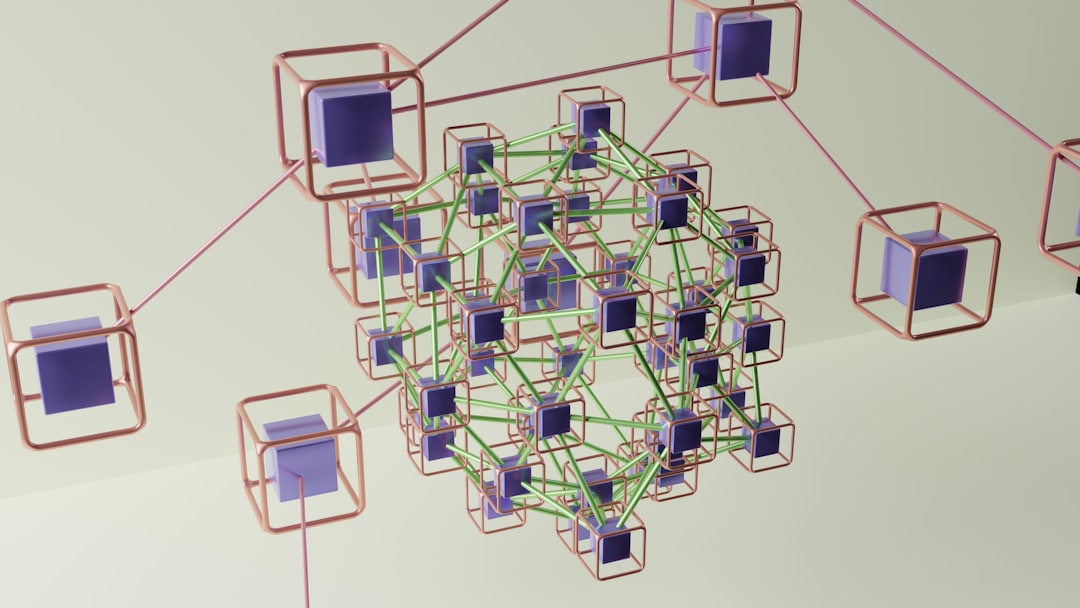
Organizations, much like complex biological organisms, exhibit an inherent tendency towards hierarchical structuring. This article explores the multifaceted processes and underlying rationales that drive the formation and evolution of these hierarchical architectures within a wide range of human enterprises. From ancient armies to modern multinational corporations, the stratification of authority and responsibility has served as a foundational principle for orchestrating collective action.
The emergence of hierarchy is not a mere managerial fad but a recurring pattern observed throughout human history and even in natural systems. It addresses fundamental challenges inherent in coordinating the efforts of multiple individuals towards a common goal. Without clear lines of authority and communication, large-scale endeavors would descend into chaos, resembling a rudderless ship in a storm.
Cognitive Limitations and Information Processing
Human beings possess finite cognitive capacities. As the size and complexity of an organization grow, the sheer volume of information that needs to be processed, disseminated, and acted upon can quickly overwhelm any individual or flat organizational structure. Hierarchy provides a mechanism for compartmentalizing information and decision-making.
- Bounded Rationality: Herbert Simon’s concept of bounded rationality highlights the limitations of human decision-making. Individuals cannot simultaneously process all available information. Hierarchies allow for the delegation of specific problem domains to specialized units, reducing the cognitive load on any single actor.
- Information Filtering and Amplification: Senior management is not burdened with every minute detail of an operation. Instead, information is filtered and aggregated as it moves up the organizational ladder, presenting a concise summary suitable for strategic decision-making. Conversely, directives are amplified and broken down into actionable steps as they cascade downwards.
The Need for Specialization and Division of Labor
As tasks become more specialized and require distinct skill sets, it becomes impractical for every individual to possess competency in all areas. Hierarchy facilitates the division of labor, allowing individuals to focus on specific functions and develop expertise.
- Efficiency Gains: Specialization leads to increased efficiency and productivity. A dedicated marketing department, for instance, can develop expertise in market analysis and campaign execution far beyond what a generalist could achieve.
- Skill Development and Training: Hierarchical layers often correspond to different skill levels and experience. Entry-level positions provide a foundation, while higher tiers demand greater expertise and strategic thinking, fostering a clear career progression path.
Hierarchical structure formation is a fundamental concept in various scientific fields, particularly in astrophysics and biology. For those interested in exploring this topic further, a related article can be found at Freaky Science, which delves into the intricacies of how complex systems evolve from simpler components. This resource provides valuable insights into the mechanisms that drive the organization of structures within different contexts, enhancing our understanding of both natural and artificial systems.
Mechanisms of Hierarchical Formation
The process by which hierarchies emerge and solidify is multifaceted, driven by both intentional design and emergent properties. Understanding these mechanisms is crucial for appreciating the dynamic nature of organizational structures.
Intentional Design: Rational Planning and Strategic Imperatives
Many hierarchies are deliberately constructed through a process of rational planning. Organizations, particularly those in nascent stages or undergoing significant restructuring, often design their reporting lines and departmental divisions with specific strategic objectives in mind.
- Clarification of Authority and Accountability: Explicitly defined roles and reporting structures remove ambiguity, ensuring that every individual understands their responsibilities and to whom they are accountable. This clarity is vital for performance management and disciplinary processes.
- Strategic Alignment: Hierarchical levels can be designed to align with an organization’s strategic goals. For example, a company focused on innovation might create flatter, cross-functional teams at lower levels to foster collaboration, while maintaining a clear strategic leadership at the top.
- Resource Allocation: Hierarchies provide a framework for the efficient allocation of resources, both human and financial. Authority to approve budgets and delegate tasks is typically concentrated at higher levels, enabling strategic resource deployment.
Emergent Properties: The Evolution of Informal Structures
While formal hierarchies are carefully designed, informal hierarchies also emerge through social interactions and power dynamics. These informal structures can either reinforce or subtly undermine the formal organizational chart.
- Social Networks and Influence: Individuals with strong social connections, charismatic personalities, or unique expertise can gain informal influence, regardless of their official position. This informal authority can be a powerful force within an organization.
- Ad Hoc Problem Solving: In situations requiring rapid adaptation, individuals may bypass formal channels and form informal working groups to address immediate challenges. If successful, these spontaneous collaborations can sometimes solidify into recognized, albeit informal, hierarchical relationships.
- Mentorship and Knowledge Transfer: Experienced individuals naturally assume a more senior, guiding role for less experienced team members, forming informal mentor-mentee hierarchies that contribute significantly to knowledge transfer and skill development.
The Functional Imperatives of Hierarchical Layers
Each layer within a hierarchy typically fulfills distinct functions, contributing to the overall stability and effectiveness of the organization. Understanding these imperatives allows for a more nuanced appreciation of how hierarchies operate.
Strategic Leadership and Vision Setting
The uppermost echelons of a hierarchy are primarily responsible for setting the long-term direction, defining the organizational mission, and articulating a compelling vision for the future.
- Environmental Scanning and Adaptation: Top leadership continuously monitors the external environment, identifying threats and opportunities, and adjusting the organization’s strategic course accordingly. This anticipatory function is crucial for long-term survival.
- Cultural Shaping: Leaders play a pivotal role in shaping the organizational culture, values, and ethical standards. Their decisions and behaviors set the tone for the entire enterprise, acting as a cultural compass.
- External Stakeholder Management: Senior executives are often the primary interface with external stakeholders, including investors, regulators, and the public. They manage key relationships and safeguard the organization’s reputation.
Operational Management and Resource Coordination
Middle management layers are the linchpin between strategic vision and operational execution. They translate high-level strategies into actionable plans and ensure the efficient allocation and utilization of resources.
- Implementation of Strategic Directives: Middle managers are responsible for breaking down broad strategic goals into departmental objectives and designing the processes and workflows necessary for their achievement.
- Performance Monitoring and Feedback: They track the progress of their teams, identify bottlenecks, and provide constructive feedback to ensure performance targets are met. This feedback loop is essential for continuous improvement.
- Employee Development and Motivation: Middle managers often bear the primary responsibility for coaching, mentoring, and motivating their direct reports, fostering a productive and engaged workforce. They are the frontline leaders who directly influence employee morale and retention.
Frontline Execution and Task Performance
The lowest layers of the hierarchy, often encompassing individual contributors and supervisory roles, are responsible for the direct execution of tasks and the delivery of products or services.
- Direct Production and Service Delivery: These individuals perform the core activities of the organization, whether it’s manufacturing goods, providing customer service, or conducting research. They are the engines of the enterprise.
- Problem Identification and Resolution: Frontline employees are often the first to identify operational issues or customer complaints. Their ability to flag problems and contribute to their resolution is critical for maintaining quality and efficiency.
- Data Collection and Reporting: They generate the raw data that feeds upwards through the hierarchy, providing the basis for performance analysis and strategic adjustments. Their accurate and timely reporting is invaluable.
Challenges and Criticisms of Hierarchical Structures
Despite their widespread prevalence and functional utility, hierarchical structures are not without their drawbacks. Critics often point to potential inefficiencies, communication bottlenecks, and stifled innovation.
Communication Barriers and Information Distortion
The layered nature of hierarchies can impede the free flow of information, leading to delays and inaccuracies, much like a message passed through multiple people in a crowded room.
- “Chinese Whispers” Effect: Information can be filtered, misinterpreted, or deliberately altered as it traverses multiple levels. This distortion can lead to suboptimal decision-making and misunderstandings.
- Slow Decision-Making: Complex decisions that require input from multiple layers can become bogged down in approvals and reviews, hindering an organization’s agility in fast-paced environments.
- Lack of Transparency: Lower-level employees may feel detached from strategic decisions, leading to a lack of engagement and a perception of opacity in organizational processes.
Bureaucracy and Rigidity
Overly rigid hierarchies can foster bureaucratic tendencies, where adherence to rules and procedures takes precedence over adaptability and innovation.
- Resistance to Change: Established hierarchies can become resistant to change, as new ideas may challenge existing power structures or require significant upheaval of established processes.
- “Red Tape” and Inefficiency: Excessive reliance on formal procedures and multiple layers of approval can create unnecessary administrative burdens, slowing down operations and wasting resources.
- Lack of Empowerment: Employees at lower levels may feel disempowered and unable to take initiative, as decision-making authority is concentrated at the top. This can stifle creativity and engagement.
Power Imbalances and Political Behavior
The inherent power differentials within hierarchies can give rise to political maneuvering, self-serving behavior, and a sense of disenfranchisement among those at lower levels.
- “Silo Mentality”: Departments or divisions within a hierarchy can become isolated silos, prioritizing their own goals over the broader organizational objectives, leading to inter-departmental conflicts.
- Careerism and Internal Competition: Individuals may prioritize climbing the corporate ladder over collaborative efforts, leading to unhealthy competition and a focus on personal advancement rather than collective success.
- Lack of Voice: Employees at lower organizational levels may feel their perspectives are not heard or valued, leading to decreased morale and a sense of alienation from the decision-making process.
Hierarchical structure formation is a fascinating topic that delves into how complex systems organize themselves into layers of organization. For those interested in exploring this concept further, a related article can be found at Freaky Science, which discusses various models and theories that explain the emergence of such structures in both natural and artificial systems. Understanding these principles can provide valuable insights into everything from social dynamics to biological systems, highlighting the interconnectedness of different fields of study.
The Future of Organizational Hierarchy: Adaptation and Evolution
| Metric | Description | Typical Value/Range | Unit |
|---|---|---|---|
| Mass of Dark Matter Halos | Mass of gravitationally bound dark matter structures forming hierarchically | 10^6 to 10^15 | Solar Masses (M☉) |
| Redshift (z) | Epoch indicator for structure formation stages | 0 to 20+ | Dimensionless |
| Virial Radius | Radius within which the halo is gravitationally bound and virialized | 10 to 2000 | kpc (kiloparsecs) |
| Halo Concentration Parameter | Ratio describing density profile concentration of halos | 5 to 20 | Dimensionless |
| Merger Rate | Frequency of halo mergers per unit time | 0.01 to 1 | Gyr⁻¹ (per billion years) |
| Growth Rate of Structure | Rate at which density perturbations grow over time | 0.5 to 1.0 | Dimensionless (growth factor) |
| Power Spectrum Amplitude (σ8) | RMS density fluctuations on 8 Mpc/h scales | ~0.8 | Dimensionless |
The ongoing discourse surrounding organizational design suggests that while hierarchy may persist as a fundamental principle, its manifestations are continually evolving. Modern organizations are experimenting with hybrid models that seek to mitigate the drawbacks of traditional hierarchies while retaining their inherent benefits.
Hybrid Models: Flattening and Decentralization
Many organizations are moving towards flatter structures, aiming to empower employees and accelerate decision-making, without entirely abandoning the need for strategic direction.
- Matrix Structures: These structures overlay functional hierarchies with project-based teams, allowing for cross-functional collaboration and resource sharing. Individuals report to both a functional manager and a project manager, creating a more fluid reporting dynamic.
- Holacracy and Sociocracy: These radical approaches distribute authority and decision-making throughout self-organizing teams, often replacing traditional job titles with dynamic roles and circles. While not universally adopted, they represent significant deviations from conventional hierarchies.
- Decentralized Decision-Making: Empowering lower-level teams and individuals with greater autonomy to make decisions relevant to their specific areas of expertise can lead to faster response times and increased innovation.
Technology as an Enabler of New Structures
Advances in communication and collaboration technologies are playing a crucial role in enabling new organizational designs that can transcend geographical boundaries and traditional hierarchical constraints.
- Enhanced Information Flow: Digital communication platforms facilitate rapid and transparent information exchange across all organizational levels, reducing the “Chinese whispers” effect and increasing transparency.
- Virtual Teams and Remote Work: Technology allows for the formation of virtual teams that operate effectively across different locations, challenging the need for physical co-location often associated with traditional hierarchies.
- Data-Driven Decision Making: Analytics platforms provide access to vast amounts of data, enabling decision-making to be more evidence-based and less reliant on hierarchical intuition alone.
In conclusion, hierarchical structure formation in organizations is a complex and multifaceted phenomenon, driven by fundamental human cognitive limitations, the imperative for specialization, and the need for coordinated action. While traditional hierarchies offer undeniable benefits in terms of clarity, control, and efficiency, they also present challenges related to communication, bureaucracy, and power dynamics. As organizations navigate an increasingly dynamic and complex world, the future of hierarchy lies not in its abolition, but in its intelligent adaptation and evolution, embracing hybrid models, leveraging technology, and empowering individuals to contribute effectively within a more fluid and responsive organizational architecture. The persistent quest for optimizing organizational design will undoubtedly continue to shape how we structure work and orchestrate collective endeavors.

WATCH NOW ▶️ Our Galaxy Is Sliding Toward a Cosmic Drain
FAQs
What is hierarchical structure formation?
Hierarchical structure formation is a theory in cosmology that describes how small structures in the universe, such as stars and galaxies, form first and then merge over time to create larger structures like galaxy clusters and superclusters.
How does hierarchical structure formation explain galaxy formation?
According to hierarchical structure formation, galaxies form through the gradual merging of smaller dark matter halos and gas clouds. These smaller units coalesce under gravity, leading to the buildup of larger galaxies over cosmic time.
What role does dark matter play in hierarchical structure formation?
Dark matter provides the gravitational framework necessary for hierarchical structure formation. It forms the initial small-scale clumps or halos that attract baryonic matter (normal matter), facilitating the formation of stars and galaxies within these dark matter structures.
Is hierarchical structure formation supported by observations?
Yes, hierarchical structure formation is supported by various astronomical observations, including the distribution of galaxies, the cosmic microwave background radiation, and large-scale structure surveys, all of which align with predictions from this model.
How does hierarchical structure formation differ from monolithic collapse models?
Hierarchical structure formation posits that structures form through the gradual merging of smaller units, whereas monolithic collapse models suggest that large structures formed rapidly and in a single collapse event. The hierarchical model is currently favored due to better agreement with observational data.