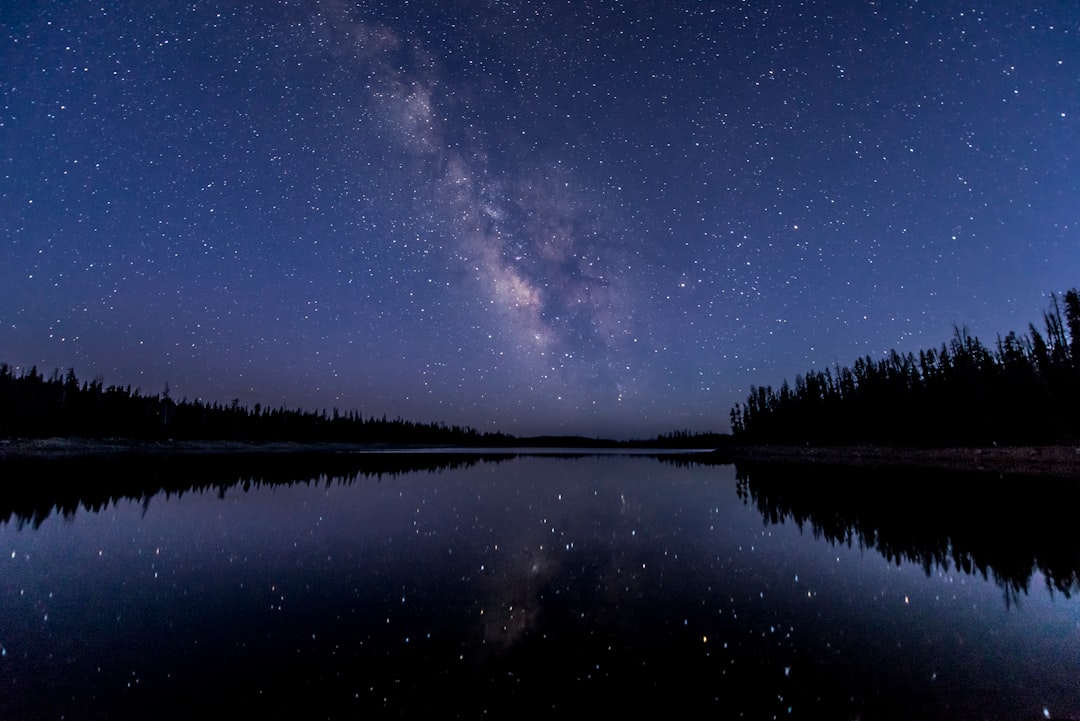
The Milky Way, a barred spiral galaxy, has been home to humanity for millennia. Its sprawling disk, punctuated by brilliant stellar nurseries and shadowed by cosmic dust, contains an estimated 100 to 400 billion stars. Yet, like all things in the universe, it has a finite existence. The exploration of this eventual end, a concept not of destruction but of transformation, offers profound insights into galactic evolution and the cosmic ballet of gravitational forces. This article delves into the various scenarios predicting the Milky Way’s ultimate fate, examining the astronomical processes that will shape its demise and the implications for its remaining inhabitants.
The most immediate and dramatic event shaping the Milky Way’s future is its impending collision with the Andromeda Galaxy (M31). This monumental encounter, projected to occur in approximately 4.5 billion years, represents not a head-on impact in the conventional sense, but a slow, gravitational embrace.
Andromeda: A Cosmic Sister
Andromeda, a formidable spiral galaxy even larger than the Milky Way, is currently hurtling towards our galaxy at a velocity of roughly 110 kilometers per second. This speed is determined by observing the blue shift in its spectrum, indicating its approach. For billions of years, the gravitational influence of Andromeda has been slowly drawing the Milky Way closer, like two ships on an inevitable course across a vast, dark ocean.
The Initial Dance: Tidal Forces
As the two galaxies draw nearer, their immense gravitational fields will begin to exert significant tidal forces on each other. These forces, akin to the Moon’s pull on Earth’s oceans, will distort the galactic disks. Spiral arms will be stretched and twisted, and vast streams of gas and stars will be pulled away from their parent galaxies. This initial phase, lasting hundreds of millions of years, will be characterized by dramatic celestial fireworksvisible from any surviving observation platforms.
The First Pass
The first major “pass” of the two galactic cores is not anticipated to be a direct collision. Instead, they are more likely to perform a graceful, yet violent, fly-by. Stars within each galaxy are incredibly far apart, meaning direct stellar collisions are exceedingly rare, like two grains of sand meeting in an entire ocean. Rather, their orbits will be perturbed, and stars will be flung into new trajectories, some ejected into intergalactic space, others drawn into the gravitational well of the merging system.
Subsequent Mergers and the Birth of Milkomeda
Following the initial pass, the two galaxies will continue to oscillate and interact, gradually shedding kinetic energy through gravitational slingshots and tidal stripping. Over several billion years, they will repeatedly pass through each other, each encounter further disrupting their structures. Eventually, after perhaps another two to three billion years, their cores will coalesce, and their disks will merge into a single, larger, elliptical galaxy. This nascent behemoth has been affectionately termed “Milkomeda” or “Milkdromeda” by astronomers.
As researchers continue to explore the mysteries of our galaxy, the end of the Milky Way presents intriguing questions about its structure and fate. For those interested in delving deeper into this topic, a related article can be found here: The End of the Milky Way: What Lies Beyond?. This article discusses the potential scenarios for the future of our galaxy and what astronomers have discovered about its outer regions.
The Long-Term Evolution of Milkomeda
The birth of Milkomeda is not the end of galactic evolution but a significant new chapter. This merged entity will undergo its own transformative processes, shaped by the dynamics of its new configuration and the relentless march of stellar evolution.
Star Formation in Milkomeda
The merger process, while initially disruptive, will also trigger intense bursts of star formation. The compression of gas clouds during the collisions of galactic disks will ignite new stellar nurseries, creating a spectacular display of young, hot, blue stars. This period of rejuvenated star birth, however, will be finite. Most of the available gas and dust will eventually be consumed or ejected.
The Decline of Star Formation
As Milkomeda settles into its new, elliptical form, the rate of star formation will steadily decline. Elliptical galaxies, unlike their spiral counterparts, are typically characterized by older stellar populations and much lower rates of ongoing star formation. The cosmic fuel, primarily hydrogen and helium gas, will be depleted, and the galaxy will gradually become redder and dimmer as its remaining stars age and die.
The Fate of Stellar Remnants
Over billions of years, the stars within Milkomeda will exhaust their nuclear fuel. Sun-like stars will evolve into red giants, shed their outer layers as planetary nebulae, and eventually settle as white dwarfs. More massive stars will explode as supernovae, leaving behind neutron stars or black holes. The galaxy will become an increasingly crowded graveyard of stellar remnants, punctuated by the occasional flash of a supernova or a gamma-ray burst.
The Universe’s Expanding Canvas
While galactic collisions represent a local influence on the Milky Way’s fate, the broader expansion of the universe exerts a profound long-term impact on all galaxies. This cosmic expansion, governed by dark energy, will dramatically reshape our view of the cosmos.
The Isolating Effect of Dark Energy
The accelerating expansion of the universe, driven by dark energy, means that distant galaxies are receding from us at ever-increasing speeds. Eventually, the space between galaxy clusters will expand so rapidly that these distant galaxies will cross a cosmic horizon, becoming permanently unobservable to future inhabitants of Milkomeda. Their light will be stretched beyond detection, and their gravitational influence will diminish into insignificance.
The Lonesome Island of Milkomeda
In the far future, Milkomeda and its immediate cluster of galaxies (the Local Group) will become a cosmic island, functionally isolated from the rest of the universe. The light from other galaxy clusters will be stretched to such extreme wavelengths that they will effectively become invisible. Future astronomers, if any exist, might infer the existence of a grander universe through residual cosmic microwave background radiation, but they would have no direct observational evidence of its current structure. This cosmic loneliness stands in stark contrast to our present vantage point, where we observe billions of galaxies stretching across the observable universe.
The Redshift Desert
The observable universe, as we understand it today, will shrink dramatically. The phenomena that currently allow us to study cosmic evolution – the light from distant supernovae, the distribution of galaxies, the signatures of primordial gas clouds – will gradually recede beyond our event horizon. The cosmic landscape will transform into a “redshift desert,” where the only observable objects are those gravitationally bound within our local supercluster.
The Degenerate Era and Beyond
Even after the formation of Milkomeda and its isolation, the universe still has billions, if not trillions, of years of evolution remaining. The ultimate end of the Milky Way, interpreted in the broadest sense, extends into these incredibly distant epochs.
Stellar Graveyards
In the unimaginably distant future, billions upon billions of years from now, even the longest-lived stars will have exhausted their hydrogen fuel. Red dwarfs, with their incredibly slow burning rates, might shine faintly for trillions of years, but even they will eventually fade. The galaxy will be dominated by stellar remnants: white dwarfs, neutron stars, and black holes. The occasional collision of white dwarfs might trigger a Type Ia supernova, a brief flicker in an otherwise dark cosmos.
Black Hole Domination
Over truly immense timescales, even more exotic phenomena will dominate. Supermassive black holes, like the one residing at the core of Milkomeda, will slowly grow by accreting any remaining gas and stellar debris. Smaller black holes, remnants of massive stars, will also populate the galactic halo. These black holes, over mind-boggling durations of time, are theorized to evaporate through a process known as Hawking radiation, gradually losing mass and energy until they vanish entirely. However, the timescale for this evaporation is exponentially longer than the current age of the universe, making its practical observation or influence on galactic evolution impossible to measure directly.
Proton Decay and the Heat Death
The most extreme and speculative scenarios for the ultimate end of the universe, and by extension, the final demise of the components of the Milky Way, involve concepts like proton decay. If protons are not absolutely stable, which is predicted by some grand unified theories, then over timescales far exceeding the lifetime of any star or black hole, even atoms themselves would eventually disintegrate. This would leave behind a universe composed solely of fundamental particles and radiation.
This scenario leads to the concept of “heat death,” where the universe reaches a state of maximum entropy. All energy would be evenly distributed, and there would be no temperature gradients, no sources of free energy to power any processes. The universe would be a cold, dark, featureless expanse, an ultimate state of cosmic stillness, where the constituents of the once vibrant Milky Way would have long since dispersed into an indistinguishable cosmic soup.
As scientists continue to explore the mysteries of our galaxy, the end of the Milky Way presents intriguing questions about the future of our cosmic neighborhood. Recent studies suggest that the Milky Way may eventually collide with the Andromeda Galaxy, leading to a spectacular cosmic merger. For more insights on this fascinating topic, you can read a related article that delves deeper into the implications of such galactic interactions. To learn more, check out this informative article that explores the dynamics of our universe.
Implications for Life and Observation
| Metric | Value | Unit | Description |
|---|---|---|---|
| Estimated Time Until Collision with Andromeda | 4 | billion years | Time until the Milky Way and Andromeda galaxies begin to merge |
| Duration of Milky Way-Andromeda Merger | 2 | billion years | Approximate time span for the galaxies to fully merge |
| Resulting Galaxy Name | Milkomeda | N/A | Proposed name for the merged galaxy |
| Star Formation Rate Decline | Near zero | solar masses/year | Expected decrease in star formation after gas depletion |
| Black Hole Merger Event | In ~6 billion years | years | Estimated time for central black holes of both galaxies to merge |
| Milky Way’s Current Age | 13.6 | billion years | Age of the Milky Way galaxy |
| End of Star Formation in Milkomeda | ~100 trillion | years | Estimated time when star formation ceases in the merged galaxy |
The profound changes awaiting the Milky Way naturally raise questions about the fate of any life forms inhabiting the galaxy, including our own prospective descendants.
The Habitability of Milkomeda
While the initial collision might seem catastrophic, the vast distances between stars mean that individual star systems, like our own, are unlikely to be directly impacted. However, the changed gravitational environment could perturb planetary orbits. It is plausible that the Sun and its planets could find themselves in a new region of Milkomeda, perhaps even ejected into intergalactic space, though the latter is less probable for our star. The critical factor for life will be the continued stability of their host star and planetary system.
The Evolving Cosmic View
Future astronomers, if any survive the journey through these cosmic epochs, would inhabit a dramatically different universe. The once familiar spiral arms of the Milky Way would be long gone, replaced by the diffuse halo of Milkomeda. The rich tapestry of external galaxies, so carefully studied by modern astronomy, would fade into obscurity, leaving behind a seemingly empty cosmic expanse. This highlights the ephemeral nature of our current observational window, a precious era where the universe’s past and present are still within reach of our instruments.
A Legacy in Transformation
The end of the Milky Way, therefore, is not an abrupt cessation but a grand transformation, a testament to the dynamic and ever-evolving nature of the universe. From a bustling spiral to a majestic elliptical, and eventually to a realm of stellar remnants and fundamental particles, the story of our home galaxy is interwoven with the grand cosmic narrative. Understanding these processes provides a humbling perspective on our place in the cosmos, reminding us of the transient beauty and enduring power of astronomical forces. The exploration of this galactic destiny is a quintessential human endeavor, an attempt to grasp the enormity of cosmic time and the ultimate fate of our universal home.

WATCH NOW ▶️ Our Galaxy Is Sliding Toward a Cosmic Drain
FAQs
What does “the end of the Milky Way” mean?
The phrase “the end of the Milky Way” typically refers to the eventual fate or ultimate transformation of our galaxy, including events such as its collision with the Andromeda galaxy or the gradual dispersal of its stars over billions of years.
When is the Milky Way expected to collide with the Andromeda galaxy?
Astronomers estimate that the Milky Way will collide with the Andromeda galaxy in about 4 to 5 billion years, resulting in a merger that will form a new, larger galaxy often referred to as “Milkomeda” or “Milkdromeda.”
Will the collision between the Milky Way and Andromeda destroy our solar system?
While the collision will dramatically reshape both galaxies, it is unlikely to directly destroy the solar system. However, gravitational interactions may alter the solar system’s position within the merged galaxy, and the night sky will look very different.
What happens to the stars at the outer edges of the Milky Way?
Stars at the outer edges of the Milky Way orbit more slowly and can be influenced by gravitational forces from nearby galaxies or dark matter. Over very long timescales, some stars may be pulled away or drift into intergalactic space.
How will the Milky Way change after the collision with Andromeda?
After the collision and merger, the Milky Way and Andromeda will form a larger elliptical or lenticular galaxy. Star formation rates may initially increase due to gas compression, but over time, the new galaxy will stabilize and evolve differently from the current spiral structure.