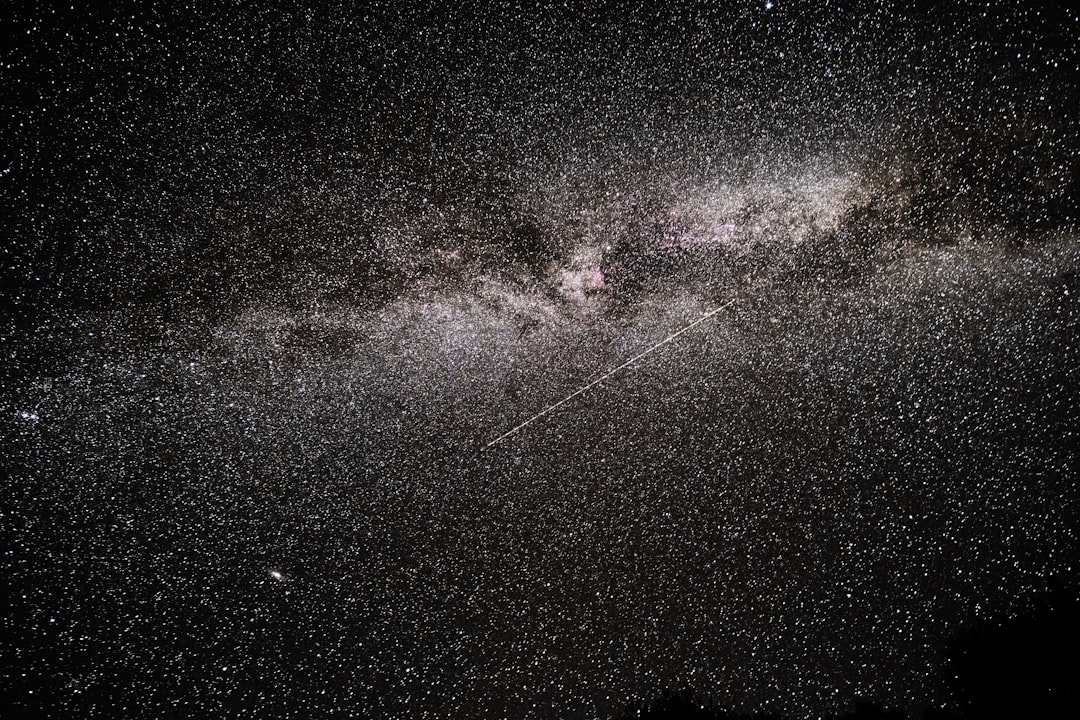
The Milky Way Galaxy, our cosmic home, is not a static island in the vast ocean of space. Instead, it embarks on a grand, unseen journey, a celestial drift that scientists have recently measured with surprising precision and astonishing speed. For generations, humanity has gazed upon the luminous river of stars that graces our night sky, a spectacle that has inspired awe and wonder. Now, the same scientific inquiry that deciphers the composition of distant nebulae and the birthplaces of stars has unveiled a new dimension to our galaxy’s existence: its undeniable velocity. This article will explore the current understanding of the Milky Way’s motion, the methods employed to measure it, and the implications of this dynamic cosmic dance.
The sheer scale of the Milky Way, a disc-shaped spiral galaxy estimated to contain hundreds of billions of stars, makes measuring its movement a formidable scientific undertaking. Imagine trying to gauge the speed of a continent by observing only the pebbles on its surface. Similarly, determining the Milky Way’s velocity requires observing the subtle shifts in the light from celestial objects over vast distances and timescales. Recent advancements in observational technology and sophisticated data analysis have provided the most precise measurements to date, revealing that our galaxy is hurtling through the cosmos at a pace far greater than previously anticipated.
The Reference Frame: A Crucial Starting Point
To understand motion, one must first establish a frame of reference. Newton’s laws of motion, fundamental to our understanding of physics, are predicated on the idea that motion is relative. Therefore, to measure the Milky Way’s speed, astronomers must identify distant, relatively stationary objects or phenomena that can serve as benchmarks. This is akin to marking a spot on a moving train and then observing a distant mountain to see how the spot moves relative to the unchanging peak.
The Cosmic Microwave Background as a Static Point
Perhaps the most crucial reference frame for galactic motion is the Cosmic Microwave Background (CMB). This faint afterglow of the Big Bang permeates the entire universe, a relic of the early hot, dense state of the cosmos. While the universe itself is expanding, the CMB is remarkably uniform. However, the Milky Way, along with our local group of galaxies, is moving relative to this uniform background radiation. This motion creates a slight Doppler shift in the CMB photons: they appear blueshifted in the direction of our motion and redshifted in the opposite direction, a phenomenon known as the kinetic Sunyaev-Zel’dovich effect. By meticulously mapping these subtle temperature variations in the CMB, scientists can deduce the velocity of our galaxy.
Quasars as Distant Beacons
Beyond the CMB, the observed positions of distant quasars, the intensely luminous active galactic nuclei powered by supermassive black holes, also play a vital role. These objects are so far away that their peculiar velocities (their individual motions through space) are negligible compared to the overall expansion of the universe. They effectively act as fixed points in the cosmic landscape, allowing astronomers to track the Milky Way’s journey by observing how our galaxy’s position shifts relative to these ancient light sources over time.
The Doppler Effect: A Cosmic Spectacles
The Doppler effect, a phenomenon familiar from the changing pitch of a siren as it passes, is a critical tool in measuring the Milky Way’s velocity. As celestial objects move towards us, the light they emit is compressed, shifting towards shorter, bluer wavelengths (blueshift). Conversely, as they move away, the light is stretched, shifting towards longer, redder wavelengths (redshift). By analyzing the spectral lines within the light from stars and gas within our galaxy, and comparing them to known spectral signatures, astronomers can determine whether these objects are moving towards or away from us, and at what speed.
Redshift and Blueshift of Galactic Objects
The apparent motion of stars within the Milky Way and even nearby galaxies provides further clues. While individual stars within our galaxy have their own orbital motions around the galactic center, the collective motion of vast populations of stars, and the overall redshift or blueshift observed from entire regions, can reveal the galaxy’s large-scale movement. This is like observing the general tendency of all the leaves on a particular branch of a tree to move in a certain direction, suggesting the branch itself is swaying.
Measuring the Galactic Standard of Rest
The concept of a “Galactic Standard of Rest” is derived by averaging the motions of a vast number of stars within the Milky Way. This hypothetical point represents the average velocity of stars within our galaxy, effectively cancelling out the individual random motions of its stellar inhabitants. The difference between the velocity of this standard of rest and the velocity of the CMB or distant quasars then reveals the Milky Way’s true motion through the universe. It’s the equivalent of finding the average speed of all the cars on a highway to determine if the entire highway itself is moving at an incline.
Recent studies have shed light on the Milky Way Galaxy’s drift speed, revealing fascinating insights into its movement through the cosmos. For a deeper understanding of this phenomenon and its implications for our place in the universe, you can explore a related article on the topic at Freaky Science. This resource provides a comprehensive overview of the Milky Way’s dynamics and how they influence our galactic neighborhood.
The Magnitude of the Drift: A Surprisingly Swift Journey
The recent measurements have confirmed that the Milky Way is not merely drifting; it is doing so at a substantial speed. This velocity is not a leisurely amble but a significant cosmic stride, propelling our galaxy through the intergalactic medium with considerable momentum. Understanding the magnitude of this motion is crucial for comprehending our place in the cosmic tapestry and the forces shaping our galactic neighborhood.
A Speed Measured in Kilometers per Second
The reported speeds for the Milky Way’s motion are typically expressed in kilometers per second (km/s). To put this into perspective, a kilometer is roughly the length of ten football fields laid end-to-end. The velocities observed are in the hundreds of kilometers per second, a pace that dwarfs any terrestrial speed we might commonly encounter.
Comparing with Everyday Speeds
Consider a high-speed train traveling at 300 km/h. This is a mere crawl when compared to the Milky Way’s galactic promenade. The speeds involved are such that our galaxy could traverse the distance between Earth and the Moon in mere fractions of a second, if such a cosmic shortcut were possible.
Relative to What? The Andromeda Galaxy and Local Group
The Milky Way’s motion is often discussed in relation to nearby galaxies, particularly our closest large galactic neighbor, the Andromeda Galaxy. While both galaxies are on a collision course billions of years from now, their current relative motion is complex and influenced by the gravitational tugs of other galaxies in our Local Group. The Milky Way is also moving relative to other galaxies within this cluster, exhibiting a collective motion that hints at larger cosmic structures.
The Laniakea Supercluster: A Vast Cosmic Structure
Emerging from complex mapping of galaxy flows, it has been revealed that the Milky Way, along with Andromeda and hundreds of thousands of other galaxies, is part of a colossal structure known as the Laniakea Supercluster. This gargantuan cosmic island is defined by the gravitational attraction of its constituent galaxies, pulling them towards a common central point. The Milky Way’s motion is, in part, a journey towards the attractor of this supercluster. Laniakea, Hawaiian for “immense heaven,” aptly describes this incredibly vast collection of matter.
The Driving Forces: What’s Pushing Us?
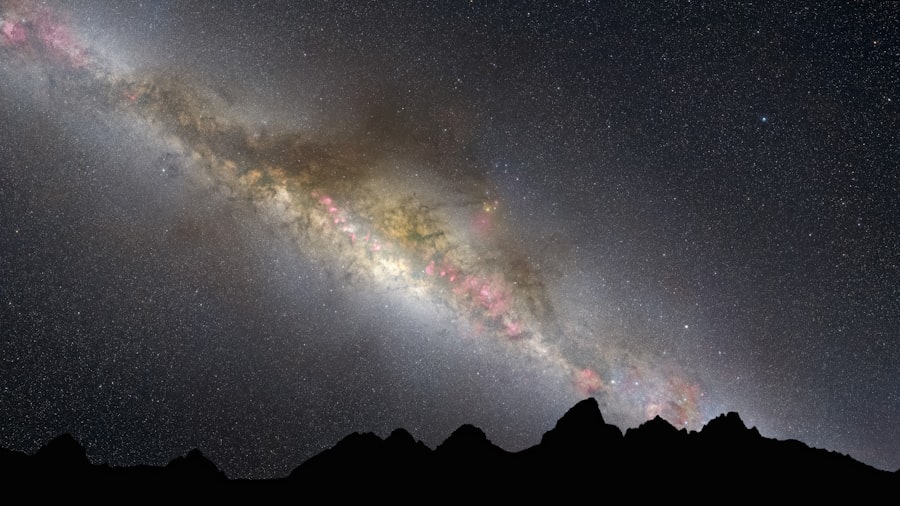
The question of what propels the Milky Way at such a remarkable speed is one that continues to occupy astrophysicists. Gravity, the universal architect of cosmic structures, is undoubtedly the primary sculptor of galactic motion. However, the specific gravitational influences at play are intricate and involve the interplay of our galaxy with its cosmic environment.
Gravitational Pull of Superclusters and Filaments
The large-scale structure of the universe is not uniform; it’s a cosmic web of filaments and voids, with galaxies congregating in clusters and superclusters. The Milky Way resides within the Laniakea Supercluster, and its motion is largely dictated by the gravitational pull of this immense structure. Think of it as a leaf being carried by a vast river; the leaf’s individual wiggles are minor compared to the overall flow of the water, which is itself influenced by the terrain of the riverbed.
Clusters and Superclusters as Cosmic Attractors
Galactic clusters and superclusters act as gravitational attractors, drawing in matter from their surroundings. The Milky Way, as part of Laniakea, is being inexorably pulled towards the supercluster’s gravitational center. This is not a random wander but a directed migration driven by the collective mass of our cosmic neighborhood.
Dark Matter’s Hidden Influence
A significant portion of the gravitational pull responsible for galactic motion is attributed to dark matter, an invisible substance that accounts for roughly 85% of the matter in the universe. While it does not interact with light, its gravitational influence is undeniable. The distribution of dark matter within superclusters and filaments plays a crucial role in dictating the motion of galaxies within them. It’s like an invisible hand guiding the dance, its presence inferred solely by the elegant choreography it orchestrates.
Understanding Dark Matter’s Distribution
Mapping the distribution of dark matter is an ongoing challenge. Astronomers infer its presence through gravitational lensing (the bending of light by mass) and the observed motions of galaxies. The more accurately we can map dark matter, the better we can understand the forces driving the Milky Way’s journey.
The Interaction with Other Galaxies
While superclusters exert a dominant influence, the gravitational interactions between individual galaxies, particularly those within our Local Group, also contribute to the Milky Way’s motion. The mutual gravitational pull between our galaxy and Andromeda, though leading to a future collision, also influences our current trajectory. It’s a complex dance of attraction and repulsion, where the dance partners’ movements are constantly adjusting to each other’s presence.
The Peculiar Velocity of the Milky Way
When we talk about the Milky Way’s velocity, it’s important to distinguish between its motion relative to the expanding universe (which is influenced by cosmic expansion) and its peculiar velocity, which is its motion relative to its local cosmic environment. The peculiar velocity is the part that is driven by local gravitational forces.
Implications of the Galactic Drift: A Cosmic Perspective
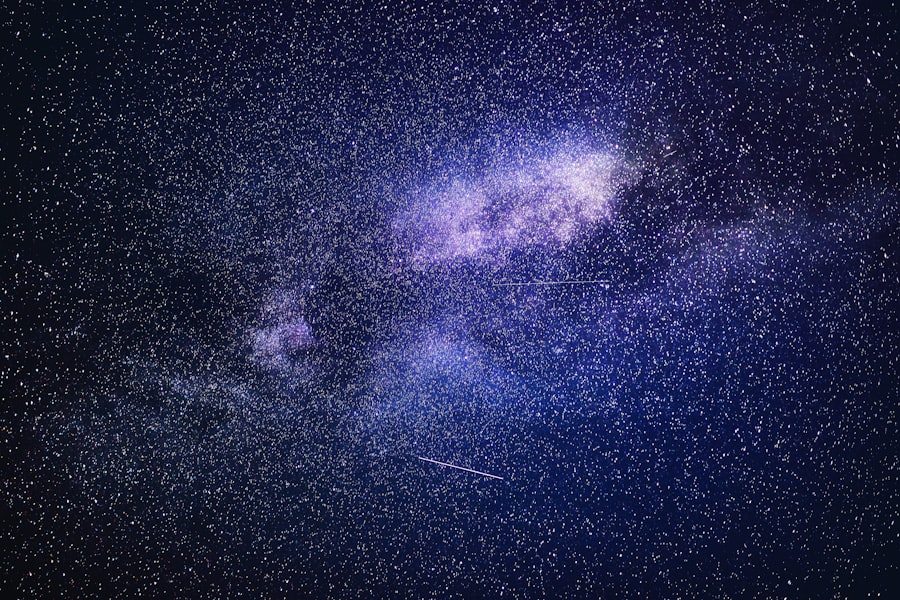
The revelation of our galaxy’s surprisingly swift movement has profound implications for our understanding of the universe and our place within it. It underscores the dynamic nature of cosmic evolution and challenges any anthropocentric notion of a static or central universe.
Our Place in the Cosmic Web
The Milky Way’s motion is not an isolated phenomenon; it is a testament to the interconnectedness of the universe. Our galaxy is a participant in the grander cosmic ballet, moving in concert with billions of other galaxies, all shaped by the invisible scaffolding of dark matter and the inexorable force of gravity. Understanding these large-scale structures and movements helps us contextualize our own existence within the vastness of space and time.
The Universe as a Dynamic Ecosystem
The universe is not a static painting but a living, breathing entity constantly in motion. Galaxies are born, evolve, merge, and move, driven by fundamental physical laws. The Milky Way’s drift is just one thread in this intricate cosmic tapestry, a testament to the dynamic equilibrium that governs celestial bodies.
The Future of the Milky Way
The Milky Way’s journey is not an unending one in its current form. Billions of years from now, our galaxy is destined to collide and merge with the Andromeda Galaxy, forming a larger elliptical galaxy. The current velocity measurements provide valuable data for refining models of this future cosmic merger, helping scientists predict the intricate dance of these two massive galactic entities. It’s like understanding the current trajectory of two ships to predict their eventual rendezvous at sea.
Refining Predictions of Galactic Collisions
Precise measurements of galactic velocities are essential for accurate simulations of galactic mergers. These simulations help us understand the processes of galaxy formation and evolution, and the ultimate fate of galaxies like our own.
Understanding Fundamental Physics
The study of galactic motion also provides a crucial testing ground for our understanding of fundamental physics, particularly gravity. Deviations from predicted motions could point towards new physics beyond the Standard Model, or a deeper understanding of phenomena like dark matter and dark energy. It’s a cosmic laboratory where our most cherished theories are put to the ultimate test.
Dark Energy and Cosmic Expansion
While gravity pulls things together, dark energy is thought to be responsible for the accelerated expansion of the universe. The Milky Way’s motion is influenced by both these forces, and understanding their interplay is key to unraveling the universe’s ultimate fate.
Recent studies have shed light on the fascinating phenomenon of the Milky Way galaxy’s drift speed, revealing how our galaxy is moving through the cosmos at an astonishing pace. For those interested in exploring this topic further, a related article discusses the implications of this drift on our understanding of cosmic structures and the universe’s expansion. You can read more about it in this insightful piece on Freaky Science, which delves into the dynamics of galactic movement and its significance in astrophysics.
Looking Ahead: The Future of Galactic Motion Studies
| Metric | Value | Unit | Description |
|---|---|---|---|
| Solar System Orbital Speed | 828,000 | km/h | Speed of the Sun orbiting the center of the Milky Way |
| Milky Way Drift Speed Relative to Cosmic Microwave Background | 600 | km/s | Velocity of the Milky Way moving through space relative to the CMB |
| Milky Way Rotation Speed at Sun’s Location | 220 | km/s | Rotational velocity of the Milky Way at the Sun’s orbit radius |
| Distance from Sun to Galactic Center | 27,000 | light years | Distance between the Sun and the center of the Milky Way |
| Milky Way’s Velocity Toward Andromeda Galaxy | 110 | km/s | Approach speed of the Milky Way toward the Andromeda Galaxy |
The current understanding of the Milky Way’s swift drift is a testament to human ingenuity and scientific progress. However, the pursuit of knowledge is a continuous journey, and future advancements promise even more precise and insightful measurements.
Next-Generation Telescopes and Observatories
The development of next-generation telescopes, both ground-based and space-based, will provide unprecedented capabilities for observing the universe. These instruments will be able to map the cosmos with greater resolution and sensitivity, allowing for more accurate determination of galactic velocities and the underlying gravitational forces. It is like upgrading from a spyglass to a supercomputer for peering into the cosmos.
Enhanced Data Analysis Techniques
Alongside hardware advancements, sophisticated data analysis techniques, including artificial intelligence and machine learning, will play an increasingly important role. These tools will be able to process vast amounts of observational data, identify subtle patterns, and extract meaningful information about galactic motion.
Probing the Cosmic Web with Unprecedented Detail
Future studies will aim to map the Milky Way’s motion and that of millions of other galaxies with unprecedented detail. This will allow scientists to reconstruct the history of the cosmic web, understand the formation of large-scale structures, and refine our understanding of the universe’s evolution from the Big Bang to the present day. It’s like piecing together a cosmic jigsaw puzzle with billions of pieces, each one telling a part of the universe’s story.
The Quest for a Definitive Galactic Reference Frame
Ultimately, the ongoing research aims to establish a more definitive “Galactic Standard of Rest” and to understand the Milky Way’s motion in the context of the most comprehensive cosmological models available. This continued exploration will undoubtedly reveal further astonishing truths about our place in the universe and the magnificent, ongoing journey of our home galaxy.

WATCH NOW ▶️ Our Galaxy Is Sliding Toward a Cosmic Drain
FAQs
What is the drift speed of the Milky Way galaxy?
The Milky Way galaxy is moving at an approximate speed of 600 kilometers per second relative to the cosmic microwave background radiation.
What causes the Milky Way to drift through space?
The Milky Way drifts due to gravitational interactions with nearby galaxies and the overall expansion of the universe, as well as the influence of large-scale structures like galaxy clusters.
In which direction is the Milky Way galaxy moving?
The Milky Way is moving toward a region known as the Great Attractor, located in the direction of the constellation Centaurus.
How is the drift speed of the Milky Way measured?
Astronomers measure the Milky Way’s drift speed by observing the cosmic microwave background radiation and detecting the Doppler shift caused by the galaxy’s motion relative to this radiation.
Does the Milky Way’s drift speed affect our solar system?
The Milky Way’s drift speed does not have a direct noticeable effect on our solar system because all objects within the galaxy, including the solar system, move together at roughly the same velocity.