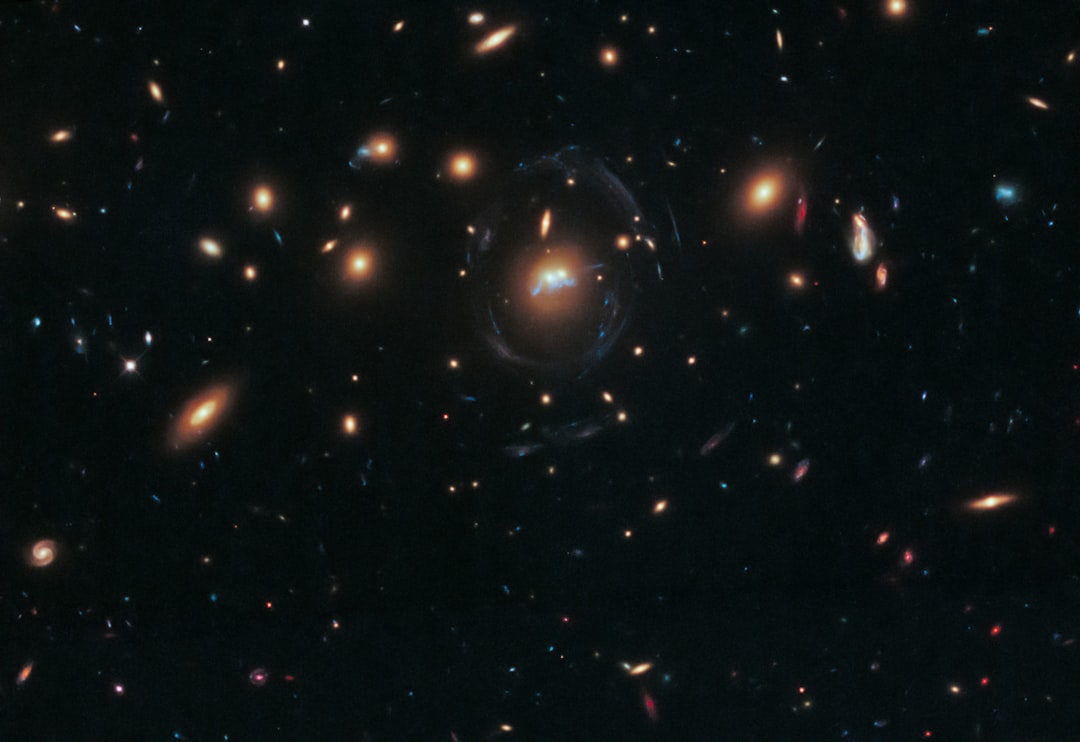
The large-scale structure of the universe is a tapestry woven from matter, gravitationally bound into an intricate cosmic web. At its grandest scales, this web is characterized by voids – vast, empty regions – and filaments, sheets, and knots where galaxies cluster. Among these structures, superclusters of galaxies stand as the largest known assemblages of matter, representing the pinnacle of gravitational attraction on scales encompassing hundreds of millions of light-years. Understanding their formation, evolution, and distribution is a cornerstone of modern cosmology, offering crucial insights into the universe’s ultimate fate and the processes that sculpted its current form.
The universe is not uniformly distributed with matter; rather, it exhibits a hierarchical structure. From individual galaxies to groups of galaxies, and then to clusters, this hierarchy culminates in superclusters. These colossal structures are transient and dynamic, continually accreting matter and undergoing gravitational processes that reshape their constituent parts.
Filaments and Voids: The Network of the Cosmos
The cosmic web is primarily composed of vast, underdense regions known as voids, which are largely devoid of galaxies. Surrounding and interconnecting these voids are filaments, elongated structures of galaxies and dark matter that typically stretch for tens to hundreds of megaparsecs. Where these filaments intersect, rich clusters of galaxies form, representing the densest nodes of the cosmic web. Superclusters are essentially collections of these clusters and groups of galaxies, bound loosely by gravity and often elongated along these cosmic filaments. Imagine, if you will, a vast sponge: the holes are the voids, and the material constituting the sponge itself are the filaments and sheets, with the densest knots being the galaxy clusters.
Bridging Scales: From Local Group to Laniakea
The quest to map the supergalactic plane and identify these colossal structures began in earnest with initial observations of the distribution of nearby galaxies. As observational techniques improved, particularly with all-sky surveys, astronomers gained a more comprehensive view of our cosmic neighborhood. The Local Group, our own small cluster of galaxies dominated by the Milky Way and Andromeda, is itself gravitationally bound to a much larger structure known as the Virgo Supercluster. This supercluster, with the Virgo Cluster at its heart, is merely one component of an even vaster entity: the Laniakea Supercluster. This hierarchical arrangement underscores the nested nature of cosmic structure.
The growth of galaxy superclusters is a fascinating topic that sheds light on the large-scale structure of the universe. Recent studies have shown that these colossal formations, which can contain thousands of galaxies, are not only expanding but also evolving over time due to gravitational interactions and dark matter influences. For a deeper understanding of this phenomenon, you can read a related article that explores the dynamics and implications of supercluster growth at Freaky Science.
Unveiling the Giants: Identification and Characteristics
Identifying a supercluster is not as straightforward as spotting an individual galaxy or even a cluster. Their sheer size and diffuse nature make their boundaries challenging to define unambiguously. Various methods, relying on galaxy density enhancements and gravitational potential, are employed to delineate these colossal structures.
Density and Velocity Fields: Tracing the Gravitational Influence
Astronomers primarily identify superclusters by mapping the distribution of galaxies and analyzing their peculiar velocities – their motion relative to the general Hubble flow of expansion. Regions where galaxies are denser than average, and where their peculiar velocities converge towards a common center, indicate the presence of a supercluster. Sophisticated algorithms are used to identify gravitationally bound systems and track the flow of matter, akin to mapping the currents in a vast ocean. These velocity fields reveal the coherent motion of galaxies within a local gravitational basin, pointing towards the gravitational center of the supercluster.
Morphology and Substructure: A Complex Tapestry
Superclusters exhibit a wide range of morphologies. Some, like the Shapley Supercluster, appear relatively compact and rich, representing significant overdensities. Others are more elongated, reflecting their formation along cosmic filaments. It is important to note that superclusters are rarely monolithic entities. Instead, they are often comprised of numerous galaxy clusters, groups, and individual galaxies, all in various stages of gravitational interaction and merger. This internal substructure provides valuable clues about their evolutionary history and the ongoing processes of accretion and gravitational assembly. The presence of numerous substructures suggests a dynamic environment where smaller groups and clusters are still falling into the larger potential well.
The Genesis of Giants: Formation and Evolution
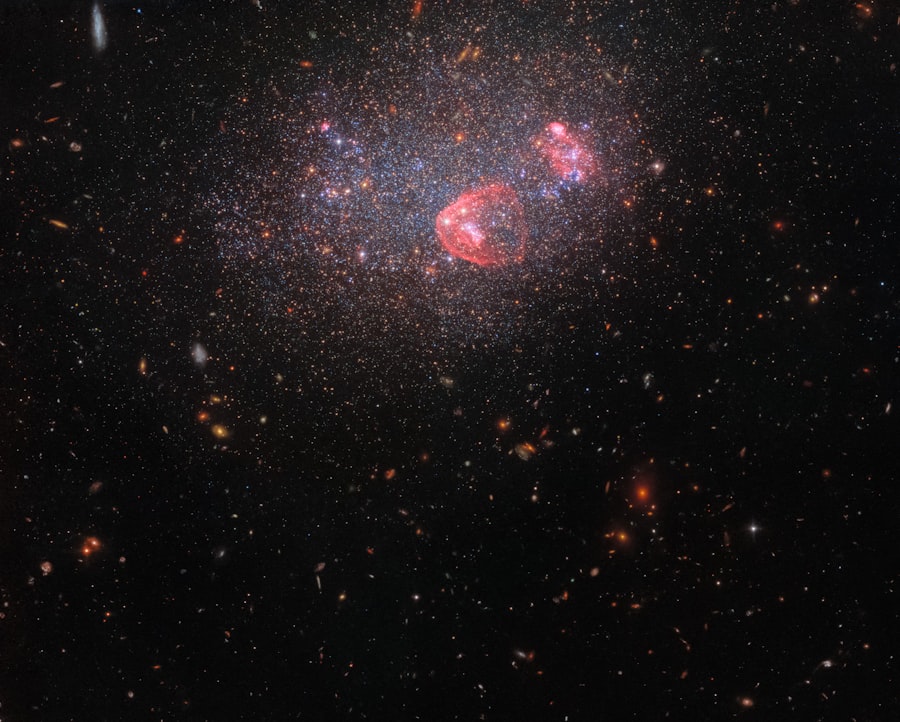
The formation of superclusters is a direct consequence of the gravitational instability within the early universe. Tiny quantum fluctuations imprinted in the primordial plasma, amplified by cosmic expansion and the dominant influence of dark matter, grew over billions of years into the structures we observe today.
Gravitational Instability: From Fluctuations to Structure
In the immediate aftermath of the Big Bang, the universe was remarkably smooth, though not perfectly so. Minute overdensities and underdensities in the distribution of matter existed. Gravity, being an attractive force, began to enhance these overdensities, drawing in more matter from surrounding regions. This process, known as gravitational instability, is the fundamental mechanism responsible for all large-scale structure formation. Dark matter, which interacts only gravitationally and constitutes approximately 27% of the universe’s mass-energy content, played a crucial role in this process, providing the gravitational scaffolding upon which luminous matter subsequently aggregated.
Hierarchical Merging: Building Blocks of the Cosmos
Superclusters, like clusters and galaxies, are believed to have formed through a bottom-up, hierarchical merging process. Smaller structures, such as individual galaxies and groups, formed first. These then gravitationally coalesced into larger clusters, which in turn began to aggregate into superclusters. This process is ongoing, with superclusters still accreting matter from surrounding filaments and voids. Observing superclusters at different stages of evolution allows astronomers to piece together this intricate cosmic history, much like studying different stages of an evolving organism. The process is not entirely orderly; mergers can be violent, leading to shocks, gas heating, and the rearrangement of constituent galaxies.
The Role of Dark Energy: Counteracting Gravity
While gravity drives the formation of superclusters, the accelerating expansion of the universe, attributed to dark energy, acts as a counteracting force. At smaller scales, gravity dominates, leading to the formation of bound structures. However, on the largest scales, comparable to and exceeding the size of superclusters, dark energy begins to overcome gravity’s pull. This means that superclusters are unlikely to ever become gravitationally bound into a single, colossal entity. Rather, they represent the largest structures that have managed to form and remain loosely connected before the accelerating expansion completely isolates them from one another. This cosmic tug-of-war between gravity and dark energy dictates the ultimate fate of these grand structures.
The Cosmos on the Move: Dynamics and Future
Superclusters are not static entities; they are dynamic systems in constant motion, evolving under the influence of gravity and the expanding universe. Their internal dynamics and interactions with surrounding structures provide valuable clues about their eventual fate.
Gravitational Flows: The “Great Attractor”
Within and around superclusters, galaxies exhibit characteristic gravitational flows. One of the most famous examples of such a flow is the “Great Attractor,” a region of immense mass that exerts a significant gravitational pull on galaxies, including our own Local Group, towards it. This region is thought to be a massive supercluster or a particularly dense knot within a supercluster. Mapping these large-scale flows helps to identify the centers of mass of these colossal structures and provides a kinematic view of the cosmic web. These flows are direct evidence of the gravitational influence of these immense structures.
The Expanding Universe: Boundaries and Dissolution
As the universe continues to expand, driven by dark energy, the gravitational influence of superclusters will eventually be overcome on the very largest scales. While individually bound galaxies and clusters will remain so, the vast distances between superclusters will continue to grow, making them increasingly isolated from one another. This “cosmic horizon” effect implies that future observers in our Local Group might only ever see our own gravitationally bound structure, as all other superclusters recede beyond their observable universe. The loosely bound nature of superclusters means that they are particularly susceptible to this cosmic stretching.
Recent studies have shed light on the fascinating growth of galaxy superclusters, revealing how these massive structures evolve over time and influence the universe’s large-scale structure. For those interested in a deeper exploration of this topic, a related article can be found at Freaky Science, which discusses the intricate processes that drive the formation and expansion of superclusters. Understanding these cosmic giants not only enhances our knowledge of the universe but also provides insights into the fundamental forces that shape it.
Superclusters as Cosmic Laboratories: Unveiling Secrets
| Metric | Description | Value / Range | Unit | Notes |
|---|---|---|---|---|
| Average Size | Typical diameter of galaxy superclusters | 100 – 400 | Million light-years | Varies depending on supercluster |
| Mass | Total mass including dark matter, gas, and galaxies | 1015 – 1017 | Solar masses | Estimated from gravitational effects |
| Growth Rate | Rate of increase in mass and size over cosmic time | ~1% per billion years | Percent per Gyr | Depends on local density and cosmic expansion |
| Redshift Range | Observed redshift range of superclusters | 0.01 – 2.0 | Redshift (z) | Higher redshift corresponds to earlier universe |
| Number of Galaxies | Typical galaxy count within a supercluster | 10,000 – 100,000 | Galaxies | Includes clusters and groups |
| Dark Energy Influence | Effect of dark energy on supercluster growth | Significant | N/A | Accelerates cosmic expansion, limiting growth |
Superclusters serve as invaluable laboratories for studying a wide range of astrophysical phenomena, from the interaction of galaxies to the precise nature of dark matter and dark energy. Their immense size and diverse environments provide unique opportunities for observation and theoretical modeling.
Galaxy Evolution in High-Density Environments
The dense environments found within superclusters, particularly within their constituent galaxy clusters, significantly influence galaxy evolution. Here, galaxies experience frequent interactions, mergers, and tidal stripping, leading to the transformation of their morphologies and star formation histories. Unlike galaxies in the field, isolated in low-density regions, those in superclusters are constantly bathed in hot, X-ray emitting intergalactic gas and are subjected to higher rates of mergers and fly-bys. Studying these phenomena allows astronomers to understand how environmental factors shape the evolution of galaxies over cosmic time. For instance, the prevalence of elliptical galaxies in cluster cores suggests that these environments accelerate the transformation of spiral galaxies through processes like ram-pressure stripping and repeated interactions.
Probing Dark Matter and Dark Energy
As the largest known structures in the universe, superclusters are ideal probes for studying the properties of dark matter, which constitutes the majority of their mass, and dark energy, which dictates the universe’s accelerating expansion. The gravitational lensing effects produced by superclusters, where the immense mass of the supercluster bends the light from background galaxies, provides a direct measure of their total mass, including their dark matter content. Furthermore, the distribution and growth rate of superclusters over cosmic time can constrain cosmological parameters, shedding light on the nature of dark energy and the overall geometry of the universe. The way these structures evolve and respond to the expanding universe offers crucial data points for refining our cosmological models.
Future Observatories and Insights
Next-generation telescopes and surveys, such as the upcoming Euclid mission and the Vera C. Rubin Observatory’s Legacy Survey of Space and Time, are poised to revolutionize our understanding of superclusters. These observatories will provide unprecedented sensitivity, sky coverage, and depth, allowing astronomers to map the cosmic web with unparalleled precision, identify even more distant and nascent superclusters, and track their evolution in exquisite detail. These advancements will undoubtedly lead to new discoveries and a deeper comprehension of the universe’s grandest structures, potentially revealing aspects of the cosmic web that are currently beyond our grasp. The sheer volume of data will enable statistical analyses that were previously unimaginable, refining our understanding of the cosmic dance between gravity and expansion.
Superclusters of galaxies represent the apex of gravitational assembly in the cosmos, a testament to the power of gravity acting over billions of years. Their intricate structures, dynamic evolution, and profound influence on galaxy properties make them compelling subjects of study. As our observational capabilities continue to advance, we expect to unravel even more of their secrets, pushing the boundaries of our knowledge about the universe and our place within its majestic tapestry.

WATCH NOW ▶️ Our Galaxy Is Sliding Toward a Cosmic Drain
FAQs
What are galaxy superclusters?
Galaxy superclusters are massive groups of smaller galaxy clusters and galaxy groups, forming some of the largest known structures in the universe. They consist of thousands of galaxies bound together by gravity.
How do galaxy superclusters grow?
Galaxy superclusters grow through the gravitational attraction of matter, pulling in galaxies, galaxy groups, and dark matter over billions of years. This process is influenced by the expansion of the universe and the distribution of dark matter.
What role does dark matter play in the growth of superclusters?
Dark matter provides the gravitational framework that helps superclusters form and grow. It acts as an invisible scaffold, attracting normal matter and enabling galaxies and clusters to coalesce into larger supercluster structures.
How do astronomers study the growth of galaxy superclusters?
Astronomers study supercluster growth using observations from telescopes across various wavelengths, computer simulations, and mapping the large-scale structure of the universe. These methods help track the distribution and movement of galaxies over time.
Why is understanding the growth of galaxy superclusters important?
Understanding supercluster growth helps scientists learn about the evolution of the universe, the nature of dark matter and dark energy, and the large-scale cosmic web. It also provides insights into how galaxies and cosmic structures form and change over billions of years.