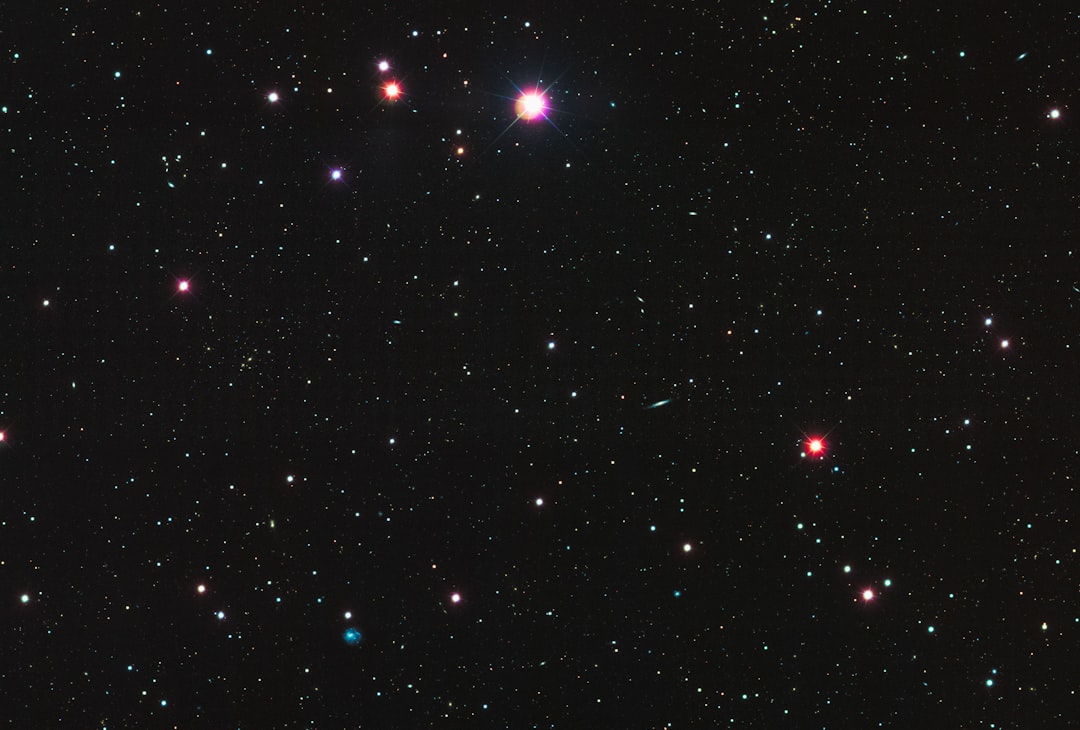
The vast cosmic tapestry, woven with the luminous threads of stars and galaxies, presents an awe-inspiring spectacle. Yet, beneath this visible splendor lies a profound enigma: the invisible architecture upon which this cosmic ballet unfolds. This essay seeks to unveil the nature of dark matter, the hypothetical substance believed to form the gravitational scaffolding that underpins the formation and evolution of galaxies. You will explore the compelling evidence that compels scientists to posit its existence, the theoretical frameworks attempting to explain its identity, and the ongoing experimental endeavors to directly detect this elusive component of the universe.
The initial hints of something beyond ordinary matter emerged from observations that defied Newtonian gravity as understood by astronomers. The discrepancies were subtle at first, but when pieced together, they painted a consistent picture of unseen mass exerting a significant gravitational influence.
Galactic Rotation Curves: A Spinning Discrepancy
One of the earliest and most robust lines of evidence for dark matter comes from the study of galaxy rotation. Imagine a spinning merry-go-round. The outer edges, if governed solely by observable mass, should move slower than the inner parts. However, when astronomers observed the rotation speeds of galaxies, they found a disturbing trend: stars in the outer regions of spiral galaxies were orbiting far too quickly.
The Expected vs. The Observed
In a solar system, planets closer to the Sun orbit faster than those further out, a direct consequence of the Sun’s gravitational pull diminishing with distance. Astronomers applied this same logic to galaxies, expecting that stars on the periphery, far from the bulk of visible mass, would exhibit slower orbital velocities. However, Vera Rubin and her colleagues in the 1970s meticulously measured the rotational velocities of stars within numerous spiral galaxies. Their data revealed that the ‘expected’ drop-off in speed in the outer arms of galaxies simply did not occur. Instead, the rotational velocities remained remarkably constant, or even increased slightly, as distance from the galactic center increased. This implied the presence of a substantial amount of unseen mass extending far beyond the visible stellar disk, a halo of gravitational influence.
The Implication of Unseen Mass
This constant velocity at galactic fringes is akin to an invisible hand gently nudging the outer stars, keeping them in their swift orbits. Without this additional gravitational pull, these stars would have long since been flung out into intergalactic space. The magnitude of this discrepancy demands a significant contribution of mass that is not accounted for by stars, gas, and dust – the visible constituents of galaxies. This invisible mass, as predicted, forms a vast, diffuse halo enveloping the luminous galactic disk.
Galaxy Clusters: Gravitational Lensing and Virial Theorem
Galaxies are not isolated entities; they often congregate in massive structures called galaxy clusters. These cosmic cities, containing hundreds or even thousands of galaxies, provided further ammunition for the dark matter hypothesis.
Gravitational Lensing: Light Bending Around Mass
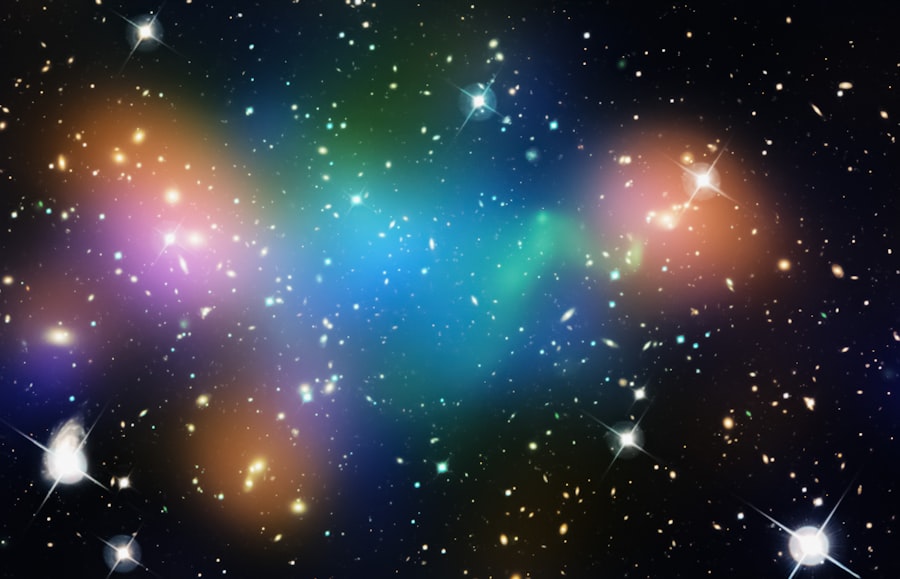
Albert Einstein’s theory of General Relativity predicts that massive objects warp spacetime, causing light rays passing nearby to bend, a phenomenon known as gravitational lensing. The more massive an object, the greater the bending of light. When astronomers observed galaxy clusters through telescopes, they noticed that the light from more distant galaxies located behind these clusters was distorted and magnified. This lensing effect is exceptionally strong, implying a far greater mass within the cluster than could be accounted for by the visible galaxies and the hot gas detected within them.
Weak and Strong Lensing
This lensing can manifest in two primary ways: weak lensing, which causes small, statistical distortions in the shapes of background galaxies, and strong lensing, which results in multiple, distorted images of a single background object or even arcs and rings. The intensity of these lensing effects directly correlates with the total mass present. By analyzing the degree of distortion, astronomers can map the distribution of mass within galaxy clusters. The maps invariably show a mass distribution that is far more extended and concentrated than the visible matter alone.
The Virial Theorem: A Delicate Gravitational Balance
Another line of evidence from galaxy clusters comes from an application of the Virial Theorem. This theorem, in this context, relates the kinetic energy of the galaxies within a cluster to their gravitational potential energy. If a cluster is gravitationally bound and stable, there should be a specific balance between the random motions of galaxies (kinetic energy) and the pull of gravity holding them together (potential energy).
Estimating Cluster Mass
By measuring the velocities of individual galaxies within a cluster, astronomers can estimate its total kinetic energy. Simultaneously, by estimating the size and extent of the cluster and the mass of its visible components, they can calculate the gravitational potential energy. When these calculations were performed, it became clear that the kinetic energy far exceeded what the visible mass could account for. To keep these fast-moving galaxies from escaping the cluster, a tremendous amount of additional gravitational binding energy, and thus, mass, was required. This unseen mass, again, points towards the presence of dark matter.
The Cosmic Microwave Background: Echoes of the Early Universe
The Cosmic Microwave Background (CMB) radiation is the faint afterglow of the Big Bang, a snapshot of the universe when it was only about 380,000 years old. Studying the subtle temperature fluctuations within the CMB has provided profound insights into the composition and evolution of the universe.
Anisotropies and Composition
The CMB is not perfectly uniform; it exhibits tiny variations in temperature across the sky, known as anisotropies. These anisotropies are the seeds from which all structure in the universe, including galaxies, has grown. The precise pattern and amplitude of these fluctuations are exquisitely sensitive to the relative proportions of different components in the early universe, specifically ordinary (baryonic) matter, dark matter, and dark energy.
Dark Matter’s Role in Structure Formation
During the era of recombination, when the CMB was released, the universe was a hot, dense plasma. Photons and baryonic matter were tightly coupled. However, dark matter, interacting only gravitationally, was not. This crucial difference meant that dark matter could begin to clump together under its own gravity much earlier than ordinary matter. These early clumps of dark matter acted as gravitational wells, attracting baryonic matter as the universe cooled and expanded. Without this pre-existing dark matter scaffolding, the tiny density fluctuations observed in the CMB would not have had enough time to grow into the vast cosmic structures we see today. The observed patterns in the CMB are remarkably well-explained by a cosmological model that includes a significant component of cold dark matter.
Recent studies have shed light on the intriguing role of dark matter in the formation and structure of galaxies, suggesting that it acts as a scaffold that influences their development. For a deeper understanding of this phenomenon, you can explore a related article that discusses the implications of dark matter on galactic formation and evolution. To read more, visit this article.
The Elusive Identity: What is Dark Matter Composed Of?
Despite the overwhelming evidence for its gravitational effects, the exact nature of dark matter remains one of the most significant unanswered questions in modern physics and cosmology. Scientists have proposed numerous candidates, ranging from exotic subatomic particles to modifications of gravity itself.
Particle Candidates: The Subatomic Zoo
The leading hypothesis is that dark matter is composed of one or more as-yet-undiscovered particles that interact very weakly with ordinary matter and light, hence the term “dark.” These hypothetical particles would need to be stable, massive, and non-luminous.
WIMPs: The Weakly Interacting Massive Particles
One of the most well-motivated candidates for dark matter is the Weakly Interacting Massive Particle (WIMP). These hypothetical particles are predicted by some extensions of the Standard Model of particle physics, such as supersymmetry. WIMPs would be massive, hence “Massive,” and would interact only through the weak nuclear force and gravity, hence “Weakly Interacting.”
WIMP Miracle and Detection Prospects
The “WIMP miracle” refers to the remarkable coincidence that if WIMPs exist with masses and interaction strengths predicted by some theories, their predicted relic abundance in the early universe would naturally match the observed abundance of dark matter. This has made WIMPs a prime target for direct detection experiments. These experiments aim to detect the faint recoil of an atomic nucleus when a WIMP collides with it.
Axions: The Ultralight Contenders
Another class of dark matter candidates are axions. These are hypothetical elementary particles that were originally proposed to solve a problem in quantum chromodynamics. Axions are predicted to be much lighter than WIMPs, and they would interact even more weakly with ordinary matter.
Axion Searches and Detection Strategies
The search for axions requires different experimental techniques, often involving strong magnetic fields that could convert axions into detectable photons. While less favored than WIMPs by some in the past, recent theoretical developments and observational constraints have revitalized interest in axion-like particles as a significant dark matter component.
Sterile Neutrinos: The Ghostly Relatives
Neutrinos are known particles that are very light and interact very weakly. The Standard Model includes three types of neutrinos that are too light and fast-moving (“hot”) to constitute the majority of dark matter. However, theoretical extensions could accommodate “sterile neutrinos,” which would be heavier and interact much less than their known counterparts.
The Neutrino-Dark Matter Connection
If sterile neutrinos exist with the right mass and interaction properties, they could be a significant component of dark matter. Detecting sterile neutrinos is challenging due to their extremely weak interactions, but various astrophysical and experimental methods are being explored, including looking for their decay products or their subtle gravitational effects.
Exotic Possibilities: Beyond the Standard Model Particles
While particle candidates are the most widely explored, scientists also consider more speculative possibilities for the nature of dark matter.
MACHOs: The Dark Baryonic Dark Matter
Before the dominance of particle dark matter theories, it was considered that dark matter might consist of ordinary baryonic matter that is simply too faint to detect. These hypothetical objects, termed Massive Astrophysical Compact Halo Objects (MACHOs), could include brown dwarfs, rogue planets, or black holes formed in the early universe.
Microlensing Searches and Constraints
The primary method to search for MACHOs has been through gravitational microlensing. This technique looks for temporary brightening of distant stars as a MACHO passes in front of them, bending their light. While microlensing searches have indeed detected some MACHOs, they have not found enough to account for the total amount of dark matter inferred from other cosmological observations. This strongly constrains MACHOs as the primary constituent of dark matter.
Modified Gravity Theories: Rethinking Newton and Einstein
A more radical approach suggests that the entire concept of dark matter might be unnecessary. Instead, perhaps the laws of gravity themselves need to be modified at large scales.
MOND and its Successors
Modified Newtonian Dynamics (MOND) is a theory that proposes that gravitational force behaves differently at very low accelerations, such as those found in the outer regions of galaxies. MOND can successfully explain galactic rotation curves without invoking dark matter. However, MOND faces significant challenges in explaining observations at larger scales, such as galaxy clusters and the CMB anisotropies. While MOND in its original form is largely disfavored, ongoing research explores more comprehensive modified gravity theories that aim to reconcile these discrepancies.
The Search for Direct Detection: Unmasking the Invisible
The compelling indirect evidence for dark matter has spurred a global effort to directly detect these elusive particles. These experiments are designed to observe the faint interactions of dark matter particles with ordinary matter.
Underground Laboratories: Shielding from Cosmic Noise
The vast majority of dark matter detection experiments are conducted deep underground. This subterranean location is crucial for shielding the sensitive detectors from cosmic rays and other sources of background radiation that could mimic a dark matter signal.
Reducing Background Noise
Cosmic rays are high-energy particles from space that constantly bombard Earth. To isolate the incredibly faint signal of a dark matter interaction, these experiments must be shielded by kilometers of rock. This “natural shielding” significantly reduces the flux of interfering particles, allowing detectors to be more sensitive to the rare events expected from dark matter.
Detector Technologies: Sensitive Instruments
A variety of sophisticated detector technologies are employed in the search for dark matter, each with its own strengths and weaknesses.
Cryogenic Detectors: Superconducting Sensitivity
Many experiments utilize cryogenic detectors, often composed of materials like germanium or silicon. These detectors are cooled to extremely low temperatures, close to absolute zero. At these frigid temperatures, even a single dark matter particle collision with an atom in the crystal lattice can create a measurable vibration (phonon) or ionization event.
Measuring Recoil Energy
The key to identifying a potential dark matter signal lies in precisely measuring the energy deposited by the recoiling nucleus. Dark matter particles are expected to interact via the weak force, resulting in a characteristic recoil energy signature. By carefully analyzing these energy depositions, scientists can distinguish potential dark matter events from background noise.
Noble Liquid Detectors: Ionization and Scintillation
Other experiments employ large volumes of noble liquids such as xenon or argon. When a dark matter particle interacts within these liquids, it can produce both ionization (free electrons) and scintillation (photons).
T Two-Phase Detection
Many of these experiments operate in a “two-phase” mode, where the liquid is also surrounded by a gaseous layer. The ionization trails from a particle interaction can drift upwards into the gas, where they produce a secondary scintillation signal. Detecting both the primary scintillation (from the liquid) and the secondary scintillation (from the gas) allows for exquisite position reconstruction within the detector, helping to reject background events originating from the detector walls.
Indirect Detection: Looking for Dark Matter’s Aftermath
In addition to direct detection, scientists also pursue indirect detection methods, which involve searching for the byproducts of dark matter annihilation or decay.
Gamma Rays and Neutrinos: Cosmic Signals
If dark matter particles are their own antiparticles, they could annihilate with each other when they collide, producing standard model particles like gamma rays or neutrinos. Telescopes on Earth and in space, as well as neutrino observatories, are used to search for an excess of these particles coming from regions where dark matter is expected to be concentrated, such as the galactic center or dwarf galaxies.
Astrophysical Trace Signatures
The detection of a statistically significant excess of gamma rays or neutrinos from these regions, with a spectrum consistent with theoretical predictions for dark matter annihilation, would be strong evidence for its existence. However, distinguishing such signals from astrophysical sources remains a significant challenge.
Dark Matter in Cosmic Structure Formation: The Universe’s Blueprint
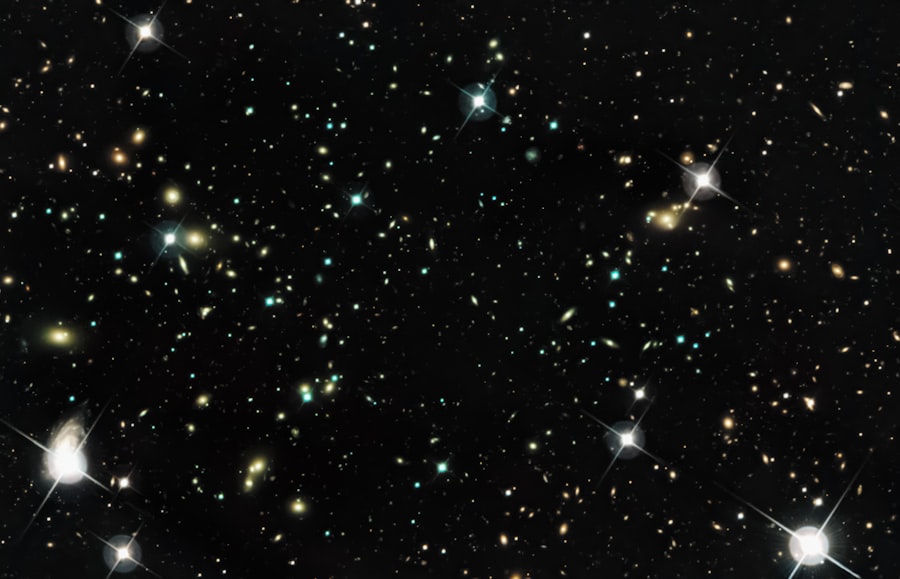
The existence of dark matter is not merely an abstract concept; it is fundamental to our understanding of how the universe evolved from a nearly uniform state to the complex web of galaxies and clusters we observe today.
Hierarchical Structure Formation: Building Blocks from Small to Large
The prevailing cosmological model, known as the Lambda-CDM (Cold Dark Matter) model, posits that structure in the universe forms hierarchically. This means that small clumps of matter form first and then merge over time to create larger structures.
The Role of Dark Matter Halos
In this model, dark matter plays the crucial role of providing the gravitational potential wells that seed this hierarchical formation. Tiny quantum fluctuations in the early universe, amplified by inflation, became density variations in the dark matter distribution. These overdense regions, acting as gravitational attractors, began to pull in surrounding dark matter, forming what are known as “dark matter halos.”
Halo Mergers and Galaxy Growth
As the universe expanded and cooled, baryonic matter, attracted by the gravity of these dark matter halos, began to fall into them. Within these halos, gas could cool, condense, and eventually form stars and galaxies. The merging of smaller dark matter halos over cosmic time led to the formation of larger and more massive halos, which in turn hosted the growth of larger galaxies and galaxy clusters. Without dark matter, the baryonic matter would not have been able to overcome the expansion of the universe and clump together efficiently enough to form the structures we see today.
Galactic Evolution: The Life Cycle of Galaxies
Dark matter halos are not static entities; they are dynamic environments that actively influence the evolution of the galaxies they host.
Halo Mass and Galaxy Size
The mass of a dark matter halo is directly correlated with the size and luminosity of the galaxy it contains. Massive galaxies are found at the centers of massive dark matter halos, while smaller galaxies reside in less massive halos. This correlation provides strong observational support for the idea that dark matter halos dictate the scale of galaxy formation and evolution.
Satellite Galaxies and Tidal Stripping
Galaxies are often found within the halos of larger galaxies, forming what are known as satellite galaxies. These smaller galaxies are gravitationally bound to their larger hosts and orbit within their dark matter halos. The gravitational interactions between satellite galaxies and their host galaxy, as well as interactions with other satellites, can lead to tidal stripping, where material is pulled away from the satellite galaxy, influencing its star formation history and ultimate fate.
The Cosmic Web: A Filamentous Network
On the largest scales, galaxies and galaxy clusters are not randomly distributed; they form a vast, interconnected network known as the cosmic web. This web is characterized by dense regions called clusters, connected by filaments of galaxies, all surrounding vast, nearly empty voids.
Dark Matter’s Gravitational Influence on the Cosmic Web
The structure of the cosmic web is a direct consequence of the underlying distribution of dark matter. Simulations of structure formation that include dark matter accurately reproduce the filamentary and clumpy nature of the observed cosmic web. The gravitational influence of dark matter dictates where galaxies and clusters will form and how they will be interconnected.
Dark Matter Filaments as Cosmic Highways
The filaments of the cosmic web are thought to be where the largest concentrations of dark matter reside. These filaments act as cosmic highways, guiding the flow of baryonic matter and facilitating the mergers of galaxies. Understanding the properties of these dark matter filaments is crucial for comprehending the large-scale structure and evolution of the universe.
Recent studies have shed light on the intriguing role of dark matter in the formation and structure of galaxies, suggesting that it acts as a scaffold that holds these cosmic structures together. This concept is further explored in a related article that delves into the complexities of dark matter and its influence on galaxy formation. For those interested in understanding the nuances of this phenomenon, you can read more about it in the article found at Freaky Science. The insights provided there could enhance your understanding of how dark matter shapes the universe we observe today.
The Future of Dark Matter Research: Towards a Definitive Answer
| Metric | Description | Typical Value | Unit |
|---|---|---|---|
| Dark Matter Halo Mass | Total mass of dark matter surrounding a galaxy | 10^11 – 10^15 | Solar Masses |
| Concentration Parameter | Measure of how centrally concentrated the dark matter halo is | 5 – 15 | Dimensionless |
| Virial Radius | Radius within which the galaxy’s dark matter halo is gravitationally bound | 100 – 300 | kpc (kiloparsecs) |
| Dark Matter Density | Average density of dark matter in the halo | 0.01 – 0.1 | Solar Masses per cubic parsec |
| Rotation Curve Velocity | Velocity of stars/gas influenced by dark matter halo | 100 – 300 | km/s |
| Mass-to-Light Ratio | Ratio indicating dark matter dominance over visible matter | 10 – 1000 | Solar Masses per Solar Luminosity |
The quest to understand dark matter is far from over. Scientists are continuously developing new theoretical frameworks and experimental techniques to probe this cosmic mystery. The next decade promises to be a pivotal period in the ongoing investigation.
Next-Generation Detectors: Pushing the Limits of Sensitivity
The race is on to build even more sensitive dark matter detectors, capable of probing lower interaction cross-sections and exploring a wider range of dark matter particle masses.
Increased Target Mass and Reduced Backgrounds
Future experiments will likely involve larger masses of target material, providing more opportunities for rare interactions to occur. Simultaneously, continued advancements in detector technology and analysis techniques will aim to further reduce background noise to unprecedented levels, allowing for the unambiguous identification of a dark matter signal.
Exploring New Detection Channels
Beyond the direct recoil of atomic nuclei, researchers are also exploring new detection channels, such as looking for the subtle scattering of dark matter off electrons or the detection of dark matter annihilation signals in previously unexplored energy ranges.
Novel Experimental Approaches: Thinking Outside the Box
The search for dark matter is also benefiting from innovative experimental approaches that deviate from traditional methods.
Astrophysical Probes and Cosmological Signatures
New generations of telescopes, both ground-based and space-based, will provide unprecedented views of the universe, allowing for more precise measurements of gravitational lensing, galaxy cluster properties, and the CMB. These astrophysical probes can provide complementary evidence for dark matter and constrain its properties.
Precision Cosmology and Theoretical Refinements
The ongoing pursuit of precision cosmology, which aims to make ever-more accurate measurements of cosmological parameters, will continue to refine our understanding of the universe’s composition and evolution. This, in turn, will provide tighter constraints on theoretical models of dark matter and guide future experimental efforts.
The Grand Unification: A Unified Understanding of the Universe
Ultimately, the discovery of the true nature of dark matter would represent a profound leap in our understanding of the fundamental constituents of the universe and the laws that govern them.
Unifying Forces and Particles
Identifying the dark matter particle could provide crucial insights into physics beyond the Standard Model, potentially revealing new fundamental forces or particles that have eluded detection until now. Such a discovery could pave the way for a more unified understanding of all the forces and particles in the cosmos.
The Cosmic Inventory Complete
For centuries, humanity has gazed at the stars and pondered their composition. The unveiling of dark matter would not only fill a significant gap in our cosmic inventory but also revolutionize our understanding of how the universe formed, how galaxies evolved, and what the ultimate fate of the cosmos may be. The ongoing pursuit, driven by curiosity and ingenuity, brings us ever closer to completing this cosmic portrait.

WATCH NOW ▶️ Our Galaxy Is Sliding Toward a Cosmic Drain
FAQs
What is the dark matter scaffold of galaxies?
The dark matter scaffold of galaxies refers to the invisible framework of dark matter that provides the gravitational foundation upon which galaxies form and evolve. This scaffold influences the distribution and structure of galaxies in the universe.
How does dark matter affect galaxy formation?
Dark matter’s gravitational pull attracts ordinary matter, such as gas and dust, leading to the formation of stars and galaxies. Without dark matter, the visible matter would not clump together efficiently to form the large-scale structures observed in the universe.
Can we directly observe the dark matter scaffold?
No, dark matter does not emit, absorb, or reflect light, making it invisible to traditional telescopes. Its presence is inferred through gravitational effects on visible matter, radiation, and the large-scale structure of the cosmos.
What evidence supports the existence of a dark matter scaffold?
Evidence includes the rotation curves of galaxies, gravitational lensing of light around massive objects, the cosmic microwave background radiation patterns, and the large-scale distribution of galaxies, all of which suggest the presence of unseen mass consistent with dark matter.
Why is understanding the dark matter scaffold important in astronomy?
Understanding the dark matter scaffold is crucial because it helps explain the formation and evolution of galaxies, the overall structure of the universe, and the behavior of cosmic phenomena. It also guides researchers in developing models of cosmology and particle physics.