The Universe’s Erasing Act
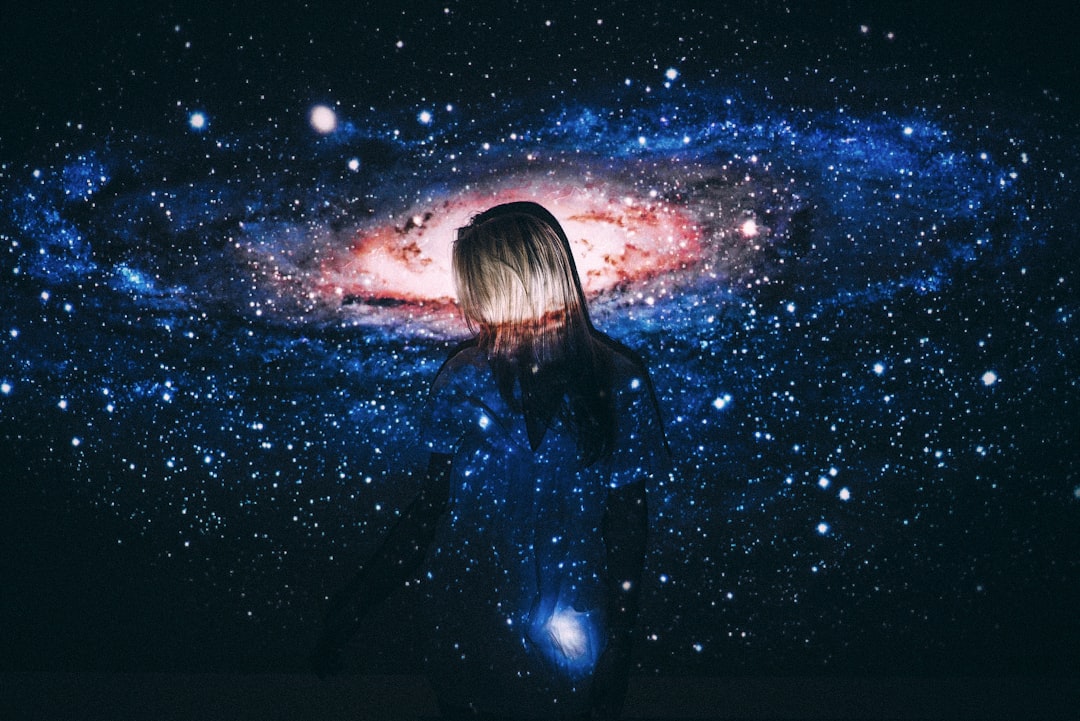
The cosmos, in its infinite grandeur, is not merely a stage for creation, but also for its meticulous undoing. This perpetual cycle of construction and deconstruction, of birth and decay, can be understood as the Universe’s Erasing Act. It is a fundamental principle woven into the very fabric of existence, manifesting across scales both immense and infinitesimal. To observe this act is to witness the profound impermanence that defines reality, a constant rebalancing that ensures the dynamism of the cosmos.
The second law of thermodynamics, often referred to as the principle of entropy, is a cornerstone of the Universe’s Erasing Act. It dictates that in any closed system, disorder naturally increases over time. Imagine a perfectly organized deck of cards; over time, with shuffling and handling, the ordered sequence will inevitably degrade into a random, chaotic arrangement. The Universe, in its vast, overarching system, operates under a similar, albeit far more complex, imperative.
The Arrow of Time and Irreversible Processes
Entropy provides the fundamental directionality to time, often termed the “arrow of time.” Processes that increase entropy are generally irreversible. A shattered vase, for instance, cannot spontaneously reassemble itself. In cosmology, this translates to the inevitable dissipation of energy and the spreading of matter. Stars burn their fuel, galaxies drift apart, and even the potential for organized structures is gradually diminished. Understanding this irreversible flow is crucial to comprehending the Universe’s tendency towards dispersal and the ultimate “erasure” of concentrated forms.
Heat Death: The Ultimate Implication of Entropy
While debated and subject to ongoing research, the concept of “heat death” or the “Big Freeze” represents the ultimate theoretical consequence of the relentless march of entropy. In this scenario, the Universe would reach a state of maximum entropy, where all energy is uniformly distributed, and no further work or change is possible. Imagine a vast, cold, and homogenous expanse, where the fires of stellar creation have long been extinguished, and the remnants of galaxies have dispersed into an undifferentiated cosmic dust. This is the hypothetical endpoint of the Universe’s Erasing Act, a quiescent state of ultimate equilibrium.
Recent studies have suggested that the universe may be undergoing a process of erasure, leading to intriguing implications for our understanding of reality. For a deeper exploration of this concept, you can read the article titled “The Universe is Erasing: What It Means for Our Existence” found at this link. This article delves into the theories surrounding cosmic entropy and the potential for information loss in the fabric of spacetime, offering a thought-provoking perspective on the nature of existence itself.
Cosmic Annihilation: The Violent Erasures
Beyond the gradual fade of entropy, the Universe also engages in dramatic, violent acts of erasure. These are not subtle shifts but catastrophic events that reshape cosmic landscapes and eliminate entire celestial bodies or structures. These moments of profound destruction are as integral to the Universe’s narrative as its moments of spectacular formation.
Supernovae: Stellar Demise and Galactic Rebirth
The death of massive stars, known as supernovae, is one of the most powerful examples of cosmic erasure and subsequent renewal. When a star exhausts its nuclear fuel, its core collapses, triggering a cataclysmic explosion that ejects a significant portion of its mass into interstellar space. This explosion is the ultimate erasure of the star’s organized structure, yet the heavy elements forged within its core are scattered, becoming the building blocks for future stars, planets, and even life. The remnants, like neutron stars or black holes, represent a transformed state, a dense packing of matter where conventional understanding of physics is pushed to its limits.
Galactic Collisions: Mergers and Mysteries
Galaxies, the grand architectural marvels of the Universe, are not static entities. They are in constant motion, drawn together by gravity, leading to inevitable collisions and mergers. While these events can be spectacular, they also represent a form of erasure for the individual galaxies involved. Their distinct structures are disrupted, their stars may be flung into intergalactic space, and over vast timescales, they meld into a new, larger entity. The act of merging erases the previous identities, forging a singular, albeit altered, cosmic being.
Black Holes: Ultimate Consumers of Matter and Light
Black holes are perhaps the most enigmatic and efficient agents of erasure in the Universe. Their gravitational pull is so immense that nothing, not even light, can escape their event horizon. Matter that crosses this boundary is effectively removed from the observable Universe. While the exact fate of matter within a black hole remains a subject of intense theoretical speculation, their existence represents a profound erasure of physical information and structure. They are cosmic vacuum cleaners, swallowing and disappearing all that falls into their grasp.
Planetary Purgatory: The Erasure of Worlds
On smaller scales, the Universe is also responsible for the erasure of planets, often through processes that are less grand but equally definitive. The dynamic nature of star systems and the inherent instability of fledgling planetary formations contribute to this ongoing attrition.
Stellar Flares and Radiation: Scorching the Surface
Stars, especially younger, more active ones, can unleash powerful flares and bursts of radiation. These energetic events can strip away planetary atmospheres, irradiate surfaces, and render worlds uninhabitable. Imagine a planet constantly bombarded by high-energy particles, its atmosphere gradually eroded like sand on a beach hammered by relentless waves. This energetic assault is a potent form of erasure, transforming a potentially habitable world into a barren rock.
Gravitational Chaos and Orbital Instability
The gravitational ballet of a star system is a delicate equilibrium. Planets exert gravitational influence on each other, and over millions or billions of years, these interactions can lead to orbital instability. Planets can be ejected from their systems, pulled into their host star, or even collide with other planets. This celestial wrangling is a cosmic game of billiards, where gravitational nudges can send worlds careening off course, leading to their ultimate erasure from a stable orbit.
The Inevitable Collisions
Space is not empty; it is filled with debris ranging from dust grains to rogue asteroids and comets. Planets, as they orbit, are vulnerable to these impacts. While smaller impacts can be absorbed, larger collisions can be catastrophic, capable of obliterating surface features, triggering mass extinctions, or even fragmenting the planet itself. The impact that wiped out the dinosaurs on Earth is a stark reminder of this potent form of planetary erasure.
Atmospheric Attenuation: The Fading of Skies
The very atmospheres that shield planets and enable life are not eternal. They are subject to various processes of attrition, gradually fading or being stripped away, representing another facet of the Universe’s Erasing Act.
Solar Wind Stripping
The solar wind, a stream of charged particles emanating from the Sun, can gradually erode planetary atmospheres over vast timescales. Planets with weaker magnetic fields are particularly vulnerable, as the solar wind can directly interact with and carry away atmospheric gases. It’s akin to a constant breeze slowly but surely sandblasting away a delicate structure.
Molecular Dissociation and Escape
Atmospheric molecules are not immutable. They are subject to bombardment by ultraviolet radiation from their host star, which can break them down into lighter atoms. These lighter atoms, possessing greater kinetic energy, can then escape the planet’s gravitational pull and drift into space. This slow leakage is a form of subtle erasure, a gradual thinning of the planetary veil.
Chemical Degradation and Transformation
Within an atmosphere, complex chemical reactions can occur, leading to the degradation or transformation of its components. The introduction of certain gases or the presence of energetic processes can alter the atmospheric composition, rendering it unsuitable for its previous purpose or ultimately leading to its dissipation.
Recent studies suggest that the universe may be undergoing a process of erasure, leading to intriguing implications for our understanding of reality. This phenomenon raises questions about the fundamental nature of existence and the potential for information loss in cosmic events. For a deeper exploration of these concepts, you can read a related article that delves into the mysteries of the universe and its potential fate. Check it out here for more insights.
The Grand Cycle: Erasure as a Precursor to Creation
| Metric | Description | Current Value | Implication for Universe Erasing |
|---|---|---|---|
| Cosmic Expansion Rate (Hubble Constant) | Rate at which the universe is expanding | Approximately 70 km/s/Mpc | Faster expansion leads to galaxies moving beyond observable horizon, effectively erasing them from view |
| Cosmic Microwave Background Temperature | Residual radiation from the Big Bang | 2.725 K | Cooling over time reduces energy available, contributing to the universe’s gradual “fading” |
| Dark Energy Density | Energy density causing accelerated expansion | ~7 x 10^-30 g/cm³ | Accelerates expansion, increasing the rate at which distant objects disappear from view |
| Entropy Increase Rate | Measure of disorder increase in the universe | Estimated at ~10^44 J/K per second | Leads to heat death scenario where usable energy is depleted, effectively erasing structured information |
| Star Formation Rate | Rate of new star creation in the universe | ~1.65 solar masses per year per cubic megaparsec (current epoch) | Declining rate means fewer new stars, leading to a darker, less active universe over time |
It is crucial to understand that the Universe’s Erasing Act is not merely a force of destruction. It is an indispensable part of a grand, cosmic cycle. Erasure, in its many forms, is not an end in itself but a necessary precursor to new beginnings.
Recycling of Matter and Energy
The ejected material from supernovae, the dispersed dust from galactic collisions, and the remnants of planetary atmospheres are not lost but are recycled. These elements and energy become the raw materials for future cosmic phenomena. The ashes of a dying star become the fertile ground for a new stellar nursery, where nascent celestial bodies can form.
The Importance of Impermanence
The very impermanence that the Erasing Act enforces allows for dynamism and evolution. If the Universe were static, fixed in its current state, there would be no room for change, no possibility for novelty. The constant erasure of old forms makes way for the emergence of new ones, fostering the ongoing grand experiment of cosmic existence. Imagine a sculptor constantly chipping away at a block of stone; the act of removal is essential to revealing the form within. Without the erasing act, the Universe would be a stagnant monument, devoid of the vibrant, ever-changing tapestry we observe.
The Universe’s Erasing Act, therefore, is not a cause for despair but a fundamental aspect of reality to be understood. It is a reminder of the transient nature of all things, from the smallest particle to the grandest galaxy, and an integral component of the awe-inspiring, ever-evolving cosmos.

WATCH NOW ▶️ Our Galaxy Is Sliding Toward a Cosmic Drain
FAQs
What does it mean when scientists say the universe is “erasing”?
The phrase “the universe is erasing” typically refers to the gradual loss or transformation of information, energy, or matter over cosmic timescales. This can involve processes like the fading of stars, the expansion of space causing galaxies to move beyond observable limits, or the thermodynamic increase of entropy leading to a more uniform and less structured universe.
How does the expansion of the universe contribute to this “erasing” effect?
The universe is expanding at an accelerating rate, causing distant galaxies to move away from us faster over time. As a result, light from these galaxies becomes increasingly redshifted and eventually undetectable, effectively erasing them from our observable universe. This expansion leads to a loss of accessible information about the cosmos.
Is information truly lost in the universe, or is it just becoming inaccessible?
According to current physical theories, information is not destroyed but can become inaccessible. For example, information about distant galaxies may be lost to us due to cosmic expansion, but it still exists beyond our observational horizon. Similarly, in black hole physics, debates continue about whether information is lost or preserved, with many physicists supporting the idea that information is conserved in some form.
What role does entropy play in the universe’s “erasing” process?
Entropy, a measure of disorder, tends to increase over time according to the second law of thermodynamics. As entropy increases, the universe moves toward a state of maximum disorder and uniformity, often called “heat death.” This process effectively erases the structured information and energy differences that allow for complexity and life.
Can the universe’s “erasing” be reversed or halted?
Currently, there is no known mechanism to reverse or halt the universe’s overall trend toward increased entropy and expansion. These processes are governed by fundamental physical laws. While local decreases in entropy can occur (such as in living organisms), the universe as a whole is moving toward a state of greater uniformity and information loss over extremely long timescales.