The human brain, a complex and dynamic organ, possesses an extraordinary capacity to generate and interpret simulations of reality. This ability, foundational to everything from simple decision-making to complex artistic creation, has garnered significant attention within the fields of neuroscience and cognitive psychology. Understanding the neural mechanisms underpinning simulation offers profound insights into perception, memory, and even the nature of consciousness itself. This exploration delves into the brain’s intricate responses to and generation of simulated experiences, illuminating the cognitive architecture that allows us to mentally navigate potential futures and re-experience the past.
The brain’s primary function is not merely to react to sensory input but to proactively anticipate and predict the world around us. This predictive coding framework suggests that the brain continuously generates internal models of its environment, which are then updated by incoming sensory information. This highly efficient process minimizes surprise and facilitates rapid, adaptive responses.
Predictive Coding and Error Signals
Within this framework, the brain generates predictions about future sensory states. When actual sensory input deviates from these predictions, an “error signal” is produced. This error signal is then propagated through hierarchical brain networks, leading to the refinement of internal models. Consider the act of reaching for a cup. The brain predicts a specific sensory experience (tactile feedback, visual confirmation). Any deviation from this expectation, such as missing the cup or misjudging its weight, generates an error signal, updating the motor commands and sensory expectations for subsequent actions. This continuous loop of prediction and correction is fundamental to all forms of simulation.
The Role of Hippocampus in Anticipation
The hippocampus, a brain structure well-known for its role in memory formation, also plays a crucial part in anticipation and future simulation. Research has demonstrated hippocampal involvement in imagining future events, a process often termed “episodic future thinking.” Lesions to the hippocampus can impair an individual’s ability not only to recall past events but also to construct coherent mental scenarios for the future, highlighting the deep connection between memory and simulation.
The neuroscience of simulation is a fascinating field that explores how our brains create mental models of the world, allowing us to predict and understand various scenarios. For a deeper dive into this topic, you can read a related article that discusses the implications of neural simulation in decision-making and social interactions. Check it out here: Freaky Science.
Neural Correlates of Mental Imagery: Seeing with the Mind’s Eye
Mental imagery, the ability to create vivid sensory experiences in the absence of external stimuli, is a fundamental form of simulation. Whether imagining the taste of a lemon or the sound of a familiar melody, the brain recruits similar neural resources as it would during actual sensory perception.
Shared Neural Pathways with Perception
Neuroimaging studies have consistently shown overlap in brain activity during mental imagery and actual sensory perception. For instance, visualizing an object activates regions in the visual cortex, including primary visual areas, mirroring the activity observed when actually viewing the object. Similarly, imagining a sound activates auditory cortices, and imagining a movement activates motor cortices. This neural overlap suggests that mental imagery is not merely an abstract representation but a re-enactment of sensory experiences within the brain’s processing pathways.
The Precuneus and Parietal Cortex in Spatial Navigation
Beyond simple sensory recall, mental imagery is crucial for spatial navigation and imagination of movement. The precuneus, a region of the superior parietal lobule, is consistently active during tasks involving mental navigation and self-referential processing. This area, alongside other parietal regions, contributes to constructing and manipulating spatial representations within the mind, enabling individuals to mentally tour familiar environments or plan novel routes. Imagine navigating a complex building in your mind; the precuneus is a key player in orchestrating this internal spatial movement.
The Default Mode Network and Self-Referential Simulation

The default mode network (DMN) is a collection of brain regions that are active when an individual is not focused on the external world but is instead engaged in internal thought processes. This network plays a pivotal role in self-referential processing, introspection, and, significantly, in simulating past and future events.
Components and Functions of the DMN
Key components of the DMN include the medial prefrontal cortex, posterior cingulate cortex, precuneus, and angular gyrus. These regions work in concert to facilitate various cognitive functions, including recalling autobiographical memories, envisioning future scenarios, and understanding the perspectives of others (theory of mind). When you find yourself daydreaming, reminiscing about a past vacation, or planning your weekend, the DMN is highly engaged.
The DMN as a Simulator of Social Interactions
Beyond personal introspection, the DMN is also implicated in simulating social interactions and understanding the mental states of others. This “mentalizing” ability is crucial for effective social cognition and allows individuals to predict the actions and reactions of others, a sophisticated form of simulation essential for navigating complex social environments. This capacity to mentally step into another’s shoes and anticipate their thoughts and feelings is a testament to the DMN’s advanced simulation capabilities.
The Frontoparietal Control Network: Guiding Simulated Experiences
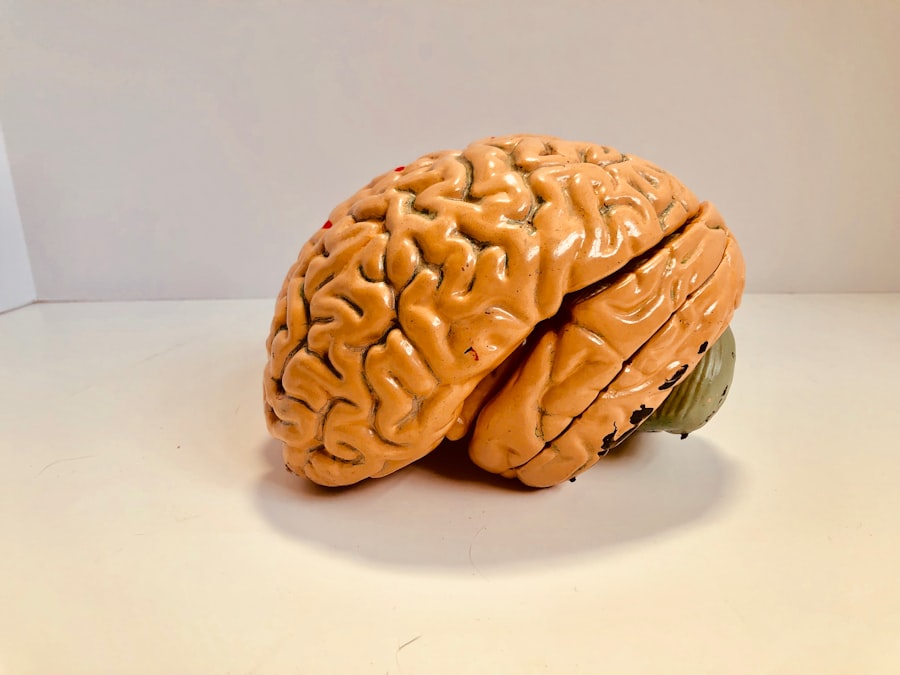
While the DMN generates and supports internal simulations, the frontoparietal control network (FPCN) acts as a conductor, guiding and manipulating these mental constructs. The FPCN is a distributed network of frontal and parietal brain regions involved in executive functions such as working memory, attention, and cognitive control.
Orchestrating Mental Construction
The FPCN plays a crucial role in maintaining and manipulating simulated information in working memory. When you are mentally rehearsing a difficult conversation or trying to solve a complex problem in your head, the FPCN is actively engaged in holding relevant information in mind and applying cognitive operations to it. It provides the “scaffolding” for complex mental simulations, allowing for the strategic organization and manipulation of internally generated content.
Interaction with the DMN
The FPCN and DMN exhibit an interesting interplay. While the DMN is active during internally focused tasks, the FPCN often shows increased activity when an individual is engaged in externally directed, goal-oriented tasks. However, during complex simulations that require both internal generation and guided manipulation – such as mentally strategizing a chess move – both networks show coordinated activity, highlighting their collaborative role in cognitive control over internally generated experiences. This dynamic interaction underscores the sophisticated neural architecture supporting our ability to both create and control our internal worlds.
Recent studies in the neuroscience of simulation have shed light on how our brains create mental models of the world around us, enhancing our ability to predict outcomes and navigate complex environments. For those interested in exploring this fascinating topic further, a related article discusses the implications of these findings on our understanding of cognitive processes and decision-making. You can read more about it in this insightful piece on the subject at Freaky Science.
Clinical Implications and Future Directions: Harnessing Simulation for Well-being
| Metric | Description | Value / Range | Unit | Relevance to Neuroscience of Simulation |
|---|---|---|---|---|
| Neural Activation in Prefrontal Cortex | Level of activity measured during mental simulation tasks | 15-25 | fMRI BOLD signal (arbitrary units) | Indicates engagement of executive functions during simulation |
| Mirror Neuron Firing Rate | Frequency of mirror neuron activation when observing or simulating actions | 20-40 | Hz | Supports understanding of others’ actions through internal simulation |
| Simulation Accuracy | Percentage of correct predictions in mental simulation tasks | 70-90 | % | Reflects effectiveness of neural simulation processes |
| Reaction Time Delay | Time difference between actual and simulated response | 200-350 | milliseconds | Measures temporal dynamics of neural simulation |
| Hippocampal Activation | Engagement level during spatial and episodic simulation | 10-18 | fMRI BOLD signal (arbitrary units) | Crucial for memory-based simulation and navigation |
Understanding the neuroscience of simulation extends beyond basic science, offering promising avenues for clinical applications and interventions. Dysfunctions in simulation processes are implicated in various neurological and psychiatric disorders, and conversely, harnessing these processes can promote mental well-being.
Simulation Deficits in Neurological and Psychiatric Conditions
Individuals with certain neurological conditions, such as amnesia, often exhibit profound deficits in episodic future thinking, demonstrating the link between memory and the ability to simulate future events. Similarly, disorders like schizophrenia involve disrupted predictive coding and an impaired ability to distinguish between internally generated simulations and external reality, leading to hallucinations and delusions. Depression can also involve dysfunctional simulation, marked by an excessive focus on negative future outcomes and rumination over past events.
Therapeutic Applications of Mental Simulation
Conversely, the deliberate use of mental simulation forms the basis for several therapeutic interventions. Cognitive Behavioral Therapy (CBT), for example, frequently employs mental rehearsal and visualization to help individuals reframe negative thought patterns and practice adaptive coping mechanisms. Exposure therapy, used to treat anxiety disorders, often involves imaginal exposure where individuals mentally confront feared situations in a controlled environment, gradually reducing their anxiety response. Mindfulness practices, by observing thoughts and sensations without judgment, can also be viewed as a form of controlled internal simulation, fostering greater self-awareness and emotional regulation.
Virtual Reality and Enhanced Simulation
The advent of virtual reality (VR) technologies offers unprecedented opportunities to study and leverage the brain’s capacity for simulation. VR provides immersive simulated environments that can elicit strong physiological and psychological responses, often mirroring those experienced in real-world scenarios. This allows researchers to manipulate and control simulated experiences with precision, investigating their impact on brain activity, behavior, and emotional states. In a therapeutic context, VR exposure therapy is proving highly effective for phobias and PTSD, offering scalable and customizable simulated environments for therapeutic intervention. Imagine a patient with a fear of heights gradually acclimatizing to virtual precipices, preparing them for real-world encounters.
The neuroscience of simulation is a rapidly evolving field, continually revealing the intricate tapestry of neural networks that allow us to mentally construct and navigate both our inner and outer worlds. From the predictive power of error signals to the orchestrated dance of the DMN and FPCN, the brain’s capacity for simulation is a cornerstone of human cognition, offering fertile ground for scientific discovery and innovative therapeutic strategies. As we continue to unravel these neural mysteries, our understanding of what it means to perceive, remember, and anticipate will undoubtedly deepen, moving us closer to a comprehensive understanding of the human mind.
FAQs
What is the neuroscience of simulation?
The neuroscience of simulation studies how the brain creates and processes mental representations of real or imagined experiences. It explores the neural mechanisms that allow individuals to simulate actions, sensations, or events internally without direct external input.
How does the brain simulate actions or experiences?
The brain uses networks involving the motor cortex, premotor areas, and mirror neuron systems to internally replicate actions or experiences. These areas activate similarly during actual execution and mental simulation, enabling understanding, learning, and prediction of behaviors.
What role do mirror neurons play in simulation?
Mirror neurons fire both when an individual performs an action and when they observe the same action performed by others. This mirroring mechanism supports the brain’s ability to simulate others’ actions, facilitating empathy, social cognition, and learning through imitation.
How is simulation used in cognitive neuroscience research?
Researchers use simulation paradigms to study how the brain predicts outcomes, understands others’ intentions, and processes sensory information. Techniques like functional MRI and EEG help identify brain regions involved in simulating motor actions, emotions, or sensory experiences.
What are practical applications of understanding the neuroscience of simulation?
Insights into simulation mechanisms inform rehabilitation strategies for motor disorders, enhance virtual reality experiences, improve social skills training, and contribute to artificial intelligence development by modeling human cognitive processes.